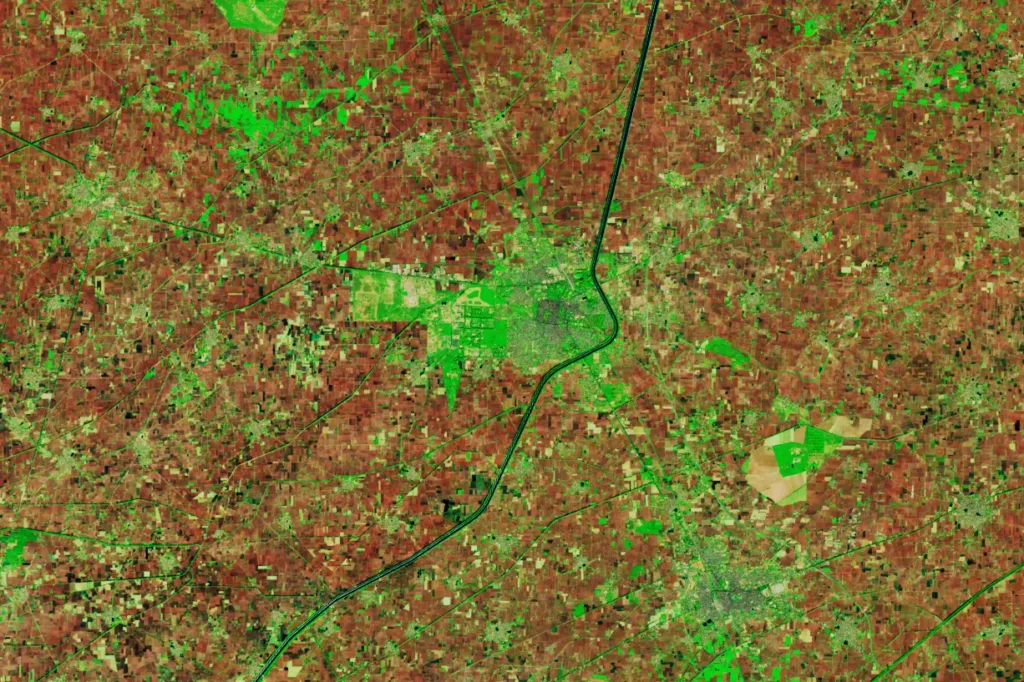
File satellite image, 25 November 2024; not the 2026 fires. Representative image. NASA Earth Observatory images by Wanmei Liang, using Landsat data from the U.S. Geological Survey. Story by Adam Voiland., Public domain, Wikimedia Commons

Why it matters
Detection, inspection and confirmed cases measure different stages of enforcement. Keeping them separate helps readers judge what the latest burning figures establish and how much of the imposed compensation has been collected.
Punjab farm fires reached 1,152 reported incidents on 8 November 2026, taking the season’s tally to 4,459, according to monitoring figures reported by India Today and Hindustan Times on 9 November. Both outlets described the Diwali-day count as the highest single-day figure of the current season. The numbers measure reported fire incidents; they are separate from cases confirmed through field inspections.
Punjab farm fires: what the 4,459 total counts
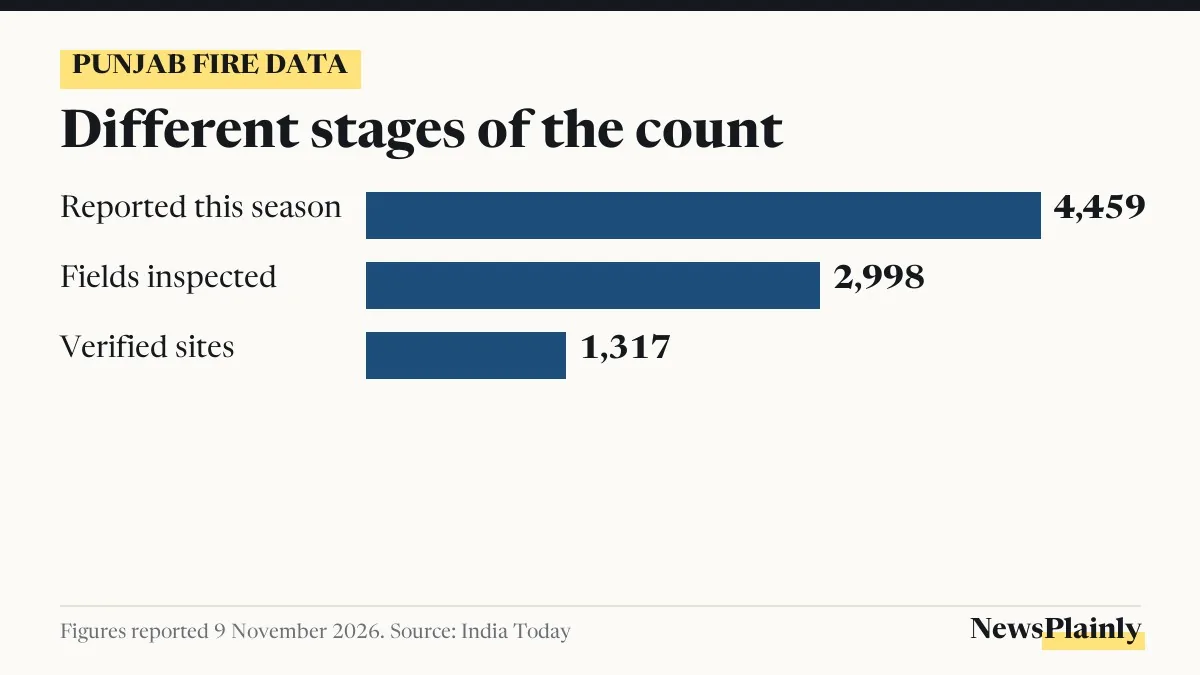
India Today said the figures were compiled under the Indian Space Research Organisation’s monitoring protocol. Its account separates three stages: incidents reported in the monitoring data, fields inspected by officials, and sites physically verified as stubble-burning cases. Stubble means the crop stalks and other residue left after harvesting.
Of the 4,459 reported incidents, 2,998 fields had been inspected and 1,317 sites physically verified as stubble burning, the outlet reported. These figures should be read with their labels attached. An inspection count is not another daily fire tally, and the verified-case count does not replace the broader monitoring total.
NewsPlainly has set the categories side by side below. The table preserves the different stages in the reported data rather than treating every number as a count of the same thing.
| Reported measure | Count | What it describes |
|---|---|---|
| 8 November incidents | 1,152 | One day’s reported fires |
| Season incidents | 4,459 | Cumulative monitoring tally |
| Fields inspected | 2,998 | Sites checked on the ground |
| Verified stubble-burning sites | 1,317 | Cases physically confirmed |
The data do not justify describing all incidents outside the verified category as false alarms. Nor do they establish that every detected incident had already been confirmed on the ground. Those would be conclusions beyond the figures reported.
One day’s addition made up about a quarter
Hindustan Times put the cumulative count before the latest addition at 3,307. Adding 1,152 gives 4,459. NewsPlainly’s calculation shows that the latest day’s incidents accounted for about 25.8% of the updated season total: 1,152 divided by 4,459, multiplied by 100.
The same inputs give a 34.8% increase in the cumulative tally over its previous level. That is a different comparison from saying daily burning rose 34.8% against the previous day’s daily count. The denominator here is 3,307, the earlier season total, rather than the number of fires on 7 November.
This distinction matters when reading a fast-moving series of figures. A daily total describes one date; a cumulative total adds observations across the monitoring season. A large daily addition can change the cumulative number sharply without giving a day-to-day growth rate.

About ₹29.95 lakh of imposed penalties remained unrecovered
Both reports gave environmental compensation of ₹62.55 lakh imposed in stubble-burning cases and ₹32.60 lakh recovered. Environmental compensation is the monetary penalty described in the enforcement figures. The reports attributed the wider enforcement record to the Commission for Air Quality Management, the body overseeing air-quality measures in Delhi and adjoining areas.
NewsPlainly’s subtraction leaves ₹29.95 lakh between the amount imposed and the amount collected. The recovery was about 52.1% of the imposed sum, calculated as 32.60 divided by 62.55. These are calculations from the reported totals, not an estimate of when the remainder will be paid.
India Today also reported proceedings against 18 supervisory officers under the commission’s law. Proceedings being initiated do not mean a penalty or a finding against an officer has been completed. The report did not describe those cases as final disciplinary outcomes.
The next dates concern sowing and monitoring
India Today reported that around 91% of Punjab’s paddy area had already been harvested. That is an area estimate, separate from the share of fires verified or penalties recovered. It supplies the farming context for the latest figures without showing how much residue remains to be managed.
Hindustan Times linked the pressure to clear fields with Punjab Agricultural University’s recommended wheat-sowing deadline of 15 November. A crop recommendation is not a legal permission to burn residue. The outlet said the official fire-monitoring season runs until 30 November.
The figures also should not be read as a measurement of how much pollution Punjab contributed to Delhi on a particular morning. Neither account supplied that calculation for these incidents. NewsPlainly’s earlier coverage of the Supreme Court’s Delhi pollution hearing concerns the wider air-quality issue. The India Today report supplies the monitoring and field-verification numbers used here.
Frequently asked questions
Were all 4,459 incidents physically confirmed as stubble burning?
India Today separately reported 2,998 fields inspected and 1,317 sites physically verified. Those figures describe different stages of checking.
How much of the environmental compensation was recovered?
The reports gave ₹32.60 lakh recovered against ₹62.55 lakh imposed. NewsPlainly calculates that as about 52.1%.
Does the count show how much pollution reached Delhi?
No pollution contribution estimate for these incidents was supplied in the reports used for this article.