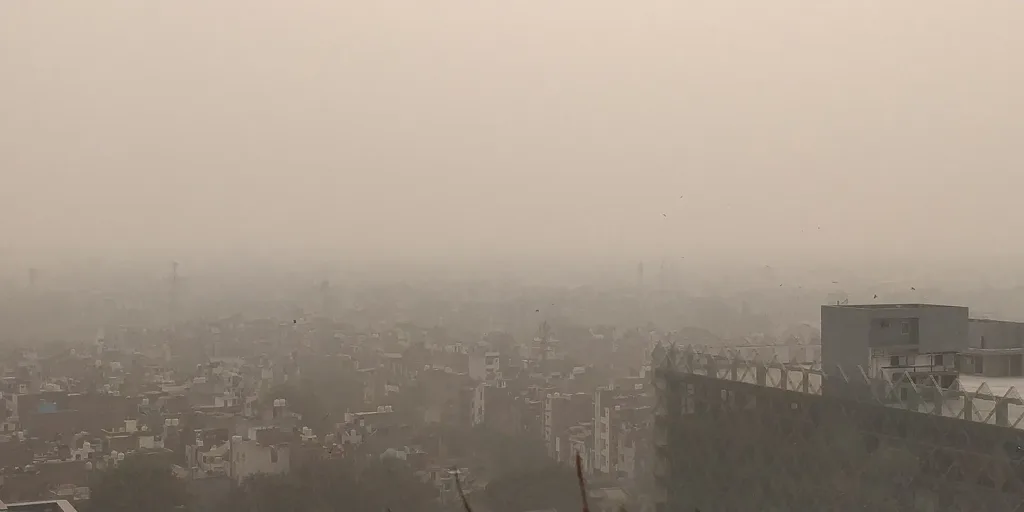
Representative image. Prami.ap90, CC BY-SA 4.0, Wikimedia Commons

हिन्दी में सारांश Summary in Hindi
- AAP ने 9 नवंबर को दिल्ली के प्रदूषण के आंकड़ों में हेराफेरी का आरोप लगाया।
- कपिल मिश्रा ने पंजाब में जानबूझकर पराली जलाने का आरोप लगाया; इसकी पुष्टि नहीं हुई है।
- ंतराल की खबर दी।
বাংলায় সারাংশ Summary in Bangla
- ভিযোগ করেছে আপ।
- ভিযোগ, পঞ্জাবে ইচ্ছাকৃত ভাবে খড়ে আগুন দেওয়া হয়েছে; এই দাবি যাচাই হয়নি।
- দ্য হিন্দু ও হিন্দুস্তান টাইমস জানিয়েছে, কিছু নজরদারি কেন্দ্রের তথ্য পাওয়া যায়নি।
Why it matters
An incomplete monitoring record makes the worst hours harder to assess. Residents need a technical account of interruptions to distinguish missing observations from lower pollution.
Delhi data row widened on 9 November 2026 as the Aam Aadmi Party alleged that air quality index (AQI) readings were being manipulated, while Delhi minister Kapil Mishra alleged a conspiracy involving farm fires in Punjab. Mishra also said the government would examine missing monitoring data and inform the media, The Hindu reported.
The exchanges followed a night when readings from several stations were unavailable for hours. The missing information is a reported gap in the pollution record. The claims about why it happened, and about deliberate fires in Punjab, remain allegations by the politicians making them.
What each side said in the Delhi data row
Aam Aadmi Party (AAP) Delhi president Saurabh Bharadwaj questioned the reliability of government pollution figures in a video posted on X. According to The Hindu, he alleged that monitoring stations had been shut on Diwali night and described the handling of the figures as fraud.
Hindustan Times reported that Bharadwaj also alleged water was being sprayed near the Jahangirpuri station to lower its readings. He questioned the placement of newer stations in greener, open locations. These are his accusations about the measurement system, rather than findings of a technical inquiry.
For the Bharatiya Janata Party (BJP), Mishra alleged that people had deliberately set crop residue alight in AAP-governed Punjab while farmers were celebrating Diwali. The Hindu quoted him putting the number of incidents at about 1,200 and calling the matter a conspiracy against Delhi, Punjab and farmers.
His allegation concerns how fires started. It cannot be established simply by counting detected fires, which does not by itself identify who lit them or their intention. NewsPlainly’s earlier report on Punjab’s farm-fire figures deals with the recorded detections separately.
What the missing station readings establish
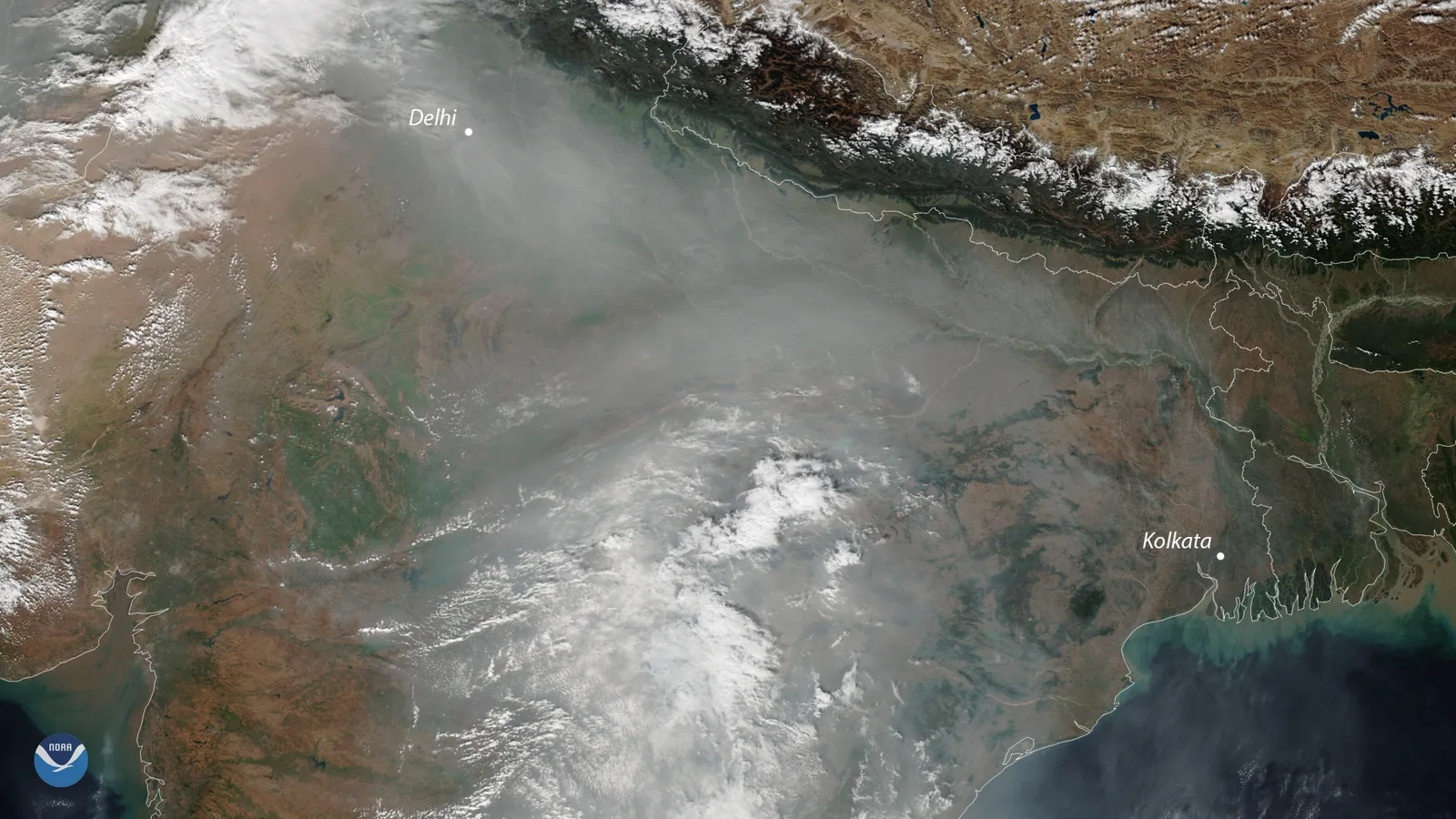
According to The Hindu’s reporting, several stations operated by the Delhi Pollution Control Committee (DPCC) did not provide data for hours during the night of 8 and 9 November. DPCC is the Delhi government’s pollution regulator.
Hindustan Times separately reported that more than half of Delhi’s monitoring stations stopped reporting around midnight. Stations that continued to provide readings showed severe pollution. The newspaper’s account describes an incomplete network record during a period when pollution was high.
A missing observation is different from a low observation. It leaves a gap rather than proving that the air at that location became cleaner. Equally, a blank entry alone does not establish a deliberate shutdown or identify the reason a reading was unavailable.
That distinction matters to the Delhi data row. The reporting supports questions about the completeness of the record. It does not, by itself, settle the political accusation of intentional manipulation.
Claims, observations and replies are different evidence
The following comparison separates the main strands of the dispute. It is a guide to what the accounts establish, rather than a verdict on either party’s explanation.
| Issue | What was reported | What remains unresolved |
|---|---|---|
| Missing readings | The Hindu and Hindustan Times reported gaps at stations. | The reason for each station’s missing data. |
| Manipulation claim | Bharadwaj alleged interference with measurements. | Whether a technical examination supports that accusation. |
| Punjab fires | Mishra alleged deliberate setting of fires. | Evidence identifying responsibility and intention. |
| Government check | Mishra said officials would examine the missing readings. | The findings of that examination. |
The explanation residents are still waiting for
Asked about the missing data, Mishra said the government would look into it within an hour and inform the media, according to The Hindu. That was a commitment made when he spoke. The report reviewed for this article did not contain the result of that promised examination.
Bharadwaj said his party had written to the Commission for Air Quality Management (CAQM), the regional pollution authority, and the Central Pollution Control Board (CPCB). The letters were described in the reporting; they were not independently examined for this article.
For Delhi residents, the immediate information gap is specific: which stations stopped reporting, for how long, and what caused each interruption. A station-by-station explanation would address a different question from the wider argument over pollution sources. The Delhi data row currently brings those two debates together, but each needs its own evidence.
Frequently asked questions
Did the reports prove deliberate manipulation?
No. They documented missing readings and attributed allegations to AAP. The cause of the interruptions remains unresolved in the material reviewed.
What did Kapil Mishra say about the gaps?
The Hindu reported that he promised to examine the issue within an hour and inform the media.