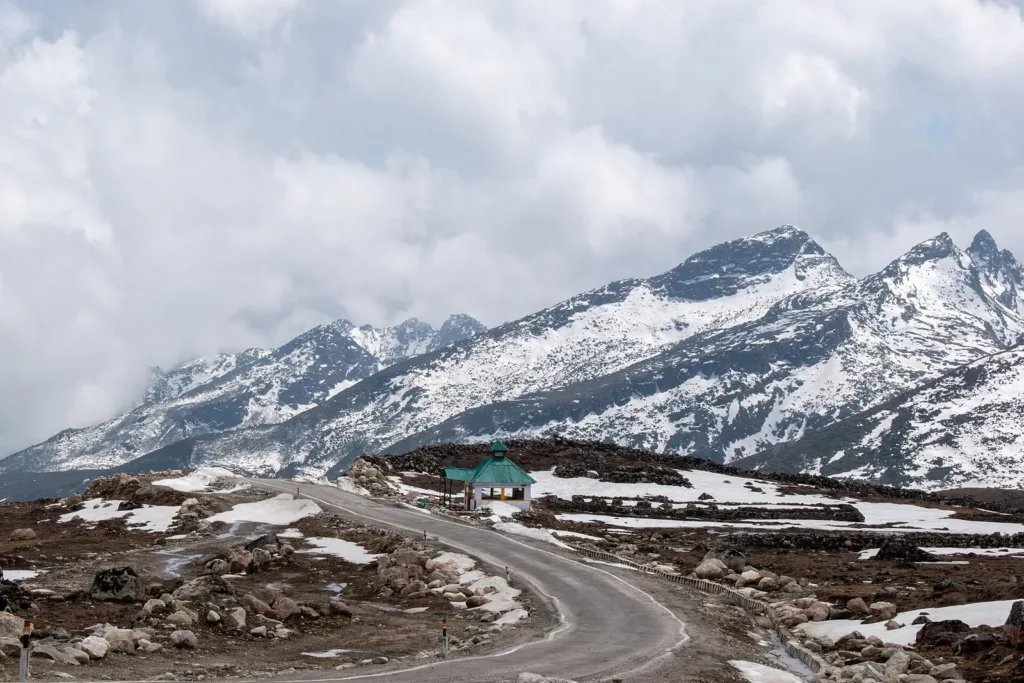
Representative image. Rohit Sharma, CC BY-SA 4.0, Wikimedia Commons

Why it matters
The LAC is where India and China's armies meet, and a face-off can turn into a clash, as Galwan did in 2020. Both countries have spent two years rebuilding ties, including trade and travel links, so an open admission of continuing face-offs is watched closely. How the two sides handle it decides whether talks stay on track.
The LAC face-off in Arunachal Pradesh reached the foreign ministry on 23 October 2026. India said the situation along the border with China “gets disturbed from time to time when Chinese forces diverge from established patrolling patterns”, a day after the chief of the Indo-Tibetan Border Police (ITBP) told his troops that face-offs at several places in the state were still going on.
The Line of Actual Control (LAC) is the de facto border between India and China, the line each side actually holds on the ground. It has never been fully agreed, so patrols from both armies sometimes walk into areas the other side claims, and those meetings are what officials call face-offs.
What the ITBP chief told troops in Alwar
Shatrujeet Kapur, Director General of the ITBP, the central armed police force that guards the India-China border, was speaking at a felicitation ceremony for personnel in Alwar, Rajasthan, on Thursday, 22 October. According to Hindustan Times (HT), he said that in recent days there had been a face-off at different locations in Arunachal Pradesh which was still continuing, and that the force’s Shaurya commando teams had done exceedingly well there.
Kapur did not name China in the clip, HT reported. The ITBP posted the footage on social media late on Thursday night and later deleted it. The news agency IANS (Indo-Asian News Service) quoted unnamed sources as saying the remarks were made in the context of routine operational preparedness and were not linked to any one incident.
In the same address, the Press Trust of India (PTI) reported, Kapur said the ITBP has raised drone platoons in all its border units and is building underground infrastructure at forward posts. He said a new training course called “Strike” has been prepared to handle situations like the June 2020 clash in the Galwan Valley, in which 20 Indian soldiers were killed, and that the whole force will finish the course by the end of 2027. He also told troops to be careful on social media because adversaries watch their accounts.
How the MEA answered on the LAC face-off
At the weekly media briefing on Friday, Ministry of External Affairs (MEA) spokesperson Randhir Jaiswal did not deny the ITBP chief’s account. On the details, he said, “I would refer you to the Ministry of Defence,” according to News18.
He repeated a line the ministry has used before: that the border situation is disturbed from time to time when Chinese forces move away from established patrolling patterns. Both sides, he said, continue to use existing diplomatic and military mechanisms to resolve outstanding issues and avoid misunderstanding and miscalculation along the LAC.
Jaiswal added that India and China have agreed to discuss ways to improve their understanding of the LAC in some areas for better border management, and that peace and tranquillity in the border areas are essential for the overall development of ties, India Today reported. China has not commented publicly on the ITBP chief’s remarks in the reports available on Friday evening.
Congress and the government on the Arunachal Pradesh face-offs
The Congress said the government had been silent on the matter. Party general secretary Jairam Ramesh wrote on X that India was paying the price for what he called the Prime Minister’s clean chit to China on 19 June 2020, days after Galwan. He said the DG ITBP had rightly praised the force’s performance in the face-offs with the People’s Liberation Army (PLA), China’s army, while there had been, in his words, a “deafening silence” from the Prime Minister, according to Moneycontrol.
The government has in the past rejected the Congress charge that it is soft on Beijing and has said it is committed to protecting India’s borders, HT noted. BJP leaders have accused the Congress of politicising national security and have pointed to Jawaharlal Nehru’s record on China. The BJP had not responded to Ramesh’s latest post when HT published its report on Friday.
Why the India China border talks matter now
The remarks come in a year when both governments have been working to steady relations. In October 2024 they reached an understanding to pull back troops from Depsang and Demchok, the last two friction points in eastern Ladakh, ending a standoff of more than four years. Prime Minister Narendra Modi and President Xi Jinping met in Kazan days later, and again in Tianjin in August 2025 at the Shanghai Cooperation Organisation (SCO) summit.
Xi came to New Delhi for the summit of BRICS, the group of emerging economies that includes Brazil, Russia and South Africa, on 12 and 13 September 2026, his first visit to India in seven years, and held talks with Modi. Chief of Defence Staff General NS Raja Subramani said last month that the border was stable, IANS reported, and External Affairs Minister S Jaishankar said in New York in late September that ties were better than a couple of years ago.
Arunachal Pradesh is a different stretch of the same line. Since July there have been reports of a standoff with Chinese troops in the remote Taksin area of Upper Subansiri district, HT reported, and in August Jaiswal gave a similar answer when asked about it. So the ITBP chief’s words are the first time a senior official has said in public that face-offs in the state were still going on in October.
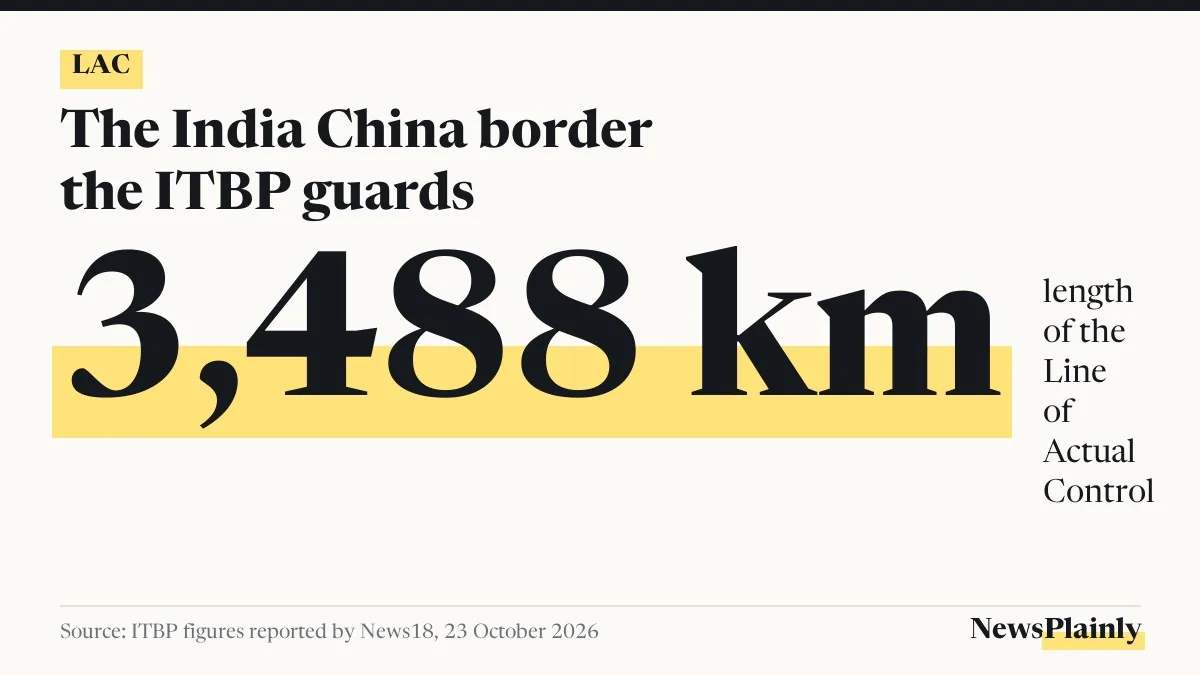
The scale is large. The ITBP, set up in 1962, guards the 3,488 km LAC that runs from Ladakh to Arunachal Pradesh. Neither the ITBP nor the MEA has said how many locations are involved, how many troops are present or whether anyone has been hurt.
What to watch next on the LAC
The MEA has pointed reporters to the Ministry of Defence for details, so any fuller account of the face-offs would come from there or from the Army. The talks Jaiswal mentioned on improving understanding of the LAC in certain areas have no announced date.
The question is also likely to come up at the next MEA briefing and in Parliament, where the Congress has asked the government to explain what is happening in Arunachal Pradesh. For readers, the earlier posts on NewsPlainly about India’s foreign ties this month give more of the wider picture.
Frequently asked questions
What did the ITBP chief say about Arunachal Pradesh?
Shatrujeet Kapur told troops in Alwar on 22 October that face-offs at different locations in Arunachal Pradesh were still continuing and praised the Shaurya commando teams.
What did the MEA say?
Spokesperson Randhir Jaiswal said the border situation gets disturbed when Chinese forces diverge from established patrolling patterns, and referred details to the Defence Ministry.
What is the LAC?
The Line of Actual Control is the de facto border India and China hold on the ground. The ITBP guards its 3,488 km length.