Representative image. Balaji Kasirajan, CC BY-SA 3.0, Wikimedia Commons

Why it matters
More than 8.3 lakh consumers in Gurugram and Nuh could have chosen between two electricity suppliers under the HERC order, so its fate decides whether that choice arrives. The strike also showed how fast a power dispute turns into water shortages in a city where housing societies pump their water. And over 1.29 lakh connection applications are still pending in the state, the problem the regulator said it was trying to fix.
The Haryana power strike is over. Electricity employees called off their statewide strike on 23 October 2026, a day after it began, when Chief Minister Nayab Singh Saini said the state had used Section 108 of the Electricity Act, 2003 to direct the regulator to review a private licence in Gurugram and Nuh. Supply was to be restored at once, the employees’ Joint Action Committee said.
Why the Haryana power strike ended on day two
Saini announced the deal at a joint press conference in Panchkula with union leaders by his side. “Our position is absolutely firm; there will be no privatisation of any kind,” he said, according to Mint and Financial Express. He also noted that the Haryana Electricity Regulatory Commission (HERC), the body that sets power rules and tariffs in the state, is independent and works under its own law.
Power Minister Anil Vij gave the details. He said he and the chief minister had signed a letter telling the department to act immediately to halt the order, and that the government would also file an application asking HERC to review it, Babushahi reported. Vij said the state had never invited private companies to apply. The central law lets a company go to the regulator directly, he explained, and the state opposed the plea from the first day.
Both sides are to meet again on 3 November at 3 pm, when the government has promised a point-by-point account of progress.
What the HERC licence for Eleven Power allows
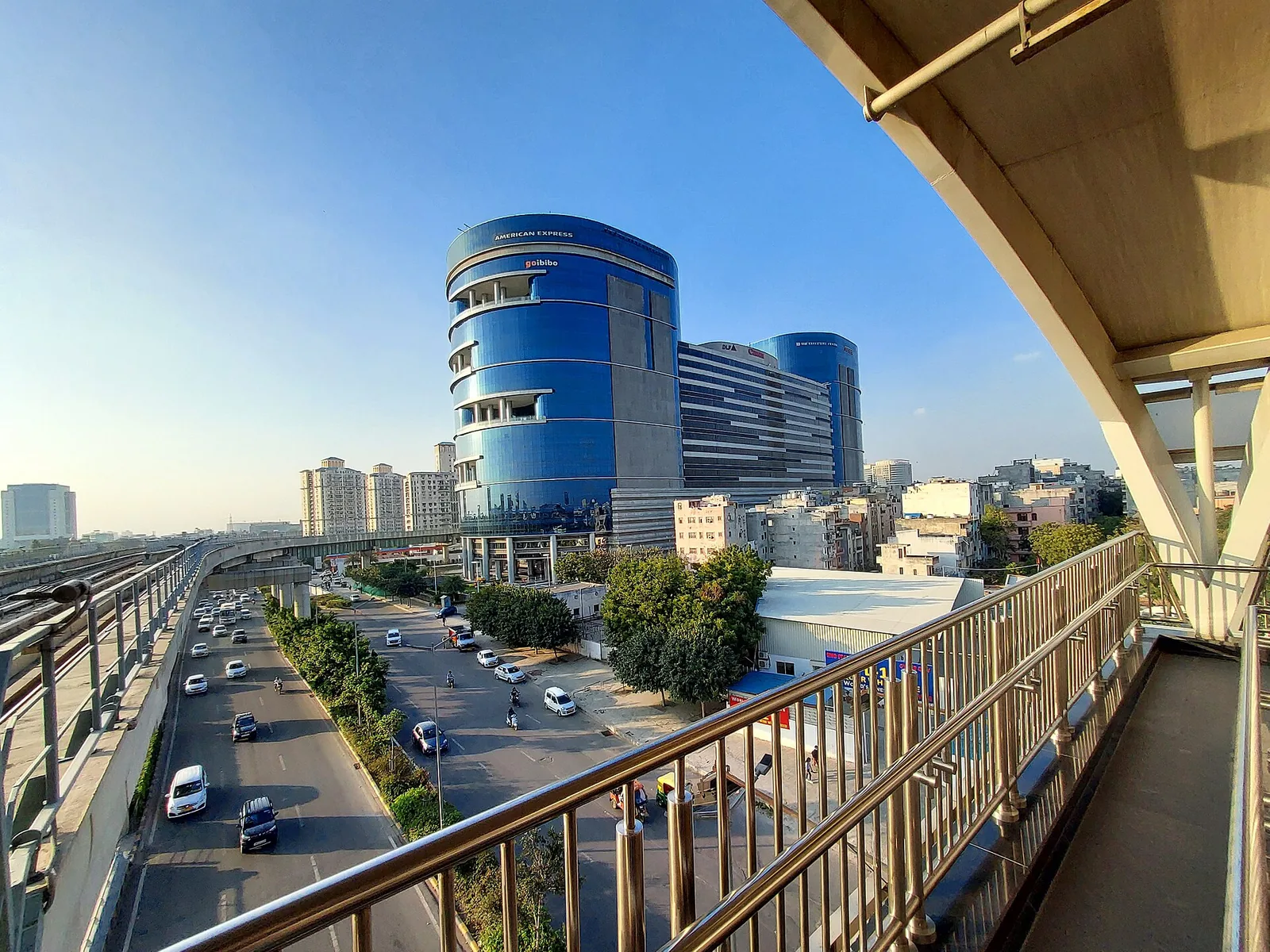
The dispute goes back to a HERC order of 19 October. It gave Eleven Power Private Limited a 25-year “parallel” distribution licence for the Gurugram and Nuh districts. A parallel licence means a second company may lay its own network and sell electricity in an area that already has a supplier. Here that supplier is the state-owned Dakshin Haryana Bijli Vitran Nigam Limited (DHBVNL), which serves south Haryana. Section 14 of the Electricity Act allows more than one licensee in the same area.
It was the first such licence in Haryana, ThePrint reported. The order was signed by HERC officiating chairman Mukesh Garg and member Shiv Kumar after four hearings between May and September. The network was to be built over five years across five divisions: Gurugram City, Gurugram Sub-urban, Manesar, Sohna and Nuh, with Nuh in the first phase. Financial Express reported that more than 8.3 lakh consumers, from homes and farms to shops and factories, could eventually get a choice of supplier. No one had to switch. The current supplier would keep serving everyone, and the option would open only as the new network reached each area.
Eleven Power, incorporated in June 2025, belongs to the Eleven Group led by Sunil Sachdeva, a co-founder of the Medanta hospital chain, according to ThePrint. In its petition the company proposed spending ₹4,716.73 crore over five years and buying about 80% of its power from renewable sources.
Why the regulator backed a second supplier
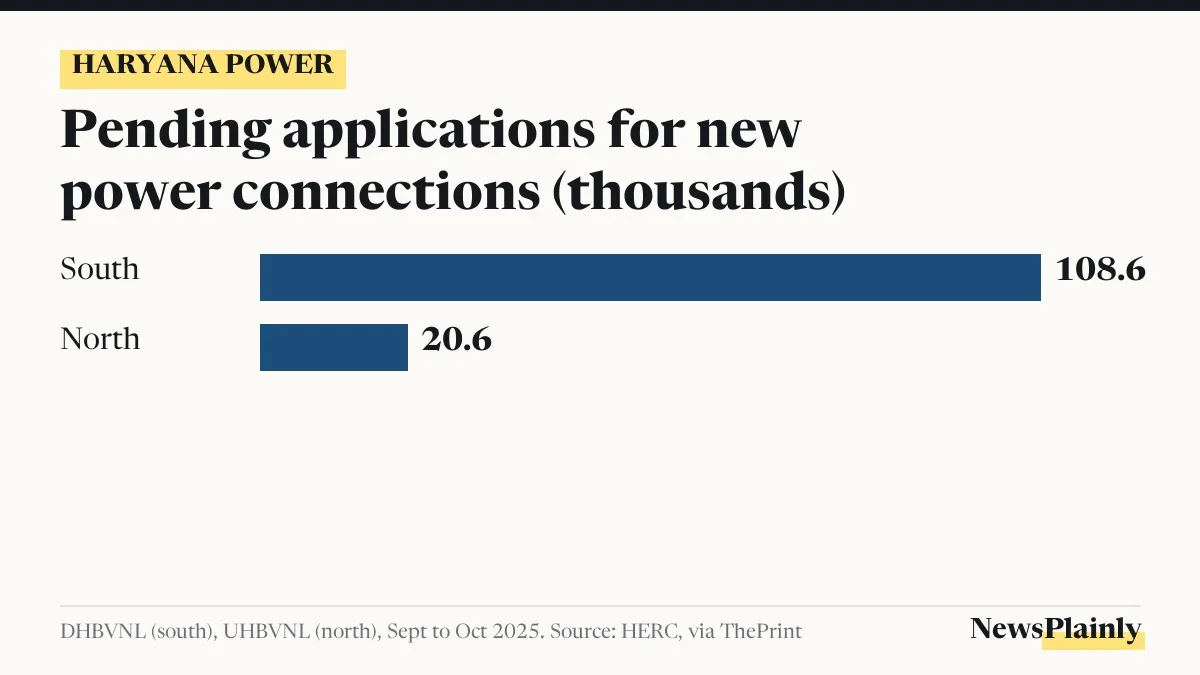
HERC pointed to a backlog. Data from the state power companies showed DHBVNL had 1,08,590 applications for new connections pending as of 1 October 2025, adding up to a load of about 1,642 megawatts (MW). Its northern counterpart, Uttar Haryana Bijli Vitran Nigam Limited (UHBVNL), had another 20,603 pending. Together that is roughly 1.29 lakh people and businesses still waiting for a connection. The regulator said a second licensee would give consumers an alternative and bring competition.
The order drew support from 32 intervenors, ThePrint reported, among them the Gurgaon Industrial Association, several real estate firms and hotels, and farmers’ groups from Nuh and Gurugram.
Opponents saw it differently. Former minister Sampat Singh of the Indian National Lok Dal (INLD) called the plan “backdoor privatisation” of the most profitable part of the public network. He argued it could weaken the state companies and the cross-subsidy that keeps farm power cheap, and questioned whether a company set up less than a year earlier could fund a project of this size. Critics also said the ₹304.37 crore set aside for Nuh, about 6.5% of the plan, was too little for a poorer district. HERC rejected these objections and held that the company met the financial tests.
What the strike meant for Gurugram electricity users
The Haryana Bijli Karmchari evam Engineer Sanyukt Sangharsh Morcha, a joint front of power employees and engineers, had called the strike for 22, 23 and 24 October, calling the licence “anti-people and anti-employee”. About 40,000 employees and engineers took part, Mint reported. Their concerns were job security, the future of the state companies and the cost of electricity for ordinary consumers.
Gurugram felt it first. Mint reported that thousands of residents in the city were left without power or water during the strike, and that businesses feared losses running into crores. Many housing societies depend on electric pumps for their water, so a power cut quickly becomes a water cut as well.
The strike came at a tense time for supply. Our earlier report on coal stocks at power plants showed how many plants were already running low as demand rose this month.
What Section 108 lets the state do
Section 108 of the Electricity Act lets a state government give written policy directions to its electricity regulator on matters of public interest, and the regulator must be guided by them. Saini said the state used that power to ask HERC to review the matter and “effectively cancel” the provision, Mint reported.
Before the strike, Vij had told ThePrint that the government would also challenge the order before the Appellate Tribunal for Electricity (APTEL), the court-like body that hears appeals against power regulators. The government has not said publicly whether it will now go ahead with that appeal as well as the review plea.
Eleven Power has not commented publicly on the government’s move, and HERC has not said how it will respond to the direction. For Gurugram electricity users, the immediate change is simple: the staff who keep the lines running are back at work, and the licence that set off the strike is now under review.
Frequently asked questions
Is the Haryana power strike over?
Yes. The employees' Joint Action Committee called it off on 23 October 2026 after talks with Chief Minister Nayab Singh Saini and Power Minister Anil Vij, and said supply would be restored immediately.
What is the Eleven Power licence in Gurugram?
HERC gave Eleven Power Private Limited a 25-year licence on 19 October to build a second electricity network in Gurugram and Nuh, so consumers could choose between it and the state-owned DHBVNL over five years.
What is Section 108 of the Electricity Act?
It lets a state government give written policy directions to its electricity regulator on matters of public interest. The regulator must be guided by them. Haryana used it to ask HERC to review the licence.
Has the private licence been cancelled?
Not yet. The government has directed HERC to review it and plans a review application. HERC has not announced a decision.