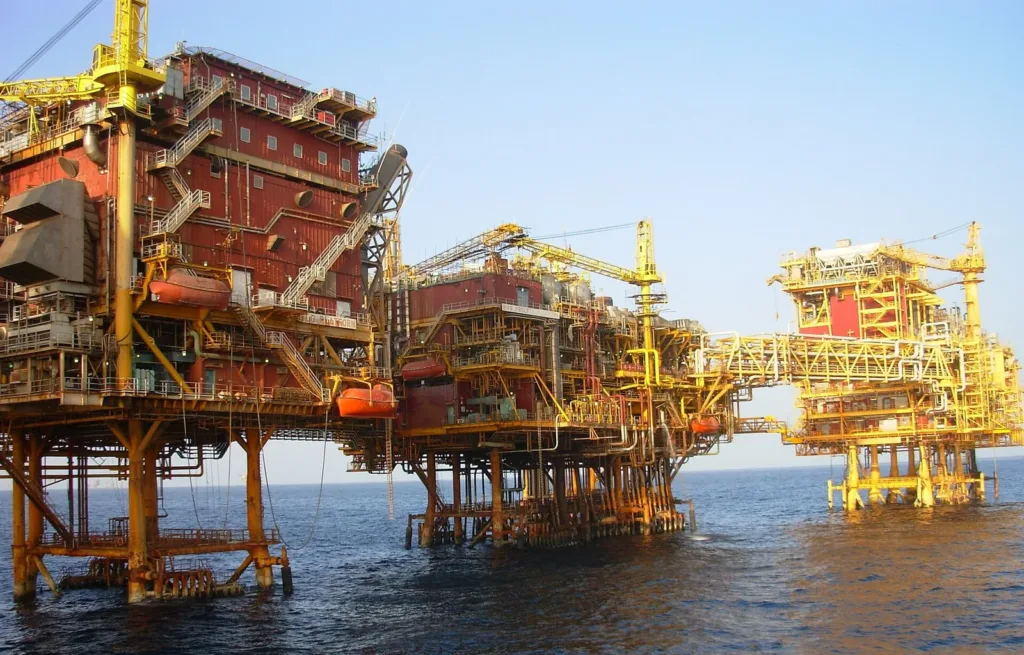
Representative image. Nandu Chitnis from Pune, India, CC BY 2.0, Wikimedia Commons

Why it matters
India imports a large part of the gas used for cooking gas, CNG, fertiliser and power, and Middle East shipping risks make those imports less certain. A new domestic find will not change supply on its own, but further tests will show whether the Krishna Godavari formation can add meaningful home-grown gas in the coming years.
State-owned Oil India Limited (OIL) said on 23 October 2026 that it had found natural gas in a shallow-water block of the Krishna Godavari basin off the Andhra Pradesh coast. The Oil India gas discovery came from a test well that flowed about 1 lakh standard cubic metres of gas a day, with a peak of 2 lakh, the company told the stock exchanges.
What Oil India found in the Krishna Godavari basin
The find is in a block called KG-DSF/GSKW/2018, which Oil India runs on its own. The well, named Godavari-1, is an appraisal well, the kind drilled to check the size and quality of an earlier find rather than to search blind. Gas was found in the Matsyapuri formation, a layer of rock that had not been appraised before, between 2,024 and 2,027 metres below the surface.
Production testing began on 16 October. According to the company’s filing, gas reached the surface at about 1 lakh standard cubic metres per day (SCMD), the usual measure of gas output, and touched 2 lakh SCMD during continuous testing. The well also produced about 170 barrels a day of condensate, a light liquid that comes up along with the gas, and showed a wellhead pressure of 1,815 psi (pounds per square inch).
Oil India said it is now preparing to test the next zone higher up in the same well. It did not give any estimate of how much gas the formation holds, or a date for production, Free Press Journal and BusinessLine reported.
Why the Matsyapuri formation find is still at an early stage
A flow on test is not the same as a field ready to produce. Companies usually need more tests and more wells to estimate the reserves, and then a development plan and approvals before gas is sold. Oil India has not said when those steps will happen.
The block came to Oil India through the Discovered Small Field (DSF) bid rounds, a government scheme that auctions small oil and gas finds which had been left undeveloped, so that a new operator can bring them into production. BusinessLine reported that the company won this one in one of the recent DSF rounds.
The market reaction was muted. Oil India shares were trading at ₹447.50 on the BSE at 12.34 pm on Friday, down 1.69%, Free Press Journal reported. Oil India was among the top searches in Hindi on Google Trends India on Friday evening.
How the Oil India gas discovery compares with national output
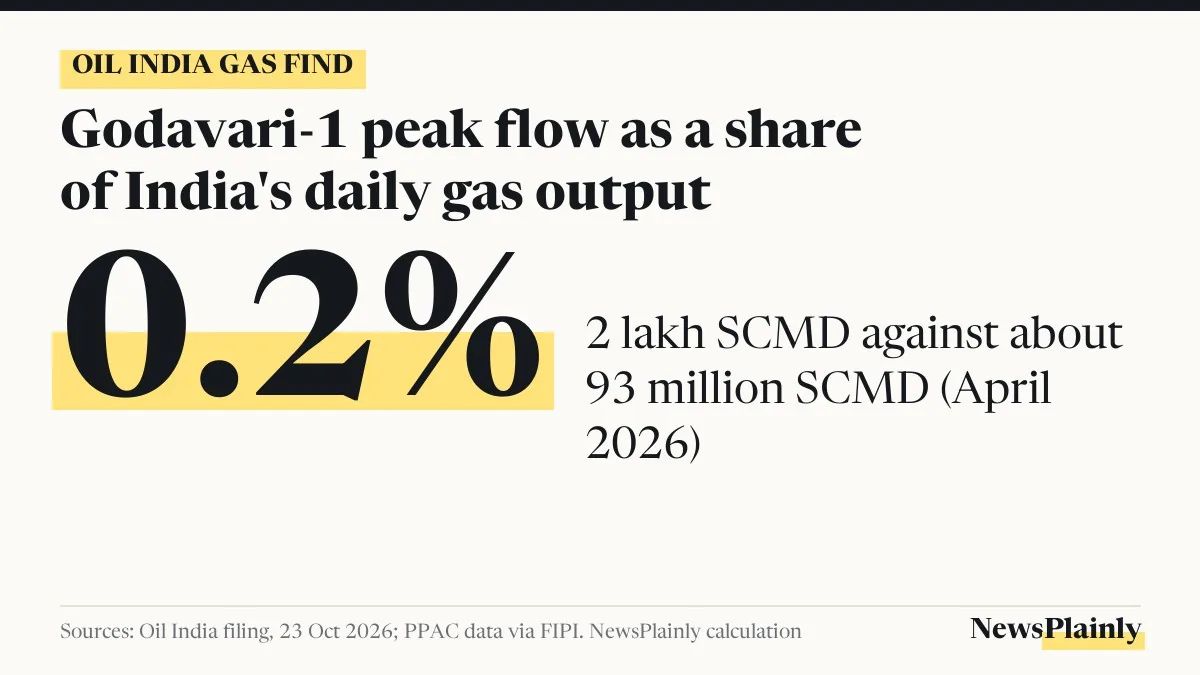
The numbers help put the find in scale. India produced 2,787 million standard cubic metres (MMSCM) of natural gas in April 2026, down 4.2% from a year earlier, according to Petroleum Planning and Analysis Cell (PPAC) data compiled by the Federation of Indian Petroleum Industry. That works out to roughly 93 million cubic metres a day.
The Godavari-1 peak of 2 lakh cubic metres a day is about 0.2% of that daily national output. On its own, then, a single well of this size would not change the country’s gas balance. Its value lies in what further tests show about the rest of the formation, and in adding domestic supply at a time when imports are uncertain.
India buys a large share of its gas from abroad as liquefied natural gas (LNG), gas cooled into liquid so it can travel by ship. LNG imports were 2,266 MMSCM in April against total consumption of 5,014 MMSCM, the same PPAC data show, though the report said actual imports were likely to be much lower because of the conflict in the Middle East. Shipping risks in the region have already put Indian crews in danger, as our report on the Hormuz tanker attack showed.
What it means for India’s natural gas imports
The government wants natural gas to supply 15% of India’s energy by 2030, up from about 6% now, BusinessLine noted. Meeting that target with less dependence on imported LNG means finding and producing more gas at home, and the Krishna Godavari basin is one of the country’s main offshore gas regions. Deepwater projects there have accounted for a significant share of the growth in domestic output in recent years, BusinessLine reported.
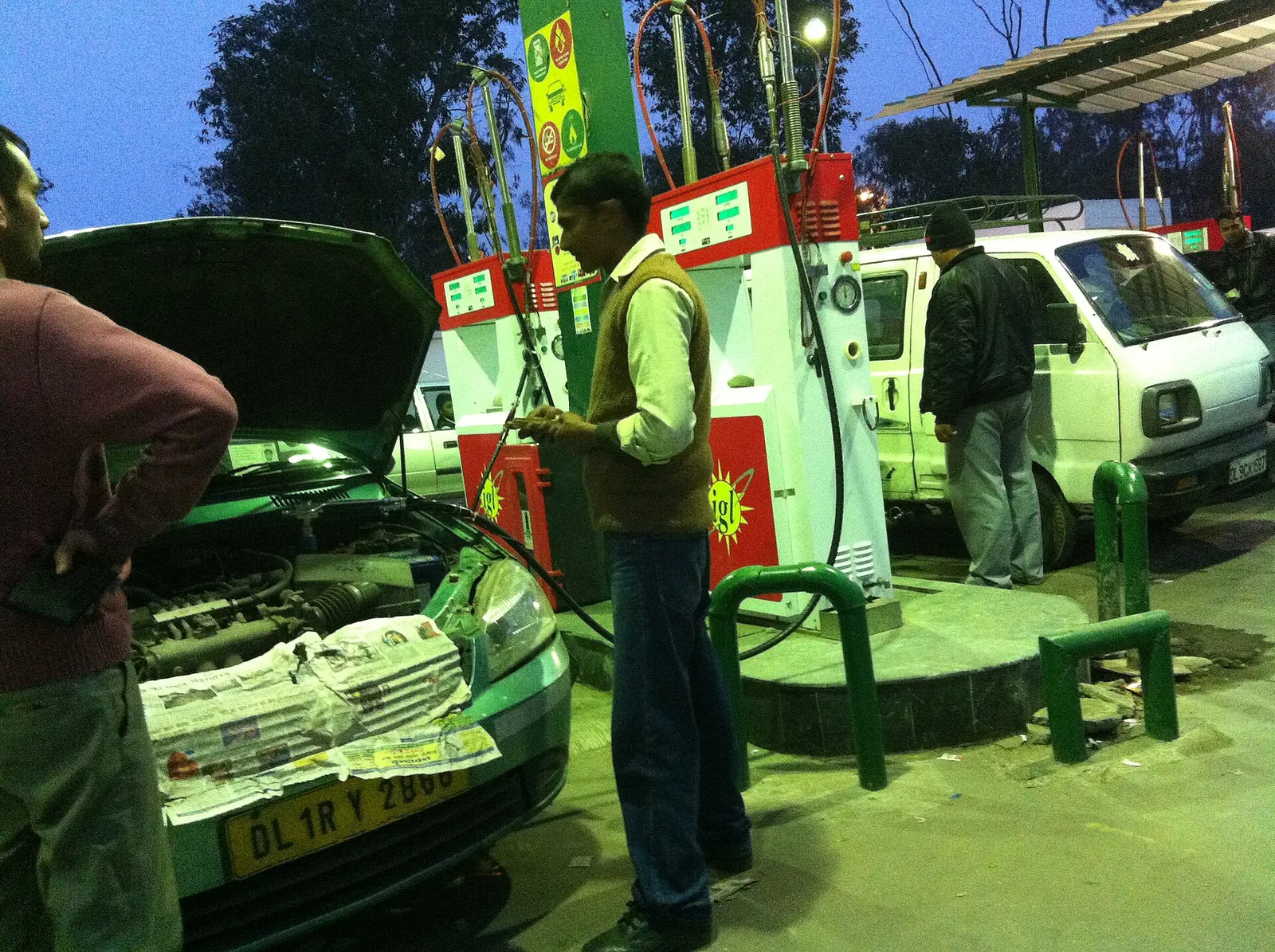
For consumers, more domestic gas matters because the same molecules end up as piped cooking gas, CNG for vehicles, fertiliser and electricity. Fertiliser plants and city gas networks are the two biggest users, at 27% and 29% of consumption in April, according to the PPAC figures. Any cut in natural gas imports also eases pressure on India’s import bill.
For now, Oil India’s discovery is one well and one tested zone. The next test, on the zone above, will give the first clue to whether Matsyapuri holds a bigger field.
Frequently asked questions
Where did Oil India discover natural gas?
In the shallow-water offshore block KG-DSF/GSKW/2018 of the Krishna Godavari basin, off India's east coast, in the Godavari-1 appraisal well.
How much gas did the Oil India well produce?
About 1 lakh standard cubic metres a day, with a maximum of 2 lakh during continuous testing, plus about 170 barrels a day of condensate.
When will the new gas reach consumers?
Oil India has not said. It has to finish testing and estimate reserves, and a development plan and approvals would follow.
How did Oil India shares react?
They traded at ₹447.50 on the BSE at 12.34 pm on 23 October, down 1.69%, according to Free Press Journal.