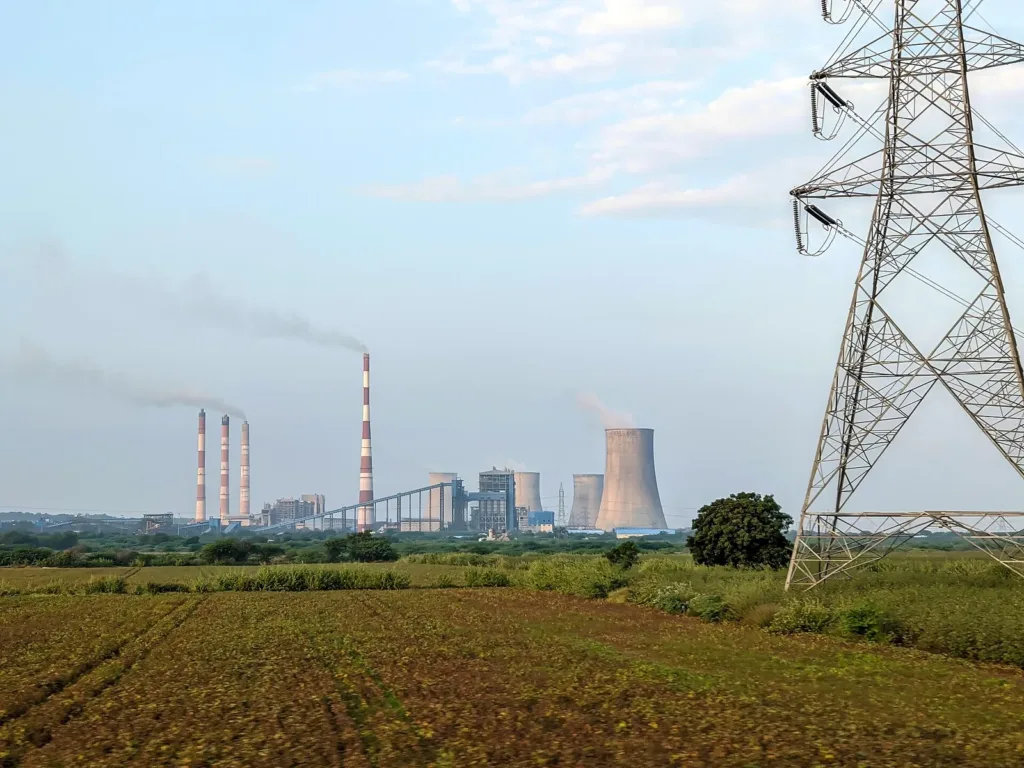
Representative image. Jay.Jarosz, CC BY-SA 4.0, Wikimedia Commons

Why it matters
Core industries supply the power, fuel, steel and cement the rest of the economy runs on, so their growth is an early sign of how industry is doing overall. The continued fall in fertiliser production comes as farmers start sowing winter crops, which makes imports and stock levels worth watching.
Core sector growth in India rose to 7.9% in September 2026, up from 5.9% in August, according to provisional data the Ministry of Commerce and Industry released on Wednesday, 21 October. Output of iron ore, electricity, coal and refinery products all grew by more than 10%. Fertiliser production, however, shrank for yet another month.
The core sector is a group of basic industries whose output feeds almost everything else in the economy: coal, crude oil, natural gas, refinery products such as petrol and diesel, fertilisers, steel, cement, electricity and, in the new series, iron ore.
Which of the eight core industries grew fastest
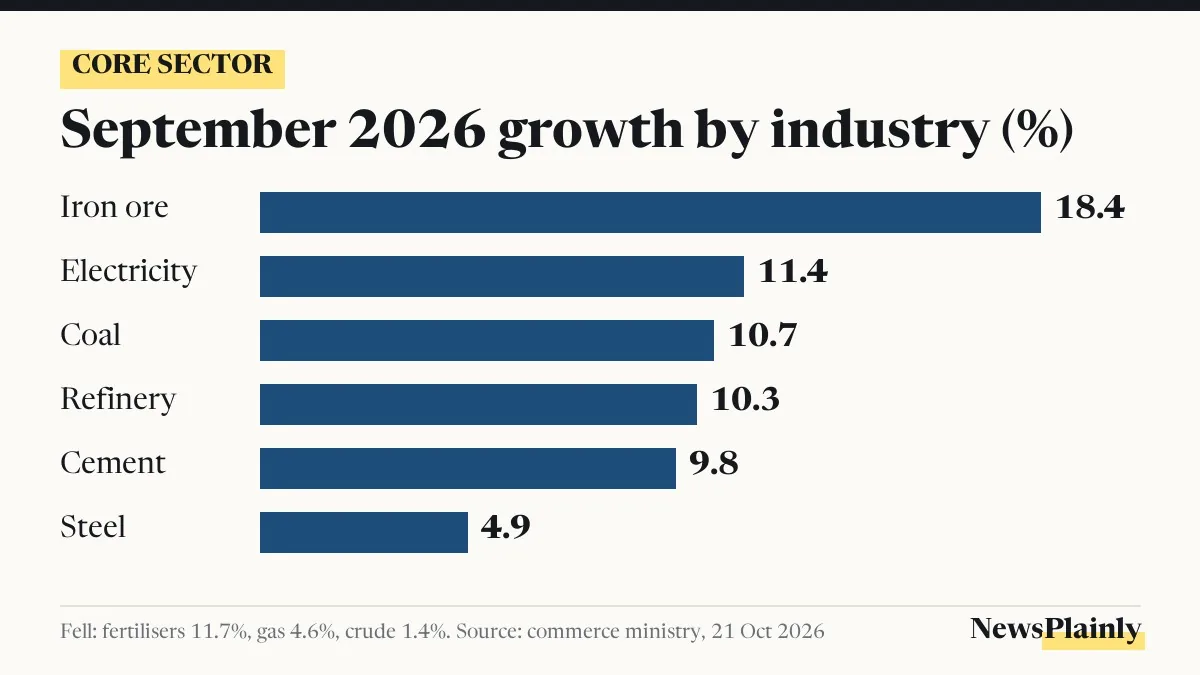
Iron ore led with growth of 18.4% over September 2025, up from 5.5% in August, according to the data as reported by Upstox and Forbes India. Electricity output rose 11.4%, a little slower than August’s 13.1%. Coal swung back to 10.7% growth after shrinking 3.8% in August.
Refinery products, which include petrol, diesel and jet fuel, grew 10.3%, nearly double August’s 5.6%. Cement rose 9.8%, down from 11.7%, and steel picked up to 4.9% from 3.5%.
Three industries shrank. Fertiliser output fell 11.7%, natural gas 4.6% and crude oil 1.4%. Natural gas and crude oil production have contracted every month since September 2025, Forbes India reported.
Aditi Nayar, chief economist at ICRA (an Indian credit rating agency), said core output grew at its fastest pace in the new series, helped by a favourable base, Forbes India reported. A favourable base means the same month last year was weak: September 2025 growth was only 3.1%, according to NewsDrum, so even normal output this year looks like a big jump. She added that seven of the nine sectors improved on their August performance.
The series is still widely called the eight core industries, but the revised index, which uses 2022-23 as its base year, tracks nine, including iron ore, NewsDrum reported.
Why fertiliser production keeps falling
Fertiliser output has fallen in every month since March 2026, when it dropped 24.6%, as the war in West Asia disrupted supplies, Forbes India reported. The September fall of 11.7% follows a 12.4% decline in August. Over April to September, fertiliser production is down 7.6% from a year earlier.
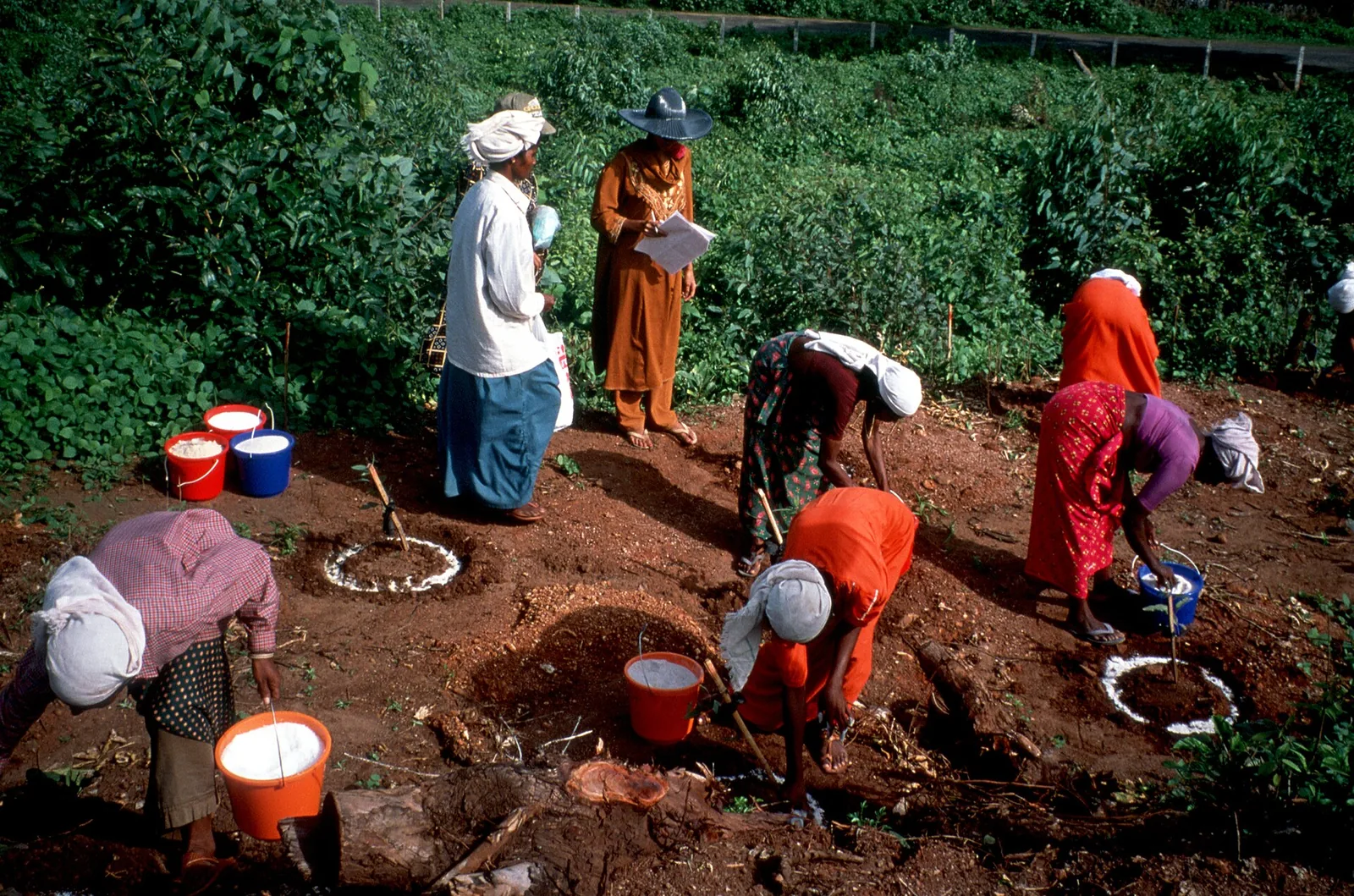
The timing matters for farmers. October to December is the main sowing window for rabi, or winter, crops such as wheat, mustard and gram, which need fertilisers like urea and DAP (diammonium phosphate) at sowing. The core sector data counts only fertiliser made in India; it does not show imports or stocks held by companies and states, so it cannot say on its own whether farmers will face a shortage.
The fall in natural gas output is linked: natural gas is the main raw material for urea plants. Over the first half of the year, gas production is down 4.4% and crude oil 3.7%, NewsDrum reported.
What the index of core industries says about the economy
The index of core industries (ICI) is watched closely because these industries make up a large share of the Index of Industrial Production (IIP), India’s wider measure of factory, mining and power output. Upstox put that share at 40.27%. The ICI comes out before the IIP, so it gives an early hint of trends in the wider industrial sector.
Not every industry counts equally. Electricity carries the biggest weight in the revised index at 30.932%, followed by refinery products at 22.572% and steel at 17.584%, according to NewsDrum. Added together, those three make up about 71% of the index, which is why strong power and refinery numbers lifted September’s figure even with fertilisers in decline.
The index stood at 118.3 in September, against 109.6 a year earlier. It was lower than August’s 120.4, but Forbes India said that reflected normal seasonal movement rather than a slowdown. August’s figure was itself revised up, from a provisional 119.2 to 120.4, which raised August growth from 4.8% to 5.9%.
Six-month core sector growth doubles
For April to September 2026, the first half of the financial year, core sector growth was 5.1%, against 2.5% in the same period of 2025, the ministry’s data showed. Iron ore led the six months with 21.2% growth, followed by electricity at 10.2% and cement at 10.1%.
Steel slowed sharply over the half year, to 4.3% from 12.2% a year earlier, Forbes India reported. Refinery products grew just 1% over the six months, and coal output was down 1%, so September’s double-digit numbers for both came after a weak spell.
Refinery output is especially worth watching this year. Crude oil prices have been volatile because of the conflict in West Asia, as NewsPlainly explained here, and refinery output decides how much petrol and diesel India makes at home.
When the next data comes out
The ministry will release the provisional core sector figure for October 2026 on 20 November, it said. The full official release for September is published by the Office of the Economic Adviser, part of the Department for Promotion of Industry and Internal Trade (DPIIT). The September IIP figure, which includes manufacturing, is due from the statistics ministry later.
Frequently asked questions
What is core sector growth?
It is the year-on-year change in output of India's basic industries: coal, crude oil, natural gas, refinery products, fertilisers, steel, cement, electricity and iron ore.
What was core sector growth in September 2026?
7.9%, up from a revised 5.9% in August, according to provisional government data released on 21 October 2026.
Why did fertiliser production fall?
Forbes India reported that fertiliser output has fallen every month since March 2026 as the war in West Asia disrupted supplies.
When is the next core sector data?
The October 2026 figure will be released on 20 November 2026.