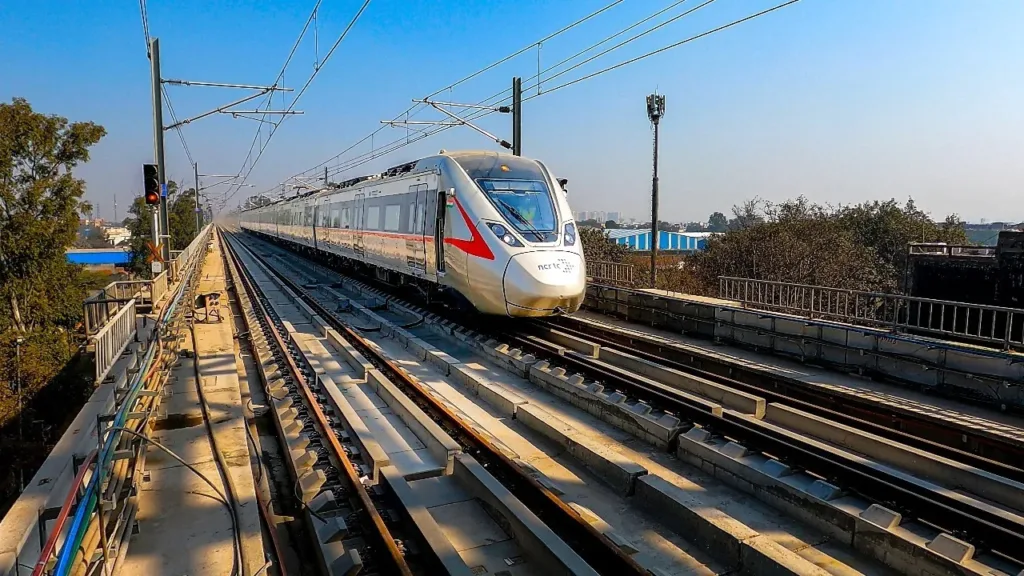
Representative image. Government of India, GODL-India, Wikimedia Commons

हिन्दी में सारांश Summary in Hindi
- तिरिक्त फेरे चला रहा है, सराय काले खां से मोदीपुरम तक पूरे कॉरिडोर पर।
- तिरिक्त फेरे।
- सोमवार, 2 नवंबर को मेट्रो में 80,54,968 बोर्डिंग दर्ज हुईं, पिछले सोमवार से करीब 8.3 लाख ज्यादा।
বাংলায় সারাংশ Summary in Bangla
- এনসিআরটিসি বুধবার, 4 নভেম্বর 2026 থেকে নমো ভারতের 20টি বাড়তি ট্রিপ চালাচ্ছে, সরাই কালে খাঁ থেকে মোদীপুরম পর্যন্ত পুরো করিডরে।
- দিল্লি মেট্রো মঙ্গলবার, 3 নভেম্বর থেকে কাজের দিনগুলিতে আরও 20টি ট্রিপ যোগ করেছে, মোট বাড়তি ট্রিপ এখন 40।
- সোমবার, 2 নভেম্বর মেট্রোতে 80,54,968টি বোর্ডিং হয়েছে, আগের সোমবারের চেয়ে প্রায় 8.3 লাখ বেশি।
Why it matters
Drivers whose older vehicles can no longer enter Delhi need another way in, and both operators say the extra trips are meant to pull people from private vehicles onto public transport. The added trains arrive as Metro boardings come close to the network's record. The Metro increase is modest, about 1 per cent of its daily trips by NewsPlainly's calculation.
Delhi Metro extra trips now total 40 every weekday, and the Delhi-Meerut Namo Bharat line joins in from Wednesday, 4 November 2026, with 20 more trips of its own. The National Capital Region Transport Corporation (NCRTC), which runs Namo Bharat, said the added services will cover the full corridor from Sarai Kale Khan in Delhi to Modipuram in Meerut.
Both operators tied the step to the pollution curbs now in force across Delhi-NCR (the National Capital Region). The Commission for Air Quality Management (CAQM) put Stage 2 of the Graded Response Action Plan (GRAP), the region’s step-by-step list of winter anti-pollution measures, in place on 2 November, when Delhi’s Air Quality Index (AQI) reached 324 at 4 pm, the Times of India (TOI) and Hindustan Times reported.
Namo Bharat extra trips from 4 November: what NCRTC said
NCRTC said in a statement, reported by The Economic Times, that the 20 extra trips run from Wednesday along the whole route. The aim, it said, is to get commuters to choose public transport over private vehicles amid rising pollution.
An NCRTC official told TOI the step was part of continuing efforts to promote public transport and cut dependence on private vehicles as air quality worsens across the region.
The line links up with other transport at its big hubs, according to NCRTC: Delhi Metro, Indian Railways, inter-state bus terminals and city buses at Sarai Kale Khan, Anand Vihar, New Ashok Nagar and Ghaziabad. Its stations have parking, and the Namo Bharat Connect app shows live parking availability, so drivers can check for a space before they set out.
The reports read did not give the timings of the Namo Bharat extra trips or say whether they also run at weekends. Riders who want to know when the added trains leave can check the app or the station displays. The whole corridor has been open since February 2026, when Prime Minister Narendra Modi inaugurated its last two sections, Sarai Kale Khan to New Ashok Nagar and Meerut South to Modipuram, according to NCRTC.
How Delhi Metro extra trips reached 40 a weekday
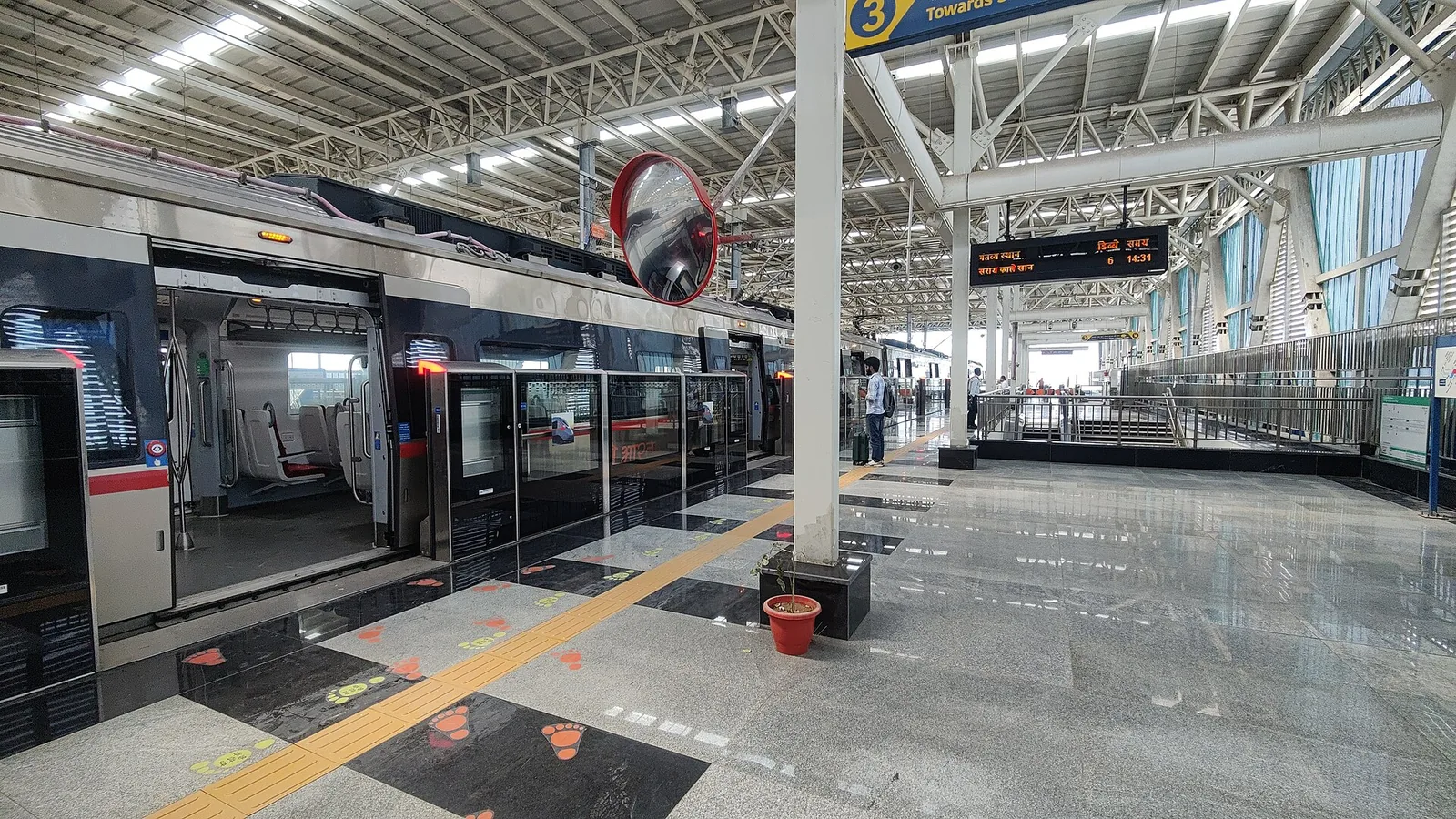
The Delhi Metro Rail Corporation (DMRC) first added 20 weekday trips on 22 October, when GRAP Stage 1 came in, the Indian Express reported. On Monday, 2 November, after Stage 2 was invoked, DMRC said it would run 20 more on weekdays from the next day, Tuesday 3 November.
“This is to encourage more and more people to use public transport instead of their private vehicles and help mitigate pollution,” the corporation said, according to TOI.
For scale, a DMRC official told TOI the network has 336 trains with 2,326 coaches and runs more than 4,200 trips a day. Forty more is roughly 1 per cent of that daily total, by NewsPlainly’s calculation (40 divided by 4,200). The official also said DMRC would make extra arrangements for passengers at stations when needed.
On Tuesday, the first day of the second batch, Amar Ujala reported a technical fault on the Blue Line at about 10.30 am that made trains run in stops and starts, with delays of 15 to 20 minutes during the morning rush.
Extra Metro and Namo Bharat trips at a glance
The table puts the two batches of Delhi Metro extra trips and the new Namo Bharat services side by side, with the dates each operator gave.
| Service | Extra trips | From | Days | Where |
|---|---|---|---|---|
| Delhi Metro, first batch (GRAP Stage 1) | 20 | 22 October 2026 | Weekdays | Across the network |
| Delhi Metro, second batch (GRAP Stage 2) | 20 | 3 November 2026 | Weekdays | Across the network |
| Namo Bharat | 20 | 4 November 2026 | Not given in the reports read | Sarai Kale Khan (Delhi) to Modipuram (Meerut) |
On Wednesday, 4 November, that adds up to 60 trips more than the normal timetable across the two systems, by NewsPlainly’s count. Neither operator’s statement, as reported, said how long the extra trips will continue.
Delhi Metro ridership jumps 8.3 lakh in a week
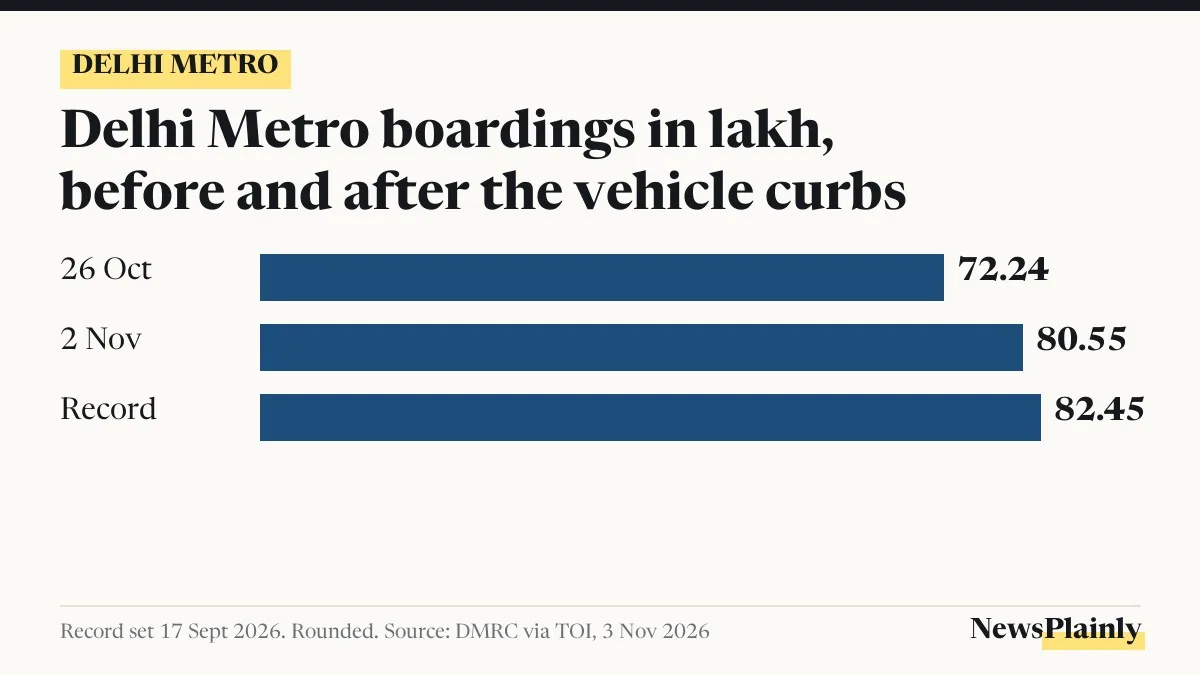
The extra trains follow a sharp rise in Delhi Metro ridership. The network recorded 80,54,968 passenger boardings on Monday, 2 November, against 72,24,094 the Monday before (26 October), a DMRC official told TOI. Amar Ujala and the Indian Express reported the same figures.
That is 8,30,874 more boardings, a rise of 11.5 per cent, by NewsPlainly’s calculation from the DMRC figures (the Indian Express gives the same percentage). It is also 1,89,935 short of the network’s single-day high of 82,44,903, set on 17 September 2026 during a strike by Delhi Transport Corporation (DTC) bus drivers, TOI reported.
A boarding is not one person. DMRC counts each line a passenger uses, so someone who changes trains once is counted twice.
The Yellow Line, from Samaypur Badli to Millennium City Centre in Gurugram, had 21.27 lakh boardings that Monday, and the Blue Line, from Dwarka to Noida and Vaishali, had 21.23 lakh, the Indian Express reported. Together the two lines carried more than half the day’s total.
The DMRC official told TOI the rise may be linked to the curbs on some older vehicles. Since 1 November, petrol and diesel vehicles registered outside Delhi that do not meet the Bharat Stage VI (BS-VI) emission standard cannot enter the city (NewsPlainly explained who is hit). The Indian Express put the number of BS-I to BS-IV vehicles registered in Uttar Pradesh, Haryana and Rajasthan at about 3.02 crore, 48 lakh of them in NCR districts next to Delhi.
What commuters from Ghaziabad and Meerut can use under GRAP Stage 2
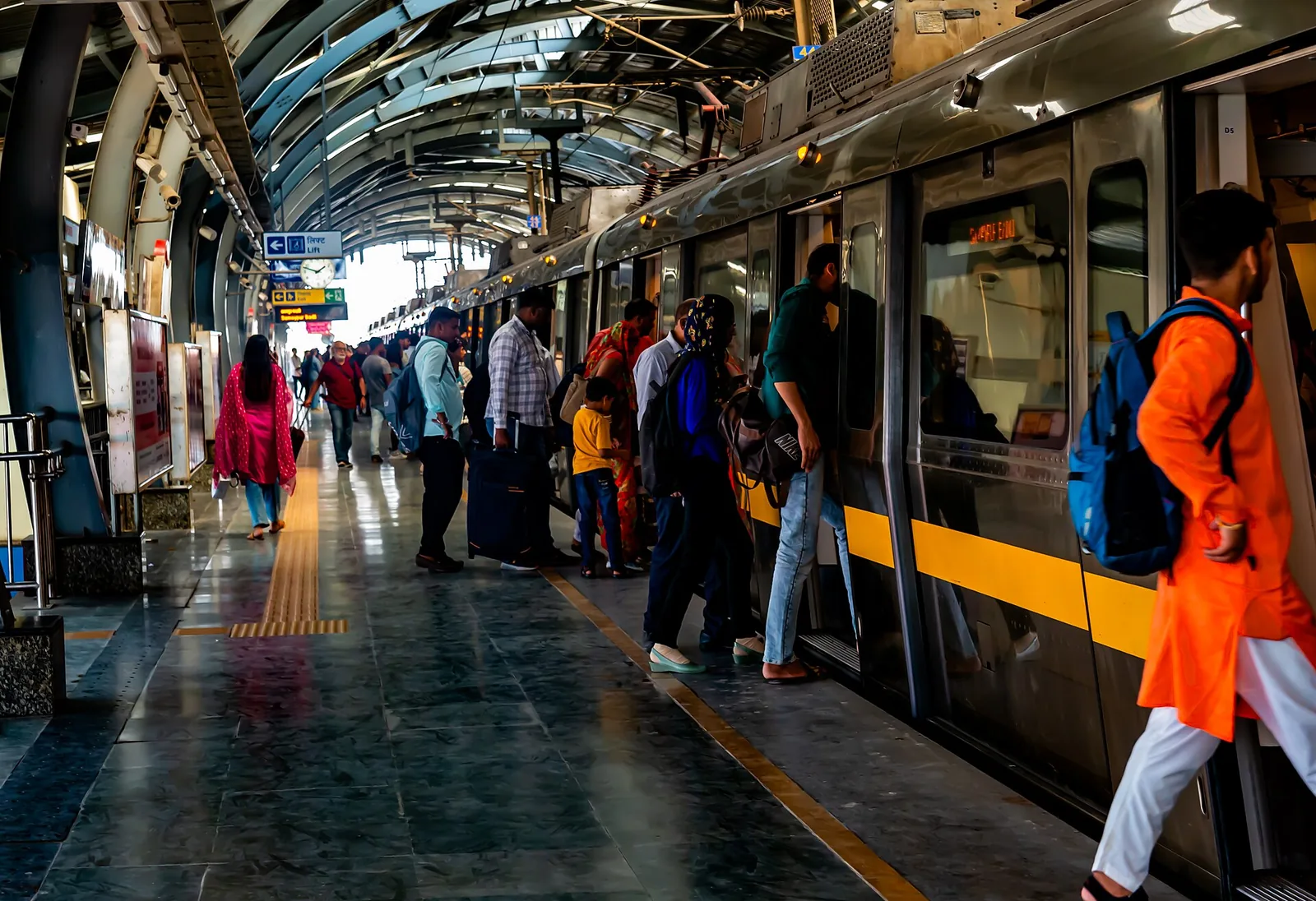
For drivers from Ghaziabad, Meerut and nearby towns whose older vehicles are now kept out, NCRTC is offering parking at Namo Bharat stations and a train into Delhi, with changes to the Metro at Sarai Kale Khan, Anand Vihar or New Ashok Nagar.
Delhi Metro extra trips run on weekdays only, according to DMRC’s statement, while the Namo Bharat extra trips cover the full line from Delhi to Meerut. The GRAP Stage 2 order also calls for more frequent Metro, Regional Rapid Transit System (RRTS, the rail system Namo Bharat runs on) and CNG or electric bus services, as NewsPlainly reported from the CAQM order.
The Air Quality Early Warning System forecast quoted by TOI on 2 November expected Delhi’s air to stay in the very poor category from 3 to 5 November, then ease slightly to poor over the following six days.
Frequently asked questions
When do the extra Namo Bharat trips start?
From Wednesday, 4 November 2026, on the whole corridor from Sarai Kale Khan in Delhi to Modipuram in Meerut, NCRTC said. The reports read did not give the timings of the added trips.
How many extra trips is Delhi Metro running?
40 on weekdays: 20 added on 22 October under GRAP Stage 1 and 20 more from 3 November under Stage 2, according to DMRC as reported by TOI and the Indian Express.
Do the extra Delhi Metro trips run at weekends?
DMRC's statement, as quoted by the Times of India, says the extra trips run on weekdays.
Is there parking at Namo Bharat stations?
Yes. NCRTC said its stations have parking, and the Namo Bharat Connect app shows live parking availability.