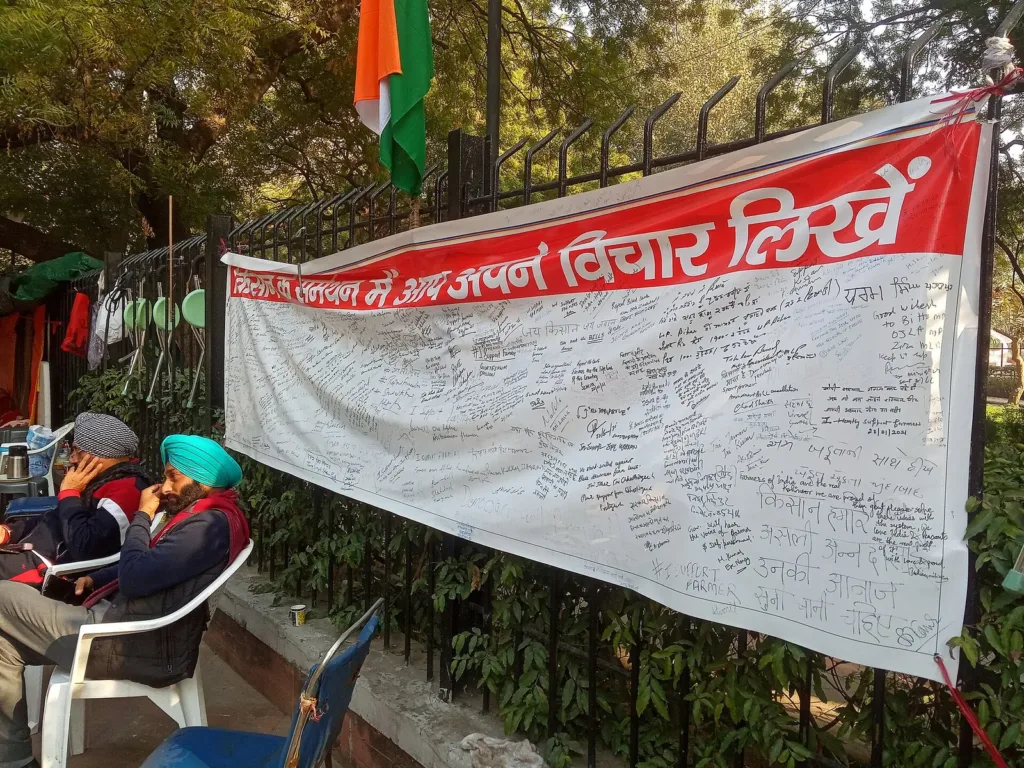
Representative image. Sumita Roy Dutta, CC BY-SA 4.0, Wikimedia Commons

हिन्दी में सारांश Summary in Hindi
- नुराग कुमार ने सुप्रीम कोर्ट में हलफनामे में कहा कि जंतर मंतर एक सार्वजनिक सड़क है और उसे कभी विरोध स्थल नहीं बनाया जाना चाहिए था।
- पुलिस के मुताबिक वहां लगभग 1,500 लोग ही आ सकते हैं, और पास में 78 दूतावास और मिशन तथा 99 केंद्रीय सरकारी दफ्तर हैं।
- भी फैसला नहीं दिया है।
বাংলায় সারাংশ Summary in Bangla
- নুরাগ কুমার সুপ্রিম কোর্টে হলফনামায় বলেছেন, যন্তর মন্তর একটি সরকারি রাস্তা, একে কখনও প্রতিবাদস্থল ঘোষণা করা উচিত হয়নি।
- ফিস।
- ক্টোবর ২০২৬-এর আদেশে এখন প্রতিবাদ হবে রামলীলা ময়দান, সিবিডি গ্রাউন্ড বা বুরারি গ্রাউন্ডে; আদালত এখনও রায় দেয়নি।
Why it matters
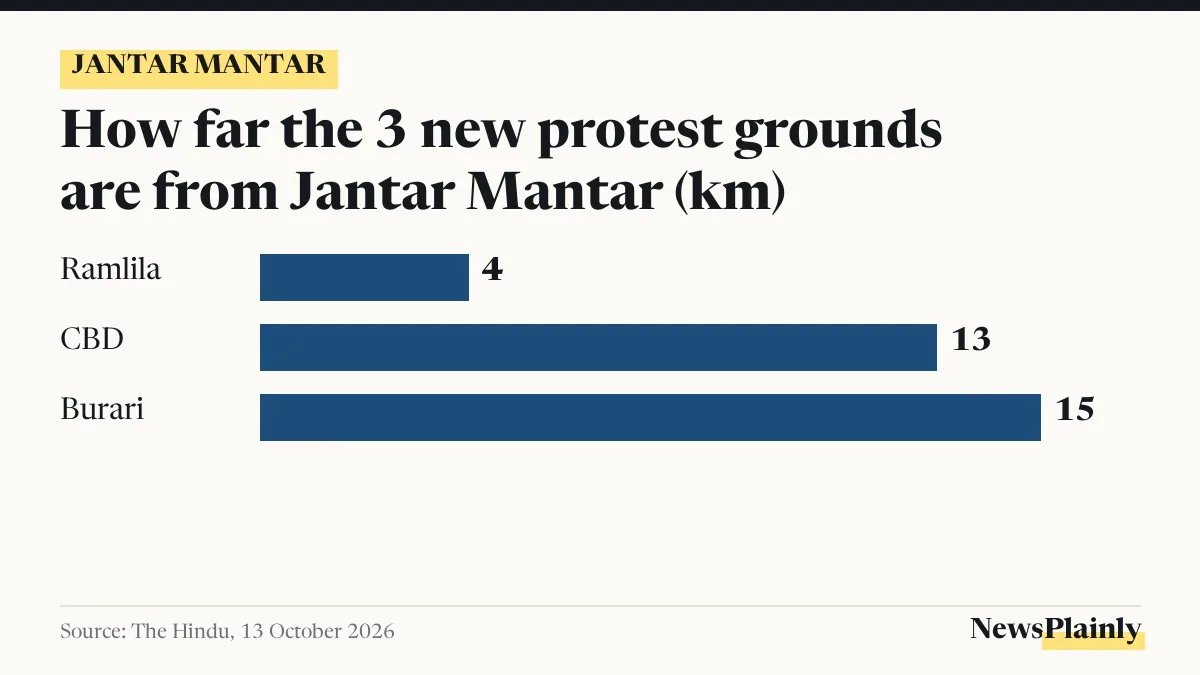
Jantar Mantar let groups protest close to Parliament without a booking fee. The nearest of the three new grounds is 4 km away and cost ₹50,000 a day to book, PTI reported in October; the farthest is 15 km out. The court's answer will set where, and at what cost, people can protest in the capital.
Jantar Mantar protest rules are back before the Supreme Court. In a counter affidavit reported on 3 November 2026, Delhi Police Commissioner Anurag Kumar told the court that Jantar Mantar is a public road, not a protest ground, and should never have been declared a designated protest site. The affidavit, reported by LiveLaw and by Bar and Bench, defends the police’s October decision to drop the spot and send protests to three grounds instead: Ramlila Maidan in Central Delhi, CBD Ground in Shahdara, East Delhi, and Burari Ground in North West Delhi.
The court has not ruled. The affidavit is the police’s reply to a petition by advocate Swaty Singh, who says that moving protests away from the centre of power makes the right to protest hollow.
What Delhi Police told the Supreme Court about Jantar Mantar
The police case rests on space and safety. According to the affidavit as reported by both outlets, the protest area can hold about 1,500 people at most, and the crowd at the Cockroach Janta Party (CJP) protest that began on 20 July 2026 went well past that. LiveLaw reported the affidavit as saying Jantar Mantar sees more than 1,300 protests and demonstrations a year.
The Delhi Police affidavit then lists what sits around the road. Within roughly 3 to 4 km there are 78 foreign embassies, missions and offices of international bodies, and 99 central government offices, the Reserve Bank of India among them. The police put the area’s daily footfall at about 1.46 lakh people. Bar and Bench reported that it also counts about 64,500 people living nearby.
For 1 to 27 August, the affidavit gave figures for the area, according to Bar and Bench: about 250 distress calls, 109 FIRs (first information reports, the first police record of a crime) for theft, 10 for vehicle theft, 254 claims of lost property, 23 FIRs for public order offences, rioting and defacement, and 14 cases under the Delhi Police Act.
Two arguments go beyond crowd numbers. The Commissioner said the nearby new Parliament building makes controlling the area more important, and that in the age of social media, being physically close to the seat of government no longer matters for a protest. The affidavit calls the de-notification an administrative and executive decision and says nobody has a fundamental right to protest at one particular place.
Why the police say the court did not force the Jantar Mantar protest move
The timing has been part of the dispute. On 9 October 2026, the Supreme Court had asked the Centre to consider whether another place should be named for peaceful protests, after Solicitor General Tushar Mehta, the Centre’s senior law officer, said the authorities would look at it. Two days later came a standing order (a standing police instruction) issued by Kumar and dated 11 October. It was announced on 12 October and named the three new grounds, with detailed rules for using them to follow separately.
In the new affidavit, the Commissioner called it incorrect to say Jantar Mantar was dropped because of the 9 October order. LiveLaw reported that he said the change had been under consideration by the police and the Centre for a long time, and that the ground situation had changed a lot in the last six years. A committee set up by the Union Ministry of Home Affairs (MHA) through an office memorandum dated 26 August 2026 was asked to judge whether Jantar Mantar should stay a protest site and to suggest other places. It unanimously said Jantar Mantar was no longer suitable, according to the affidavit.
What the petition against the Jantar Mantar protest ban argues
Swaty Singh’s petition says the move breaks two fundamental rights in Article 19 of the Constitution: free speech and expression, and the right to gather peacefully without arms. The state may regulate these rights for public order, the petition argues, but regulation cannot turn into a ban or leave the rights existing only on paper.
Its central point is location: how near a protest is to the institutions concerned, how easy it is for the public to reach and how visible it is all decide whether it works, the plea says. When it first came up on 15 October, the petition also said the order took Jantar Mantar away at once while leaving the rules for the new grounds to come later, LiveLaw reported. A bench of Chief Justice Surya Kant and Justice Joymalya Bagchi issued notice that day and said it would examine whether the authorities had really applied their minds to how useful the site was.
Separately on 3 November, a bench of the Chief Justice and Justices Bagchi and V. Mohana heard petitions on police action during the July protests and a traders’ plea over business losses. Hindustan Times reported the bench saying that no person or group can hold a protest site for all time, because others have the same right to use it.
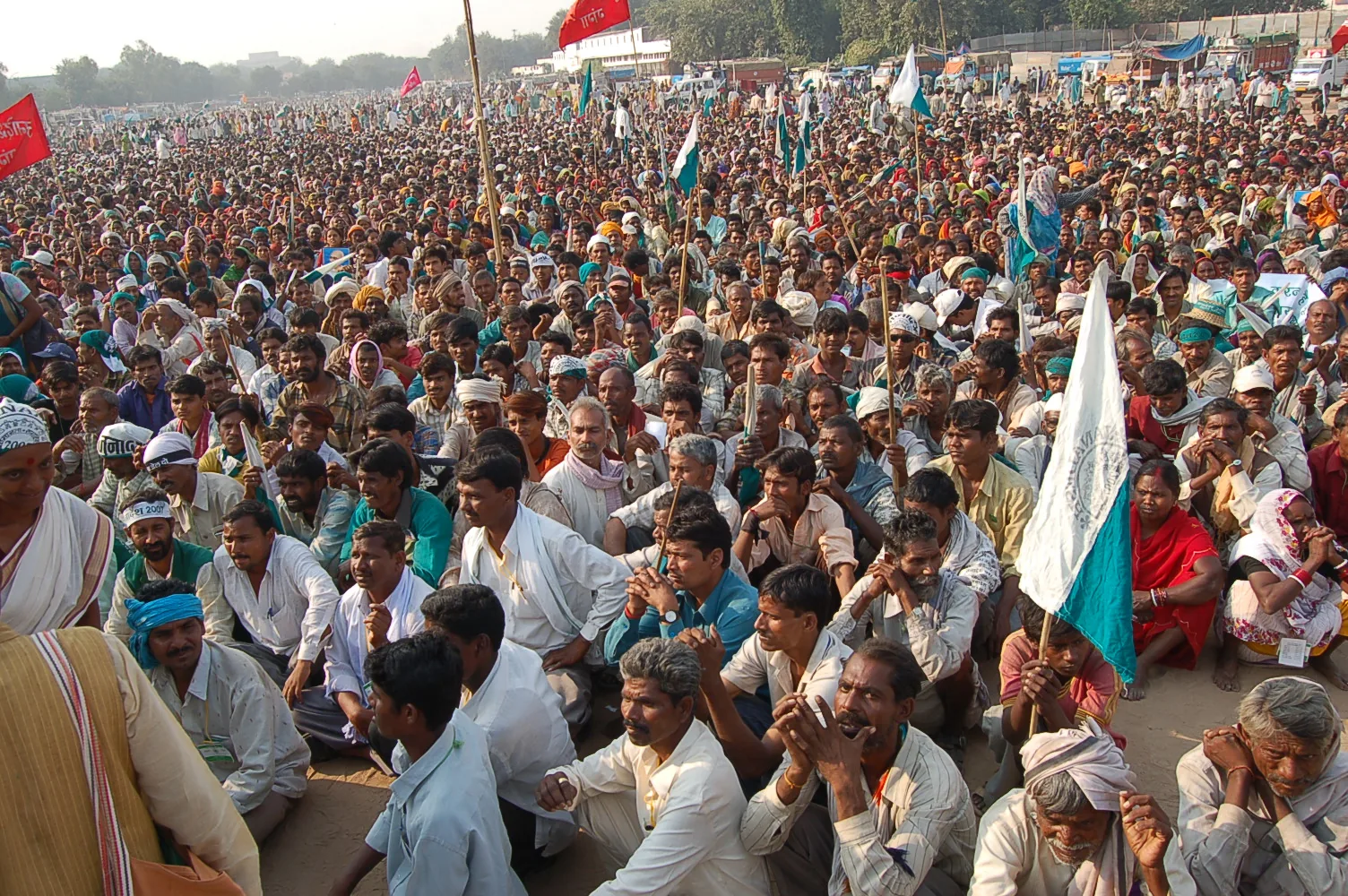
Jantar Mantar and the three new protest grounds compared
NewsPlainly has put what is on record about each protest site in Delhi side by side. Distances and sizes for the three grounds come from The Hindu’s report of 13 October; the Jantar Mantar figure is the police’s own.
| Place | Area of Delhi | Distance from Jantar Mantar | Size and who runs it | Cost to use |
|---|---|---|---|---|
| Jantar Mantar (dropped) | New Delhi, near Parliament | 0 km | A road; about 1,500 people, police say | No booking charge |
| Ramlila Maidan | Central Delhi | 4 km | Over 12 acres; Municipal Corporation of Delhi (MCD) | ₹50,000 a day plus ₹55,000 refundable deposit (reported in October) |
| CBD Ground | East Delhi (Shahdara) | 13 km | 12 acres; Delhi Development Authority (DDA) | Not given in reports read |
| Burari Ground | North West Delhi | 15 km | 50 acres; DDA | Not given in reports read |
Cost is the clearest gap. The Press Trust of India (PTI) news agency reported in October that one day at Ramlila Maidan, with deposit and taxes, needed an outlay of about ₹1.21 lakh, and civic officials said only a small free part of the ground is open, for up to 150 people. A Jantar Mantar protest needed no booking charge.
How Jantar Mantar became Delhi’s protest street
It was never meant to be one. The Indian Express has traced the history:
- 1988: about five lakh farmers led by Mahendra Singh Tikait camp on the Boat Club lawns near North Block and South Block for a week from 25 October. Gatherings there are later banned.
- 1993: Jantar Mantar, a lane by the 18th century observatory, starts to host protests without any formal order.
- 2003: a police standing order sends crowds under 5,000 to Jantar Mantar, 5,000 to 50,000 to Ramlila Maidan and over 50,000 to Burari, The Hindu has reported.
- October 2017: the National Green Tribunal (NGT) orders protests moved to Ramlila Maidan after residents complain of noise and dirt.
- July 2018: the Supreme Court, in Mazdoor Kisan Shakti Sangathan v Union of India, rules out a total ban on protests at Jantar Mantar and the Boat Club area but allows them to be regulated. A later police order allows up to 1,000 people, The Hindu reported.
- 11 and 12 October 2026: the standing order de-notifies Jantar Mantar and names three grounds.
- 15 October 2026: the Supreme Court issues notice on the challenge.
- 3 November 2026: the police affidavit defending the move is reported.
NewsPlainly earlier reported the release of CJP leaders Saurav Das and Ashutosh Ranka, who were detained near Jantar Mantar in October.
What happens next in the Jantar Mantar case
The petitioner can now answer the Delhi Police affidavit, and the bench will decide whether the de-notification stands. The reports read did not give a next hearing date. Until the court rules, the standing order stays in force: a Jantar Mantar protest has no designated status, and groups that want to protest in Delhi have Ramlila Maidan, CBD Ground or Burari Ground. Whether the detailed rules for the new grounds have been issued since October was not stated in the reports read.
Frequently asked questions
Is Jantar Mantar still a protest site?
No. A Delhi Police standing order dated 11 October 2026 de-notified it. That order is under challenge in the Supreme Court, which has not ruled.
Where can people protest in Delhi now?
The order names Ramlila Maidan in Central Delhi, CBD Ground in East Delhi (Shahdara) and Burari Ground in North West Delhi.
Why did Delhi Police drop Jantar Mantar?
The affidavit says the road holds about 1,500 people, crowds went past that in July 2026, and it is close to Parliament, 78 embassies and missions and 99 central offices. It says an MHA committee recommended the change.
What did the Supreme Court say about Jantar Mantar in 2018?
In Mazdoor Kisan Shakti Sangathan v Union of India, decided in July 2018, the court ruled against a total ban on protests at Jantar Mantar and the Boat Club area but allowed regulation.