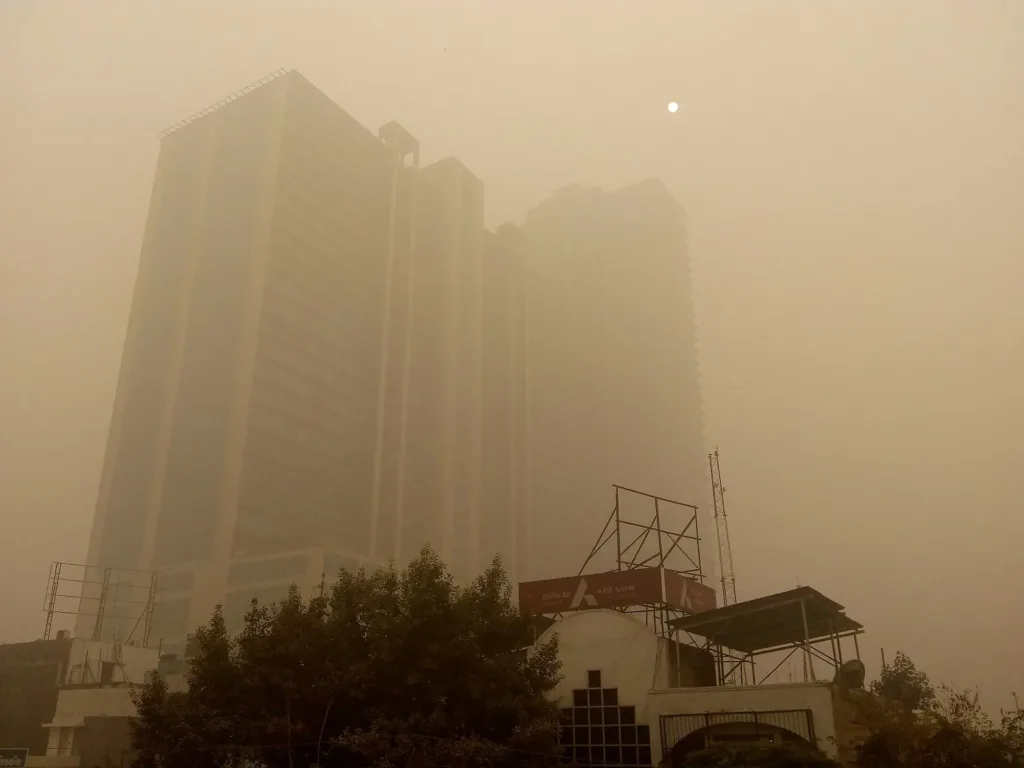
Representative image. Sumitmpsd, CC BY-SA 4.0, Wikimedia Commons

हिन्दी में सारांश Summary in Hindi
- दिल्ली में वाहनों पर सख्त पाबंदियां 1 नवंबर से लागू हुईं। पहले दिन ₹68.4 लाख का जुर्माना लगा और सीमाओं से 1,539 वाहन लौटाए गए।
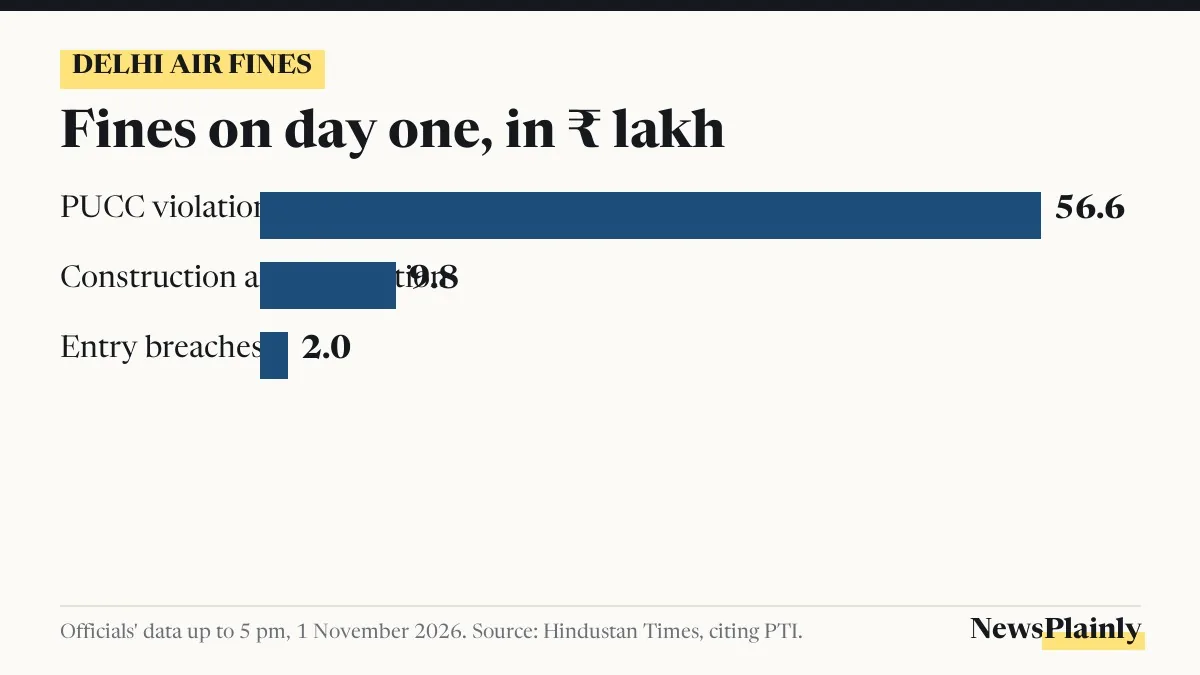
- इस जुर्माने में से ₹56.6 लाख PUCC नियमों के उल्लंघन के लिए था, ₹9.8 लाख निर्माण और ध्वस्तीकरण के और ₹2 लाख प्रवेश नियमों के उल्लंघन के लिए।
- दिल्ली के बाहर पंजीकृत, BS-VI से कम मानक वाले वाहन 1 नवंबर 2026 से 31 जनवरी 2027 तक दिल्ली में प्रवेश नहीं कर सकते।
বাংলায় সারাংশ Summary in Bangla
- ১ নভেম্বর থেকে দিল্লিতে গাড়ির উপর কড়া বিধিনিষেধ চালু হয়েছে। প্রথম দিনে ₹68.4 লাখ জরিমানা হয়েছে এবং সীমান্ত থেকে 1,539টি গাড়ি ফেরত পাঠানো হয়েছে।
- এই জরিমানার মধ্যে ₹56.6 লাখ PUCC নিয়ম ভাঙার জন্য, ₹9.8 লাখ নির্মাণ ও ভাঙচুরের জন্য এবং ₹2 লাখ প্রবেশের নিয়ম ভাঙার জন্য।
- দিল্লির বাইরে নথিভুক্ত, BS-VI-এর চেয়ে কম মানের গাড়ি ১ নভেম্বর ২০২৬ থেকে ৩১ জানুয়ারি ২০২৭ পর্যন্ত দিল্লিতে ঢুকতে পারবে না।
Why it matters
If your car or bike is registered outside Delhi and does not meet BS-VI, it cannot enter the city until 31 January under the rules reported. A vehicle without a valid PUCC certificate may not get fuel at Delhi stations. Office staff in Delhi will be working from home on half their office days through the same period, the reports say.
Delhi vehicle curbs took effect on Sunday, 1 November 2026, and the first day’s figures are out. Officials reported ₹68.4 lakh in penalties and environmental compensation, and 1,539 vehicles were sent back at the city’s borders. Hindustan Times reported the numbers from official data released up to 5 pm that day.
How Delhi vehicle curbs worked on the first day
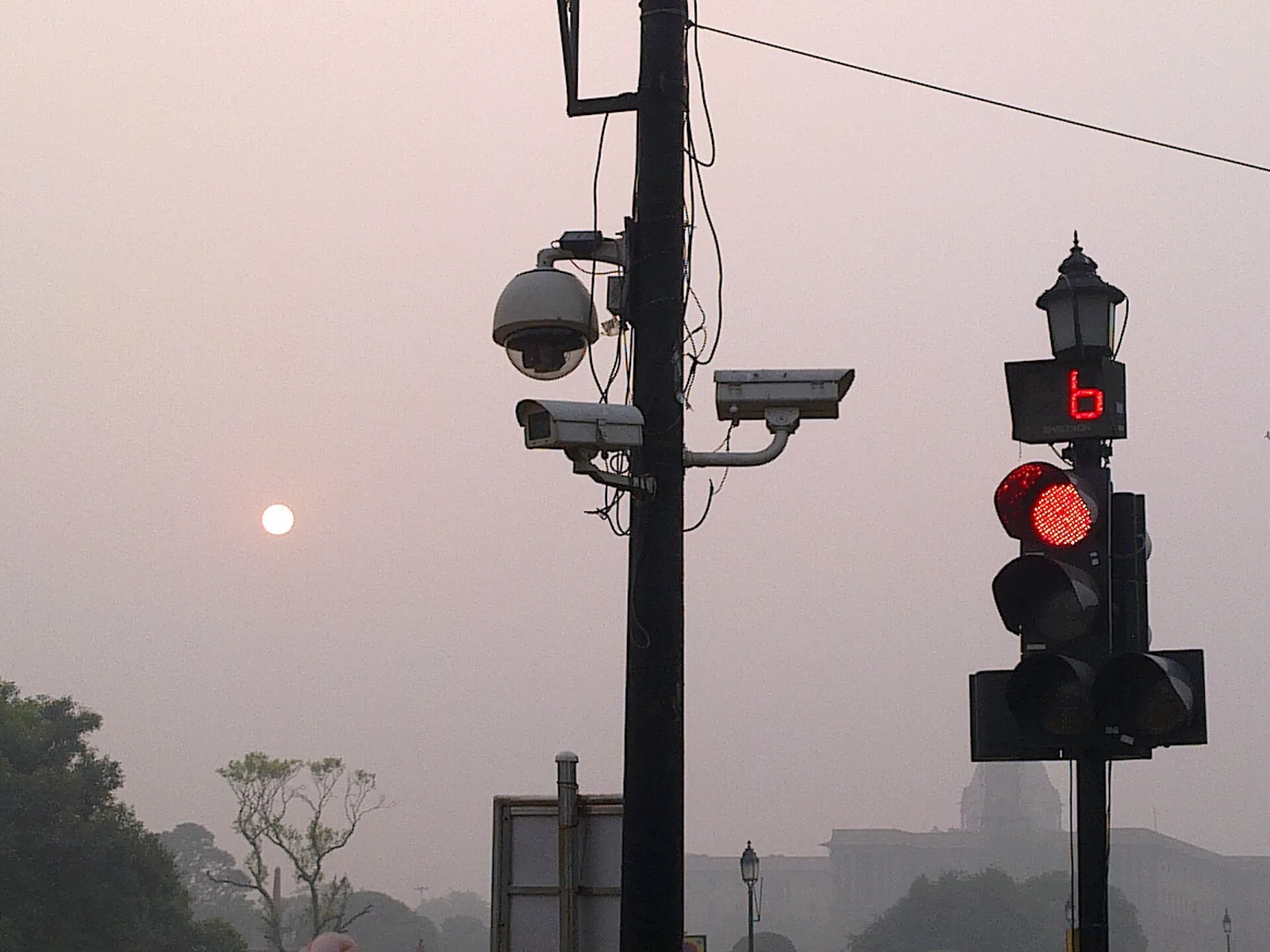
Delhi traffic police and the transport department inspected 14,930 vehicles that the entry rule targets, HT reported, and about 10.31 per cent of them were denied entry and told to turn back at the border checkpoints. India Today put the number checked at nearly 15,000 and reported that enforcement teams used automatic number plate recognition cameras at entry points and other key locations.
The fines came to ₹68.4 lakh. HT, citing the Press Trust of India (PTI), reported that most of it, ₹56.6 lakh, was for breaches of Pollution Under Control Certificate (PUCC) rules, the certificate that shows a vehicle has passed an emissions test. Construction and demolition breaches brought ₹9.8 lakh in environmental compensation, and entry breaches ₹2 lakh. Officials issued 566 challans for PUCC violations. India Today reported that the curbs are aimed at reducing vehicular emissions, dust pollution and traffic congestion during the winter months.
HT also reported a marginal staff shortage at three border points, which police linked to the opposition alliance INDIA bloc’s rally at Ramlila Maidan. The police personnel it spoke to said the situation remained manageable.
Which vehicles, fuel stations and offices the rules cover
The Delhi vehicle curbs do not all work the same way. Vehicles below BS-VI, the Bharat Stage VI emissions standard, are the main target. Some measures apply to vehicles, one to fuel stations and some to offices, and they end on different dates. The table lists the measures named in the three reports read for this article.
| Measure | Who it applies to | Dates in the reports | Source |
|---|---|---|---|
| Entry ban on non-BS-VI vehicles | Vehicles registered outside Delhi that do not meet BS-VI; CNG and electric exempt | 1 November 2026 to 31 January 2027 | Mint, HT |
| No PUCC, no fuel | Vehicles without a valid PUCC; fuel stations told not to dispense fuel to them | Start date not given in the reports read | HT |
| 50 per cent office attendance | Government and private offices in Delhi; essential services exempt | 1 November 2026 to 31 January 2027 | Mint, HT |
| Doubled parking fees | Authorised parking lots across Delhi; Delhi Metro lots exempt | 1 November 2026 to 28 February 2027 | Mint |
| Construction ban | Construction work in the city | From 1 November (The Hindu) | The Hindu |
Mint, citing PTI and the transport department’s estimates, said more than 10 lakh vehicles in the National Capital Region (NCR) areas of Gurugram, Faridabad, Noida, Greater Noida and Ghaziabad could be affected by the entry ban. CNG and electric vehicles are exempt, and so are ambulances, fire tenders and police vehicles, Mint said.
The entry rule targets vehicles registered outside Delhi that do not meet the BS-VI standard.
NewsPlainly’s calculation: 1,539 vehicles turned back out of 14,930 checked is 10.3 per cent, roughly one in ten. Separately, ₹56.6 lakh divided by 566 PUCC challans is ₹10,000 a challan. The reports do not say whether every challan carried that amount, so the figure is a division of two reported totals, not a fine schedule.
What the air looked like on the first day
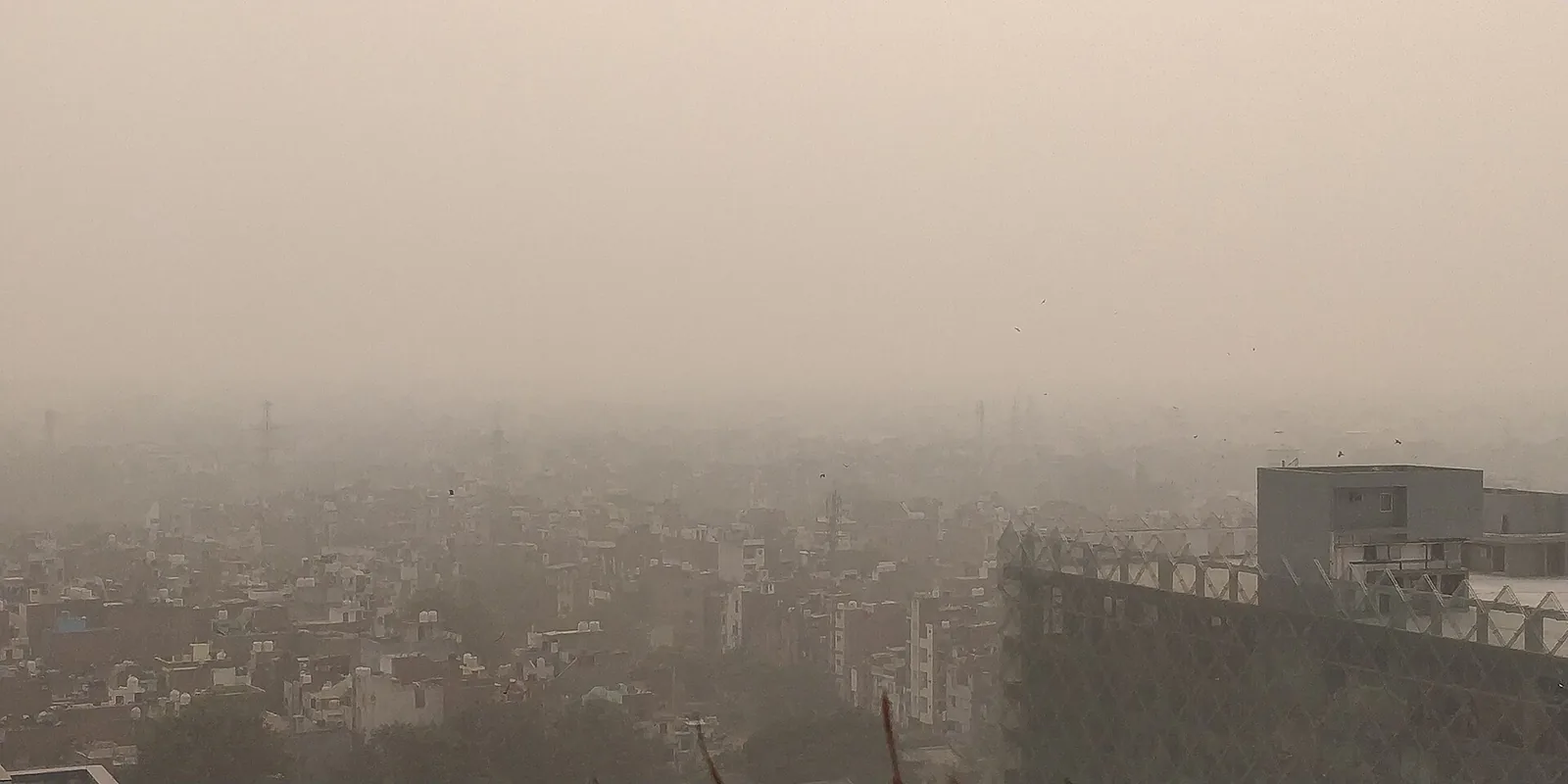
Delhi air quality slipped into the ‘very poor’ band on Monday morning. The Central Pollution Control Board (CPCB) recorded an average Air Quality Index (AQI) of 310 for Delhi at 8 am on Monday, 2 November. The AQI runs from 0 to 500, and 301 to 400 is the ‘very poor’ band, The Hindu reported. Noida, Kaithal and Hapur also reached ‘very poor’ that morning.
Station readings varied widely. India Today listed Jahangirpuri at 420, in the ‘severe’ band, and Tikri Kalan at 160, the lowest of the 58 stations with data that morning. The same report put Sunday’s reading at 222 at 9 am, while The Hindu gave 261 at 4 pm on Sunday from the CPCB bulletin.
Which dates matter after the first day
The Central government’s Air Quality Early Warning System expects Delhi’s air to stay in the ‘poor’ to ‘very poor’ range for about five to six days, The Hindu reported. The same report said enforcement was likely to be lenient until Deepavali.
The Delhi vehicle curbs do not all end on the same day. Mint reported that the BS-VI entry rule and the 50 per cent attendance rule for offices run to 31 January 2027, while doubled parking fees run to 28 February. India Today said the curbs as a whole run until 28 February. The reports read did not give a start date for the fuel-station directive on PUCC.
Our earlier story on the NCR construction ban, which also covers the 50 per cent work-from-home rule alongside these Delhi vehicle curbs, is in our NCR construction ban story.
Frequently asked questions
Which vehicles are stopped at Delhi's borders?
Vehicles registered outside Delhi that do not meet BS-VI emission standards, from 1 November 2026 to 31 January 2027, Mint reported. CNG and electric vehicles and exempt vehicles such as ambulances, fire tenders and police vehicles are allowed.
What is a PUCC certificate?
A Pollution Under Control Certificate shows that a vehicle has passed an emissions test. HT reported that 566 challans were issued on the first day for PUCC violations.
Do the curbs affect Noida and Gurugram?
Mint, citing PTI and transport department estimates, said more than 10 lakh vehicles in the NCR areas of Gurugram, Faridabad, Noida, Greater Noida and Ghaziabad could be affected by the entry ban.