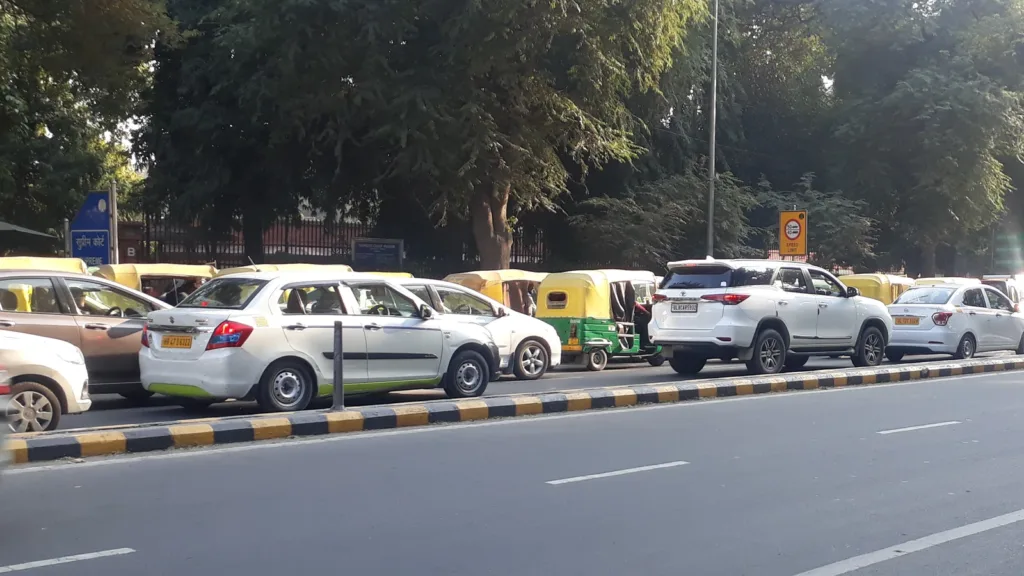
Traffic in New Delhi, 9 January 2019. Representative file photograph; the vehicles shown are not identified by emission class. Photo: Pinakpani / Wikimedia Commons, CC BY-SA 4.0. Cropped and resized.

हिन्दी में सारांश Summary in Hindi
- सुप्रीम कोर्ट की बेंच ने 23 नवंबर को कहा कि वह दिल्ली में, और हो सके तो पूरे एनसीआर में, सिर्फ बीएस-6 वाहनों को चलने देना चाहती है।
- भी कोई आदेश नहीं आया है।
- बीएस-4 वाहनों पर फिलहाल मौजूदा व्यवस्था जारी रहेगी।
বাংলায় সারাংশ Summary in Bangla
- ২৩ নভেম্বর সুপ্রিম কোর্টের বেঞ্চ বলেছে, দিল্লিতে এবং সম্ভব হলে পুরো এনসিআরে শুধু বিএস-৬ গাড়ি চলতে দিতে চায় তারা।
- এটি আদালতে বলা কথা, এখনও কোনও আদেশ হয়নি।
- বিএস-৪ গাড়ির ক্ষেত্রে আপাতত বর্তমান ব্যবস্থাই চলবে।
Why it matters
Owners of BS-IV vehicles in Delhi and the NCR are the ones who would be affected if the remark becomes an order, and the court has not said when. For now the 17 December 2025 position continues, though owners say PUC certificates and fuel are a problem. A five-year plan for goods vehicles would change how vegetables and groceries reach Delhi, but it was put as a question.
BS-VI vehicles in Delhi could become the only ones allowed on the road, if the Supreme Court follows what two of its judges said on Monday, 23 November 2026. “We are clear we will allow only BS6 vehicles in Delhi, if not NCR,” Justice Joymalya Bagchi said during the Delhi pollution case the court started on its own, WION reported. It was a remark from the bench, not an order. Chief Justice Surya Kant asked that the current arrangement for older BS-IV vehicles stay for now.
What the bench said about BS-VI vehicles in Delhi
The hearing was before a three-judge bench of Chief Justice Surya Kant and Justices Bagchi and V Mohana, in the Delhi pollution case, which the court began itself. BS-VI (Bharat Stage VI) is the emission standard that became mandatory for making, selling and registering new vehicles in India on 1 April 2020, The Indian Express reported. Justice Bagchi said the compliance should apply not only to Delhi but to the whole National Capital Region (NCR), according to the same report.
A lawyer told the bench that owners of BS-IV vehicles are not getting Pollution Under Control (PUC) certificates and, because of that, cannot buy fuel. He pointed to the court’s order of 17 December 2025, under which they were allowed and no coercive action was to be taken. On BS-IV vehicles the Chief Justice replied, “Let the status quo remain for next month or so too,” as quoted by the Indian Express. The Supreme Court Observer said he told the court that an immediate ban would have drastic consequences.
What the rule is today and what the judges want
| Question | Where it stands | Source |
|---|---|---|
| Vehicles registered outside Delhi | Barred from plying in Delhi from 1 November to 31 January each year, under a Delhi government notification | WION |
| Supreme Court position on BS-IV | 17 December 2025 order: allowed, no coercive action; status quo to continue “for next month or so” | Indian Express |
| PUC certificates for BS-IV | Owners say they are no longer being issued | Indian Express, Supreme Court Observer |
| Only BS-VI in Delhi or NCR | Stated as the bench’s wish on 23 November; no order yet | WION, Indian Express |
The table shows why the remark matters. The Delhi government rule covers older vehicles registered outside the city and only in winter months. What Justice Bagchi described is wider: BS-VI only, and across the NCR if not just Delhi. None of the three reports says how many BS-IV vehicles are on the road in Delhi or the NCR, so the number of owners who could be affected is not known from them.
A “lucky winter” and a five-year idea for goods vehicles
The bench said Delhi had a “lucky winter” because air quality had not reached the “Severe” category this year, Indian Express reported. The Chief Justice and the amicus curiae, senior advocate Aparajitha Singh, said weather and good wind movement were the reason. Additional Solicitor General Aishwarya Bhati, appearing for the Commission for Air Quality Management (CAQM), said it was mainly nature but that official efforts had also helped. Justice Mohana called it a “cumulative effect”.
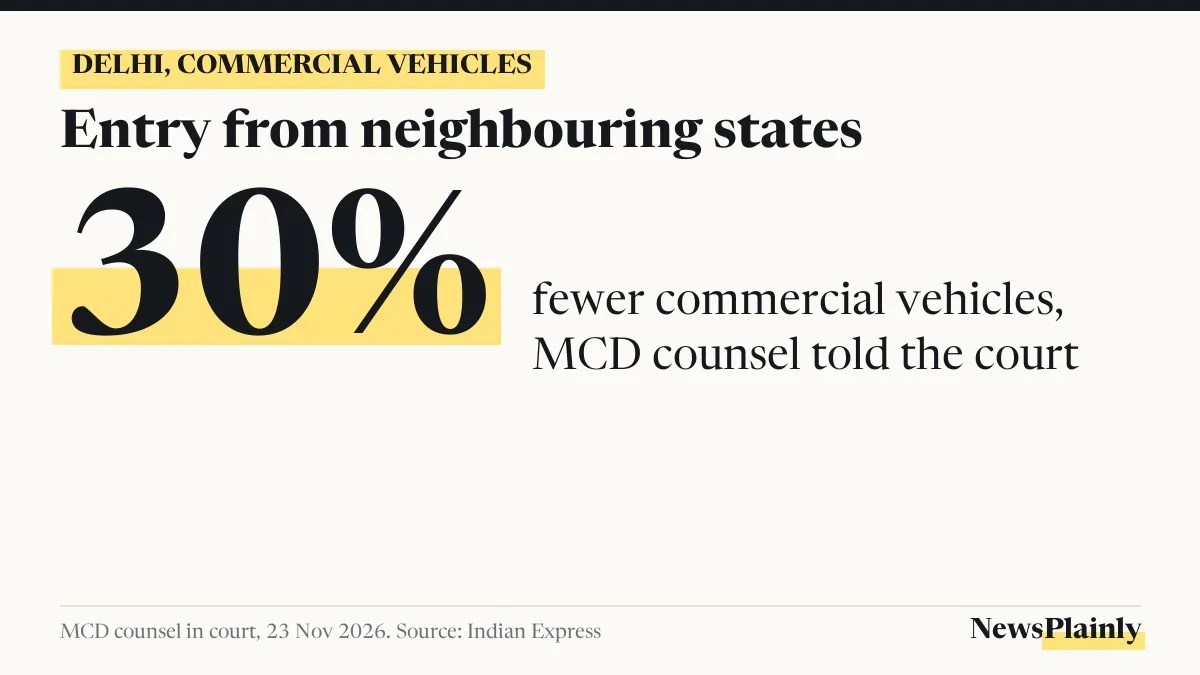
Sanjiv Sen, the senior advocate for the Municipal Corporation of Delhi (MCD), told the court that the higher Environment Compensation Charge had cut the number of commercial vehicles coming into Delhi from neighbouring states by 30%. This figure is from his submission, as reported by the Indian Express.
The Chief Justice then asked how commercial vehicles could be kept out of Delhi altogether, while accepting that the city needs vegetables, fruits and other daily items. He asked whether warehouses at the border and battery-operated or other non-polluting vehicles could carry goods in. “This kind of arrangement may not be possible this year, may not be possible next year. But why not to have this during five years?” he said, according to the Supreme Court Observer. It was a question put to authorities, not a direction.
Neighbouring states told to file reports
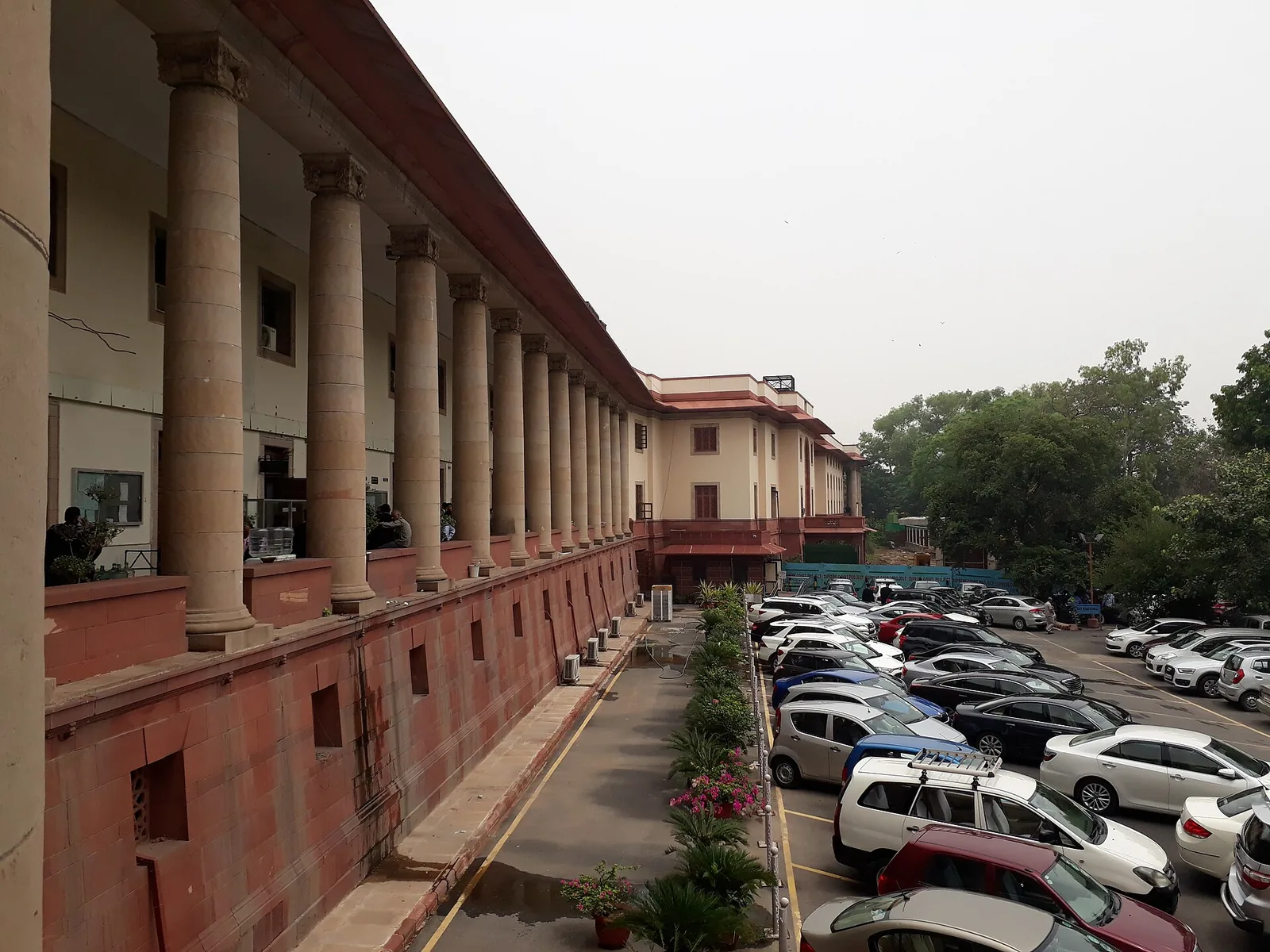
The Chief Justice asked why neighbouring states were taking only a passive part in efforts to curb Delhi’s pollution. The court directed the Advocates General of Punjab, Uttar Pradesh, Haryana and Rajasthan to appear on the next date, and asked every state to file an affidavit on the steps it has taken to reduce pollution in the NCR, the Indian Express reported. The states and CAQM were also asked to respond to a report by an expert committee that CAQM appointed. The Supreme Court Observer reported that the bench indicated any further short-term and long-term directions would cover the whole NCR, not Delhi alone.
The next hearing is likely on 25 November, according to the Indian Express. The Delhi pollution case has run for weeks; earlier court action is in our report on the Supreme Court’s remarks on vehicles.
Frequently asked questions
Has the Supreme Court banned non-BS-VI vehicles in Delhi?
No order was reported. Justice Bagchi said in court on 23 November that the bench wants only BS-VI vehicles in Delhi, if not NCR, and the Chief Justice said the status quo for BS-IV vehicles can continue for now.
What is BS-VI?
BS-VI (Bharat Stage VI) is the emission standard that became mandatory for making, selling and registering new vehicles in India on 1 April 2020, according to the Indian Express.
Can BS-IV vehicles run in Delhi now?
A 17 December 2025 order, cited in court, allows BS-IV vehicles with no coercive action. Separately, WION reported a Delhi government rule that bars BS-IV and older vehicles registered outside Delhi from 1 November to 31 January.