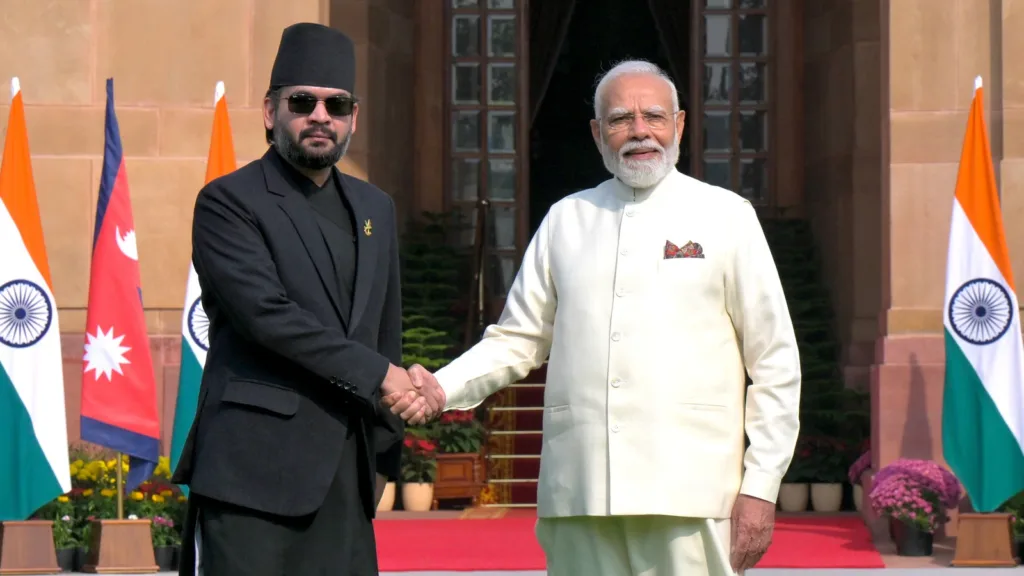
Nepal Prime Minister Balendra Shah (left) with Prime Minister Narendra Modi at Hyderabad House, New Delhi, on 23 November 2026. Photo: Prime Minister’s Office / PIB, via Wikimedia Commons, GODL-India. Cropped and resized.

Why it matters
Most of the package is a credit line, which Nepal will have to repay, and none of the reports read gives its terms. Projects that touch Indian readers directly are the Ayodhya-Janakpur train, the pipelines and the new border crossings, which are about travel, fuel and trade rather than the headline sum.
The India Nepal package announced on Monday, 23 November 2026, is worth ₹15,000 crore, of which ₹3,500 crore is grant money and ₹11,500 crore a line of credit for energy projects, The Tribune reported. Prime Minister Narendra Modi announced it after talks with Nepal’s Prime Minister Balendra Shah in Delhi, during Shah’s first bilateral visit to India since taking office. The two leaders also adopted a joint vision document and flagged off a train from Ayodhya to Janakpur.
What the ₹15,000 crore India Nepal package contains
| Part | Nepalese rupees | Indian rupees | For |
|---|---|---|---|
| Grants | Nepalese rupees (NPR) 5,600 crore | about ₹3,500 crore | Reconstruction and new infrastructure projects |
| Line of credit | NPR 18,400 crore | about ₹11,500 crore | Energy-sector projects |
| Total | NPR 24,000 crore | ₹15,000 crore |
Mint put the Nepal package grant at NPR 5,600 crore (about ₹3,500 crore) and the credit line at NPR 18,400 crore (about ₹11,500 crore). Together the two parts of the India Nepal package add up to the NPR 24,000 crore Modi named. The New Indian Express converted the same total to about ₹15,120 crore, or $1.62 billion, so rupee totals differ slightly by the exchange rate used. None of the three reports read gives the interest rate, repayment period or list of projects for the credit line, so how it will be used is not yet clear from them.
The reports differ on what the grant is for. The Tribune linked it to recovery from the floods that hit Nepal in August, and said Shah thanked India for help after the Rasuwa-Bhotekoshi floods. Mint and the New Indian Express described it as post-earthquake reconstruction.
What was done on the day and what is still planned
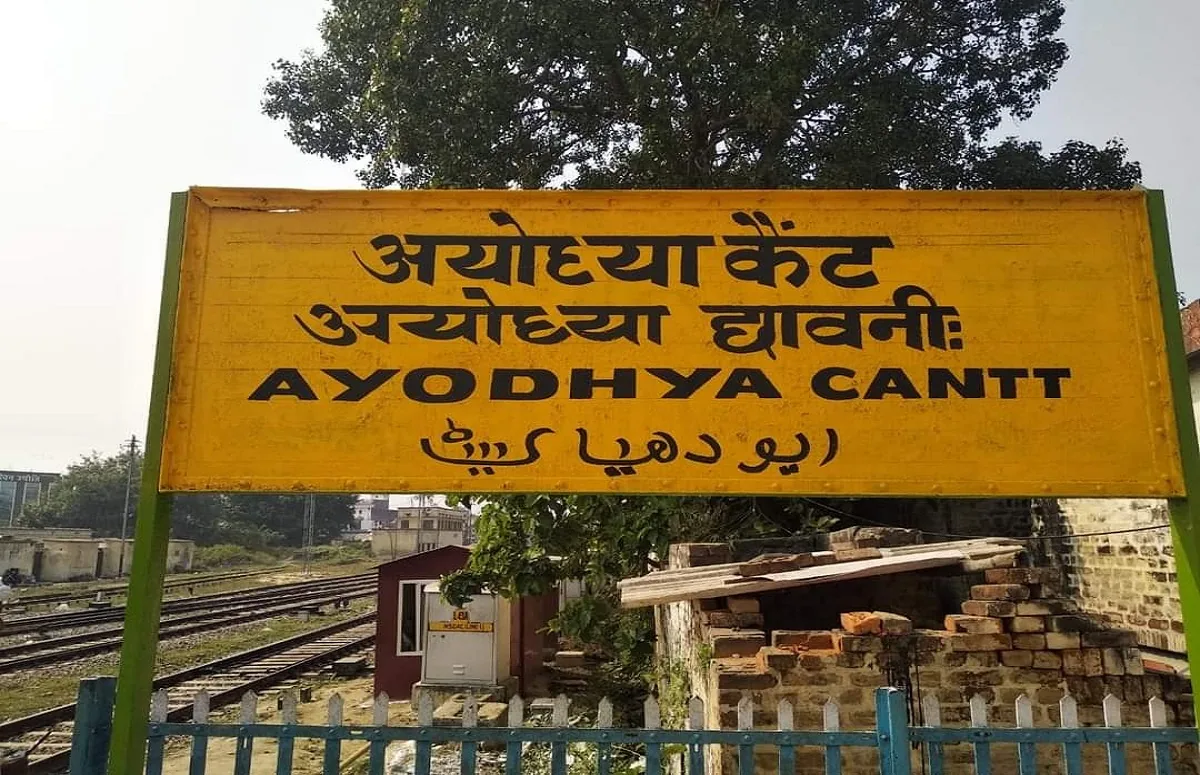
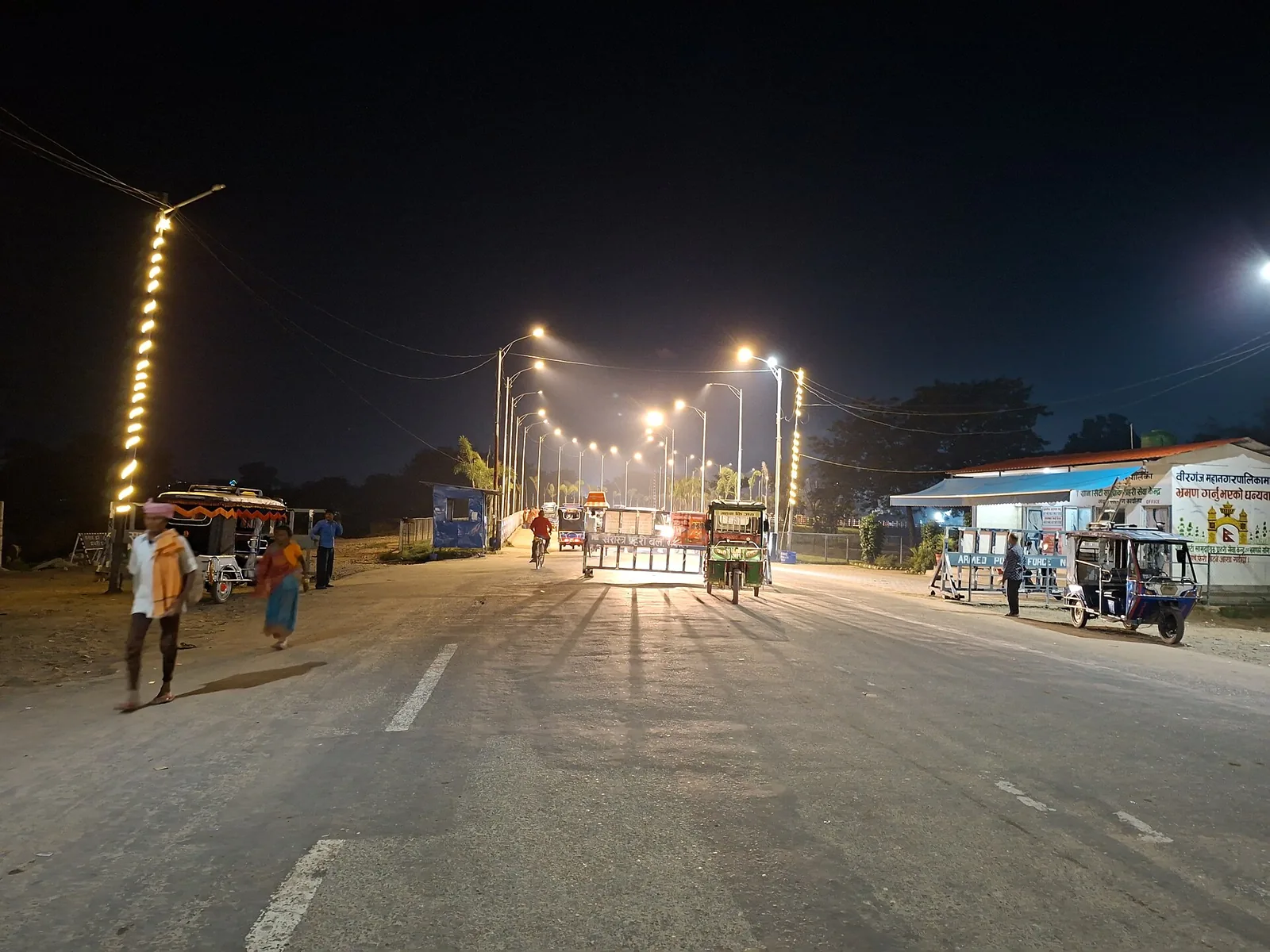
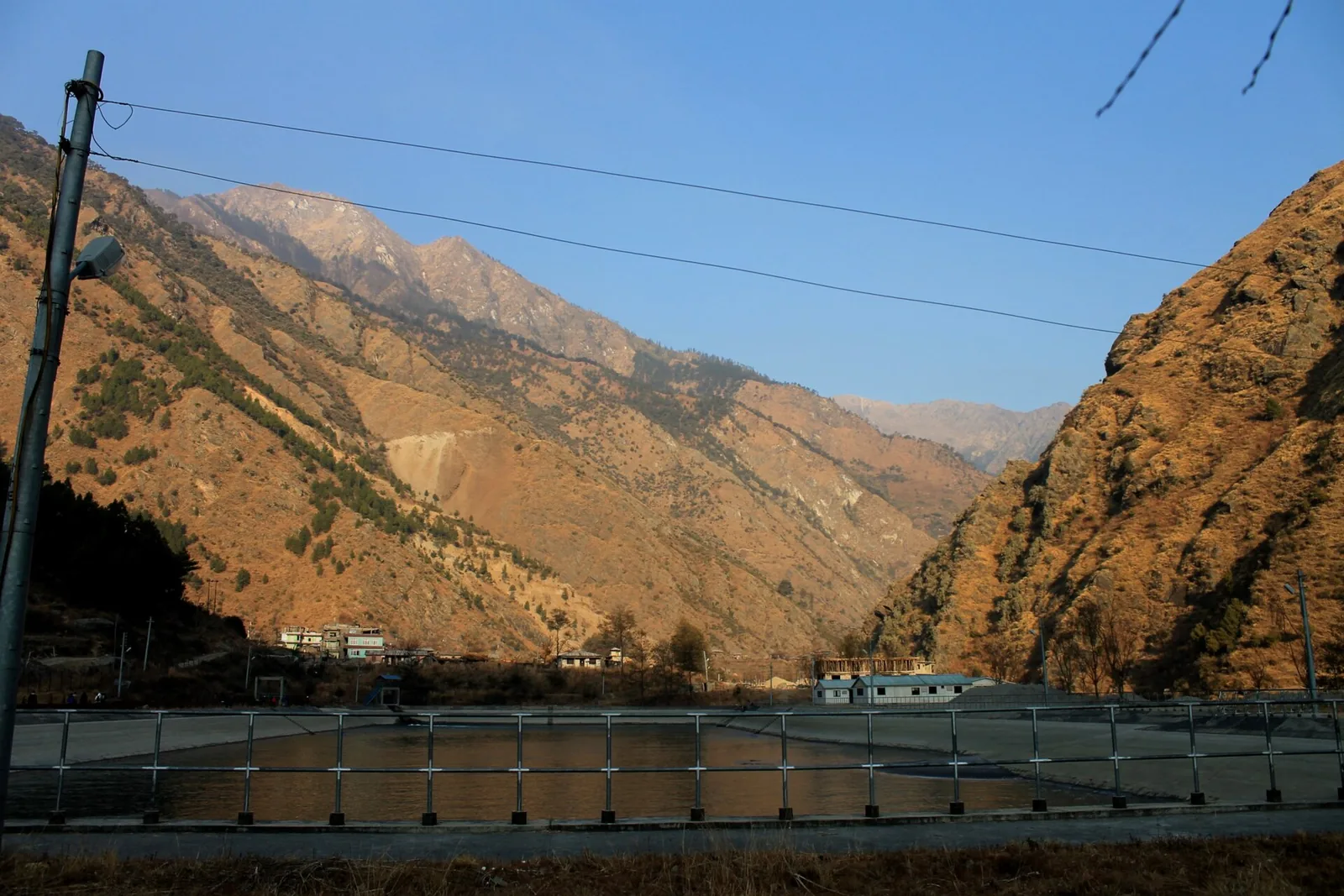
Several projects moved on 23 November itself. The leaders flagged off the Saryu-Kamala Express between Ayodhya in Uttar Pradesh and Janakpur in Nepal, opened a motorable bridge between Dharchula in Uttarakhand and Darchula in Nepal, and dedicated Phase II of the Motihari-Amlekhgunj petroleum pipeline, the Tribune reported. They also laid foundation stones, virtually, for the 669-megawatt Lower Arun hydropower project, a petroleum terminal at Jhapa and an Integrated Check Post at Banbasa. Our earlier report on the Saryu Kamala Express has its distance and schedule.
| Item | Status on 23 November |
|---|---|
| Saryu-Kamala Express, Ayodhya to Janakpur | Flagged off |
| Dharchula-Darchula motorable bridge | Inaugurated |
| Motihari-Amlekhgunj pipeline, Phase II | Dedicated |
| Lower Arun hydropower project (669 megawatts) | Foundation stone laid |
| Siliguri-Jhapa petroleum pipeline | Early start stressed, not begun |
| Raxaul-Kathmandu electrified railway | Field location survey finalised |
| Paradip port access for Nepal’s trade | Offered once infrastructure is in place |
Energy was a second focus. Modi said Nepal’s rivers have large potential for clean power and that India’s market could be the base for Nepal’s prosperity, according to the Tribune. The two leaders also called for faster work on the Arun-3 project, the Pancheshwar Multipurpose Project and the Saptakoshi and Sunkoshi projects. The sides also agreed to look at gas pipelines, Mint reported, and welcomed the part Indian companies play in Nepal’s energy projects.
For trade, Modi announced access for Nepal’s transit cargo through Kandla port in Gujarat, and offered Paradip port in Odisha once the infrastructure is ready, according to the Tribune and Mint.
Treaty review, the IIT campus and the border question
The Nepal joint vision document commits the two sides to review the 1950 Treaty of Peace and Friendship and other agreements on the basis of mutual consent, the Tribune reported, and to settle boundary, water, energy and trade issues through dialogue. The India Nepal package and the vision document were announced together.
The document has 10 pillars and is titled “Viksit Bharat and Samunnat Nepal: Re-imagining the Partnership”. India will set up an offshore campus of an Indian Institute of Technology (IIT) in Nepal, along with a start-up incubator and an innovation hub. The New Indian Express said it would be the third overseas IIT campus, after Zanzibar and Abu Dhabi. The two countries will also work on an agro-industrial park in Nepal for food processing, and on cricket and athlete training, the Tribune said.
Eight memoranda of understanding were also exchanged, covering areas from forensic science and police training to traditional medicine and fisheries.
The boundary dispute over Lipulekh, Kalapani and Limpiyadhura was not settled. Mint reported that, during the Balendra Shah visit, the leaders directed their foreign secretaries to work on outstanding boundary issues and noted progress in joint fieldwork on boundary pillars. Foreign Secretary Vikram Misri told a special briefing that Lipulekh Pass did not figure in the Modi-Shah discussions, calling it a pass between India and China, the Tribune reported. India says the territories are part of Uttarakhand; Nepal has disputed that, and the reports read do not carry Nepal’s formal reply from this visit.
What the Balendra Shah visit means for travellers and students
For pilgrims in Uttar Pradesh and Bihar, the new train links Ayodhya with Janakpur, the city associated with Sita. Modi said it would make it easier for devotees to travel on from Ayodhya, according to the Tribune. Nepalese students will see more scholarships in law and technology, and the IIT campus and Nalanda Centre at Lumbini Buddhist University are among the education plans. The Nepal joint vision document is published by India’s Ministry of External Affairs; this report relies on the Tribune, Mint and New Indian Express accounts of it, not on the text itself. Earlier background on the Balendra Shah visit is in our Nepal PM India visit report.
Frequently asked questions
How much is India's package for Nepal?
₹15,000 crore, equal to NPR 24,000 crore: about ₹3,500 crore in grants and about ₹11,500 crore as a line of credit for energy projects, according to Mint and The Tribune.
What is the Saryu-Kamala Express?
A train between Ayodhya in Uttar Pradesh and Janakpur in Nepal, flagged off by the two prime ministers on 23 November 2026.
Did the visit settle the boundary dispute?
No. Mint reported that, during the Balendra Shah visit, the leaders directed their foreign secretaries to work on the outstanding boundary issues; Foreign Secretary Vikram Misri said Lipulekh Pass did not figure in the talks, the Tribune reported.