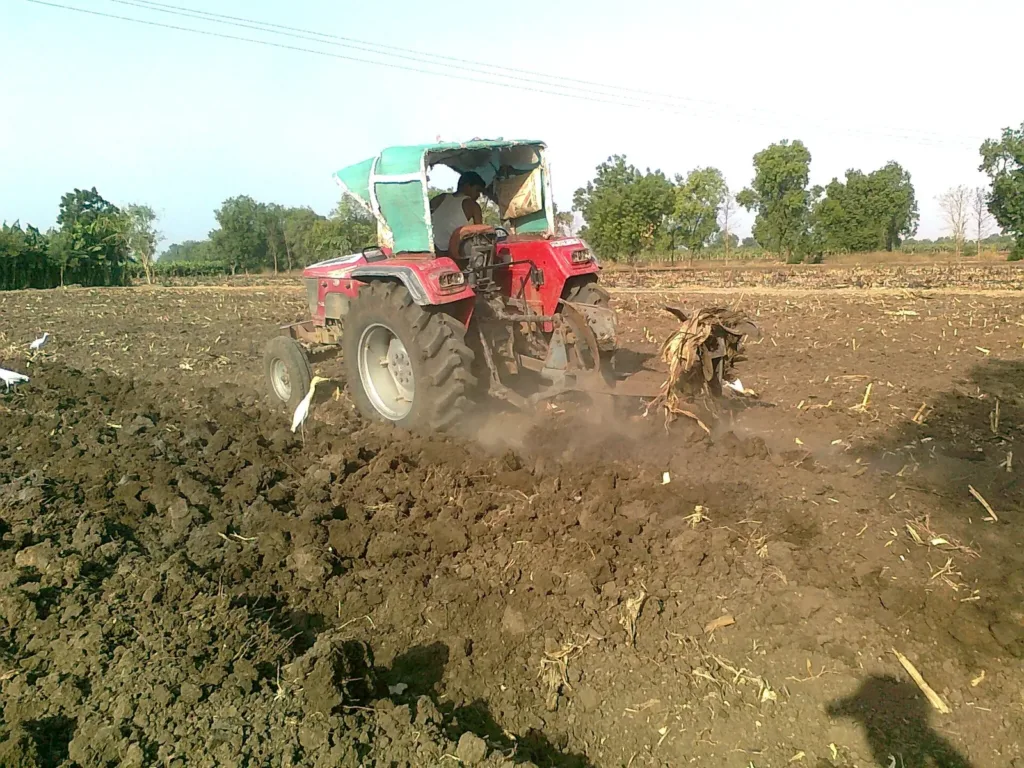
Representative image. abhiriksh, CC BY-SA 3.0, Wikimedia Commons

Why it matters
The subsidy lets farmers buy fertiliser at controlled prices, and the extra spending falls on the government's budget, not on farm prices in the reports read. The sharp fall in complex fertiliser sales and output is the number to watch for rabi sowing, though FAI says supplies are adequate.
The fertiliser subsidy this year could reach about ₹2.5 lakh crore, against ₹1,70,799 crore in the Budget, the Fertiliser Association of India (FAI) said on Monday, 23 November 2026. That is about 46% more, Deccan Chronicle reported. FAI, an industry body, put the pressure down to higher global prices of raw materials and nutrients during the West Asia conflict. The figure is an industry estimate, not a government announcement.
How far the fertiliser subsidy may overshoot the Budget
| Item | Amount | Source |
|---|---|---|
| Budget for 2026-27 | ₹1,70,799 crore | Government data, via Deccan Chronicle |
| Spent in 2025-26 | ₹1,86,460 crore | Government data, via Deccan Chronicle |
| FAI estimate for 2026-27 | about ₹2.5 lakh crore | FAI chairman S Sankarasubramanian |
| ICRA (a credit rating agency) estimate for 2026-27 | ₹2.76 lakh crore | ICRA report of November 2026, via Economic Times |
| Peak in 2022-23 | about ₹2.55 lakh crore | Economic Times |
By NewsPlainly’s calculation, the FAI figure is about ₹79,200 crore above the Budget (₹2,50,000 crore minus ₹1,70,799 crore). The Economic Times reported that the ICRA rating agency’s estimate is higher still, about ₹1.05 lakh crore over the Budget. Early in the year, government and industry officials had feared the bill could cross ₹3 lakh crore, Deccan Chronicle said, and Sankarasubramanian said global urea has since fallen to $350 a tonne from a peak of $950. The Economic Times added that China opened urea supply to world markets, which helped bring prices down. For the fertiliser subsidy, FAI said ₹62,000 crore has been set aside for phosphatic and potassic (P&K) fertilisers for the rabi season.
What fertiliser sales and imports show for farmers
Sales of major fertilisers fell about 8% in April to October 2026, to 37.76 million tonnes from 41.06 million tonnes a year earlier, according to FAI data reported by the Economic Times. FAI linked the lower use to a weak and uneven monsoon: Sankarasubramanian said total fertiliser use may fall to 65 to 67 million tonnes this year from 70 million tonnes last year, because of lower rainfall in an El Nino year.
| Fertiliser | Sales, Apr to Oct 2026 | Change on last year |
|---|---|---|
| Urea | 20.85 million tonnes | down 3.7% |
| NP/NPK (complex fertilisers) | 6.65 million tonnes | down 25.5% |
| DAP (di-ammonium phosphate) | 5.81 million tonnes | up 1.6% |
| Single super phosphate (SSP) | 3.29 million tonnes | down 5.5% |
| Muriate of potash (MOP) | 1.16 million tonnes | down 10.7% |
Complex fertilisers (NP/NPK, which carry nitrogen, phosphorus and potassium together) fell the most. The Economic Times said the drop came with a 36.1% fall in domestic NP/NPK production, to 4.50 million tonnes, and a 32.6% fall in imports, to 1.56 million tonnes, which it said points to supply constraints. An industry representative told the paper that domestic production depends heavily on natural gas, and shortages during the year affected output. In contrast, urea production rose 3.1% to 17.67 million tonnes and urea imports rose 22.9% to 7.20 million tonnes.
Is there enough fertiliser for the rabi season?
FAI said there is adequate availability of urea, DAP and other nutrients for the current rabi sowing season, according to Deccan Chronicle. Sankarasubramanian said the final urea import number will depend on domestic output over the next four months and the stock needed for the kharif season. The reports read do not carry retail prices paid by farmers, or any state-wise shortage. An earlier report on the rabi fertiliser subsidy has the government’s own announcement.
The split of the bill is also known. Sankarasubramanian said the subsidy on phosphatic and potassic (P&K) fertilisers is estimated at over ₹1 lakh crore for 2026-27, and the rest would go to urea, according to Deccan Chronicle. On urea imports, FAI said the number could be the same as last year or lower. Urea imports were 10.35 million tonnes in the whole of 2025-26, and 7.2 million tonnes came in the first seven months of this year, which is 23% more than a year earlier.
For readers, the main point is that subsidy is the government’s cost, paid to companies so farmers can buy at controlled prices. A bigger bill means more pressure on government spending, while lower sales this year follow the weak monsoon rather than any policy change, going by FAI’s own explanation.
Frequently asked questions
How much is the fertiliser subsidy this year?
The Budget set ₹1,70,799 crore. FAI said on 23 November 2026 it may reach about ₹2.5 lakh crore; ICRA's estimate is ₹2.76 lakh crore.
Why is it higher than the Budget?
FAI said global prices of raw materials and nutrients rose during the West Asia conflict; prices have since eased, with urea at $350 a tonne from a $950 peak.
Is there a fertiliser shortage for rabi sowing?
FAI said availability of urea, DAP and other nutrients is adequate for the rabi season. NP/NPK sales and production fell sharply in April to October.