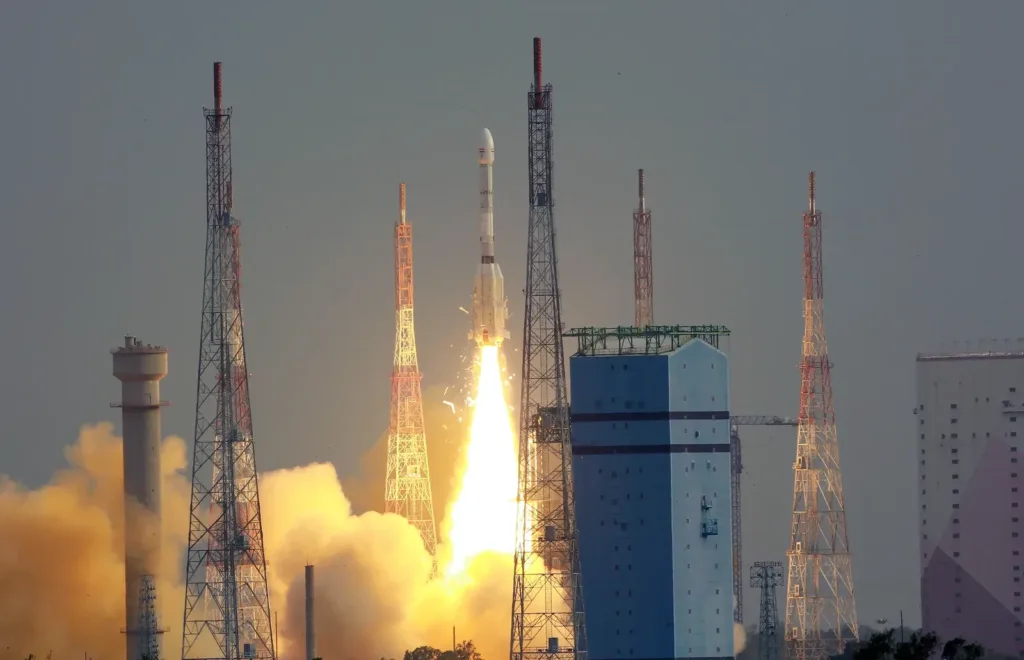
Representative image. Indian Space Research Organisation, GODL-India, Wikimedia Commons

Why it matters
NavIC is India's own satellite navigation system, used for timing, marine navigation, disaster alerts and an encrypted service for authorised users. With ISRO's list showing only 3 satellites in positioning service, NVS-03 is meant to keep that service going, ISRO says. Its L1 signal could also make NavIC easier for phones and other everyday devices to use, NDTV reported.
ISRO’s GSLV-F18 rocket is scheduled to lift off at 11.51 pm IST on 30 October 2026 from Sriharikota, carrying the NVS-03 navigation satellite. The NVS-03 launch is meant to shore up NavIC, India’s own satellite navigation system, at a point when ISRO’s list of launched satellites shows only 3 of the 11 NavIC satellites sent up so far marked as operational for positioning, navigation and timing.
The 24-hour countdown was under way on Friday, ISRO said, according to PTI. ISRO’s live webcast is due to start at 11.20 pm, the agency said in a post on X quoted by NDTV.
What GSLV-F18 will carry, and where it is going
This is the 20th flight of the Geosynchronous Satellite Launch Vehicle (GSLV), ISRO’s mission page says. The rocket stands about 50 metres tall and weighs about 420 tonnes at lift-off. It has three stages: a solid core with four liquid strap-on boosters, a liquid second stage and a cryogenic upper stage that burns liquid hydrogen and liquid oxygen, according to the mission brochure.
The launch is planned from the Second Launch Pad at the Satish Dhawan Space Centre. GSLV will not put the 2,250 kg satellite straight into its working orbit. It will drop it into a geosynchronous transfer orbit (GTO), a stretched loop that the brochure puts at 170 km at its lowest and 37,023 km at its highest, tilted 20.75 degrees to the equator. NDTV reported that the flight from lift-off to that point takes about 20 minutes.
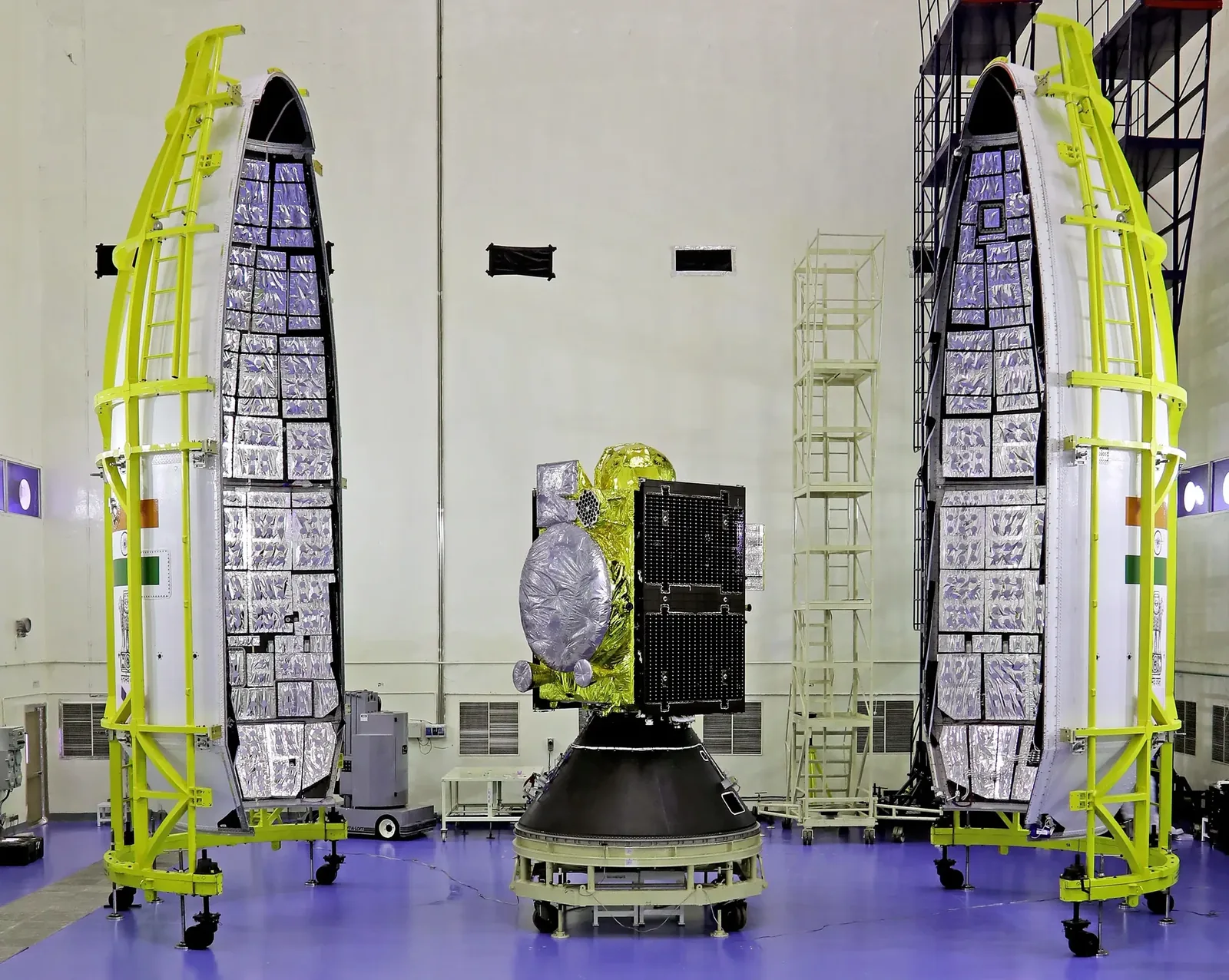
NVS-03 is the third satellite of the second-generation NVS series of NavIC satellites, which ISRO says exists to keep NavIC’s service going as the older IRNSS satellites age. It carries an atomic clock made in India alongside clocks bought from abroad. It also adds the L1 signal to the L5 and S-band signals NavIC already uses. Coverage is India and a band about 1,500 km beyond its borders.
NavIC satellites: what ISRO’s own list shows
NavIC, short for Navigation with Indian Constellation, is the public name of the Indian Regional Navigation Satellite System (IRNSS). ISRO’s programme page says it offers an open service to all users and an encrypted Restricted Service for authorised users, with position accuracy better than 20 metres in its main area.
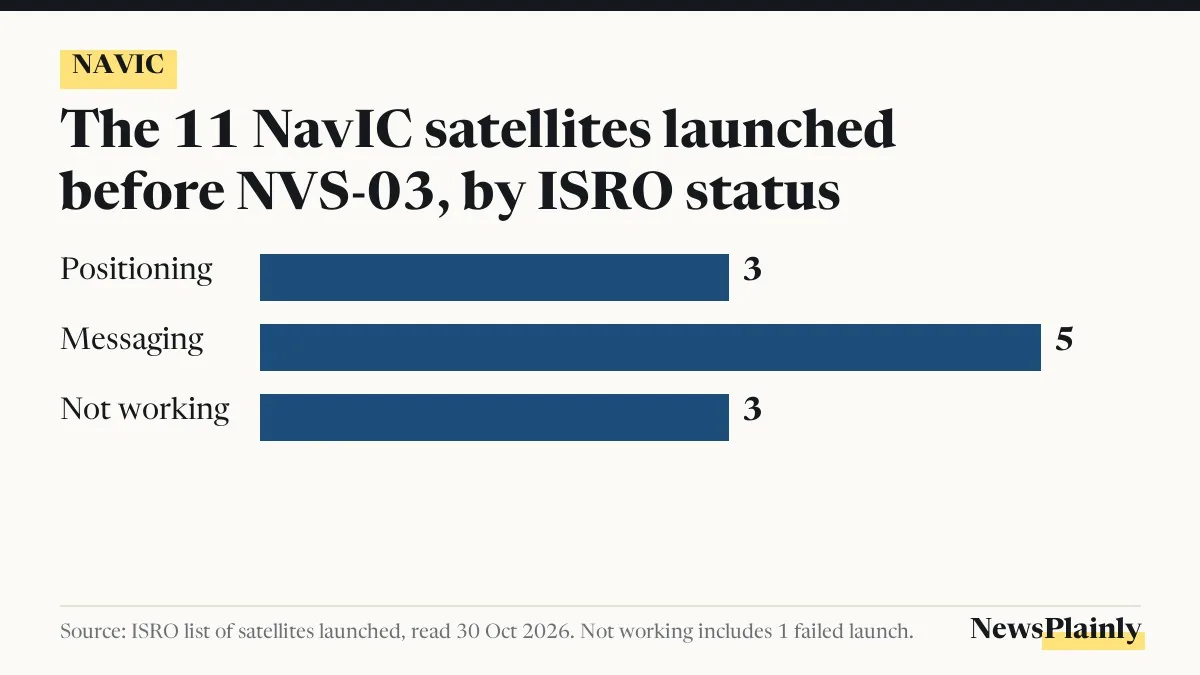
ISRO keeps a public list of every satellite it has launched, with a status against each. NewsPlainly pulled out the 11 NavIC satellites that came before NVS-03. Nine of them flew on the Polar Satellite Launch Vehicle (PSLV) and the two newest on GSLV. The page carries no “as of” date, but it already includes a September 2026 launch.
| Satellite | Launched | Rocket | Status in ISRO’s list |
|---|---|---|---|
| IRNSS-1A | 1 Jul 2013 | PSLV-C22 | Messaging and disaster alerts |
| IRNSS-1B | 4 Apr 2014 | PSLV-C24 | Positioning, navigation, timing |
| IRNSS-1C | 16 Oct 2014 | PSLV-C26 | Messaging and disaster alerts |
| IRNSS-1D | 28 Mar 2015 | PSLV-C27 | Not operational, planned to be decommissioned |
| IRNSS-1E | 20 Jan 2016 | PSLV-C31 | Messaging and disaster alerts |
| IRNSS-1F | 10 Mar 2016 | PSLV-C32 | Messaging and disaster alerts |
| IRNSS-1G | 28 Apr 2016 | PSLV-C33 | Messaging (Restricted Service) |
| IRNSS-1H | 31 Aug 2017 | PSLV-C39 | Launch unsuccessful |
| IRNSS-1I | 12 Apr 2018 | PSLV-C41 | Positioning, navigation, timing |
| NVS-01 | 29 May 2023 | GSLV-F12 | Positioning, navigation, timing |
| NVS-02 | 29 Jan 2025 | GSLV-F15 | Not operational |
Counted up, that is 3 NavIC satellites listed for full positioning service, 5 kept for messaging only and 3 that are not working or never reached orbit. NDTV reported that India ideally needs at least seven working satellites for seamless regional coverage. The gap between those two numbers is why the NVS-03 launch is being watched so closely.
What went wrong with NVS-02, and what ISRO changed
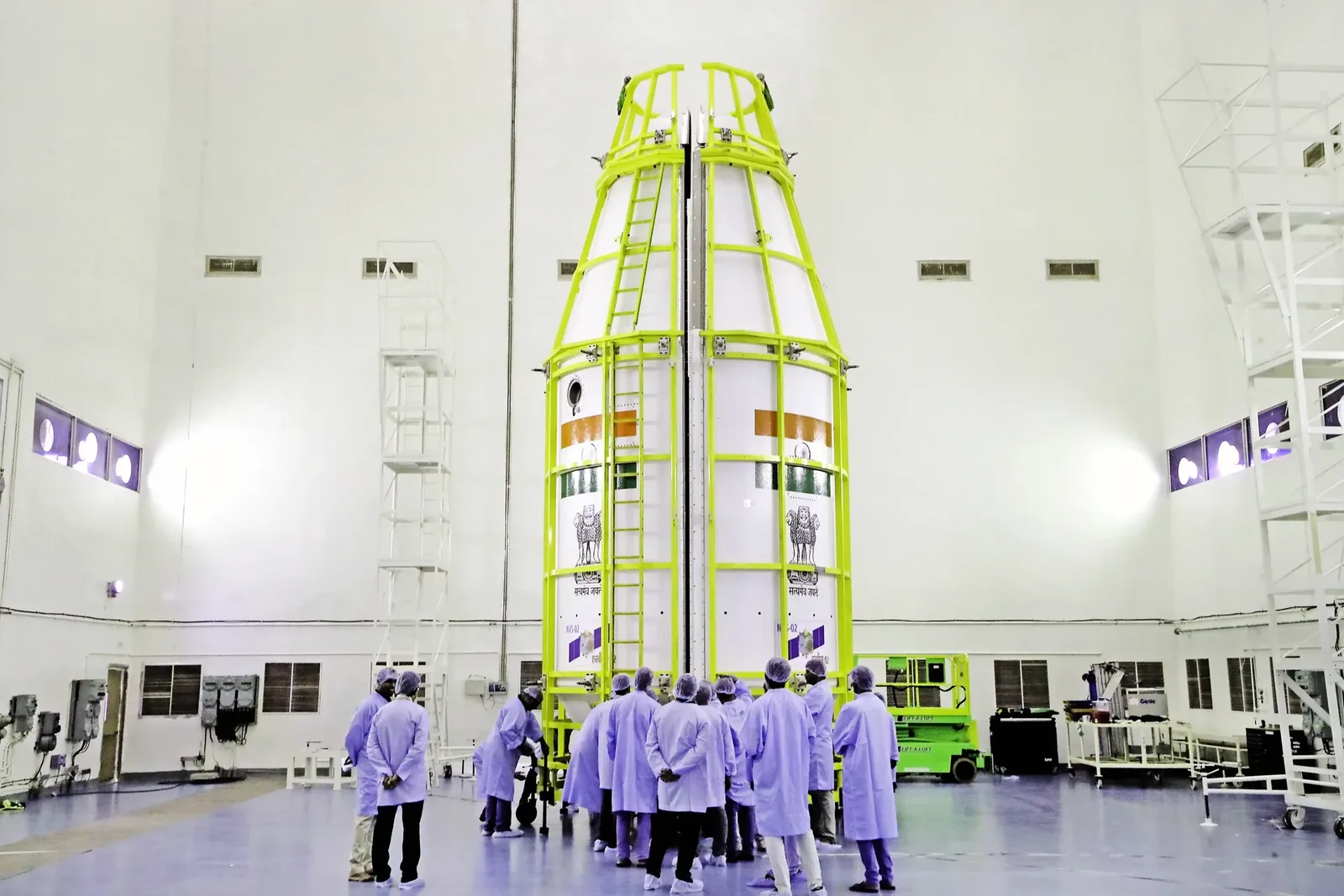
The last attempt to add a satellite did not go to plan. NVS-02 was launched on GSLV-F15 in January 2025 and reached its transfer orbit, but it never made it to its working orbit, India Today reported. The satellite’s own engine, the Liquid Apogee Motor, could not fire.
According to India Today, an investigation found that an electrical signal never reached a pyrotechnic valve that controls the flow of oxidiser to that engine. For NVS-03, the report said, ISRO is flying the satellite with those valves already activated and open, a break from its usual practice, so that the same fault cannot stop the engine again.
That means a clean NVS-03 launch at 11.51 pm is only the first half of the test. Once the satellite separates, it has to fire its engine several times to raise its orbit, and only then can it join the constellation.
Why the NVS-03 launch matters for receivers and phones
Of everything on board, the L1 signal is the part of NVS-03 most likely to reach ordinary users. NDTV reported that L1 is the band most commercial navigation chips around the world already listen to, so adding it could make NavIC easier to support in phones, smartwatches and other mass-market devices. ISRO’s mission material describes L1 as an addition to the L5 and S-band signals NavIC already broadcasts.
The atomic clock is the other change. A navigation satellite works out position from timing, and NDTV reported that failures of imported rubidium clocks were among the main reasons NavIC lost satellites over the years. NVS-03 carries an indigenous clock along with procured ones, ISRO says.
NavIC’s roots go back to the 1999 Kargil conflict, when India found it could not rely on access to foreign navigation data, NDTV reported. It is India’s regional counterpart to the American Global Positioning System (GPS), Russia’s GLONASS, Europe’s Galileo and China’s BeiDou.
What happens after lift-off
If the NVS-03 launch goes ahead as scheduled, the first milestone is the satellite separating from the cryogenic stage in the transfer orbit. The orbit-raising burns described by India Today come after that, and NVS-03 can join the constellation only once it reaches its working orbit. ISRO has not given a date for that in the mission material read for this article.
NDTV reported that this is ISRO’s third launch of 2026, after one success and one failure, and that NVS-04 and NVS-05 are expected to follow in later launches. No dates were given for them in the reports read. For more on ISRO’s plans, see ISRO’s plan to double its launch pads to 4 by 2029.
Frequently asked questions
What time is the NVS-03 launch?
GSLV-F18 is scheduled to lift off at 11.51 pm IST on 30 October 2026 from the Second Launch Pad at Sriharikota. ISRO's webcast starts at 11.20 pm.
How many NavIC satellites are working?
ISRO's list of launched satellites marks 3 of the 11 earlier NavIC satellites (IRNSS-1B, IRNSS-1I and NVS-01) as operational for positioning, navigation and timing. Five more are listed for messaging only.
What happened to NVS-02?
NVS-02 reached its transfer orbit in January 2025 but its engine could not fire to raise the orbit. India Today reported a signal failed to reach a valve controlling oxidiser flow.
What is new on NVS-03?
It carries an indigenous atomic clock with procured clocks, and adds the L1 signal to NavIC's existing L5 and S-band signals, ISRO says.