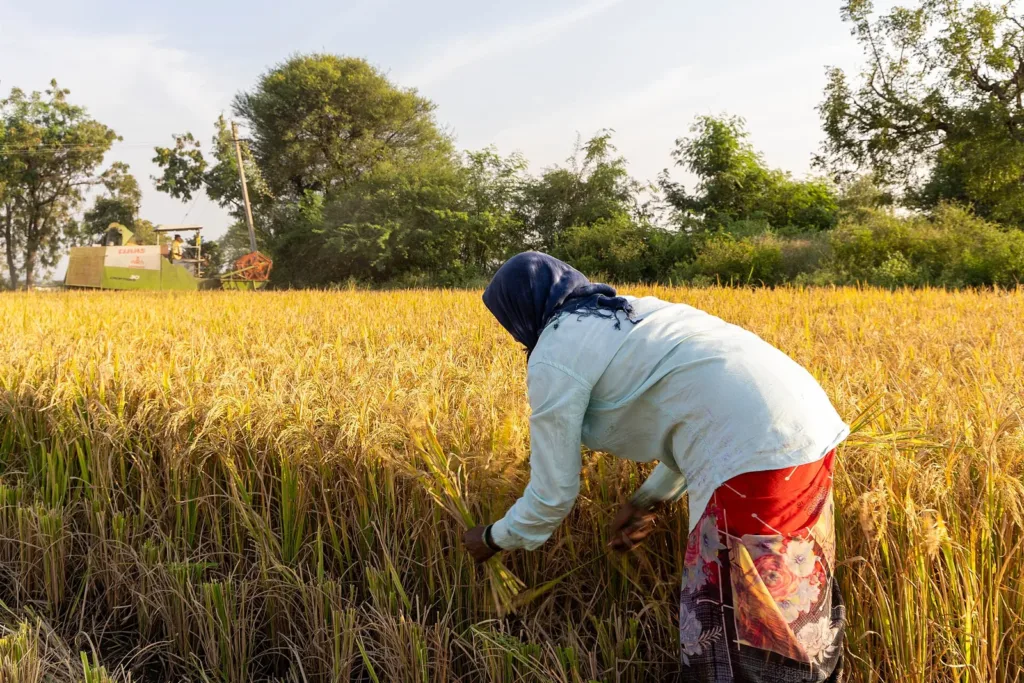
Representative image. Nanditha Gogate, WELL Labs, CC BY-SA 4.0, Wikimedia Commons

Why it matters
Lost work hours are lost income for people who work outdoors, and most of India's loss falls on farm work. The report puts the 2025 earnings hit at 4.2% of GDP. Its figures on sleep, outdoor heat-stress hours and older people's deaths show heat affecting health well beyond heatwave days.
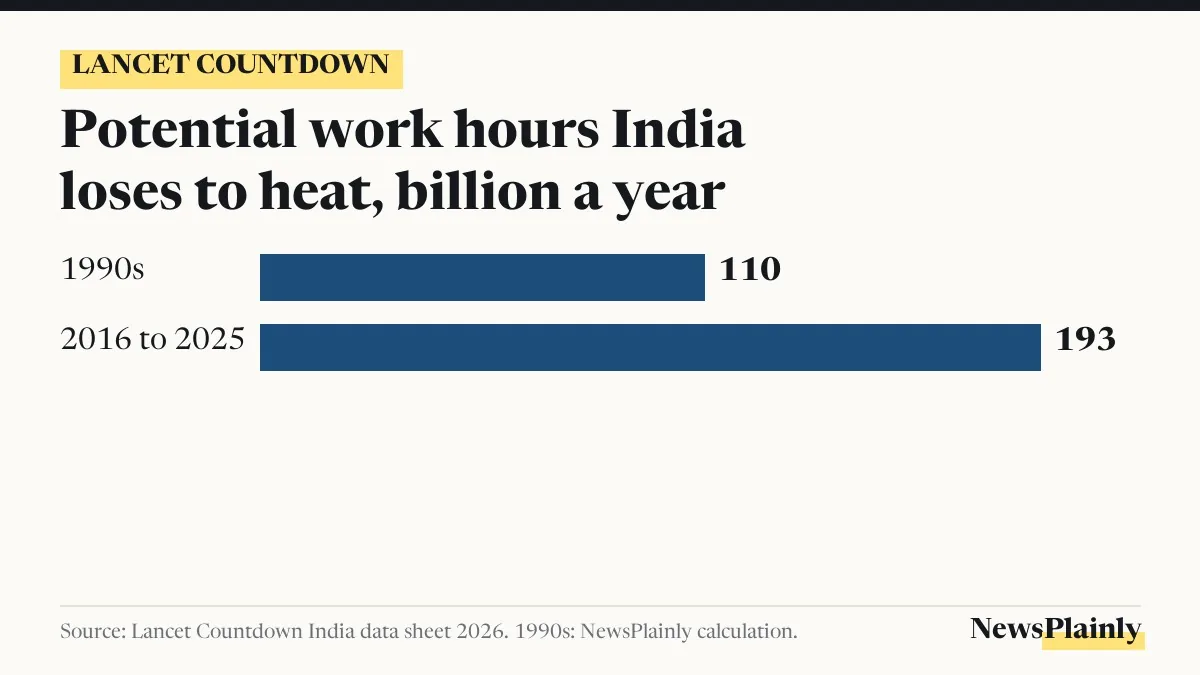
Heat cost India an estimated 193 billion potential hours of work a year between 2016 and 2025, the Lancet Countdown India data sheet shows. That is 75% more than the yearly average in the 1990s. The figure comes from the 2026 Lancet Countdown report on health and climate change, released on 28 October 2026, and farm work carries most of the loss.
The Lancet Countdown India numbers also put the 2025 earnings hit from heat at US$174 billion, or 4.2% of India’s GDP. The sheet does not give a count of heat deaths in India. It does put a money value on heat-related deaths among people over 65, and that value has roughly tripled in about two decades.
What the Lancet Countdown India data sheet found
The Lancet Countdown is a research collaboration that tracks how climate change affects health. Its 2026 report is the tenth. According to the report’s official page, it is the work of 146 experts from 71 collaborating institutions and follows 54 indicators, four of them new this year. Alongside the global paper in The Lancet, the group published two-page data sheets for individual countries, including India.
The sheet’s heat findings, in plain terms:
- Heatwave days: people in India were exposed to 10.6 heatwave days a year on average between 2016 and 2025. Half of them, 5.3 days, were directly attributable to climate change, the researchers estimate.
- Risky hours outdoors: in the same decade, there were over 2,600 hours a year in which even moderate outdoor activity, such as a brisk walk, carried a moderate or higher risk of heat stress. That is over 200 hours a year more than in the 1990s.
- Sleep: hot nights cost people in India an estimated 64 hours of sleep a year in 2021 to 2025, about 3 hours more a year than in 1986 to 2005.
- Work hours and earnings: the 193 billion lost potential labour hours and the US$174 billion earnings loss described above.
- Older people: the money value of heat-related deaths among people over 65.
The groups at greatest risk from heat, the sheet says, are older adults, young children, pregnant women and people with existing illnesses.
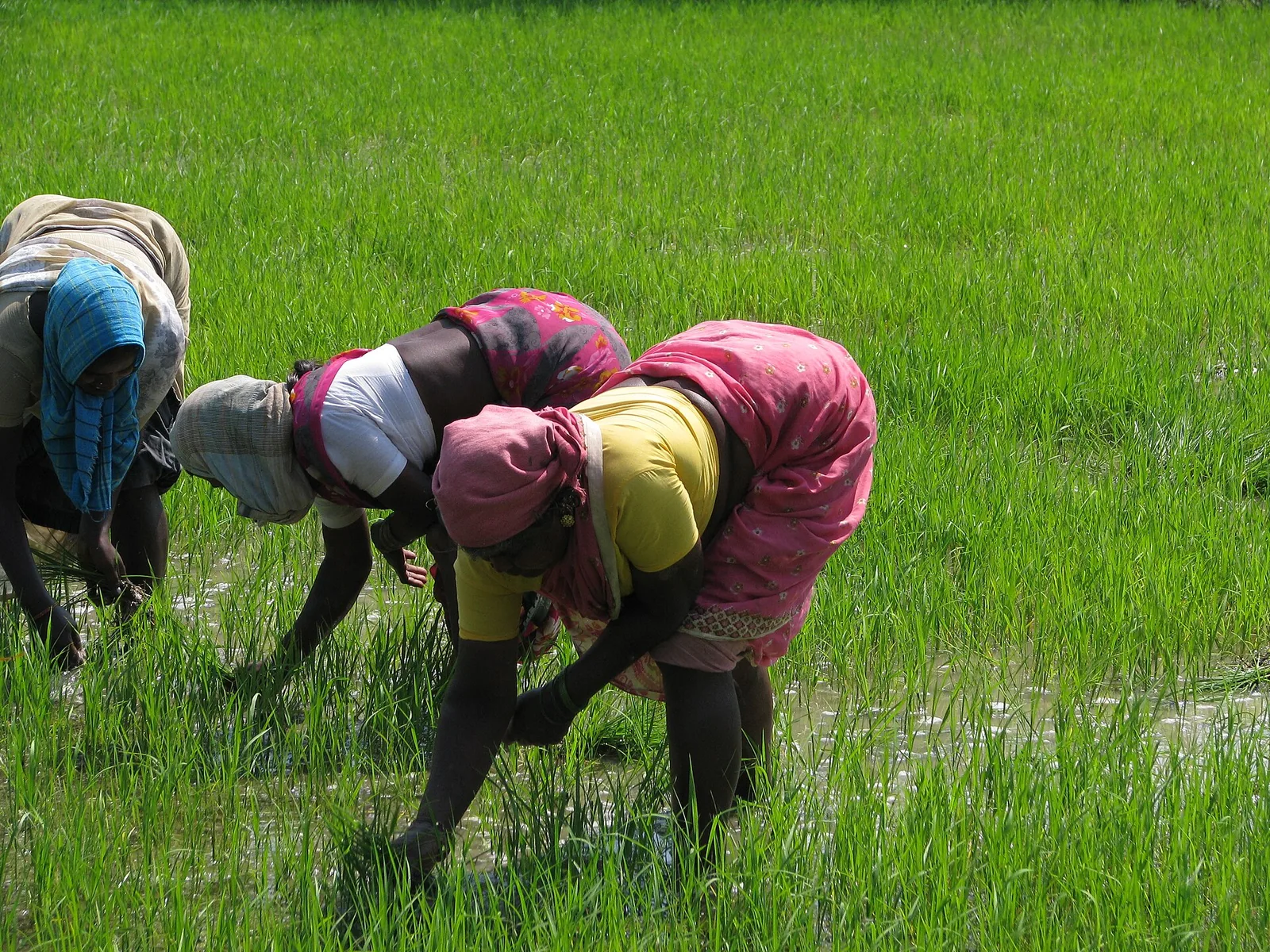
India’s heat numbers, then and now
The data sheet compares each figure with an earlier period, but each indicator uses a different base. The table puts them side by side exactly as the report gives them.
| Measure (indicator) | Latest figure | Period | Earlier comparison |
|---|---|---|---|
| Potential work hours lost to heat (1.1.3) | 193 billion a year | 2016 to 2025 | 75% above the 1990s yearly average |
| Potential hours lost per worker (1.1.3) | Up 8.5% | 2016 to 2025 | Against the 1990s |
| Hours of heat-stress risk outdoors (1.1.2) | Over 2,600 a year | 2016 to 2025 | Over 200 more than the 1990s average |
| Sleep lost to hot nights (1.1.4) | 64 hours a year | 2021 to 2025 | About 3 more than 1986 to 2005 |
| Money value of heat deaths, over-65s (4.1.2) | US$33.8 billion a year | 2021 to 2025 | 205% above 2000 to 2004 |
| Earnings lost to reduced work capacity (4.1.3) | US$174 billion (4.2% of GDP) | 2025 | No earlier figure on the sheet |
Two things stand out. The total of lost work hours rose far faster than the loss per worker, 75% against 8.5%. The sheet’s own explanation is that many more people now work in exposed jobs, so a larger workforce adds to the total even when each person loses only a little more time.
The second point is about the death figure. US$33.8 billion is not money spent on anything. It is a value the researchers place on the lives of people over 65 lost to heat, and they say it equals over 1.9 million average annual incomes in India.
Lost work hours fall hardest on farm workers
Agriculture accounted for about 68% of the lost hours, the sheet says, and 54% of the lost earnings.
Some simple arithmetic, done by NewsPlainly from the sheet’s own figures, shows the scale. If 193 billion hours is 75% above the 1990s average, that average was about 110 billion hours a year (193 divided by 1.75). And 68% of 193 billion is about 131 billion hours a year lost in agriculture alone. These are estimates of potential hours lost to a reduced capacity to work in the heat, not a count of days actually missed.
A chart in the data sheet splits the loss across agriculture, construction, manufacturing and services from 1990 to 2025. In that chart, construction is the second-largest band after farming, though the sheet gives no separate percentage for it.

Global heat deaths and where India stands
The India sheet does not give a count of heat deaths in India, so the death figures in coverage of the report are global. Heat was linked to an average of 540,800 deaths a year worldwide between 2016 and 2023, the report said as quoted by the Hindustan Times. About 68% of them, 369,900 a year, were caused by climate change, against 55% (219,100 a year) in 2006 to 2015. By NewsPlainly’s arithmetic that is about 150,800 more climate-linked heat deaths a year, though the two periods differ in length.
In 2023, the hottest year in that span, heat was linked to a record 710,000 deaths, more than malaria or HIV (the virus that causes AIDS), with 71.5% driven by climate change, according to both the Hindustan Times and the Press Trust of India (PTI). In all, climate change is estimated to have caused almost 3 million heat deaths from 2016 to 2023. The Hindustan Times reported that average annual heat deaths have risen nearly 36% in the decade since the Paris Agreement took effect.
India also ranked among the top countries for heatwave exposure of both infants and older adults, alongside China, the United States and Russia, PTI reported from the study.
Heat is not the only India finding. The sheet says the potential for dengue spread by the Aedes albopictus mosquito was 84% higher in 2016 to 2025 than in 1951 to 1960, moving from below 1 to above 1. That number, called R0, is the average count of new infections from each case, so above 1 means the disease can keep spreading. It also estimates that fine-particle air pollution from human activity was linked to over 2.2 million deaths in India in 2023.
What the report’s authors are asking for
The authors want climate change formally declared a global health emergency. They also call for a new World Health Organization (WHO) instrument to coordinate the response, faster and fairer cuts in greenhouse gas emissions, and climate finance for health given as grants rather than loans. These are demands from researchers, not decisions by any government.
Marina Romanello, executive director of the Lancet Countdown, said on the report page that progress on clean energy and health systems had been “too slow, too small” and was not reaching those who need it most. On the same page, WHO Director-General Tedros Adhanom Ghebreyesus called climate change one of the greatest threats to health facing humanity.
The report follows the UN’s synthesis of NDCs, the national climate pledges countries file under the Paris Agreement, which found those pledges would cut emissions only about 6% below 2019 levels by 2035, as NewsPlainly reported on 27 October 2026. The country data sheets and an online data explorer with every indicator are on the Lancet Countdown website.
Frequently asked questions
What does the Lancet Countdown 2026 report say about India?
Its India data sheet estimates heat cost 193 billion potential work hours a year in 2016 to 2025, 75% above the 1990s, with an earnings loss of US$174 billion in 2025, or 4.2% of GDP.
How many people die of heat in India, according to the report?
The India data sheet does not give a death count. It puts the money value of heat-related deaths among over-65s at US$33.8 billion a year in 2021 to 2025, 205% above 2000 to 2004.
How many heat deaths were there worldwide?
Heat was linked to a record 710,000 deaths in 2023, 71.5% of them driven by climate change, and climate change caused almost 3 million heat deaths from 2016 to 2023, the report said, as quoted by HT and PTI.
When was the Lancet Countdown 2026 report released?
It was released on 28 October 2026. It is the tenth report and covers 54 indicators.