Representative image. Institution:Ministry of Electronics & IT, GODL-India, Wikimedia Commons

Why it matters
The mobile PLI scheme used public money to pull phone assembly into India, and a new ₹62,500 crore scheme now follows it. Whether such subsidies pay off is a question about how tax money is spent. The minister's figures and the criticism he answered set out the two sides of that debate.
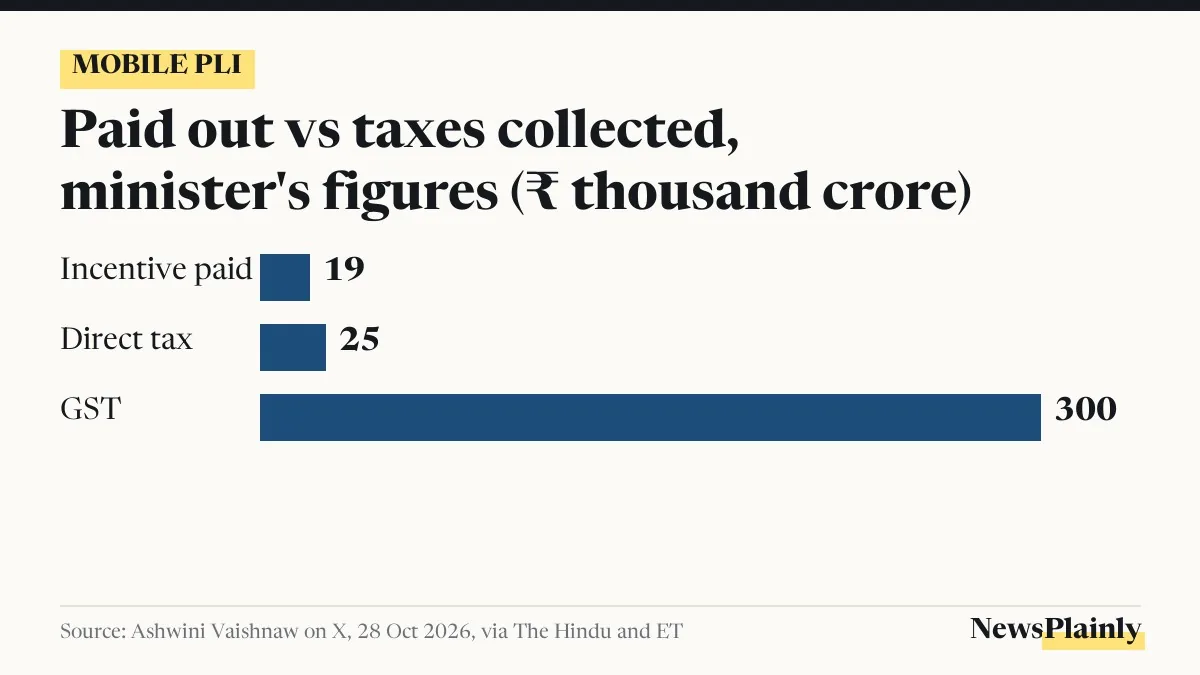
Union Electronics and IT Minister Ashwini Vaishnaw said on 28 October 2026 that the government paid ₹19,000 crore to phone makers under the mobile PLI scheme and collected ₹3.25 lakh crore in taxes from them in return. PLI is short for production linked incentive, a cash reward tied to output. In a post on X, as reported by The Hindu and The Economic Times, he split that into ₹25,000 crore of direct tax and ₹3 lakh crore of Goods and Services Tax (GST).
The post was a reply to an online video that questioned whether paying subsidies to assemble phones in India makes economic sense. It ended with two words: “Cope harder!!”
What Vaishnaw’s mobile PLI scheme figures say
Under the scheme for large scale electronics manufacturing, approved by the Union Cabinet on 21 March 2020, the Cabinet release set a cash incentive of 4% to 6% on the extra sales of phones and certain components made in India, measured against a base year. MeitY says the scheme was launched to boost the making of mobile phones in the country, which is why it is commonly called the mobile PLI.
The minister’s post, according to the two reports, gave three numbers: ₹19,000 crore paid out as incentives, ₹25,000 crore received as direct tax and ₹3 lakh crore received as GST from the companies that benefited. He added a jobs figure: “Electronics manufacturing employs 25 Lakh people; mobile manufacturing alone employs 12 Lakh,” The Hindu quoted him as saying. The same jobs numbers appear in a Ministry of Electronics and Information Technology (MeitY) statement to the Lok Sabha on 29 July 2026, which counts both direct and indirect jobs.
On the minister’s figures, the taxes are about 17 times the incentive paid. That is NewsPlainly’s arithmetic: ₹3,25,000 crore divided by ₹19,000 crore. Direct tax alone, at ₹25,000 crore, is about 1.3 times the payout.
The reports read did not say which years the tax figures cover or how the ministry linked them to the scheme. GST is charged on the sale of each phone, so the total depends on how many phones were sold in that period.
The criticism he was answering
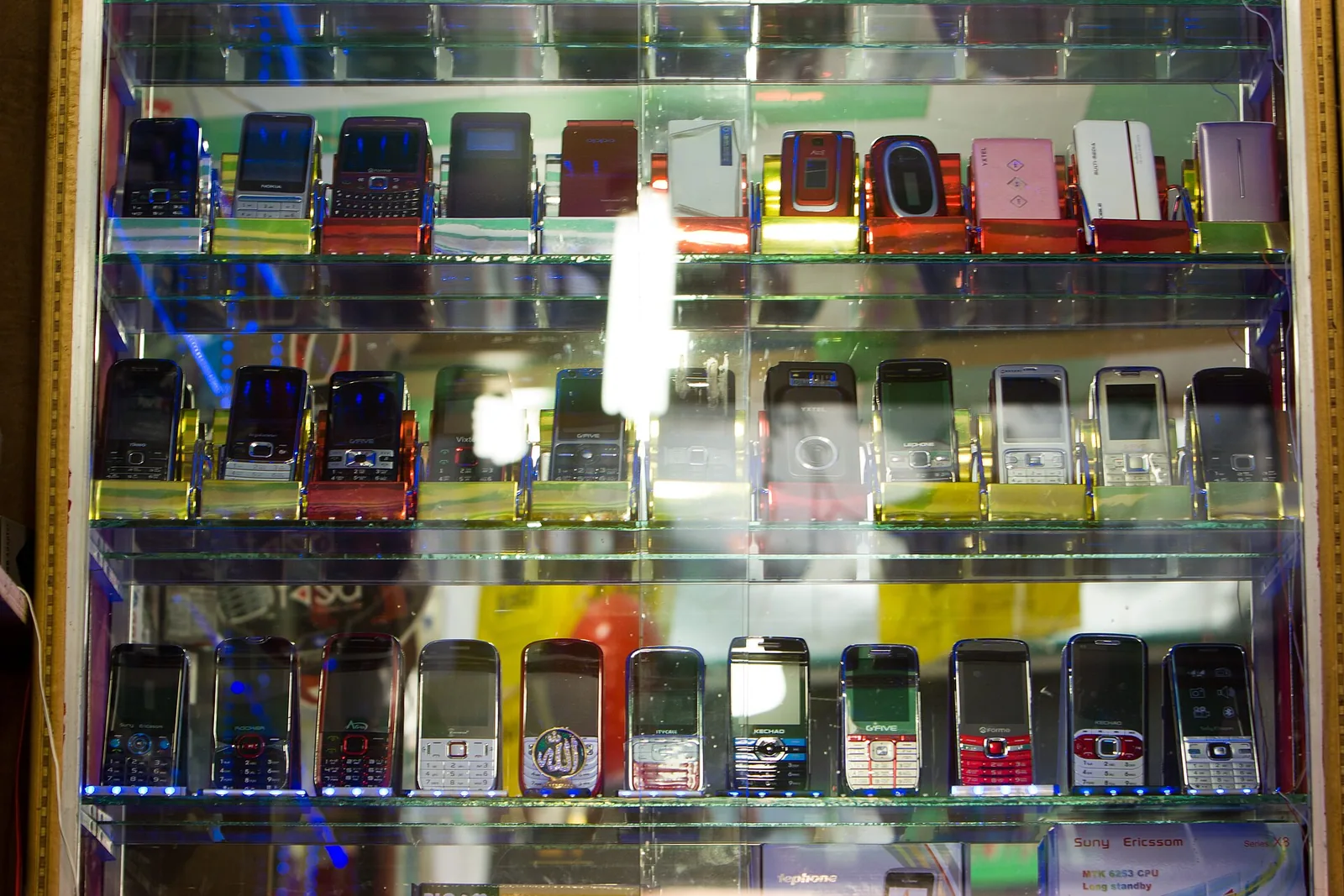
The Economic Times identified the video as a Bloomberg Opinion piece on India’s push to make iPhones. According to ET, it questioned how much India depends on imported components and what the government subsidies cost. The Hindu described the video’s central argument this way: that the components India imports cost the country more than it earns from exporting the finished phones built with taxpayer-funded support.
The point is about how much of a phone’s value is created in India. A phone made in India can still carry a chip, display and camera made elsewhere. The government’s own numbers give one measure of this. An external evaluation of the scheme found that domestic value addition, the share of a product’s value created inside India, rose to 23% in 2023-24, MeitY told the Lok Sabha in July.
The Hindu also noted that, according to official data released in March, phone imports had shrunk to about 0.02% of domestic demand in 2024-25, from 75% ten years earlier.
How the mobile PLI scheme did against its targets
The scheme closed on 31 March 2026. MeitY’s Lok Sabha reply set out what companies reported against the five-year targets, all in ₹ crore:
| Measure | 5-year target | Reported to March 2026 | Share of target |
|---|---|---|---|
| Investment | 7,000 | 20,587 | 294% |
| Production | 8,12,550 | 11,61,581 | 142% |
| Exports | 4,87,530 | 6,43,323 | 132% |
| Incentive paid | 40,951 (original outlay, 2020) | 19,000 (minister’s figure) | About 46% |
Two things stand out. First, the figures companies reported are above every target the government set. Second, the payout the minister cited is less than half of the ₹40,951 crore incentive outlay the Cabinet approved in 2020. Incentives were tied to extra sales, so the amount paid depends on how much each company qualified for in each year.
There is one gap in the official numbers. A PIB release of 15 July 2026 put the scheme’s exports above ₹6.53 lakh crore, while the Lok Sabha table two weeks later shows ₹6,43,323 crore. The table above uses the Lok Sabha figure.
The wider growth in phone manufacturing is large too. Mobile phone production rose from about ₹18,900 crore in 2014-15 to ₹6.27 lakh crore in 2025-26, and mobile phone exports from ₹1,566 crore to about ₹2.6 lakh crore, according to MeitY. That is roughly 33 times and 165 times the 2014-15 levels, the ministry said. Smartphones became India’s largest single export item in 2025-26, the ministry said.
Mobile PLI scheme timeline and what replaced it
- 21 March 2020: Cabinet approves the PLI scheme for large scale electronics manufacturing, with an incentive outlay of about ₹40,951 crore.
- 2020-21 to 2025-26: 32 applicants are approved, the largest numbers from Maharashtra (7), Karnataka (6) and Uttar Pradesh (6), according to the Lok Sabha reply.
- 31 March 2026: The scheme’s tenure ends.
- 15 July 2026: Cabinet approves the Mobile Phone Manufacturing Scheme (MPMS) with ₹62,500 crore.
- 28 October 2026: Vaishnaw posts the tax and incentive figures on X.
The new scheme, which follows the mobile PLI scheme, runs from 2026-27 to 2030-31. It pays 2.25% to 5% on eligible sales of phones made in India, up to 1.5% more for buying key components and sub-assemblies locally, and an extra 3% for Indian brands that do their own design and research, the Cabinet release says. The government expects it to lift cumulative phone production to about ₹39 lakh crore over the five years and create around 60,000 direct jobs.
The Hindu reported that the minister has set October 2028 as the timeline for an Indian smartphone brand under the new scheme.
The local-sourcing bonus in the MPMS speaks directly to the point the video raised about imported parts. Whether it changes the share of value made in India will show up in later evaluations; the July Lok Sabha reply gives 23% as the latest figure, for 2023-24.
Frequently asked questions
How much did the government pay under the mobile PLI scheme?
₹19,000 crore, according to Ashwini Vaishnaw's post on X on 28 October 2026, as reported by The Hindu and The Economic Times. The Cabinet had approved an incentive outlay of about ₹40,951 crore in 2020.
How much tax did the government collect from phone makers?
The minister put it at ₹3.25 lakh crore: ₹25,000 crore of direct tax and ₹3 lakh crore of GST from the scheme's beneficiaries. The reports did not say which years this covers.
Is the mobile PLI scheme still running?
No. Its tenure ended on 31 March 2026. The Mobile Phone Manufacturing Scheme, approved on 15 July 2026 with ₹62,500 crore, runs from 2026-27 to 2030-31.
What was the criticism Vaishnaw responded to?
A video that ET identified as a Bloomberg Opinion piece, which questioned the cost of subsidies and India's dependence on imported components for phones assembled in the country.