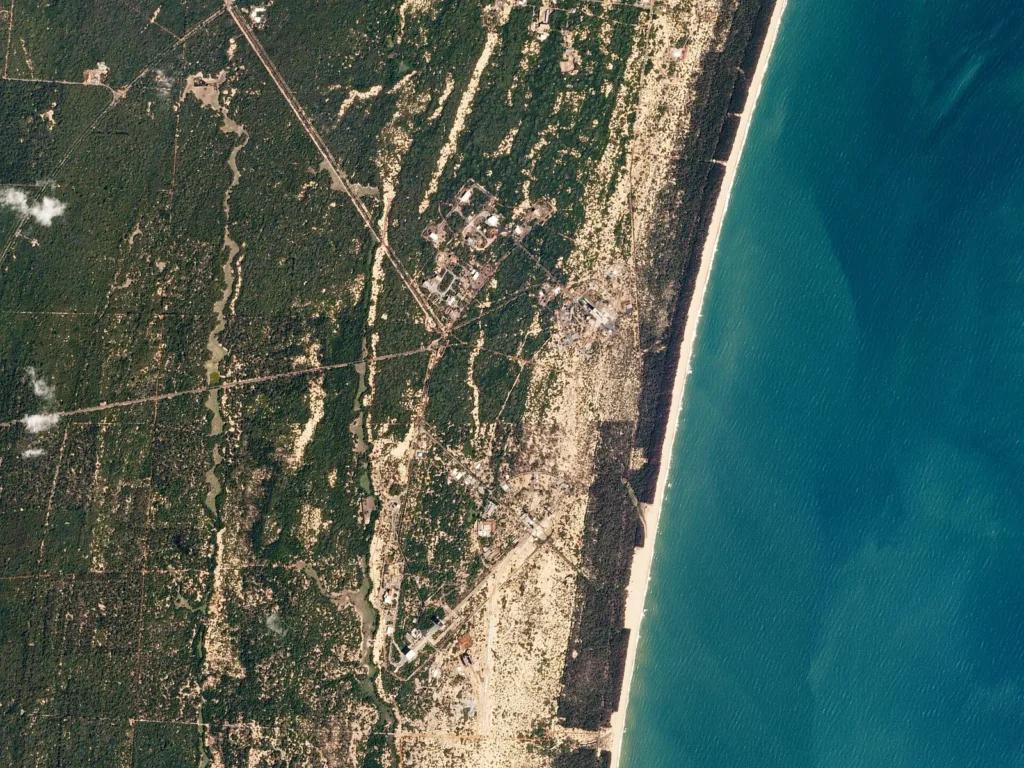
Representative image. Planet Labs, Inc., CC BY-SA 4.0, Wikimedia Commons

Why it matters
With only two pads, a delay on one can hold up India's whole launch calendar, from weather and navigation satellites to commercial launches. More pads would let ISRO and private rocket firms launch more often. The privatisation question also matters to ISRO's thousands of employees and to startups waiting for launch slots.
India plans to have four working ISRO launch pads by 2029, double the two it relies on today, Indian Space Research Organisation (ISRO) chairman V. Narayanan said in Chennai on Saturday, 24 October 2026. Speaking at a university graduation ceremony, he also said the first uncrewed Gaganyaan test flight is planned within the next two months, and repeated that the space agency is not being privatised, the news agency Press Trust of India (PTI) reported.
Narayanan named only one of the new sites: the small-rocket spaceport at Kulasekarapattinam in Tamil Nadu’s Thoothukudi (Tuticorin) district. He did not say which the other pads would be, PTI noted.
What the chairman said about ISRO launch pads and private firms
The Kulasekarapattinam spaceport will be dedicated to the Small Satellite Launch Vehicle (SSLV), ISRO’s smallest rocket, and will have integration buildings, launch pads, rail-track systems and tracking and command systems, Narayanan said. PTI put the complex at 2,000 acres; in August 2025 the Chennai daily DT Next reported the ISRO chief describing it as 2,300 acres.
On privatisation, his message was that ISRO will stay a government agency but will lean more on industry. ISRO will hand-hold startups and private companies and transfer technology to them so they can meet demand for thousands of satellites, he said. The four pads would be supported by private partners handling commercial operations.
The clarification follows unease inside the agency. Nine ISRO employee associations wrote to Narayanan on 4 September asking about plans to move manufacturing and operational work to private firms, YourStory reported at the time. In August, the space regulator IN-SPACe (Indian National Space Promotion and Authorisation Centre) invited private companies to run the Kulasekarapattinam complex once it is built, Business Today reported.
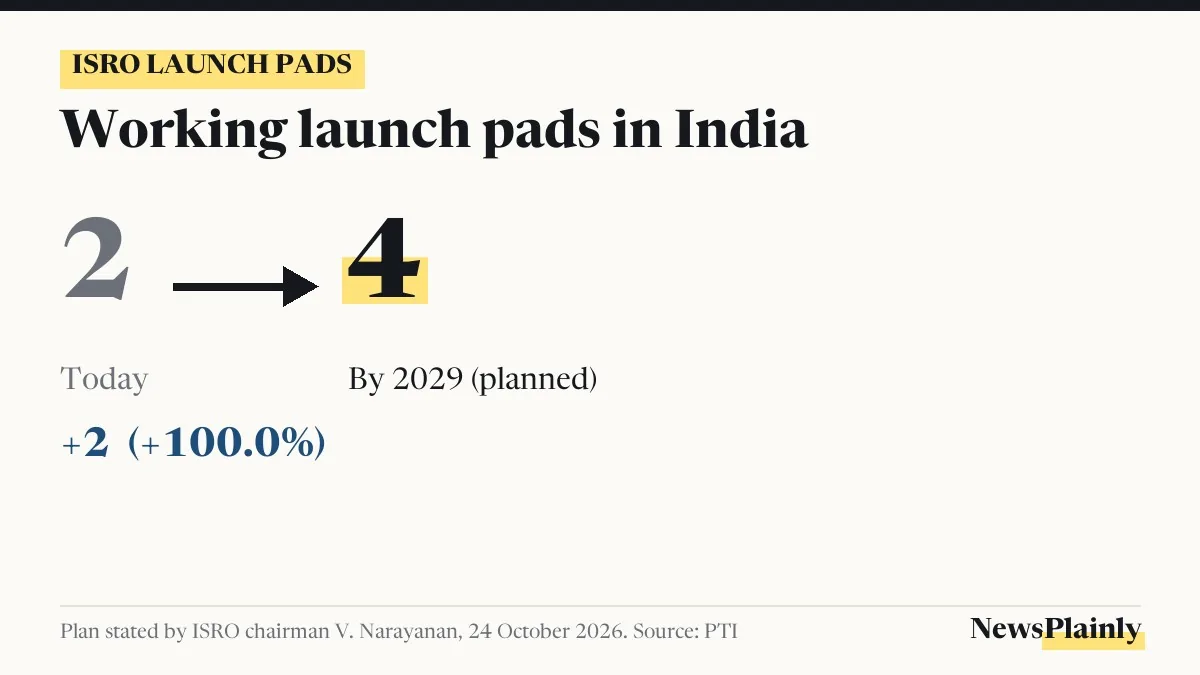
India’s launch pads today and the planned additions
All Indian rockets now lift off from two pads at the Satish Dhawan Space Centre in Sriharikota, Andhra Pradesh. The PSLV (Polar Satellite Launch Vehicle) and GSLV (Geosynchronous Satellite Launch Vehicle) are ISRO’s workhorse rockets, and the LVM3 (Launch Vehicle Mark-3) is its heaviest. The table below joins the government’s own records with recent reports to show where each pad stands. Narayanan did not list the four he counted; this is the public record of what exists or has been approved.
| Launch pad | Where | For | Status |
|---|---|---|---|
| First Launch Pad | Sriharikota | PSLV, SSLV | Working for about 30 years |
| Second Launch Pad | Sriharikota | GSLV, LVM3, Gaganyaan | Working for about 20 years |
| Third Launch Pad | Sriharikota | Next Generation Launch Vehicle, LVM3 | Approved January 2025, ₹3,984.86 crore, 48 months |
| SSLV Launch Complex | Kulasekarapattinam, Tamil Nadu | SSLV and private small rockets | Under construction, about ₹986 crore |
The Cabinet’s January 2025 approval of the Third Launch Pad said Indian space launches were “completely reliant” on the two existing pads and set a 48-month target. Counting from that month, four years runs to January 2029, which fits the chairman’s 2029 date, by NewsPlainly’s reading, so the Third Launch Pad and the Kulasekarapattinam spaceport would make four ISRO launch pads, though the chairman did not confirm this. The release said the new pad is meant for heavier rockets needed for the planned Bharatiya Antariksh Station, India’s space station, by 2035 and a crewed Moon landing by 2040, and will also be a standby for the second pad.
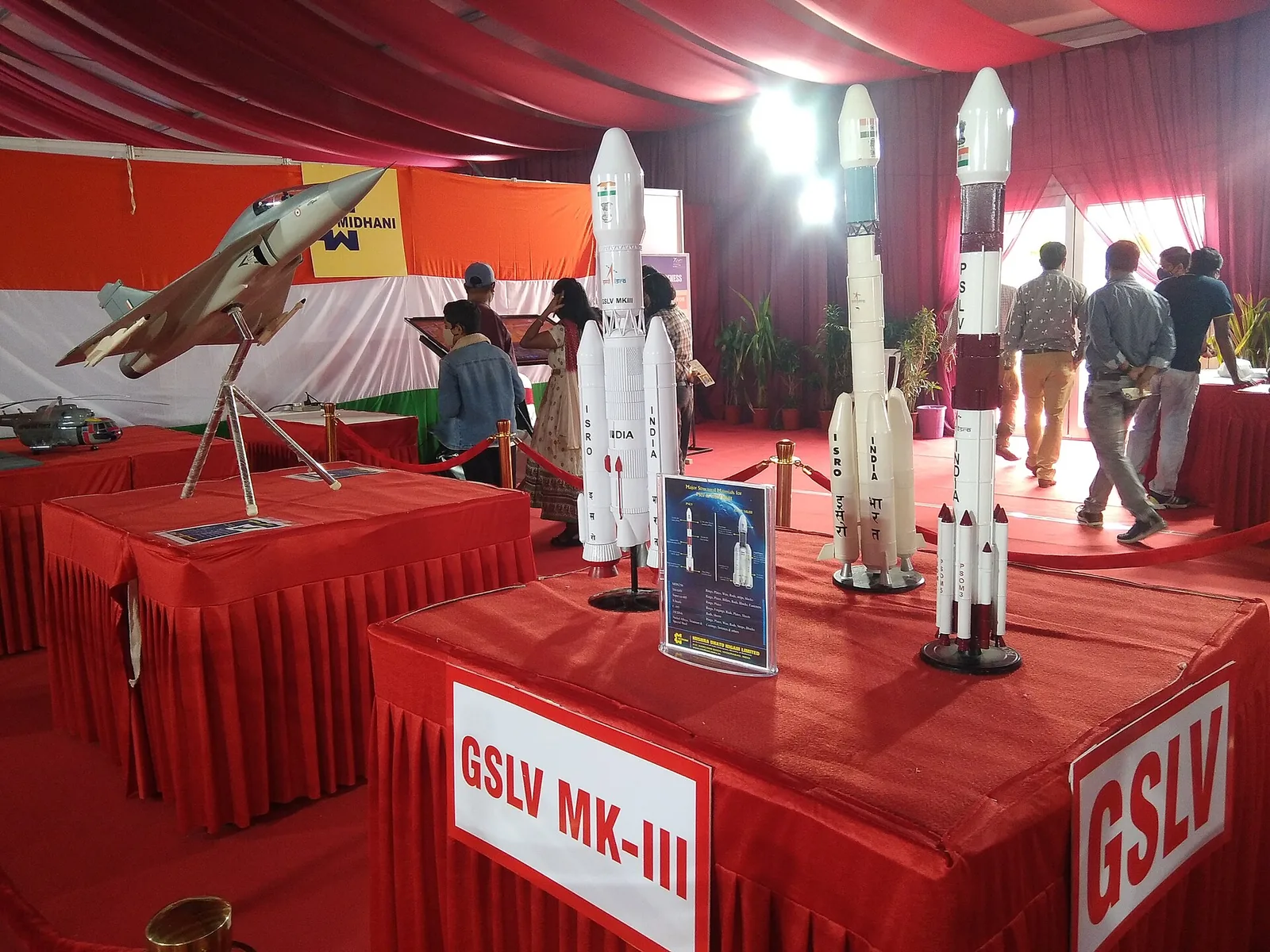
Why a southern spaceport matters for small rockets
Rockets heading south from Sriharikota have to bend their path, a fuel-hungry manoeuvre known as a dogleg, to avoid flying over Sri Lanka. A site at Kulasekarapattinam, further south on the Tamil Nadu coast, allows a direct southward path, which saves fuel and lets a small rocket carry more, Business Today explained.
The complex is meant for ISRO’s SSLV, which can carry about 500 kg to a 400 km orbit, as well as private rockets such as Skyroot Aerospace’s Vikram-1 and Agnikul Cosmos’s Agnibaan. Prime Minister Narendra Modi laid its foundation stone in February 2024. In August 2025, Narayanan said construction should finish by December 2026 and that the site could handle 20 to 25 launches a year.
The money has moved slower than the plans. Of the ₹985.96 crore allotted, ₹389.58 crore had been spent by 31 July 2025, according to figures reported by the construction journal nbmcw. Government officials have since put commissioning in 2026-27.
The first Gaganyaan test and other ISRO missions ahead
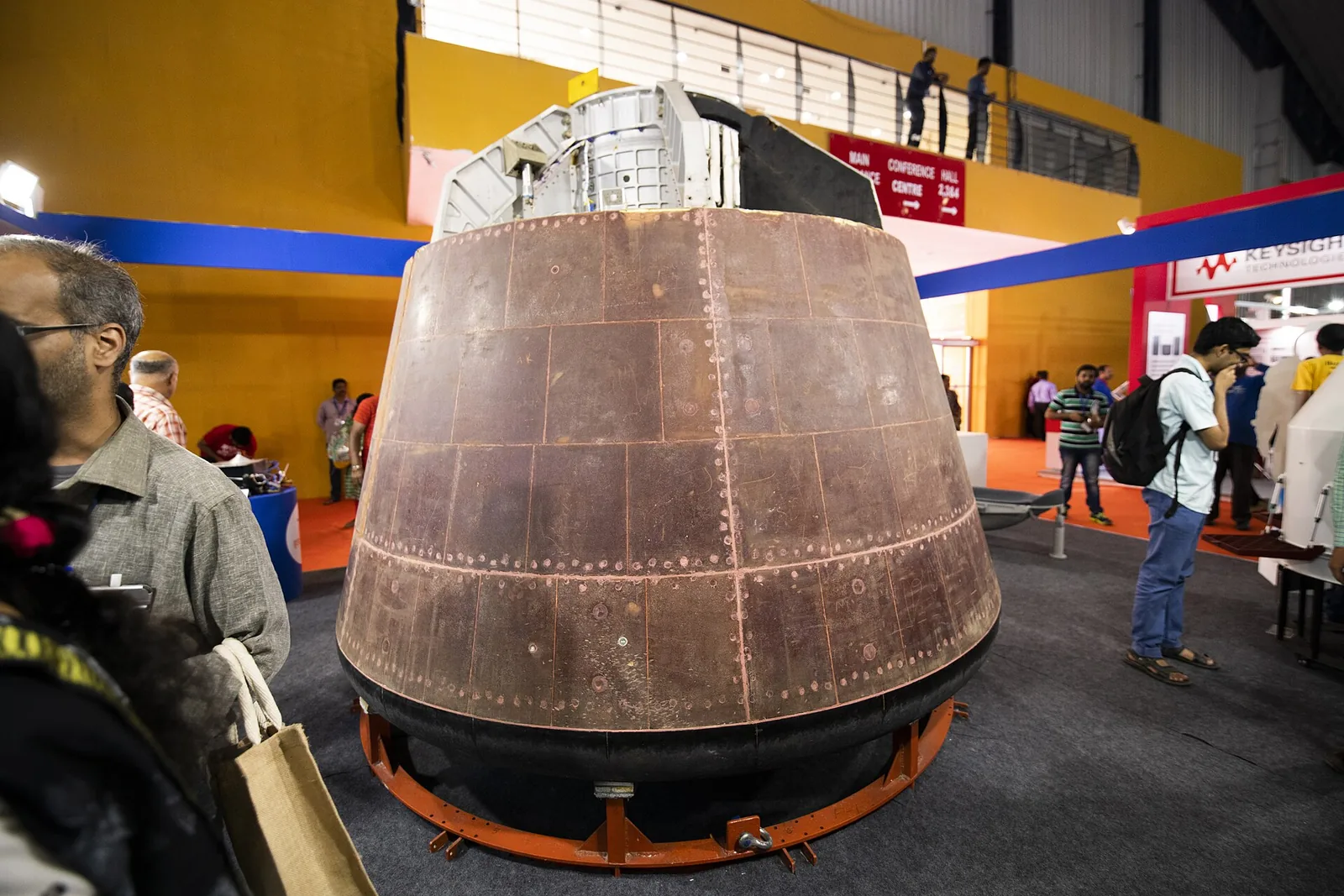
Narayanan said ISRO plans the first uncrewed Gaganyaan test within two months, to be followed by two more uncrewed tests before any crew flies. The tests will check life support, safety systems, the crew escape system and the module’s interior under changing pressure, temperature and humidity, he said. About 8,000 ground experiments have been completed, and four astronaut-designates are in training.
He also described Chandrayaan-5, a joint lunar mission with Japan’s space agency that will carry a 350 kg rover designed to work on the Moon’s surface for 100 days.
For readers following India’s science spending, our earlier report on the World Meteorological Organization’s El Nino warning shows how satellite data feeds monsoon forecasts.
Frequently asked questions
How many launch pads does ISRO have now?
Two, the First and Second Launch Pads at the Satish Dhawan Space Centre, Sriharikota.
Which new launch pads are planned?
A Third Launch Pad at Sriharikota, approved in January 2025, and an SSLV launch complex at Kulasekarapattinam in Tamil Nadu. ISRO's chief did not name the full list of four.
Is ISRO being privatised?
Chairman V. Narayanan said it is not. He said ISRO will support private firms and transfer technology to them.
When is the first Gaganyaan test?
Narayanan said the first uncrewed test is planned within the next two months, followed by two more uncrewed flights.