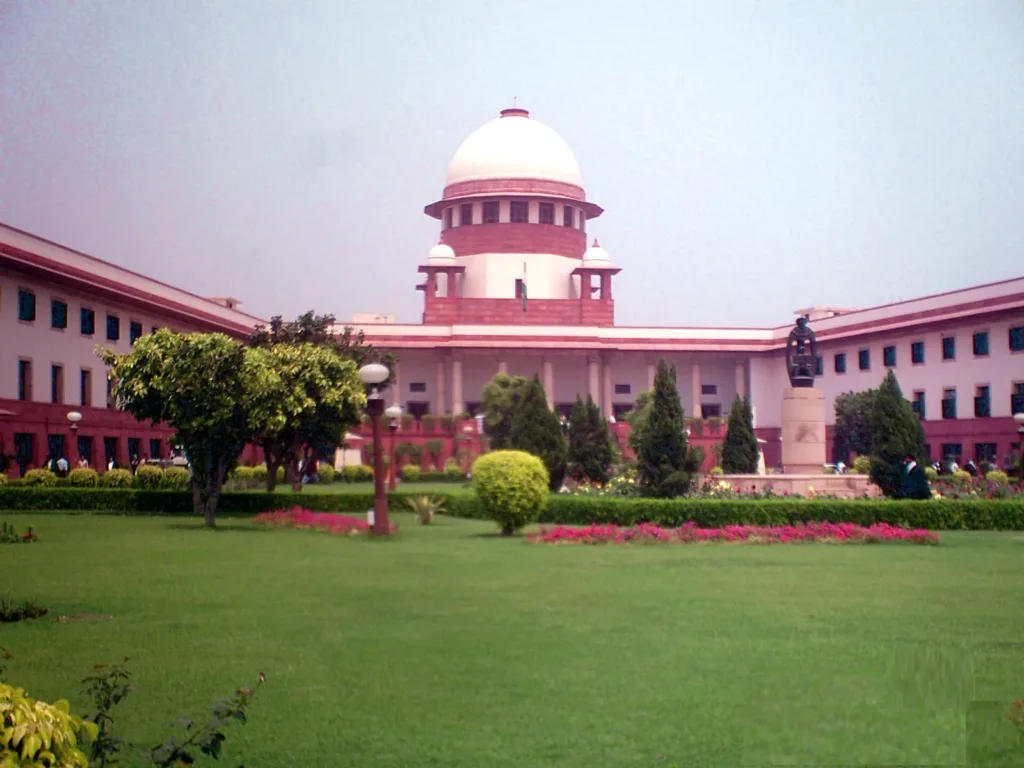
Representative image. Legaleagle86 at English Wikipedia., CC BY-SA 3.0, Wikimedia Commons

Why it matters
The judges who decide cases about citizens' rights and the government's own powers are picked through the collegium. An account from a judge who sat on it, of how much the government shaped those choices, affects public trust in the courts and the long debate on how judges should be appointed.
The Justice Kaul memoir has started a fresh debate over how India appoints its judges. Former Supreme Court judge Sanjay Kishan Kaul writes in his forthcoming book, Without Fear or Favour, that former Chief Justice of India (CJI) D.Y. Chandrachud was “too deferential” to the government on judicial appointments, according to The Indian Express, which reviewed the unpublished manuscript. Chandrachud has said he has not read the book. The Congress has cited the memoir to question the government’s role, and the government has not responded publicly in the reports available on Sunday, 25 October 2026.
What the Justice Kaul memoir says about the Supreme Court collegium
Kaul sat on the Supreme Court collegium, the group of the five senior-most judges that recommends who becomes a judge of the higher courts, from June 2022 until he retired in December 2023. The book is due from Juggernaut Books later this month, Hindustan Times and Scroll reported.
His central point is a distinction. Consultation between judges and the government is unavoidable, he writes, but asking for the government’s agreement before the collegium has even discussed a name is something else, which he calls “pre-approval”, according to HT. He writes that it is a fantasy to think the collegium is free of political pressure, and traces the friction to the Supreme Court’s 2015 ruling striking down the National Judicial Appointments Commission (NJAC), the body Parliament had created to replace the collegium.
Kaul is also critical of the collegium itself, calling it deeply imperfect, opaque and too dependent on informal channels, HT reported.
The three episodes Kaul describes
The sixth name. During the collegium’s first big round after Kaul joined, five names had been agreed for six vacancies, Scroll reported, citing The Indian Express. Kaul writes that Chandrachud proposed a sixth name on the way to the meeting, which the other judges resisted, and that Chandrachud then wondered aloud whether to phone the government for its view. Kaul says he told him he could not do that in the middle of a collegium meeting. The five names went through; the sixth did not.
The candidate from a minority faith. Kaul writes that the government asked whether the court needed more judges from that faith, and later asked about the caste of the candidate’s family before conversion, HT reported. He says he told Chandrachud that if judges were chosen this way, the government might as well appoint them itself, then closed the file and left the meeting. The government eventually agreed, according to his account.
Two cases and the bench. In an interview with journalist Karan Thapar for The Wire, reported by LiveLaw, Kaul said Chandrachud had suggested he take a “middle path” in petitions asking the court to reconsider its 2022 judgment on the Prevention of Money Laundering Act (PMLA), the anti money laundering law. Kaul said he went ahead with the hearing. He also said a case on government delays in clearing judges’ appointments was taken off his bench, and that the CJI appeared to be under some pressure, though he could not say whether that came from the government.
How Chandrachud and the Congress responded
Chandrachud told The Indian Express that he had not read the book and could not respond in detail without knowing the context, The Pioneer reported. He described his collegium meetings with Kaul as respectful and marked by reasoned discussion, said he could not recall Kaul walking out of a meeting, and said he did not recall any recorded dissent in collegium resolutions.
Congress general secretary Jairam Ramesh said on X that the account raised serious questions about judicial independence under the Narendra Modi government, Newsdrum reported. He said questions about a candidate’s caste and religion had no place in appointments, and argued that Chandrachud had not denied that the government held discussions with the Chief Justice on appointments.
The Union Law Ministry and the BJP had not commented publicly on the Justice Kaul memoir in the reports available on Sunday evening. Kaul himself has said he does not oppose talks with the government, only the stage at which they happen, according to LiveLaw.
Collegium vs NJAC: how judges are picked
The row turns on how judicial appointments work, a system most readers never see. NewsPlainly has set out the two models side by side, from the facts in HT’s report on the memoir.
| Point | Collegium (in use) | NJAC (struck down) |
|---|---|---|
| Who decides | CJI and the senior-most Supreme Court judges | 3 senior judges, the Union law minister and 2 eminent persons |
| Who has the lead | Judges have primacy in recommending names | Shared with the law minister and 2 eminent persons |
| Blocking a name | Decided among the judges | Any 2 members could block a name |
| Origin | Supreme Court rulings in the 1990s | Constitutional amendment and a companion law |
| Status | Restored in October 2015 | Struck down 4:1 by a 5-judge bench |
This is why timing matters in Kaul’s account. Under the collegium the government’s views are meant to come after the judges have deliberated; Kaul’s complaint is that seeking them earlier can shape the list itself, and that a CJI with a long tenure sets a habit his successors find hard to break, as he told The Wire.
What happens next with the Justice Kaul memoir
All the accounts so far come from a pre-publication manuscript and interviews. The full book will show how Kaul tells each episode in his own words, including the PMLA and appointments cases. Chandrachud has said he could respond only after reading it. The Congress has said it will keep raising the issue, and the government has not yet set out its position. For an earlier Supreme Court ruling we explained, read our report on the Andhra Pradesh municipal polls case.
Frequently asked questions
What is Justice Kaul's memoir called?
Without Fear or Favour. It is due from Juggernaut Books later in October 2026.
What did Justice Kaul say about Chandrachud?
He writes that the former CJI was too deferential to the government on appointments and once considered phoning the government during a collegium meeting, according to reports on the manuscript.
How did D.Y. Chandrachud respond?
He told The Indian Express he had not read the book, described collegium meetings as respectful, and said he could not recall Kaul walking out of a meeting.
What is the Supreme Court collegium?
The CJI and the senior-most Supreme Court judges, who recommend appointments and transfers of judges to the higher courts.