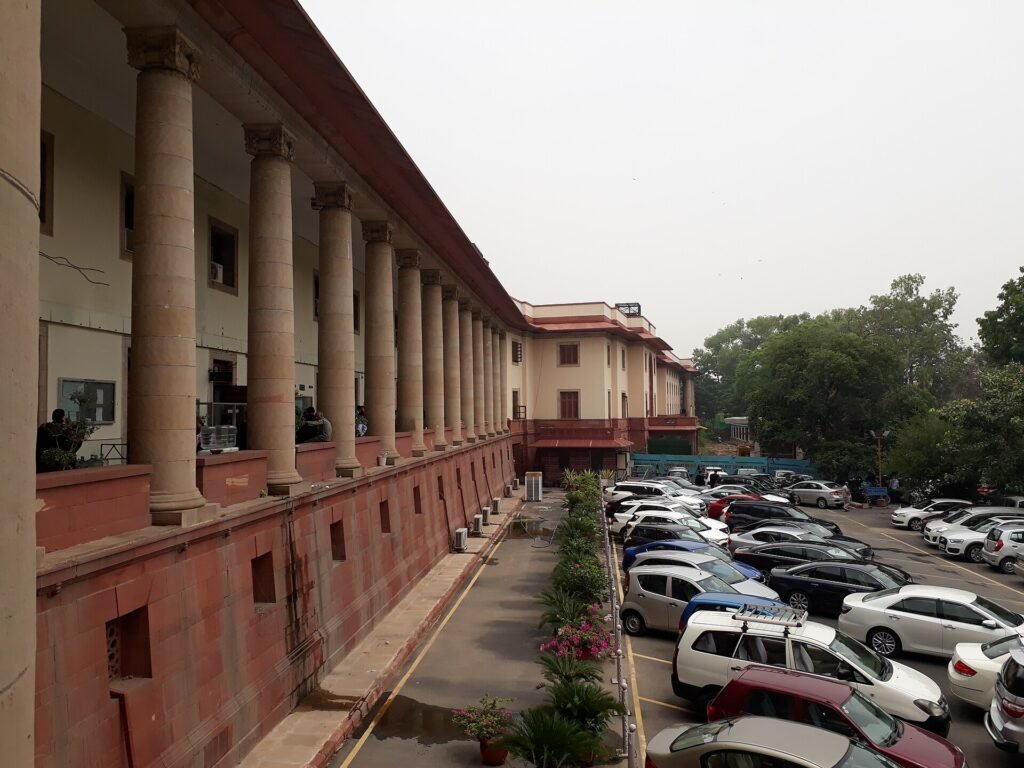
Representative image. Pinakpani, CC BY-SA 4.0, Wikimedia Commons

Why it matters
The order decides who gets heard before a court orders a corruption FIR against a public servant, a question that applies far beyond this case. It also sets limits on how far ED information can push state police to act. For Kerala, it keeps a case against a former chief minister and a former minister in the courts rather than with investigators, at least for now.
Former Kerala chief minister Pinarayi Vijayan won a seven-day pause on 21 October 2026 in the corruption investigation linked to payments by Cochin Minerals and Rutile Ltd (CMRL) to Exalogic Solutions, a now-defunct IT firm associated with his daughter Veena T. The Supreme Court froze the Vigilance probe and sent the dispute back to the Kerala High Court, which had refused to hear an appeal by Pinarayi Vijayan, Veena and her husband, former minister P A Mohamed Riyas.
What the Supreme Court ordered in the Exalogic case
A special bench of Justices Joymalya Bagchi and V Mohana set aside a 15 October order of a High Court division bench, which had said the three could not appeal, LiveLaw reported. Their appeal is now back on the High Court’s list. The FIR filed by the Vigilance and Anti-Corruption Bureau (VACB) stays on record, but no investigation can take place for seven days so that the three can seek interim relief.
The bench said Pinarayi Vijayan and his family members were clearly aggrieved, since the material sent by the Enforcement Directorate (ED) names them and the single judge had found it showed a cognisable offence. It added that its view covered only their right to appeal, not the merits of the allegations. The court also said nothing about the separate money laundering case the ED registered after the state FIR.
How the CMRL case reached the Supreme Court
The ED alleges that CMRL, a mineral sands company, paid Exalogic for IT consultancy that was never provided. LiveLaw put the payments at ₹1.72 crore made monthly between 2017 and 2020, while a PTI report carried by the Hindustan Times put them at ₹2.78 crore. On 19 August, the ED said in a press release that it had found evidence of hawala transactions.
On 7 September, the ED wrote to the Kerala Director General of Police asking for a corruption FIR against Pinarayi Vijayan, Veena and Riyas. The state government instead asked the Crime Branch to form a special team for a preliminary enquiry. A petitioner, K M Shajahan, then went to the High Court. On 9 October, a single judge ruled that no preliminary enquiry was needed once the ED had shared its information, and directed the VACB to register a case and investigate. The VACB registered two FIRs. On 15 October, a division bench turned down the family’s request for leave to appeal.
What each side argued in court
Senior advocate Siddharth Luthra, appearing for Pinarayi Vijayan, called it a “peculiar case”. He argued that the single judge heard what was in effect a public interest petition without having that subject on the roster, and that the division bench then refused leave to appeal. Pinarayi Vijayan and his family had also told the High Court that they were never heard before the FIR was ordered.
The ED, represented by advocate Zoheb Hossain, backed the High Court’s order. He argued that the ED’s information disclosed a cognisable offence, so an FIR had to follow, and that the accused had no right to challenge it. He said the agency had also found hawala transactions, for which a separate case had been filed. Counsel for Shajahan said the single judge’s order followed the Supreme Court’s judgment in the Vijay Madanlal Choudhary case, and that an accused has no right to be heard before an FIR is ordered.
The state government’s counsel told the court that the FIR had been registered even before the division bench took up the appeal.
What the judges said about the ED’s role
Justice Bagchi told the ED’s counsel that the agency could carry on with its money laundering investigation, including into a former chief minister, but should not use its powers to step into the work of other agencies. “We are not against any investigation,” he said, according to LiveLaw, adding that the FIR would stay but there would be no investigation until the appeal court decided the issues.
The bench said a key question is whether information sent by the ED under Section 66(2) of the Prevention of Money Laundering Act forces state police to register an FIR, or whether they can verify it first. It noted that the single judge’s order seemed to take both positions in different paragraphs. Justice Bagchi also asked how a corruption probe against a former chief minister could go ahead without prior approval under Section 17A of the Prevention of Corruption Act.
The court pointed to a change in the new criminal procedure law. Under Section 175(4) of the Bharatiya Nagarik Suraksha Sanhita (BNSS), a magistrate must involve a public servant and their superior before ordering an FIR over acts linked to official duty. The old Section 156(3) of the CrPC had no such step.
What happens next for Pinarayi Vijayan
The appeal by Pinarayi Vijayan goes back to a division bench of the Kerala High Court, which can decide on its own whether to extend the pause on the probe, the Supreme Court said. If the High Court gives Pinarayi Vijayan no relief within seven days, the VACB investigation can resume. The ED’s separate money laundering case is not affected by the order.
The case is one of several political and legal fights playing out in courts this month. NewsPlainly earlier reported on the release of CJP leaders Saurav Das and Ashutosh Ranka in Delhi.
Frequently asked questions
Is the FIR against Pinarayi Vijayan cancelled?
No. The FIR stays on record. Only the investigation is paused for 7 days while the family appeals in the Kerala High Court.
What is the Exalogic case about?
The ED alleges that CMRL paid Exalogic Solutions, a firm linked to Veena T, for IT consultancy that was never provided. LiveLaw puts the sum at ₹1.72 crore; PTI puts it at ₹2.78 crore.
Does the order stop the ED's money laundering case?
No. The Supreme Court said nothing about the ED's separate money laundering case, and said the ED can continue its own investigation.