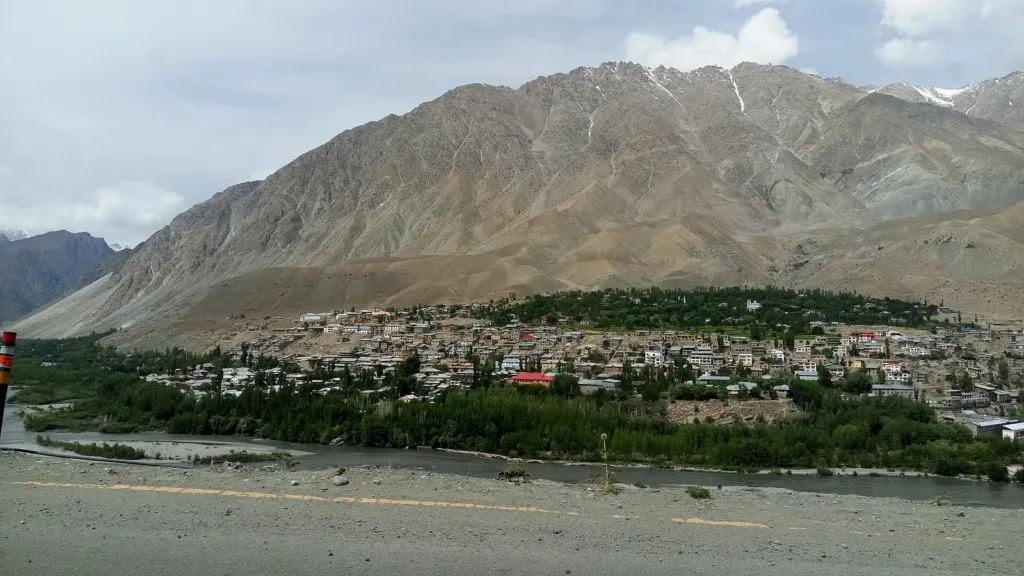
Representative image. Lalitgupta isgec, CC BY-SA 4.0, Wikimedia Commons

Why it matters
Hill councils decide local spending, land and development in Ladakh, and for now no elected councillor sits on any of them. Residents get a vote first in the 21 November panchayat polls, while council elections wait for new boundaries and better weather.
The Ladakh administration dissolved the Kargil hill council with immediate effect on 21 October 2026, the same day the Union Territory’s State Election Commission set 21 November as polling day for panchayat elections. The Ladakh Autonomous Hill Development Council (LAHDC), Kargil, was the only elected body still working in Ladakh, Greater Kashmir reported.
Until new councils are formed, the Kargil hill council’s work passes to the Deputy Commissioner of Kargil, who is also the council’s Chief Executive Officer, on an interim basis, according to the order.
Why the Kargil hill council was dissolved
The order gave two reasons, according to The Tribune and Greater Kashmir. The first was a wave of resignations on 20 October: the council’s Chief Executive Councillor, Dr Mohd Jaffar Akhoon, three Executive Councillors and six other councillors stepped down. The reports did not give their reasons for resigning.
The second was the redrawing of the old Kargil district. Drass, Zanskar and Sankoo have been carved out as new districts, and on 16 October the administration notified Sankoo as Ladakh’s eighth district with its own hill council under the LAHDC Act, 1997. That change shrank the area the Kargil hill council covered, leaving it with a smaller territory than the one voters elected it for.
The order said the interim arrangement was meant “to avoid any administrative vacuum”, The Tribune reported. All elected and nominated members of the Kargil hill council have ceased to hold office. The legal basis is the Ladakh Autonomous Hill Development Councils (Amendment) Regulation, 2026, promulgated by President Droupadi Murmu and notified by Lieutenant Governor Vinai Kumar Saxena.
The Kargil hill council had time left. Its term was due to run until October 2028, while the Leh council’s term ended on 30 October 2025, according to Greater Kashmir. With this order, both of Ladakh’s original hill councils are now without elected members.
Eight hill councils and 100 seats
The administration has notified 100 elected constituencies spread across eight councils, The Tribune reported. Leh has 22 seats, a reconstituted Kargil hill council 21, Sankoo 13, Changthang 10, and Nubra, Sham and Zanskar 9 each, with Drass at 7.
Ladakh had two hill councils before this reorganisation, so the number has quadrupled. The administration plans to redraw the boundaries of all eight at once and then hold elections, Greater Kashmir said, adding that winter weather rules out council polls until about April or May next year.
The changes follow amendments reported on 19 October that let the administration fix each council’s elected seats anywhere from 7 to 24, and nominate up to four members from women and unrepresented communities, according to The Tribune.
Ladakh panchayat elections: key dates
Panchayat polls come first. Ladakh’s State Election Commission has scheduled these dates, as reported by The Tribune and UNI:
- 21 October: Model Code of Conduct in force
- 26 October: election notification
- 2 November: last date for nominations
- 5 November: last date to withdraw
- 21 November: polling
- 30 November: whole process to be completed
State Election Commissioner Sudhanshu Pandey said the code must be followed “scrupulously by all concerned”, The Tribune reported. Ladakh last held general panchayat elections in November 2018, so the halqa bodies have gone eight years without a fresh vote.
What the Kargil Democratic Alliance and the administration have said
The Kargil Democratic Alliance (KDA), one of the two Ladakh groups in talks with the Centre on the region’s future, has objected to the end of the Kargil hill council. Its co-chairman Sajjad Kargili asked how a statutory body could be placed above a constitutional framework, The Tribune reported, and said bureaucratic decisions were shrinking democratic space. Earlier, on 19 October, he called the amendments to the hill councils “deeply problematic”, saying they were made without consulting the people of Ladakh while talks were still going on.
The administration has said the changes bring the councils in line with the Jammu and Kashmir Reorganisation Act, 2019. Chief Secretary Ashish Kundra said the administration was appointed to resolve people’s problems and that the Lieutenant Governor, as the President’s representative, has constitutional duties to carry out, according to The Tribune. Officials have also said day-to-day governance cannot be put on hold.
The talks between the Centre and Ladakh’s representative bodies, which cover the region’s constitutional status and protections for the hill councils, are continuing. For another local body election that reached the courts this week, read our report on the Andhra Pradesh municipal polls.
Frequently asked questions
When are the Ladakh panchayat elections?
Polling is on 21 November 2026. Nominations close on 2 November and withdrawals on 5 November.
Who runs the Kargil hill council now?
The Deputy Commissioner and Chief Executive Officer of Kargil, on an interim basis, until new councils are formed.
How many hill councils does Ladakh have now?
Eight: Leh, Kargil, Sankoo, Changthang, Nubra, Sham, Zanskar and Drass, with 100 elected seats in all.
When will hill council elections be held?
After delimitation of all eight councils. Greater Kashmir reported that weather rules them out until about April or May next year.