
Representative image. mckaysavage, CC BY 2.0, Wikimedia Commons

Why it matters
Southern India depends on northeast monsoon rain between October and December for crops and drinking water. A very strong El Nino can weaken that rain and push up the prices of edible oils, sugar and grains, which the RBI says is already happening and which feeds into loan rates.
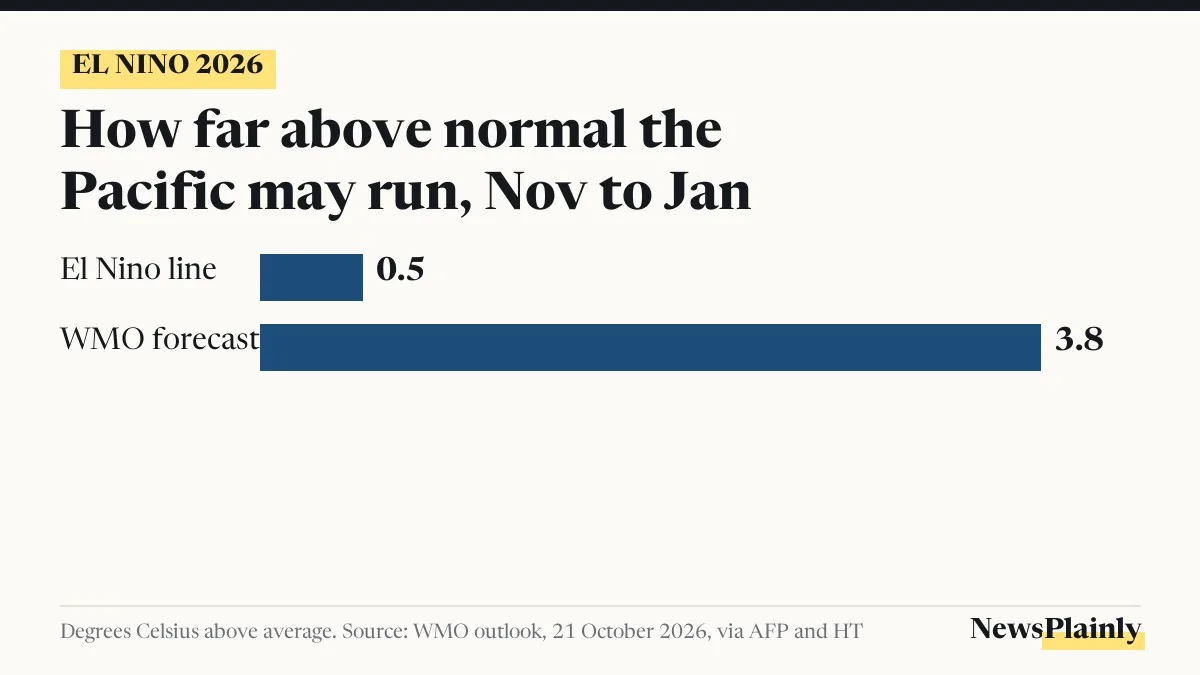
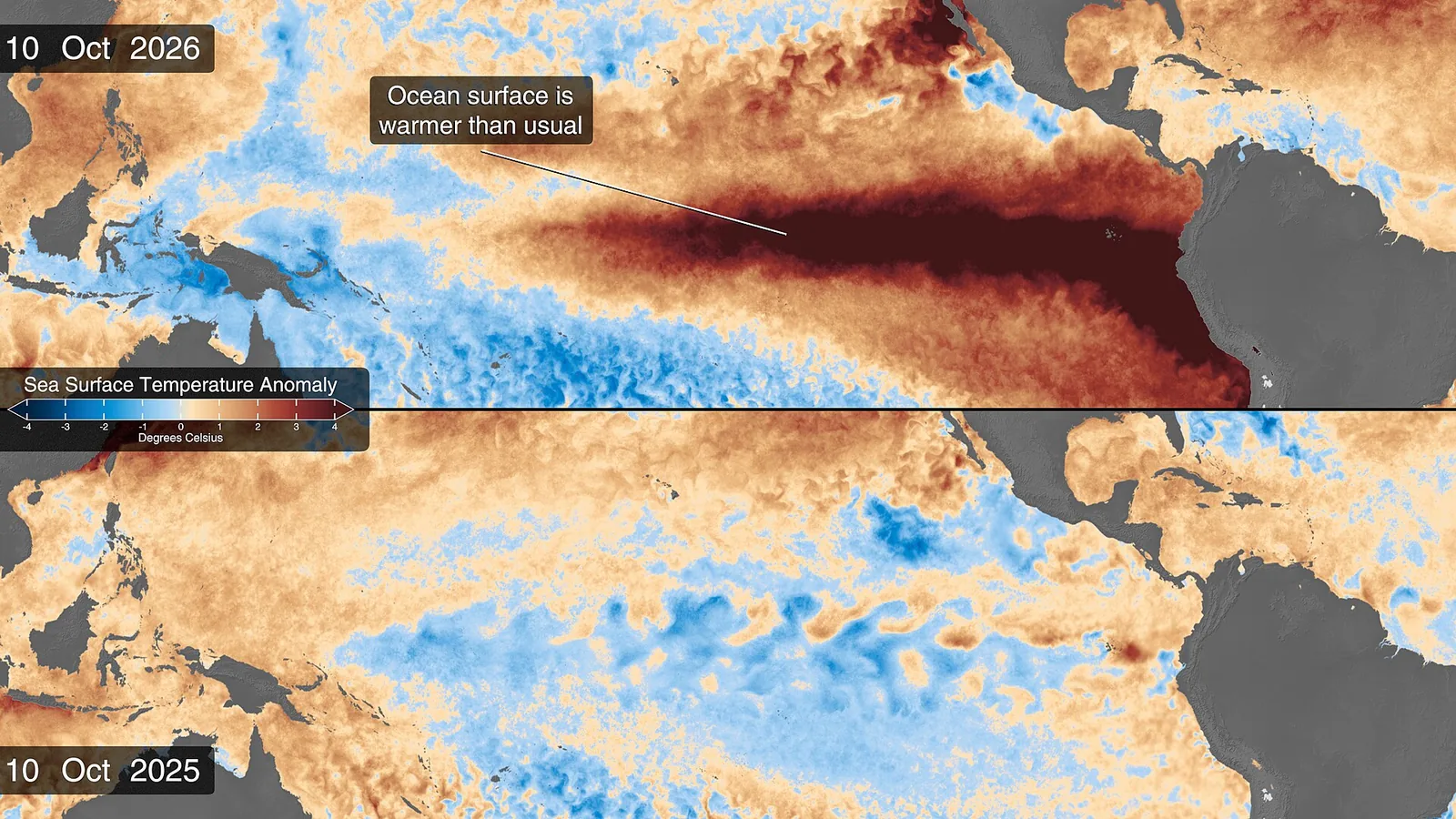
El Nino 2026 could become the strongest on record, the World Meteorological Organization (WMO) said on 21 October 2026, with Pacific Ocean temperatures forecast to run as much as 3.8°C above normal between November and January. The UN weather agency said the event is likely to peak in December and could bring more heat and weaker rain to South Asia, including India.
El Nino is a natural warming of the surface waters of the central and eastern tropical Pacific. It shifts winds, air pressure and rainfall around the world, and it usually returns every two to seven years and lasts nine to 12 months, the French news agency AFP reported. The WMO declares an El Nino once the sea surface temperature in that part of the Pacific is at least 0.5°C above average, the Hindustan Times reported. A sea surface temperature reading of 3.8°C would be more than seven times that threshold.
What the WMO said about El Nino 2026
The warning came in the WMO’s latest seasonal climate outlook, released late on Wednesday, and at a press conference in Geneva. WMO Secretary-General Celeste Saulo said the current event “could be unprecedented in strength”, according to AFP.
She said the event was off the monitoring charts the agency has used for four decades. “El Nino will peak toward the end of 2026, but its impacts will be felt long after that,” she said, AFP reported.
Saulo spoke alongside Tom Fletcher, the UN’s emergency relief chief, and the two issued a joint call for countries to act early. Fletcher called the coming El Nino a “wrecking ball” of extreme heat, droughts and floods, and said he had released $50 million to help 11 countries on the front line, including Chad, Ethiopia, Somalia and South Sudan.
The outlook expects East Africa to be wetter than normal, with a higher risk of floods, while southern Africa turns drier. Parts of Central America, the southern Caribbean and the Amazon face a greater risk of drought, the WMO said.
What El Nino 2026 means for India this winter
For South Asia, which in the WMO’s grouping covers India, Pakistan, Bangladesh, Nepal, Bhutan, Sri Lanka, the Maldives, Myanmar and Afghanistan, the outlook points to normal to above normal daytime and night-time temperatures over most of the region.
The bigger concern for India is rain in the south. The WMO noted that southern India, Sri Lanka and the Maldives get a large share of their rain between October and December, and that this rain is critical for farming, the Hindustan Times reported. In India this is the northeast monsoon, which brings most of the year’s rain to Tamil Nadu and parts of Andhra Pradesh and Kerala.
The south-west monsoon, the main June to September rainy season, withdrew from India on 15 October, and northeast monsoon rains began over southern India the same day, according to the Hindustan Times, which reported that this season’s rain is likely to suffer under El Nino. Tamil Nadu is in a wet spell for now: rain is forecast to last till 26 October as a low pressure area forms.

Why the RBI is watching the weather
El Nino has already shown up in India’s price data. In the minutes of its October policy meeting, the Reserve Bank of India said a deficient south-west monsoon and strong El Nino conditions pose risks to farm output and rural demand, though large food grain stocks should soften the blow. The RBI minutes list El Nino among the reasons it expects inflation to reach 6.0% in the October to December quarter.
One member of the RBI’s rate panel, the economist Saugata Bhattacharya, wrote that weather disruptions linked to El Nino had already pushed up prices of several farm goods, especially edible oils and sugar, and to some extent cereals. Another, Prof. Ram Singh, pointed to stress on the farm sector from below normal rain and El Nino.
That matters for household budgets. The RBI raised its key lending rate by 0.25 percentage point in October partly because such price rises were spreading.
A warmer world makes El Nino worse
The WMO said the El Nino will add to warming already caused by human activity, bringing higher temperatures to much of the planet. On the same day, the UN Environment Programme (UNEP) said in a new report that global warming could reach 2.8°C above pre-industrial levels this century if current policies continue, the Hindustan Times reported. UNEP called for deep and quick cuts in greenhouse gas emissions.
Saulo said an El Nino does not have to become a humanitarian disaster. The forecasts and early warning systems exist, she said, and what is needed now is action to protect the most vulnerable communities.
For India, the next signs to watch are the India Meteorological Department’s (IMD) updates on northeast monsoon rain over the south, and food price data in the coming months. The WMO expects El Nino 2026 to peak in December, with effects lasting well into 2027.
Frequently asked questions
What is El Nino?
A natural warming of the central and eastern tropical Pacific Ocean that changes winds and rainfall around the world. It returns every two to seven years.
How strong is the 2026 El Nino?
The WMO says Pacific sea surface temperatures may reach 3.8°C above average between November and January, which it says could be unprecedented.
How does El Nino affect India?
The WMO expects warmer than normal temperatures across South Asia and a risk to October to December rain in southern India, which farming depends on.