Representative image. SerChevalerie, CC0, Wikimedia Commons

Why it matters
Gig and platform workers were defined in law only when the Code on Social Security came into force in November 2025. This board is the body the law gives the job of recommending and monitoring welfare schemes for them, so who sits on it and how often it meets shapes what benefits are proposed next. Aggregators get seats on its gig panel while the Code also asks them to contribute 1% to 2% of turnover.
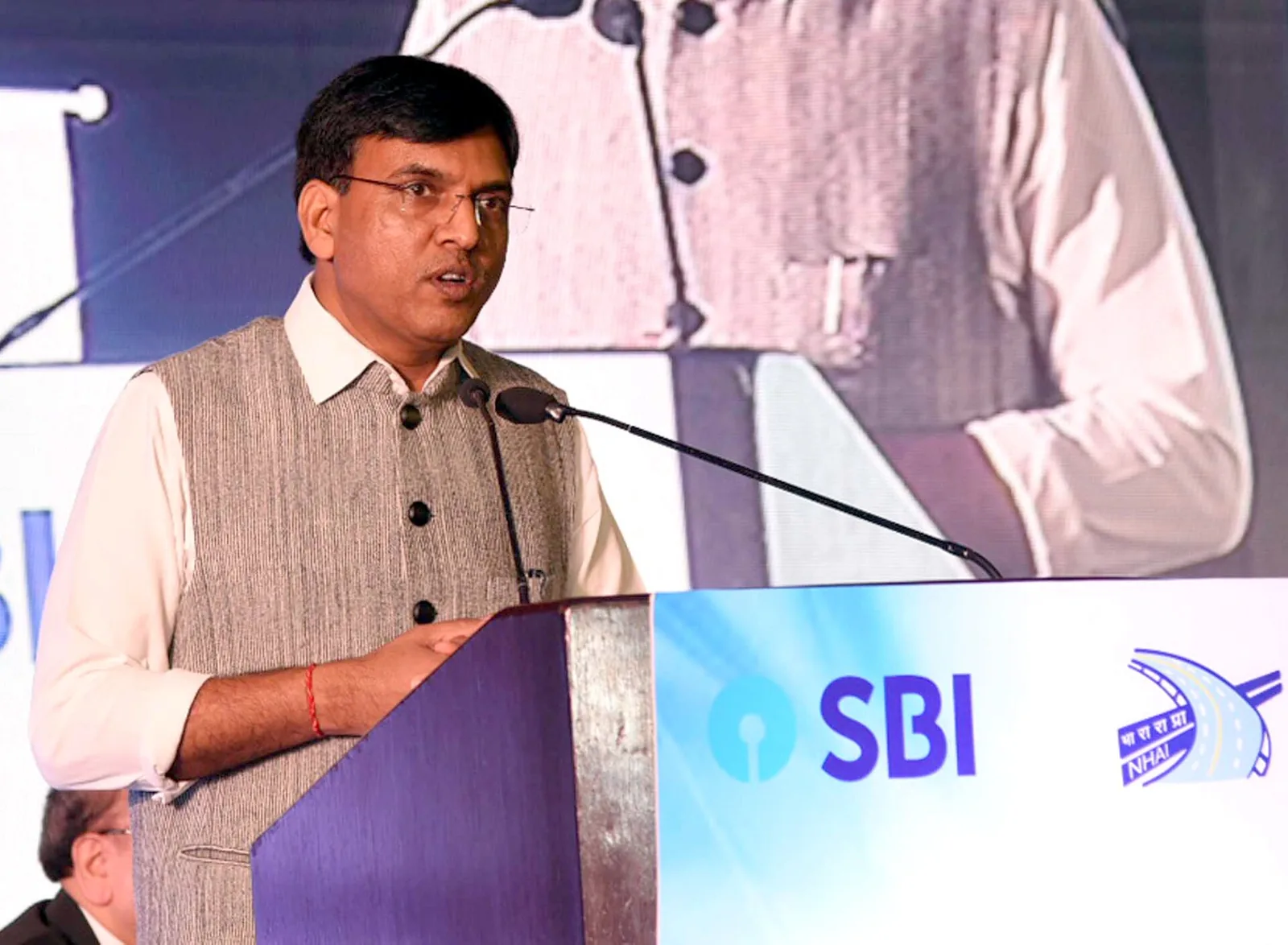
The Union Labour Ministry on 30 October 2026 notified the National Social Security Board for unorganised workers and gig and platform workers, the social security board that the Code on Social Security, 2020 sets up to recommend and monitor welfare schemes for people outside regular salaried jobs. The Union Labour Minister, Mansukh Mandaviya, will chair it, according to the ministry’s statement released through the Press Information Bureau (PIB).
The statement said the board will include representatives of the Centre and the states, aggregator companies, employers, civil society groups, trade unions and associations of gig and platform workers. Aggregators are the digital platforms that link customers with workers, such as food delivery and ride-hailing apps. The release did not name any member or give a date for the first meeting.
Gig workers are people paid per task or job outside a regular employer-employee relationship; platform workers are the subset who find that work through an app. Both groups were defined in law for the first time by the Code, which came into force on 21 November 2025, a December 2025 PIB release said.
What the social security board will do
The ministry listed six functions. The board will:
- recommend schemes to the Centre for different groups of unorganised, gig and platform workers;
- advise the Centre on questions about running the Code that are referred to it;
- monitor the welfare schemes the Centre runs for these workers;
- review the record keeping that states carry out;
- review spending from the fund and its accounts; and
- take up any other task the Centre assigns.
That list matches section 6(7) of the Code almost word for word. The board must meet at least three times a year and follow rules of procedure that the Centre prescribes. Under section 6(5), each board has a three-year term.
For gig workers, the role is advisory. Section 114(1) leaves the framing and notification of schemes to the Central Government, covering life and disability cover, accident insurance, health and maternity benefits, old age protection and creches. The board recommends and watches; the government decides.
Who sits on the board: two line-ups under one law
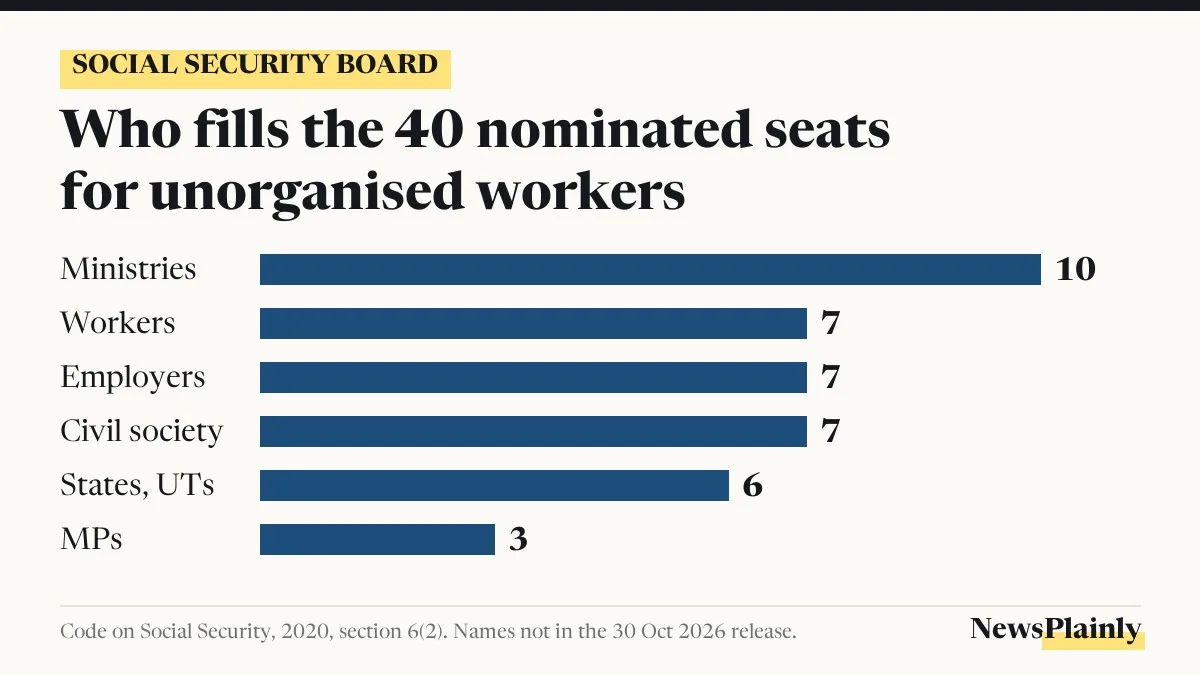
PIB and the reports by The Hindu and the Indo-Asian News Service (IANS) speak of “boards” in the plural, and The Hindu reported that Mandaviya will chair both. The Code itself describes one National Social Security Board whose membership changes when it handles gig and platform work. Section 6(2) sets the line-up for unorganised workers; section 114(6) swaps most of those seats for a smaller gig and platform panel while keeping the same chair and vice-chair. Two of the gig panel’s seats go to the heads of the Employees’ State Insurance Corporation (ESIC), which runs health insurance for workers, and the Employees’ Provident Fund Organisation (EPFO).
| Seat | Unorganised workers (section 6(2)) | Gig and platform workers (section 114(6)) |
|---|---|---|
| Chair | Union Labour Minister | Union Labour Minister |
| Vice-chair | Labour Secretary | Labour Secretary |
| Workers | 7 for unorganised sector workers | 5 for gig and platform workers |
| Employers or platforms | 7 for unorganised sector employers | 5 for aggregators |
| States | 5 for states, 1 for Union territories | 5 for states, by rotation |
| Others | 7 from civil society, 3 MPs (2 Lok Sabha, 1 Rajya Sabha), 10 from central ministries | Director General of ESIC, Central Provident Fund Commissioner (EPFO), expert members |
| Member-secretary | Director General Labour Welfare | Joint Secretary, Labour Ministry |
The Code also asks the Centre to give adequate representation to Scheduled Castes, Scheduled Tribes, minorities and women among the nominated members, and says every member other than the chair should be a person of standing in labour welfare, management, finance, law or administration.
So the table shows what the law requires, not confirmed names. Whether the notification follows these numbers seat for seat can only be checked once the gazette text or a member list is public.
Why gig workers waited for this board
The Code was passed in 2020 but came into force only in November 2025. Dates from PIB releases show the steps so far:
- 26 August 2021: e-Shram portal launched to register unorganised workers, including platform workers, with a Universal Account Number (UAN).
- 21 October 2024: e-Shram “One-Stop-Solution” added, bringing several welfare schemes onto the same portal.
- Budget 2025-26: platform workers promised e-Shram registration, identity cards and health cover under Ayushman Bharat-Pradhan Mantri Jan Arogya Yojana (AB-PMJAY).
- 21 November 2025: Code on Social Security comes into force.
- 1 December 2025: about 5.12 lakh platform workers registered on e-Shram after three national campaigns.
- 30 October 2026: National Social Security Board notified.
NITI Aayog (National Institution for Transforming India), the government’s policy think tank, estimated in a June 2022 report that India had 7.7 million (77 lakh) gig and platform workers in 2020-21 and would have 23.5 million by 2029-30, the December 2025 release noted. The 5.12 lakh platform workers on e-Shram equal about 6.6% of that 2020-21 estimate. That is NewsPlainly’s calculation and only a rough scale: the two figures are from different years, and the registration count covers platform workers alone.
The money question for aggregators
Funding for gig workers is the other open question. The board’s job includes reviewing spending from the social security fund, and the Code says where part of that money should come from. Section 114(4) asks covered aggregators to contribute between 1% and 2% of their annual turnover, at a rate the Centre notifies. The contribution cannot exceed 5% of what the aggregator pays or owes to its gig and platform workers, and the start date is also to be notified.
A hypothetical example shows how the cap works. Take an aggregator with ₹1,000 crore in annual turnover that pays ₹300 crore to its workers. At 1%, it would owe ₹10 crore. At 2%, the figure would be ₹20 crore, but the 5% cap on ₹300 crore limits it to ₹15 crore. These numbers are NewsPlainly’s illustration, not any company’s accounts.
The 30 October statement did not mention the contribution rate or its start date, and neither the IANS nor The Hindu report on the notification did.
What comes next for the National Social Security Board
The next visible steps are the names of the nominated members and the rules of procedure the Centre has to prescribe for meetings. The first meeting date was not in the statement. Once it starts meeting, the board can send scheme proposals to the Centre, but any new benefit for gig workers such as delivery riders, cab drivers or other app workers still needs a scheme notified by the government.
The Hindu and IANS both reported the notification from the ministry’s statement, and neither carried comment from platform companies or worker unions on the board’s make-up.
Frequently asked questions
Who chairs the National Social Security Board?
The Union Minister for Labour and Employment, currently Mansukh Mandaviya, chairs it, with the Labour Secretary as vice-chair under the Code.
How often will the social security board meet?
At least three times a year, according to the ministry's 30 October 2026 statement and section 6(6) of the Code.
Does the board give money to gig workers directly?
No. It recommends and monitors schemes. The Central Government frames and notifies the schemes themselves under section 114 of the Code.
How much do platforms have to contribute?
The Code sets 1% to 2% of an aggregator's annual turnover, capped at 5% of what it pays gig and platform workers. The exact rate and start date are to be notified.