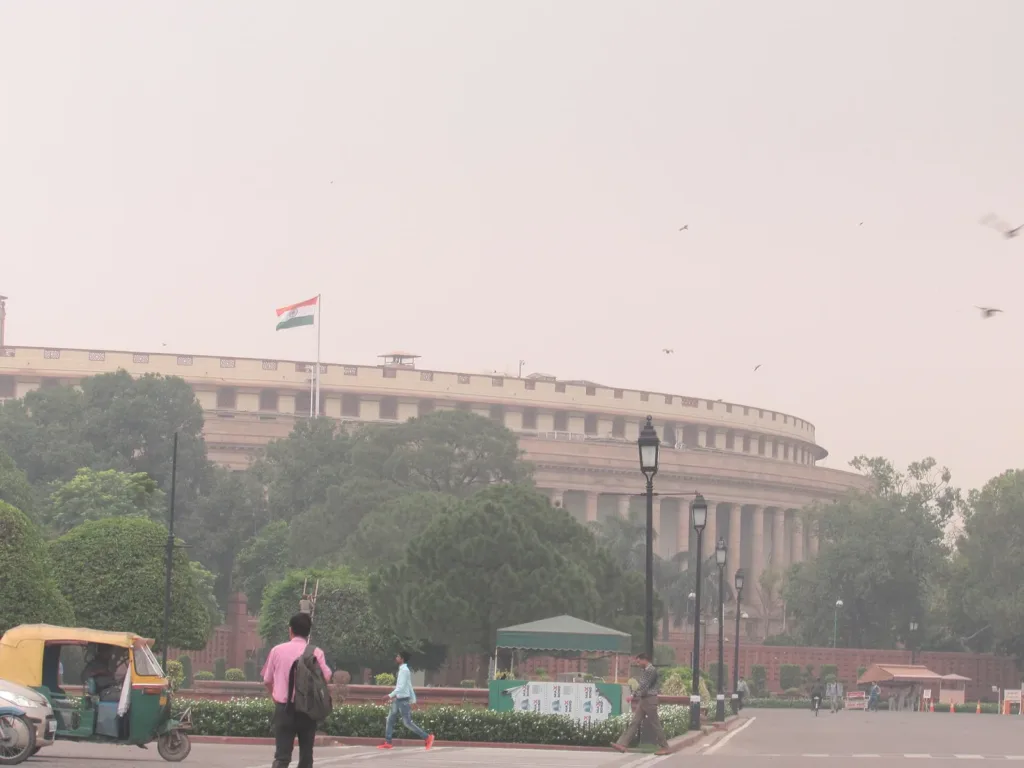
Representative image. Akshatha Inamdar, CC BY-SA 4.0, Wikimedia Commons

Why it matters
The declaration puts the parliaments of all 10 BRICS members, including China, Russia and Iran, on record condemning the Pahalgam attack and backing reform of the UN Security Council. It also sets shared positions on unilateral sanctions, West Asia and climate finance. In the passages quoted, though, it names no country as behind the attack and no country that imposes sanctions.
The 12th BRICS Parliamentary Forum, a yearly meeting of lawmakers from the BRICS group (named after its first members Brazil, Russia, India, China and South Africa), closed in New Delhi on 27 October 2026 with a joint declaration that condemns the 22 April 2025 terror attack at Pahalgam in Jammu and Kashmir, in which 26 people were killed. The declaration also calls for reform of the United Nations Security Council and condemns unilateral economic sanctions, according to the text quoted by The Hindu and the news agencies ANI (Asian News International) and IANS (Indo-Asian News Service).
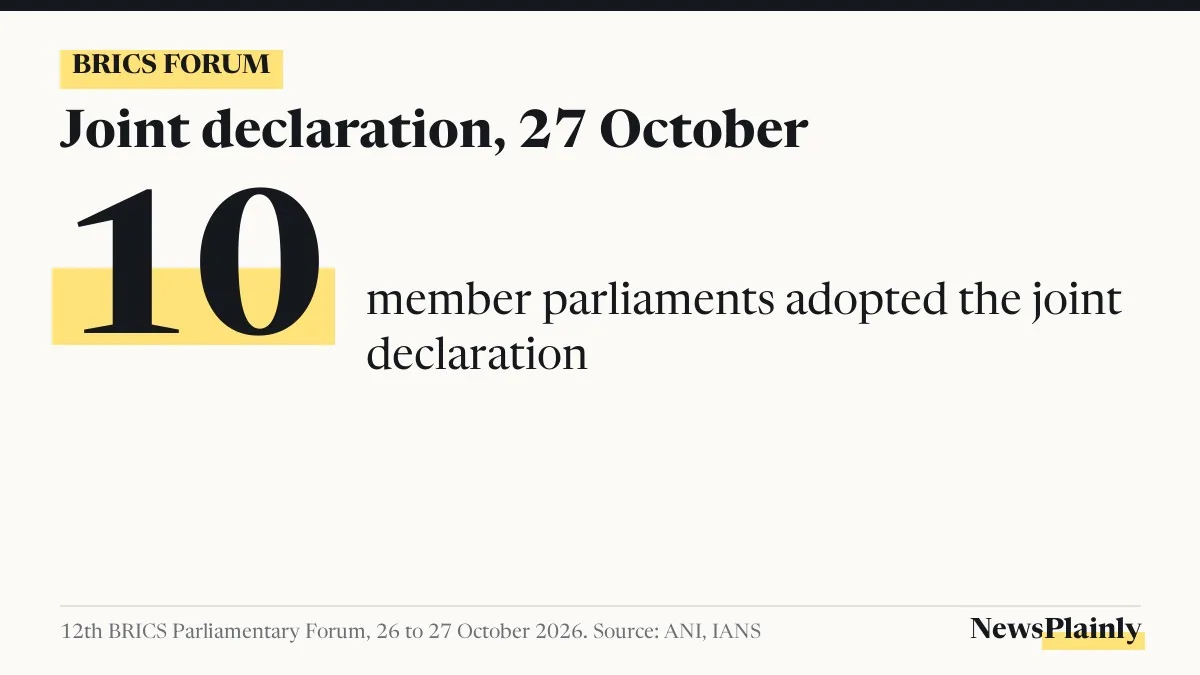
Lok Sabha Speaker Om Birla, who chaired the two-day meeting at Samvidhan Sadan (the old Parliament House), proposed the declaration and it was adopted unanimously, The New Indian Express reported. The presiding officers and representatives of 10 member parliaments took part: Brazil, China, Egypt, Ethiopia, India, Indonesia, Iran, Russia, South Africa and the United Arab Emirates (UAE), ANI and IANS reported.
What the BRICS parliamentary forum said on terrorism
Several Indian outlets, The Hindu among them, led with the terrorism section. In the passage quoted by The Hindu, the parliaments call any act of terrorism criminal and unjustifiable “regardless of their motivation, whenever, wherever and by whomsoever committed”, and condemn “in the strongest terms” the attack in Jammu and Kashmir on 22 April 2025, the Pahalgam attack.
The text goes further than a general condemnation. It names cross-border movement of terrorists, terror financing and safe havens as things to fight, asks for “zero tolerance” and an end to “double standards”, and says terrorism should not be linked to any religion, nationality, civilisation or ethnic group, The Hindu reported. It also asks for quick agreement on the Comprehensive Convention on International Terrorism (CCIT), a draft UN treaty on terrorism, and for joint action against all terrorists and groups listed by the UN.
One detail on the Pahalgam attack is worth reading closely. ANI’s report describes the Pahalgam attack as “Pakistan-backed”. In the passages of the declaration quoted by The Hindu and IANS, however, no country is named as responsible: the text refers to the attack in Jammu and Kashmir, its date and the death toll. NewsPlainly has not seen the full declaration, so this describes only the quoted passages.
Birla’s own closing speech, released in Hindi by the Lok Sabha Secretariat through the Press Information Bureau (PIB), sums up the same point. The forum, he said, condemned all acts of terrorism in strong words and called for coordinated and firm action against all terrorists and terror organisations designated by the UN. Two days earlier, on 25 October, External Affairs Minister S Jaishankar had said the use of terrorism as statecraft was unacceptable, as NewsPlainly reported.
Security Council reform and the sanctions line
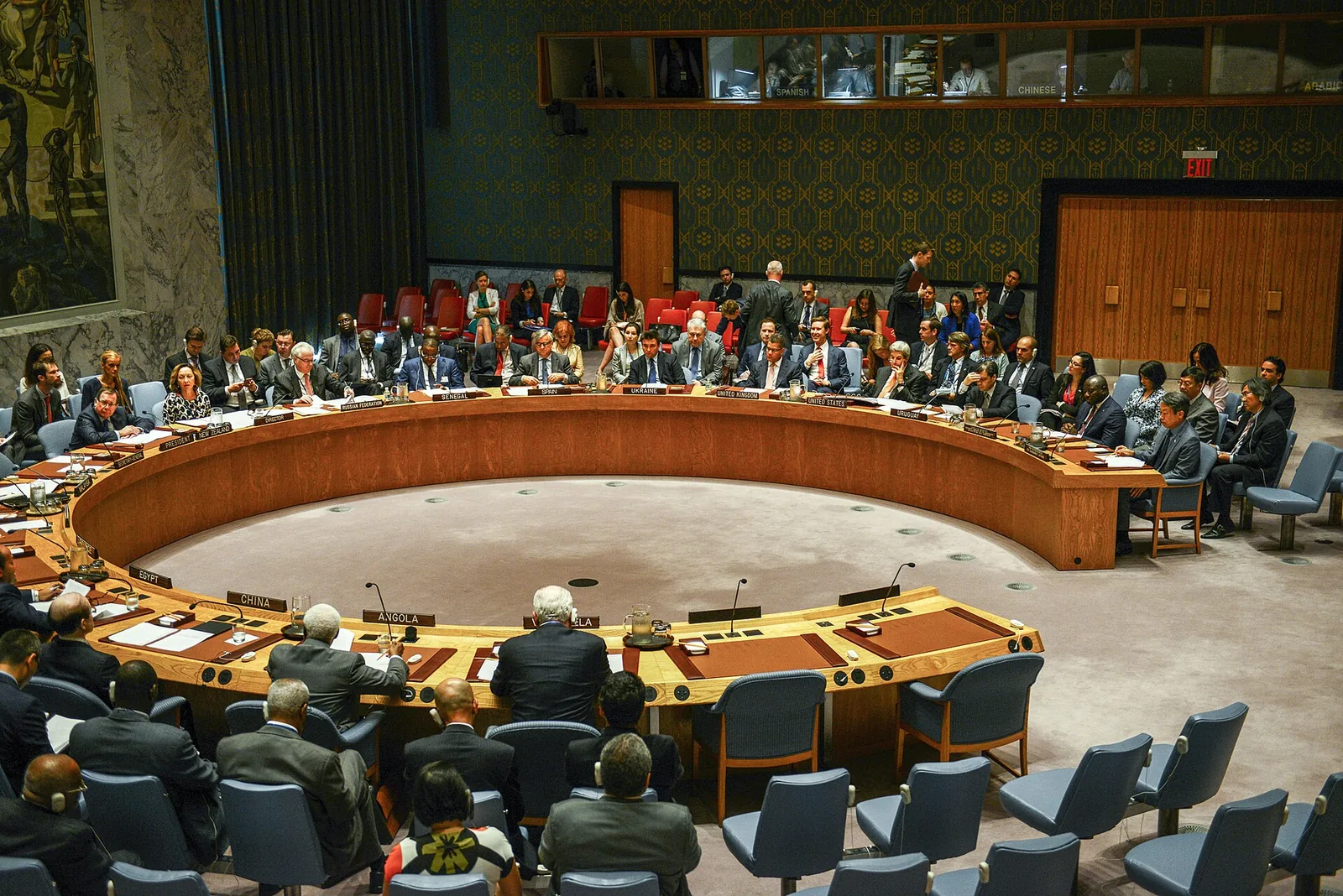
On the UN, the BRICS declaration backed a “comprehensive reform” of the organisation, including the Security Council, to make it more just, equitable, democratic, representative, effective and efficient, and to reflect present-day realities, The Hindu and IANS reported. ANI said the text points to Paragraph 13 of the New Delhi Declaration, the statement BRICS leaders adopted at their summit in New Delhi on 12 and 13 September 2026, and stresses the Global South, the developing countries of Asia, Africa and Latin America, as a voice that global bodies should reflect.
Next to Security Council reform, the sanctions passage is sharper in tone. “We condemn the imposition of unilateral coercive measures that are contrary to international law,” the declaration says, as quoted by IANS, adding that unilateral economic sanctions and secondary sanctions (penalties on third countries that trade with a sanctioned state) hurt human rights, including the right to development, health and food security. It calls for such measures to be removed. In the passages quoted by IANS and The Hindu, the declaration does not name any country that imposes sanctions.
West Asia, climate and technology in the BRICS declaration
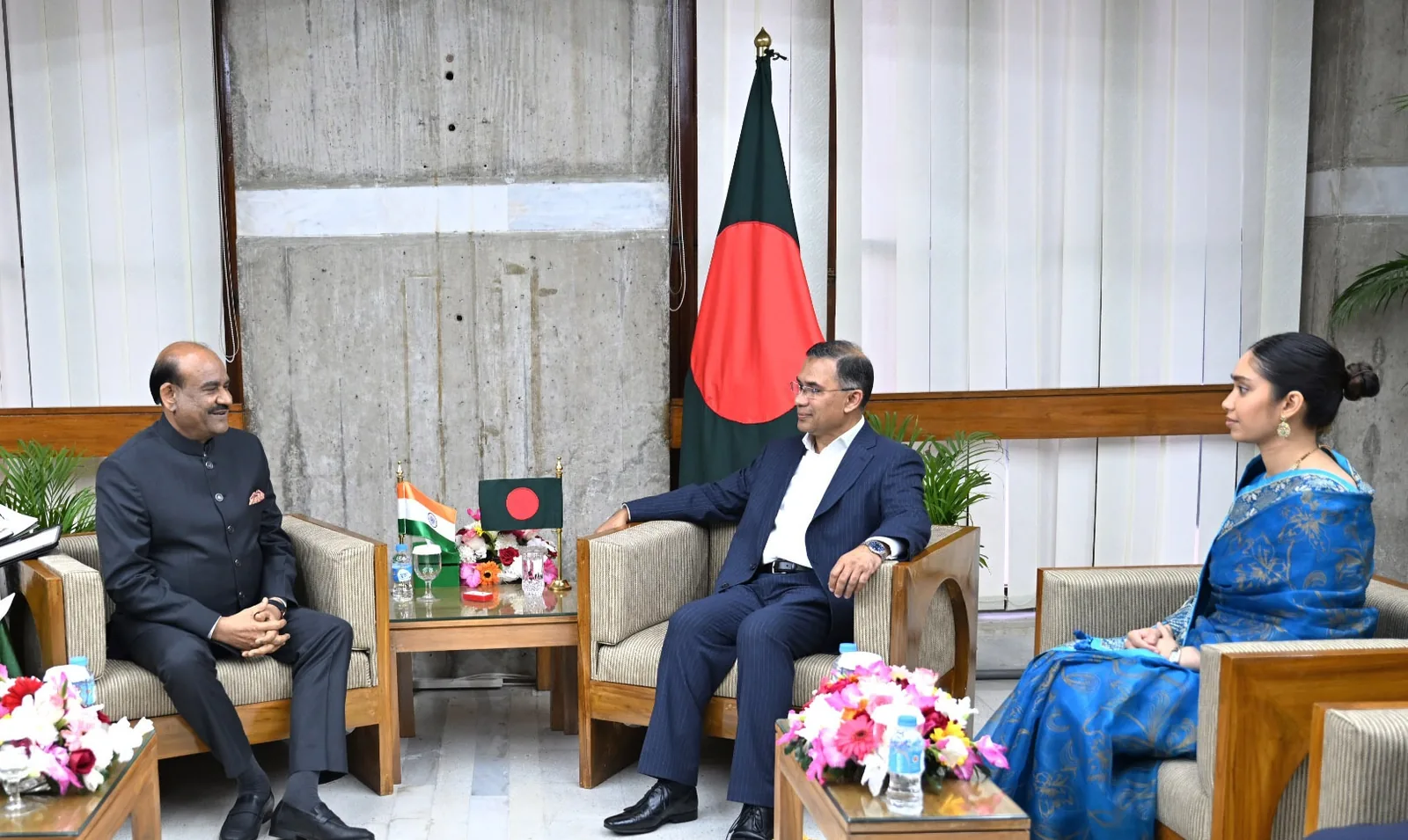
On the Israeli-Palestinian conflict, the forum restated support for a two-state solution, with both states living side by side in peace and security, and for the Palestinian people’s right to an independent, sovereign state, according to The Hindu and ANI. It voiced “deep concern” over rising tensions in West Asia, asked all sides for “maximum restraint” and condemned attacks on civilians, civilian infrastructure and aid workers, including in BRICS member states. The Hindu noted that two members, Iran and the UAE, are directly involved in the West Asia conflict.
On climate, the parliaments asked countries to step up work on their nationally determined contributions (NDCs), the emission-cutting plans each country files under the Paris Agreement. The text says developed countries “shall provide” additional, predictable finance, capacity building and technology transfer to developing countries for adaptation, IANS and ANI reported. The same day, a UN report found that current pledges add up to cuts of only about 6% by 2035, as NewsPlainly reported.
On technology, the declaration backs the open, safe and secure use of information and communication technologies and artificial intelligence (AI), while respecting each country’s sovereignty and national security. ANI reported that it welcomes proposals for a digital public infrastructure repository for BRICS countries and pilot projects, which means the idea is on the table, not yet set up.
Declaration at a glance: strong words and softer ones
The verbs in the BRICS declaration carry meaning. “Condemn” is the strongest; “call for” and “support” set a shared position; “take note” means the parliaments recorded a proposal without endorsing it. The table below sorts the main points by the word used, from the quotations in the reports read.
| Issue | What the text does | Wording reported |
|---|---|---|
| Terrorism, Pahalgam attack | Condemns | “in the strongest terms”; zero tolerance, no double standards |
| CCIT treaty at the UN | Calls for | “expeditious finalisation and adoption” |
| Unilateral sanctions | Condemns, calls for removal | “contrary to international law” |
| UN and Security Council | Supports reform | “comprehensive reform” |
| West Asia | Calls for restraint | “deep concern”; “maximum restraint” |
| Climate finance | States an obligation | Developed countries “shall provide” |
| BRICS Plus group in the IPU (Russia’s idea) | Takes note | “taking note” |
| Digital public infrastructure repository | Welcomes proposals | Proposal, not yet set up |
What the BRICS parliamentary forum is and what comes next
The BRICS Parliamentary Forum is the meeting of the legislatures of BRICS countries, hosted this year by India as BRICS chair. India chairs BRICS in 2026 under the theme “Building for Resilience, Innovation, Cooperation and Sustainability”, and this forum ran on 26 and 27 October under the theme “Fostering Parliaments for People-Centric Development”, ANI reported. Birla’s closing speech thanked the delegations of both member and partner countries.
The parliaments noted Russia’s proposals for a BRICS working group on sport and another on training and capacity building, and marked 10 years of the BRICS Women Parliamentarians’ Forum, recalling its 2016 Jaipur Declaration, ANI said. They also took note of a Russian proposal to consider a “BRICS Plus” group inside the Inter-Parliamentary Union (IPU), the global body of national parliaments.
Closing the meeting, Birla wished China well for its BRICS chairship in 2027, and the forum agreed to meet again next year under China, according to his speech, IANS and ANI.
Frequently asked questions
Where was the 12th BRICS Parliamentary Forum held?
At Samvidhan Sadan, the old Parliament House in New Delhi, on 26 and 27 October 2026, with Lok Sabha Speaker Om Birla in the chair.
Did the BRICS declaration name Pakistan over the Pahalgam attack?
In the passages quoted by The Hindu and IANS, no country is named as responsible. ANI described the attack as Pakistan-backed in its own report. NewsPlainly has not seen the full text.
Which countries signed the BRICS parliamentary declaration?
The parliaments of Brazil, China, Egypt, Ethiopia, India, Indonesia, Iran, Russia, South Africa and the UAE, according to ANI and IANS.
What did the forum say about sanctions?
It condemned unilateral economic and secondary sanctions as contrary to international law and called for their removal, saying they harm health, food security and the right to development.