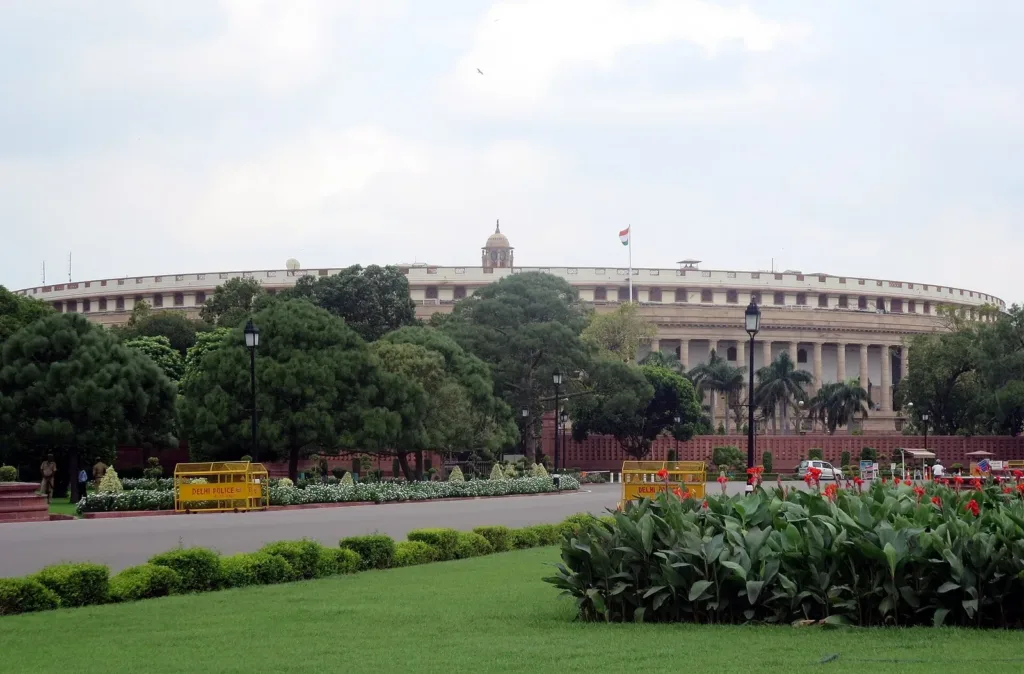
Representative image. Nikhilb239, CC BY-SA 4.0, Wikimedia Commons

हिन्दी में सारांश Summary in Hindi
- केंद्रीय कैबिनेट ने 27 नवंबर 2026 को 132वां संविधान संशोधन विधेयक मंज़ूर किया, जिसमें हर राज्य की लोकसभा और विधानसभा सीटें 50% बढ़ाने का प्रस्ताव है।
- उत्तर प्रदेश की लोकसभा सीटें 80 से 120 और विधानसभा सीटें 403 से 605 हो सकती हैं।
- भी संसद में पास होना बाकी है।
বাংলায় সারাংশ Summary in Bangla
- নুমোদন করেছে, যাতে প্রতিটি রাজ্যের লোকসভা ও বিধানসভা আসন ৫০% বাড়ানোর প্রস্তাব আছে।
- পশ্চিমবঙ্গের লোকসভা আসন ৪২ থেকে ৬৩ এবং বিধানসভা ২৯৪ থেকে ৪৪১ হতে পারে।
- প্রতিটি রাজ্যের ভাগ ২০৫১ পর্যন্ত একই থাকবে; বিল এখনও সংসদে পাস হয়নি।
Why it matters
The bill decides how many MPs and MLAs each state elects for the next 25 years, and how soon one in three of those seats goes to a woman. A uniform rise means no state loses its share of Parliament, which was the southern states' objection in April, but every constituency in the country would still be redrawn by a new commission.
Every state would get half as many Lok Sabha seats again under the Constitution (132nd Amendment) Bill, 2026, which the Union Cabinet cleared on 27 November 2026. Uttar Pradesh would go from 80 Lok Sabha seats to 120, Hindustan Times reported, and on the same formula West Bengal would go from 42 to 63. Each state’s share of the House would then stay frozen until 2051.
None of this is law yet. A Constitution amendment needs a two-thirds majority in both Houses and ratification by half the states, and a similar bill failed in the Lok Sabha in April. Parliament takes up the new one in a special sitting that opens on 30 November.
What the Cabinet-cleared bill changes
The core is a new proviso to Article 334A, the women’s reservation article. It says the delimitation done to bring in the quota “shall provide for an increase of fifty per cent” in the seats of each state and Union Territory, in the Lok Sabha and in the assemblies, over and above the seats they have now. The Indian Express and The Hindu both quoted this wording from the bill.
To make room, the ceiling on the Lok Sabha goes up to 850: 815 members from states and 35 from Union Territories, against limits of 530 and 20 today, according to Hindustan Times. The paper said the real number would land between 816 and 824, depending on how half seats are rounded. The cap on a state assembly rises from 500 to 650 through a change to Article 170.
The freeze is the other half of the deal. Article 82 now says seats need not be redistributed among states until the figures of the first census after 2026 are out. The bill changes that to “until the year 2051” and drops the reference to the 1971 population, The Hindu reported. The April bill had tried to share out seats again using the 2011 Census, which southern states opposed because their slower population growth would have cost them seats.
Constituency boundaries inside each state would still be redrawn, using the latest census published when the amendment takes effect. Government sources told the Indian Express that means the 2011 Census.
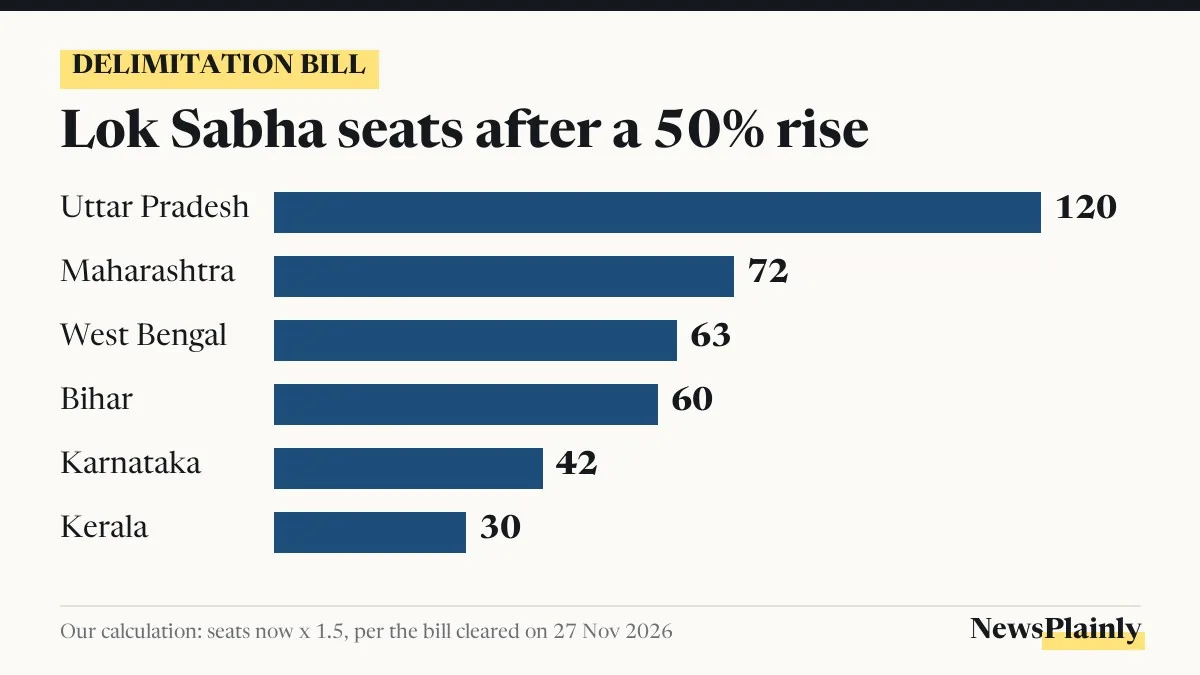
Lok Sabha seats state-wise under the 50% formula
Because every state rises by the same half, no state gains or loses share. Uttar Pradesh holds about 14.7% of the House today (80 of 543) and would hold the same after the rise; Tamil Nadu stays near 7.2%. That is NewsPlainly’s calculation from the current allocation.
| State | Lok Sabha seats now | After a 50% rise |
|---|---|---|
| Uttar Pradesh | 80 | 120 |
| Maharashtra | 48 | 72 |
| West Bengal | 42 | 63 |
| Bihar | 40 | 60 |
| Tamil Nadu | 39 | 58.5 (rounding not set) |
| Karnataka | 28 | 42 |
| Gujarat | 26 | 39 |
| Kerala | 20 | 30 |
| Delhi | 7 | 10.5 (rounding not set) |
States with an odd number of seats, such as Tamil Nadu and Delhi, end up with a half seat on paper. The bill’s rounding rule was not in the reports read, which is why the national total is given as a range.
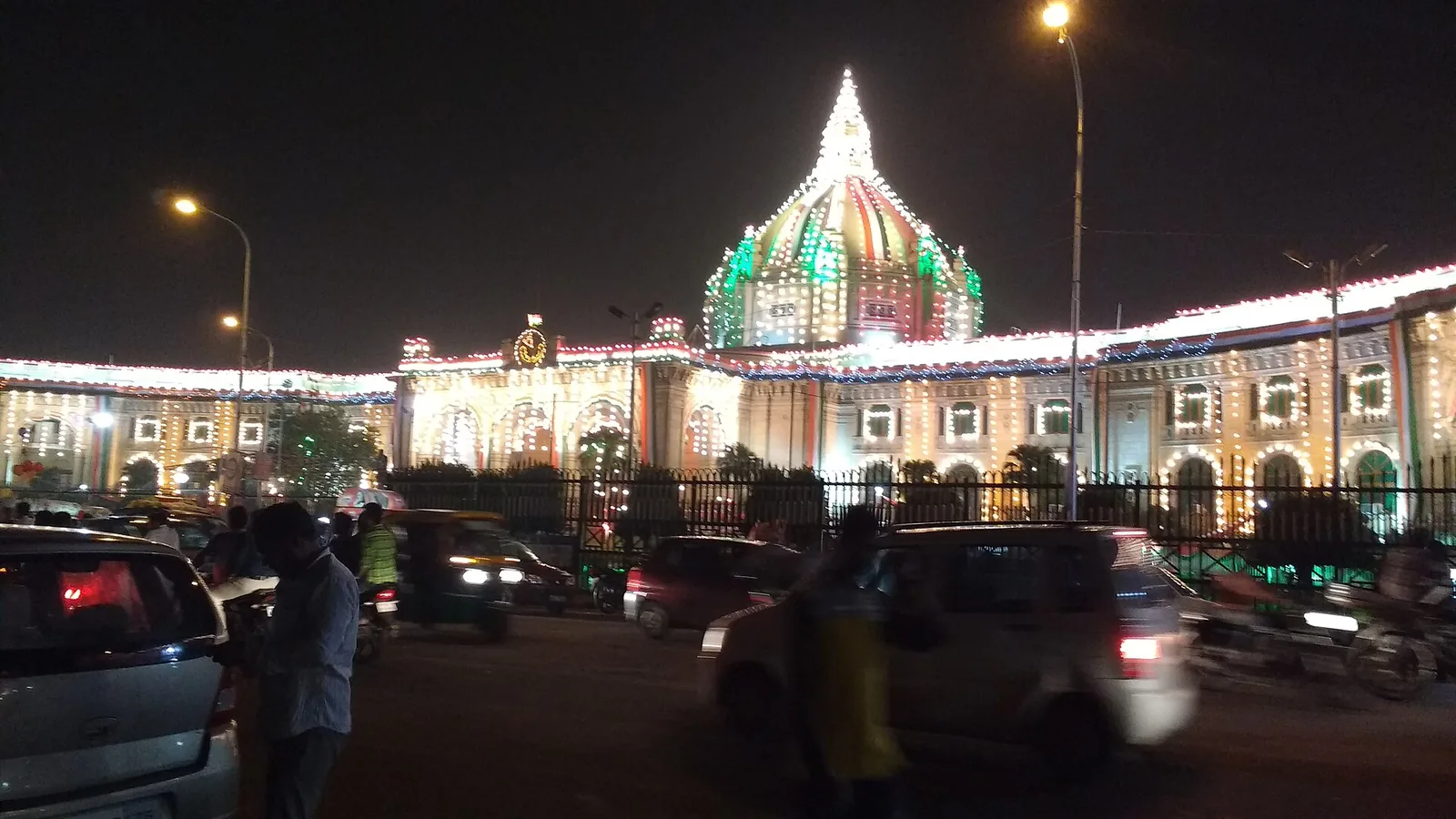
Uttar Pradesh assembly could reach 605 seats
Assembly seats grow by the same half. Uttar Pradesh, which has 403 MLAs, would have 605 and become the only state with more than 600, Hindustan Times reported. The old cap of 500 could not have held that rise, which is why the bill lifts it to 650.
The same report put West Bengal’s assembly at 441 seats, up from 294, and Maharashtra’s at 432, up from 288. On the same formula Delhi’s 70-member assembly would grow to 105, by NewsPlainly’s calculation. Two senior parliamentary officials told the paper that many assemblies would need new buildings: the Uttar Pradesh assembly building opened in 1928 and West Bengal’s in 1931.
One in three seats for women, and a new commission
The stated purpose of the delimitation bill is to bring in women’s reservation, a one-third quota, including women from Scheduled Castes and Scheduled Tribes, straight after delimitation. Law minister Arjun Ram Meghwal’s statement of objects and reasons links the quota to the redrawing of seats. Women would get 270 to 272 Lok Sabha seats if the bills pass, Hindustan Times calculated.
The reservation would last 15 years. Government sources told the Indian Express the reserved seats would rotate after every third term. Those sources also said the commission would be set up as soon as Parliament clears the bills, so the quota could apply in the 2029 Lok Sabha election.
The companion Delimitation (Second) Bill sets up that commission. A sitting or retired Supreme Court judge would chair it, with the Chief Election Commissioner or an election commissioner he nominates, and the state election commissioner of the state being redrawn. Each state also gets five MPs and five MLAs as associate members, Hindustan Times reported.
Can the government get two-thirds this time?
The Lok Sabha meets on 30 November and the Rajya Sabha on 2 December. In April the 131st Amendment Bill fell short of two-thirds, the first Constitution amendment to fail in the Lok Sabha since the Lokpal bill in 2011, according to Hindustan Times.
The paper said the numbers look different now, citing a rebellion inside the Trinamool Congress and the Shiv Sena (UBT) and a willingness to back the bill from the DMK (Dravida Munnetra Kazhagam) and Sharad Pawar’s Nationalist Congress Party (NCP). NewsPlainly’s earlier explainer on the special sitting sets out how many votes the government needs in each House. Read the Hindustan Times report on the bill’s text for the full quoted clauses.
Frequently asked questions
How many Lok Sabha seats will Uttar Pradesh have after delimitation?
120, up from 80, if the bill passes, Hindustan Times reported. Its assembly would grow from 403 to 605 seats, the only one above 600.
Will southern states lose Lok Sabha seats under the new bill?
No. Every state gets the same 50% rise, so Tamil Nadu's share stays near 7.2% (NewsPlainly's calculation). The April bill would have shared out seats by 2011 population, The Hindu reported.
When will women's reservation in the Lok Sabha start?
Only after the delimitation exercise. Government sources told the Indian Express the quota could apply from the 2029 Lok Sabha election.