
Representative image. Onewhohelps at English Wikinews, CC BY 2.0, Wikimedia Commons

हिन्दी में सारांश Summary in Hindi
- नुमान दिया है।
- ंक ज्यादा और 14 नवंबर के बाद सबसे ऊंचा है; नोएडा 295 और गुरुग्राम 262 पर रहे।
- दिल्ली-NCR में GRAP के पहले और दूसरे चरण की पाबंदियां लागू हैं; CAQM ने 17 नवंबर को तीसरा चरण हटाते समय इन्हें जारी रखा था।
বাংলায় সারাংশ Summary in Bangla
- র্থাৎ 'খুব খারাপ'; IITM বলছে ২৯ ও ৩০ নভেম্বর বাতাস খুব খারাপ থাকবে, ১ ডিসেম্বর খারাপ।
- CPCB-র হিসেবে ২৮ নভেম্বরের ২৪ ঘণ্টার গড় ছিল ২৯৩, আগের দিনের ২২৬ থেকে ৬৭ বেশি এবং ১৪ নভেম্বরের পর সবচেয়ে বেশি; নয়ডা ২৯৫, গুরুগ্রাম ২৬২।
- দিল্লি-NCR-এ GRAP-এর প্রথম ও দ্বিতীয় ধাপের বিধিনিষেধ চালু আছে; ১৭ নভেম্বর তৃতীয় ধাপ তোলার সময় CAQM এগুলি বহাল রেখেছিল।
Why it matters
Two days of very poor air are forecast, so the curbs already in place matter more this week: costlier parking, more Metro and bus trips, and rules on tandoors, generators and old vehicles. The IITM forecast does not show severe air, the band covered by Stage III, which adds limits on BS-III petrol and BS-IV diesel cars.
Delhi AQI (air quality index) read 329 at 8 am on 29 November 2026, in the “very poor” band, on the Air Quality Early Warning System run by the Indian Institute of Tropical Meteorology (IITM). Its bulletin forecasts very poor air for Sunday and Monday, 29 and 30 November, and a return to “poor” on Tuesday, 1 December, and marks all three days as unfavourable for clearing pollution.
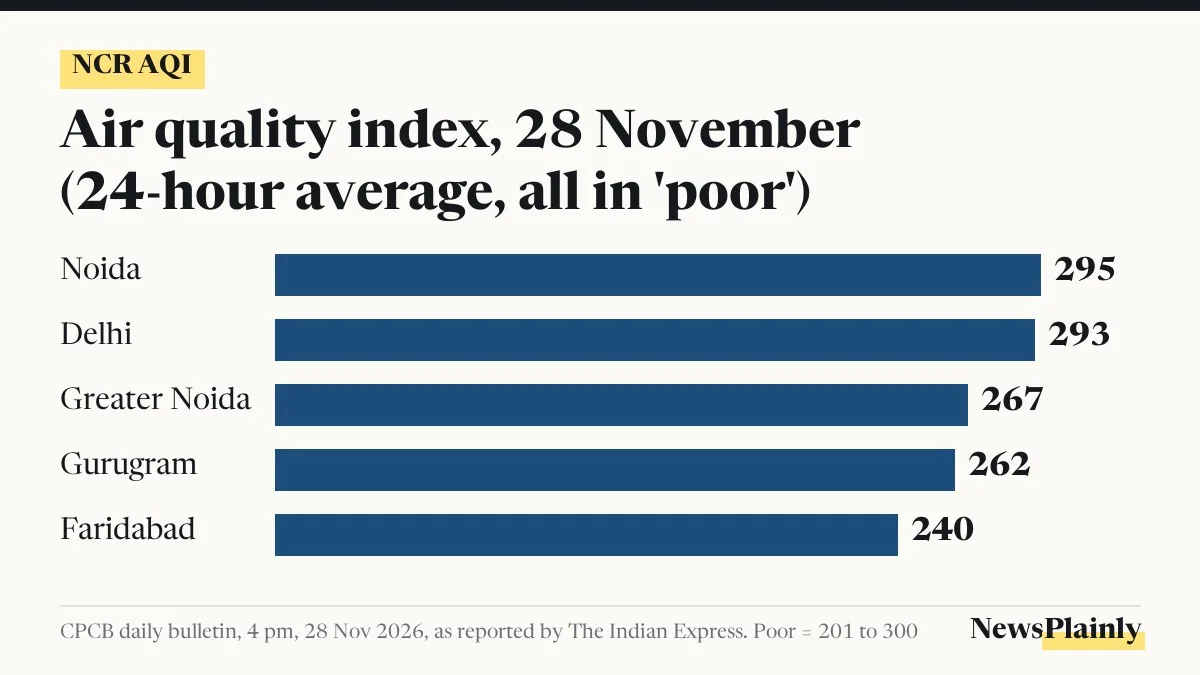
The official daily figure had already jumped on Saturday. The Central Pollution Control Board (CPCB) put Delhi’s 24-hour average at 293 in its 4 pm bulletin on 28 November, up 67 points from 226 a day earlier and the highest since 14 November, The Indian Express and The Tribune reported. Separately, the Delhi Public Works Department (PWD) has reprimanded the 13 officers who oversee pollution work in the city’s districts for skipping review meetings, India Today reported on Sunday.
Delhi AQI on 28 November: Noida two points higher
All five National Capital Region (NCR) cities in the CPCB bulletin, as The Indian Express reported it, stayed in the poor band (201 to 300) on Saturday, but every one of them worsened. Noida’s 295 was two points above Delhi, and Gurugram’s rise of 59 was close to Delhi’s 67. NCR AQI readings rose by 50 points or more wherever the report gave both days.
| City | 27 Nov | 28 Nov | Rise |
|---|---|---|---|
| Delhi | 226 | 293 | 67 |
| Noida | 245 | 295 | 50 |
| Greater Noida | not given | 267 | not given |
| Gurugram | 203 | 262 | 59 |
| Faridabad | not given | 240 | not given |
Inside Delhi, 29 of the 59 stations that reported data were in the very poor band on Saturday, 29 were poor and one was moderate, according to The Tribune. Chandni Chowk had the highest daily reading, 388. Delhi AQI figures in this bulletin are 24-hour averages, so readings at a given hour can be higher or lower. The CPCB scale counts 301 to 400 as very poor and 401 to 500 as severe.
The air kept getting worse after the bulletin. By 9 pm the real-time Delhi AQI on the IITM system had crossed into very poor at 319, with Chandni Chowk at 411, The Indian Express reported. At 9 am on Sunday the same system’s station list showed Chandni Chowk at 428 and Sirifort at 406, both severe, and North Campus at 399.
Why the air got worse this weekend
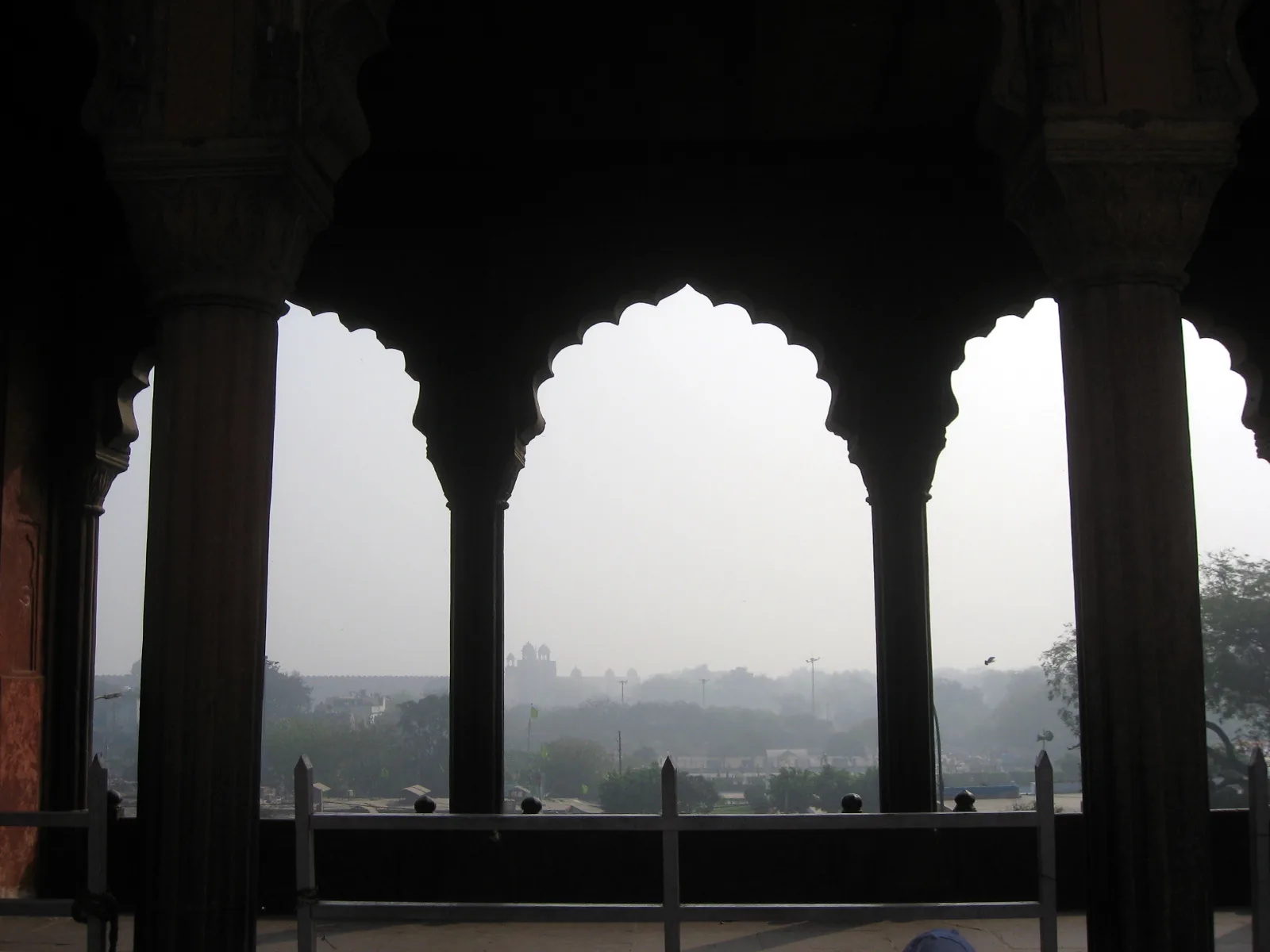
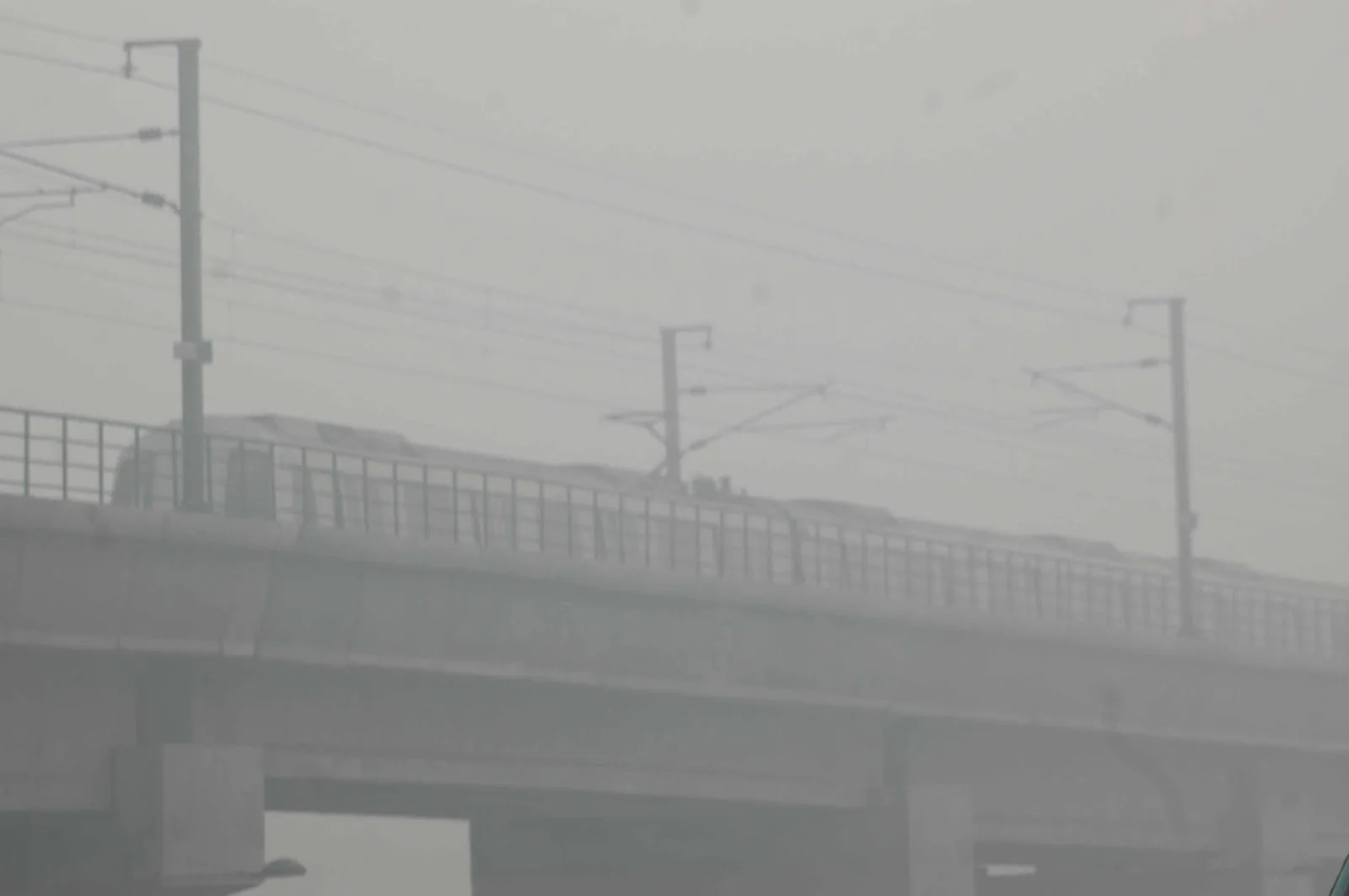
Weak winds and a shallow layer of mixing air kept pollution near the ground, according to both papers. The India Meteorological Department (IMD) had predicted a maximum mixing depth, the height up to which pollution can spread, of 1,100 metres for Saturday and a ventilation index of 1,800 square metres per second, The Tribune reported. An index below 6,000 with wind under 10 km/h is treated as bad for dispersal. Safdarjung recorded a low of 10.6°C, and shallow fog cut visibility to 800 metres at 7.30 am, according to The Indian Express.
IITM’s real-time source estimate for Saturday gave vehicles the largest share of fine dust particles (PM2.5, particles under 2.5 micrometres) in Delhi air quality readings, at 27.1%. Biomass burning, which includes farm fires and wood or dung cakes burnt at home, was 22.9%, and waste burning 18.5%, both papers reported.
The Delhi AQI forecast below is from the IITM bulletin issued on 28 November. It gives categories, not numbers.
| Day | Air quality | Wind | Ventilation index |
|---|---|---|---|
| Sun, 29 Nov | Very poor | up to 10 km/h | 4,000 m²/s |
| Mon, 30 Nov | Very poor | up to 5 km/h | 2,990 m²/s |
| Tue, 1 Dec | Poor | up to 10 km/h | 2,000 m²/s |
Before the weekend jump, Delhi air quality had been better this month than in any November since 2015. The city’s average AQI was 299 up to 27 November, according to an analysis by the Centre for Research on Energy and Clean Air (CREA) reported by the news agency Press Trust of India. It had 12 very poor days and no severe day in that period.
What stage 2 of GRAP means for Delhi-NCR now
The Graded Response Action Plan (GRAP) is the set of pollution curbs that the Commission for Air Quality Management (CAQM) switches on in stages. When the CAQM lifted Stage III on 17 November, its order kept Stage I and Stage II in force across the NCR and told agencies to step them up. So GRAP stage 2 is the level in force, and the IITM page labels Sunday morning’s reading “Very Poor – GRAP 2”. The reports read for this article do not mention a newer GRAP order.
What the stage means for people in Delhi, Noida, Ghaziabad, Gurugram and Faridabad, from the list reported when the CAQM invoked it on 2 November:
- Higher parking fees, set by local bodies to discourage private cars (The Pioneer, Open magazine).
- More frequent Metro trains and more CNG and electric buses (The Pioneer).
- Daily mechanical or vacuum sweeping and water sprinkling on busy roads, and more checks at construction sites (The Pioneer, Open).
- Staggered working hours for public offices and municipal bodies in Delhi, Gurugram, Faridabad, Ghaziabad and Gautam Buddha Nagar (Open).
- Resident welfare associations must give electric heaters to guards, sanitation and garden staff so they do not burn wood or waste (Open).
Stage I rules carry on underneath GRAP stage 2: no coal or firewood in roadside eateries and commercial tandoors, limits on diesel generators, pollution certificate checks and the bar on diesel vehicles over 10 years and petrol vehicles over 15 years old, The Pioneer reported.
On its own, Stage II does not close schools or order work from home, Open noted. Curbs on BS-III petrol and BS-IV diesel cars, older models under the Bharat Stage (BS) emission norms, sit under Stage III, so they are not part of GRAP stage 2. Separately, non-Delhi vehicles that do not meet BS-VI norms are barred from entering the city from 1 November to 31 January, and the Delhi High Court refused to stay that rule, The Pioneer reported. NewsPlainly’s report on the Stage III rollback on 17 November has the school changes that followed.
Delhi PWD warns 13 nodal officers over missed meetings
The nodal officers were posted to Delhi’s 13 revenue districts in October to coordinate departments and make sure pollution measures are carried out at identified hotspots to improve Delhi air quality in their districts, India Today reported. The PWD holds weekly meetings to review that work. Its order expresses displeasure at the officers’ repeated absence and gives them 48 hours to file an Action Taken Report.
The order also makes it compulsory for all Superintending Engineers to attend the review meetings in person and warns that any absence from future meetings will be viewed seriously, the report said. It does not name the officers, say how many meetings were missed or give the date of the order.
On the air itself, the CAQM’s GRAP sub-committee said in its 17 November order that it would keep reviewing air quality and act further as needed. The IITM outlook expects two very poor days for Delhi air quality before Tuesday’s return to poor.
Frequently asked questions
What is Delhi's AQI today, 29 November 2026?
IITM's early warning system showed 329, very poor, at 8 am. Chandni Chowk (428) and Sirifort (406) were in the severe band at 9 am.
Which GRAP stage is in force in Delhi-NCR?
Stage I and Stage II. The CAQM kept both when it lifted Stage III on 17 November, and the reports read do not mention a newer order.
Are schools closed under GRAP stage 2?
No. Stage II does not by itself close schools or order work from home; hybrid classes have come with Stage III this season.
When will Delhi air quality improve?
IITM's bulletin of 28 November forecasts poor air, one band better than very poor, on Tuesday, 1 December. It does not give numbers.