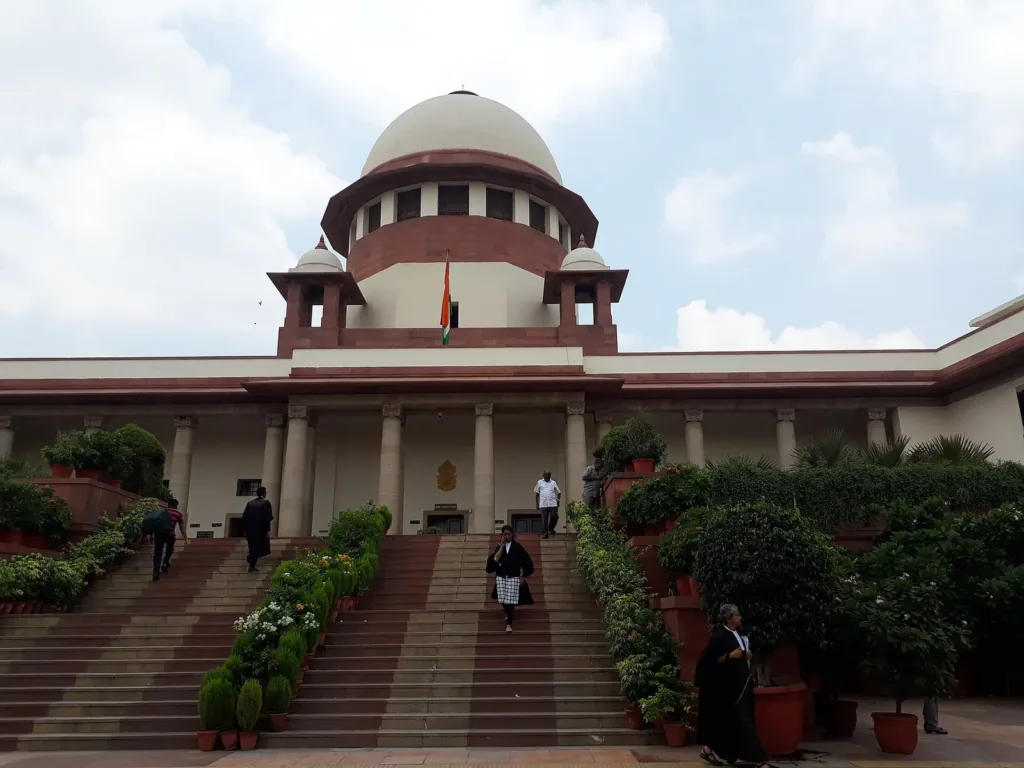
Representative image. Pinakpani, CC BY-SA 4.0, Wikimedia Commons

Why it matters
The case tests where criticism of a judge ends and contempt begins when the words come from a political party's official account. The court has issued similar notices to journalist Nikhil Wagle and MP Sanjay Raut over their posts, LiveLaw reported.
A contempt notice from the Supreme Court has gone to every office-bearer of the Kerala Pradesh Congress Committee (KPCC), including its president, over a now-deleted post on the party’s X account that told Chief Justice of India (CJI) Surya Kant to resign. A bench of Justices Aravind Kumar and Vipul M. Pancholi issued the notice on Friday, 6 November 2026, asking them to explain why contempt proceedings should not be started, LiveLaw reported.
The notice is a first step, not a finding. The bench said it had expressed no opinion on the merits, according to LiveLaw. The KPCC told the court the post went up without its leaders’ approval, was taken down and was followed by an unconditional apology.
What the Supreme Court said in the contempt notice
The bench was hearing a petition by advocate Vineet Jindal, who had asked the court to act on its own against the post. His letter to the CJI on 13 October was later turned into a writ petition, the Hindustan Times reported.
In its order, the court said the Constitution is supreme and that no person or political organisation stands above it. The independence of the judiciary is not a matter of political convenience, it said, and while judgments are always open to criticism, freedom of expression cannot be used as a shield for intimidating the courts or interfering with justice, according to LiveLaw’s report of the order. The bench added that judicial restraint should never be mistaken for weakness, and that attempts to undermine the court’s authority must be dealt with firmly.
The notice was issued under the Contempt of Courts Act, 1971, and the bench said it would examine whether the post called for the use of its powers under Article 129 of the Constitution, which lets the Supreme Court punish contempt of itself. Dainik Bhaskar reported that the court will also look at whether the case is one of criminal or civil contempt. The office-bearers were excused from appearing in person.
The court asked Attorney General R. Venkataramani to assist, and indicated that it may appoint senior advocates Arvind Datar and Siddharth Agarwal as amicus curiae, independent lawyers who help the court, LiveLaw and the Hindustan Times reported.
What the Kerala Congress post said, and the party’s reply
The post appeared on the official account of the Congress’s Kerala unit on 12 October 2026. It addressed the CJI by name, told him to resign if law and order was not his domain, and said the party would find a replacement who could handle it, according to LiveLaw. It was deleted after wide criticism.
It came during opposition protests seeking the removal of Chief Election Commissioner (CEC) Gyanesh Kumar and challenging the Special Intensive Revision (SIR) of voter rolls, the Hindustan Times reported. NewsPlainly covered the opposition’s protest plans against the CEC in October.
The Kerala Congress defence is on record. In court, its counsel said the post was put up without the approval of the office-bearers, was removed, and that the party had apologised without conditions. Justice Kumar replied that the court would examine whether the apology “has come from the pen or your heart”, LiveLaw reported.
Before the case reached court, KPCC president Sunny Joseph had answered a legal notice from the Supreme Court Bar Association (SCBA). In that reply on 22 October, he said a member of the party’s media cell had published the post without the knowledge or approval of the leadership, that the person had been removed from the post, and that the KPCC disapproved of and censured the language used, the Hindustan Times reported.
On the other side, Jindal told the court that more than 10 million people had seen the post and that a post by a political party could weaken public trust in the judiciary, according to the Hindustan Times.
Timeline: from the post to the contempt notice
| Date (2026) | What happened |
|---|---|
| 12 October | Post on the Kerala Congress X account asks the CJI to resign; later deleted |
| 13 October | Advocate Vineet Jindal writes to the CJI seeking action |
| After the post | SCBA and the Supreme Court Advocates on Record Association condemn it in resolutions |
| 16 October | SCBA joint secretary sends a legal notice to the KPCC president |
| 22 October | KPCC president replies: post unauthorised, person removed, language censured |
| 6 November | Supreme Court issues notice to KPCC office-bearers to show cause |
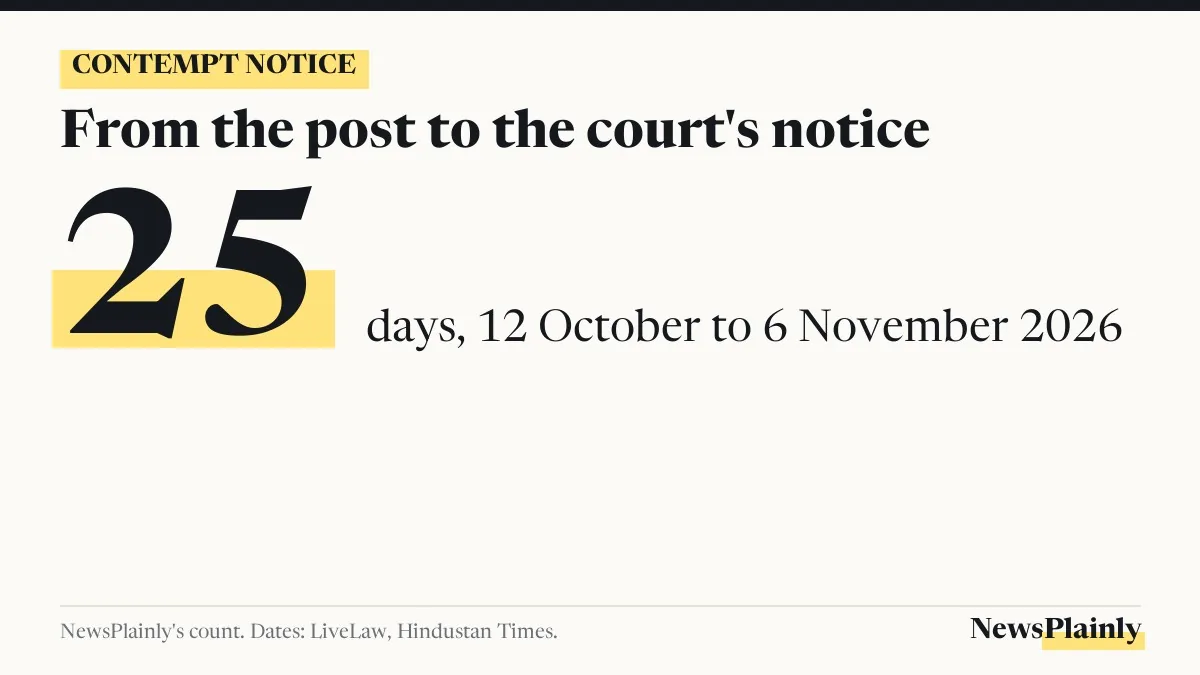
By NewsPlainly’s count, 25 days passed between the post and the court’s notice.
What a contempt notice means and what comes next
A contempt notice of this kind, a show-cause notice, asks the people named to explain, in writing, why the court should not go ahead with contempt proceedings against them. Only after hearing them, and with help from the Attorney General and any amicus it appoints, will the court decide whether the post amounts to contempt. The KPCC has already offered an apology, and the bench has said it will judge how sincere it is.
The Kerala Congress case is not the only contempt notice linked to these protests. The Supreme Court earlier issued contempt notices to journalist Nikhil Wagle and Shiv Sena MP Sanjay Raut over their social media posts against the CJI linked to the protests against the CEC, on a petition by the SCBA, LiveLaw reported. The reports read did not give the date of the next hearing in the Kerala Congress case.
Frequently asked questions
Why did the Supreme Court issue a contempt notice to Kerala Congress?
Over a 12 October 2026 post on the party's official X account that told CJI Surya Kant to resign and said the party would find a replacement. The post was later deleted.
Has the Kerala Congress been held guilty of contempt?
No. The court issued a notice asking office-bearers to show cause why proceedings should not start, and said it had expressed no opinion on the merits.
What did the Kerala Congress say about the post?
It told the court the post went up without the leaders' approval, was removed, and that it had apologised unconditionally. Its president had earlier said the person responsible was removed.