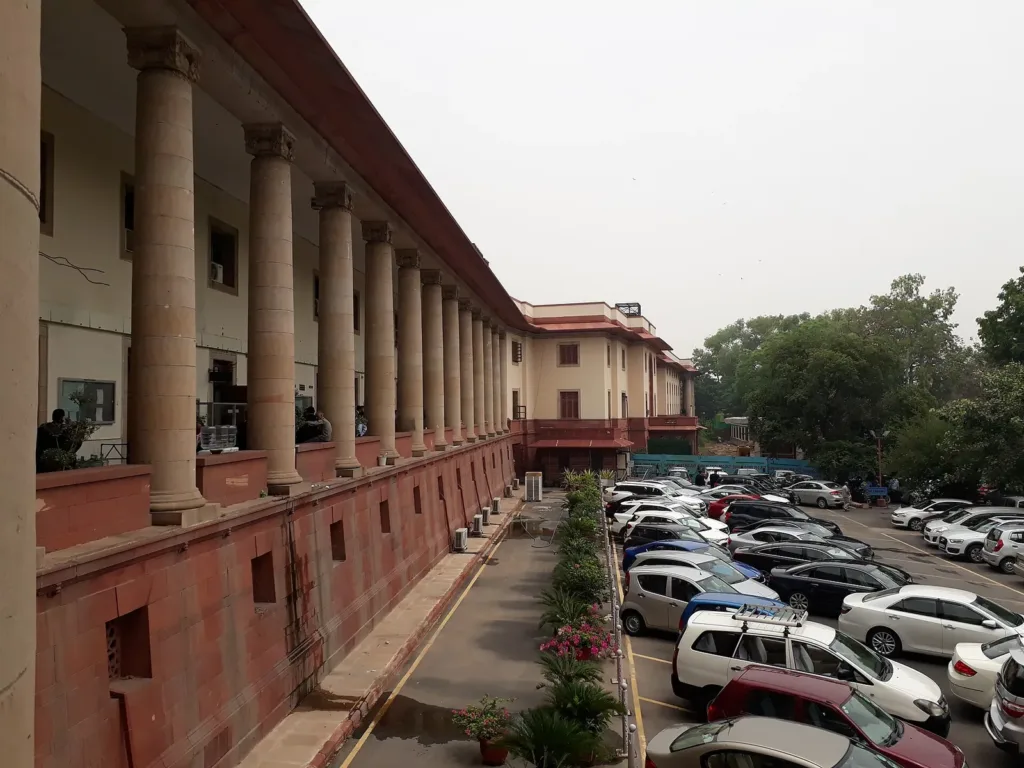
Representative image. Pinakpani, CC BY-SA 4.0, Wikimedia Commons

Why it matters
For OBC civil services candidates whose parents earn a salary in a PSU or private job, the ruling decides whether they keep their reservation. Those already appointed before March keep their positions, while this year's batch is allotted services under the March reading, in which parents' salary alone does not decide.
The OBC creamy layer ruling of March will decide how this year’s successful civil services candidates from the Other Backward Classes (OBC) are given their services, the Supreme Court said on Friday, 6 November 2026. A bench of Justices P.S. Narasimha and R. Mahadevan turned down the Centre’s request for two years to put the ruling into effect, and said it would not reopen selections and appointments already completed.
The bench was answering applications the Centre filed for a clarification of its 11 March 2026 judgment. That judgment held that whether a candidate’s family falls in the “creamy layer”, the better-off section of OBCs who cannot claim reservation, cannot be decided on parents’ salary alone, LiveLaw reported.
What the Supreme Court said on the OBC creamy layer on 6 November
The court set out its answer point by point, according to LiveLaw, which quoted the order. The March judgment decides the rights of the candidates who were parties to the case. They are in the non-creamy layer, it said, and are entitled to reservation along with the posts they would have got in the selections they took part in.
Giving them that benefit will not, by itself, hurt anyone else’s seniority or reopen finished selections, the bench said. The legal reasoning of the March judgment will not be a ground to reopen selections or appointments completed before 11 March 2026. People who say they are in the same position, and whose cases are pending before a court, tribunal or authority, will have their claims decided on their own merits by that forum, the court said, adding that it expressed no view on those claims.
Everything after the judgment is different. All selections, appointments and allotments against reservation roster points made after 11 March 2026 will follow the 1993 Office Memorandum as the court read it, LiveLaw reported.
The Centre had asked for two years to work out which jobs in public sector undertakings (PSU) and private firms are equal to which government posts, and to frame a uniform method. The bench refused to set any timeline for that work, saying it belongs to the executive and the legislature, and that the government is free to frame its own creamy layer policy within the Constitution. It gave the Centre eight more weeks to comply with the March directions, The Hindu reported; the March judgment had allowed six months.
CSE 2025: why this year’s OBC candidates are covered
The Union Public Service Commission (UPSC) Civil Services Examination (CSE) 2025 result was declared on 6 March 2026, five days before the judgment, but services have not yet been allotted to the candidates. Because that allocation is still pending, the court said there was no good reason to delay, and the creamy layer test as read in the March judgment will govern allocation for OBC candidates selected through CSE 2025, according to LiveLaw and The Hindu.
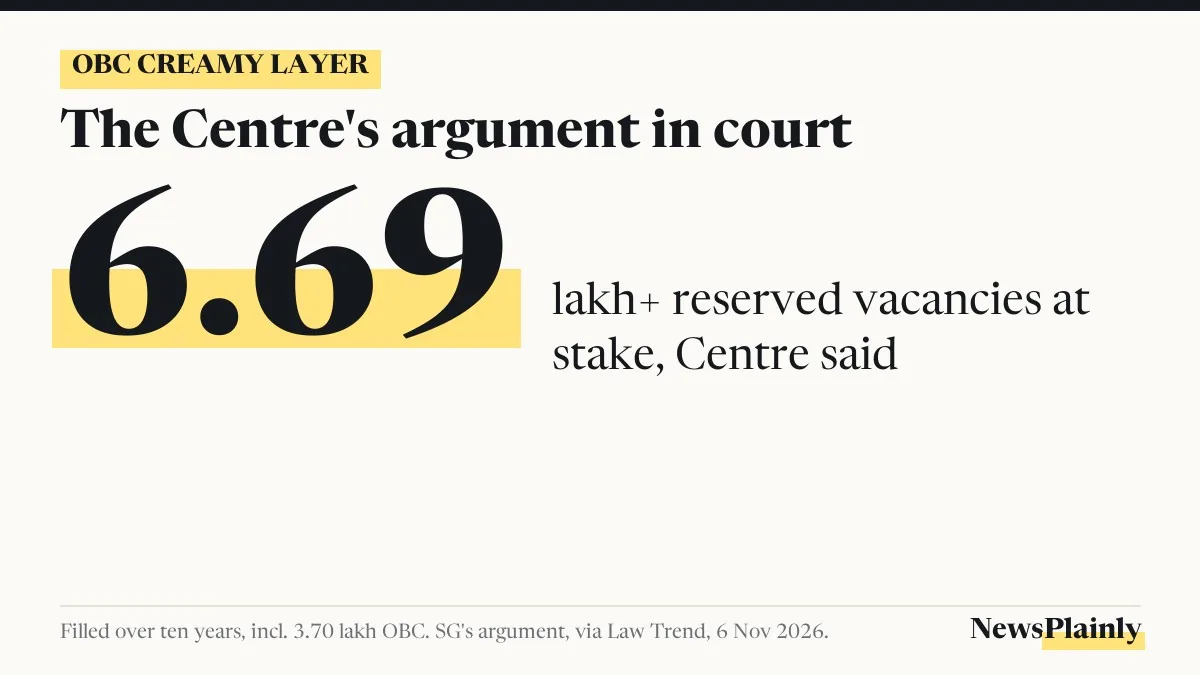
The Centre had argued otherwise. Solicitor General Tushar Mehta told the court that applying the judgment to the past would affect more than 6.69 lakh reserved vacancies filled over ten years, including 3.70 lakh OBC vacancies, the legal news site Law Trend reported. The bench’s answer was to limit the judgment to the parties and to selections from 11 March onward, with CSE 2025 included because its allocation was not finished.
Here is how the order sorts the people it touches:
| Who | What the court said | What it means |
|---|---|---|
| Candidates who were parties to the case | Non-creamy layer; entitled to reservation and the posts they competed for | Government may accommodate them, including in supernumerary posts |
| OBC candidates of CSE 2025 | Allocation of services must follow the March judgment | Parents’ salary alone cannot push them into the creamy layer |
| Anyone selected or appointed before 11 March 2026 | Judgment is not a ground to reopen their selection | Existing seniority and appointments stay |
| People with similar cases pending | Decided on merits by the court or tribunal hearing them | No automatic relief; the March reading may be taken into account |
| Selections after 11 March 2026 | Governed by the 1993 Office Memorandum as the court read it | Applies to all new roster allotments |
The creamy layer and the salary question, explained
Reservation for OBCs in central jobs excludes the creamy layer. How a family is placed in it is set by a 1993 Office Memorandum, the order the government issued after the Supreme Court’s 1992 Indra Sawhney judgment. Under that memorandum, the income and wealth test left out parents’ income from salary and from farming, The Hindu reported. For parents in government jobs, the rank of the post decides.
The dispute was about candidates whose parents worked in PSUs, where no one had fixed which posts were equal to which government posts. The Department of Personnel and Training (DoPT) applied the income test to those parents’ PSU salaries and treated the candidates as creamy layer, Law Trend reported. The candidates won before the Central Administrative Tribunal, and the Madras, Delhi and Kerala High Courts dismissed the Centre’s challenges. In March the Supreme Court held that relying on a 2004 government letter to make salary the deciding factor could not stand, Scroll reported.
Reactions and what comes next
Advocate Shashank Ratnoo, who appeared for the candidates, said the court’s ruling ended an injustice that had run for a decade, The Hindu reported. Senior advocate P. Wilson, also for the candidates, said the Centre had been trying to delay and even undo a final judgment. The bench itself warned, according to Law Trend, that applications for clarification cannot be used as a cover to reargue a judgment already given.
The next steps sit with the government. DoPT has to act on the March directions within the extra eight weeks, allot CSE 2025 services on the court’s reading, and, if it chooses, write a new creamy layer policy. The reports read did not say how many CSE 2025 candidates are affected. More court rulings on reservation are on NewsPlainly’s India page.
Frequently asked questions
What did the Supreme Court say on OBC creamy layer on 6 November 2026?
It refused the Centre two years to apply its March judgment, said CSE 2025 service allocation must follow it, and said past selections will not be reopened on its basis.
Does the OBC creamy layer ruling apply to UPSC CSE 2025?
Yes. Because services had not been allotted yet, the court said the creamy layer test as read in the March judgment will govern allocation for OBC candidates of CSE 2025.
Will old appointments be reopened?
No. The court said the ruling is not, by itself, a ground to reopen selections or appointments completed before 11 March 2026.
Is parents' salary counted for OBC creamy layer?
Under the 1993 Office Memorandum as the court read it, income from salary and farming is left out of the income and wealth test; the status of the parents' posts matters.