Representative image. Pinakpani, CC BY-SA 4.0, Wikimedia Commons

Why it matters
The rule decides which constituencies across India can elect only an SC or ST candidate. By refusing to step in, the courts have left the choice of reserved seats with Parliament, so voters who want rotation now have to press lawmakers rather than judges.
The Supreme Court on 4 November 2026 turned down a plea for reserved seats rotation in the Lok Sabha and state Assemblies, saying it is for Parliament, not the courts, to decide whether seats kept for Scheduled Castes (SCs) and Scheduled Tribes (STs) should change from one election to the next. A bench of Chief Justice of India Surya Kant, Justice Joymalya Bagchi and Justice V Mohana declined to interfere with an Allahabad High Court ruling that had upheld Section 9(1)(c) of the Delimitation Act, 2002, LiveLaw reported.
The petitioner, Jagdish Singh, is a voter in the 191-Kadipur Assembly constituency of Sultanpur district in Uttar Pradesh. His seat has been reserved for SC candidates for decades, and he wanted that to stop.
What the Kadipur voter asked the courts for
Singh first went to the Lucknow bench of the Allahabad High Court in 2011. According to the High Court’s judgment, his petition asked for three things: cancel the notification of 18 December 2006 that kept Kadipur as an SC seat, strike down the part of Section 9(1)(c) that places reserved seats where the SC or ST share of the population is “comparatively large”, and declare Kadipur a general seat.
His petition said the seat had been reserved for SCs for almost six decades since it was created. Because only an SC candidate can contest a seat reserved for SCs, he argued, he was forced to cast what he called a “caste-bonded vote” for generations. He said this broke the guarantees of equality and freedom in Articles 14, 15 and 19 of the Constitution. He had also asked the Delimitation Commission, the body that redraws constituency borders, to adopt rotation when he appeared before it on 9 September 2006, the judgment records.
His model was local government. Under Articles 243D and 243T of the Constitution, reserved seats in panchayats and municipalities rotate, so a ward kept for one group in one term can open up in the next. Singh wanted the same system for Assembly and Lok Sabha seats.
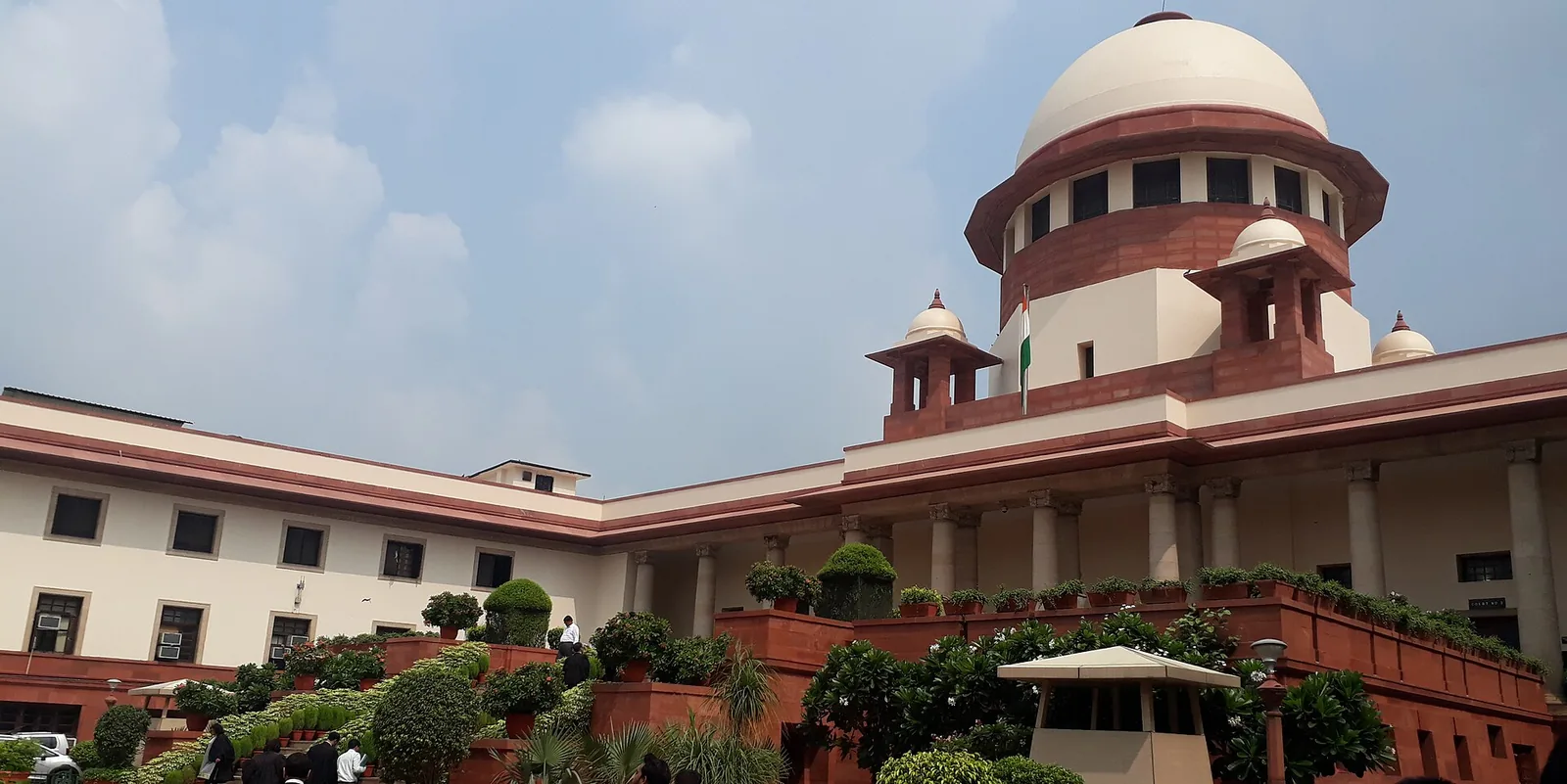
Why the Supreme Court left reserved seats rotation to Parliament
The Supreme Court agreed with the High Court’s reasoning. In its order, as quoted by LiveLaw, the bench noted that the High Court had found that rotation might ideally be followed but could not be ordered by a court, and said: “We see no ground to take a different view.” The order allowed Singh to approach elected representatives to build support for a change in the law.
During the hearing, Chief Justice Surya Kant told the petitioner he was “dialling the wrong number”, since the demand belongs before Parliament, LiveLaw reported. Justice Bagchi said voters in a multi-party democracy are expected to vote for a party’s ideology, not for caste or religion. The bench said it could not rewrite the Constitution or the statute by adding a rotation rule that Articles 330 and 332 and the Delimitation Act do not contain.
The High Court’s judgment of 22 June 2026, written by Justice Amitabh Kumar Rai for a bench that included Justice Alok Mathur, sets out the legal reasons in more detail. Articles 330 and 332 fix how many seats each state must reserve, in proportion to the SC and ST population, but say nothing about which seats. That gap, the High Court said, is filled by Parliament’s power under Article 327 to make election laws, and Section 9(1)(c) is a valid use of that power.
On the vote, the High Court said the right to vote does not let a voter decide which category a constituency is given to. It also rejected the argument that a general category candidate’s right to contest can override the reservation scheme in the Constitution.
How reserved seats are picked under the Delimitation Act
Most reports describe Section 9(1)(c) in one line. The text of the Act is more specific, and the rules for SC and ST seats are not worded the same way. The table below sets out each layer, from the law’s own words.
| Rule | What it decides | What it says |
|---|---|---|
| Articles 330 and 332, Constitution | How many seats are reserved | Seats for SCs and STs in the Lok Sabha and each Assembly, in proportion to their share of the population |
| Section 9(1)(c), Delimitation Act | Which seats go to SCs | Spread across different parts of the state, and placed, as far as practicable, where the SC share of the population is comparatively large |
| Section 9(1)(d), Delimitation Act | Which seats go to STs | Placed, as far as practicable, where the ST share of the population is the largest |
| Articles 243D and 243T, Constitution | Panchayat and municipal seats | Reserved seats are allotted by rotation |
Two things stand out. The SC rule has a second condition that is easy to miss: reserved seats must be spread out over the state, not bunched in one region, and only then placed where the SC share is “comparatively large”. The ST rule is stricter, pointing to areas where the ST share is “the largest”. Neither clause mentions rotation, and the courts have now said they will not read it in.
What the High Court said that coverage skipped
The High Court did not simply defend the current system. In its final paragraph, it said that where the SC or ST population is large, an SC or ST candidate could win even without reservation, and that the Constitution’s goals of social and political justice “can only be achieved by rotation of seats”, letting such candidates win where their population is much lower. It then said it was for Parliament to “ponder on the issue”, and dismissed the petition. The Supreme Court’s order today repeats that split: rotation may be the better idea, but courts cannot order it.
The case also took a long time. It was filed in 2011, reserved for judgment on 12 March 2026 and decided on 22 June 2026, according to the judgment.
The judgment also records the Election Commission’s side. The Commission argued that the Constitution bars courts from questioning delimitation laws (Article 329(a)), that the Delimitation Commission’s order was published in the Gazette in 2008, and that no change to reserved seats fixed on the 2001 census can be made until figures from the first census after 2026 are published. The High Court rejected the first objection and heard the petition on its merits.
What it means for voters in reserved constituencies
For voters in SC and ST seats, nothing changes because of today’s order. The seats stay reserved under the existing method, and the method itself, which picks seats with a comparatively large SC share or the largest ST share, has now been upheld by the High Court and left in place by the Supreme Court.
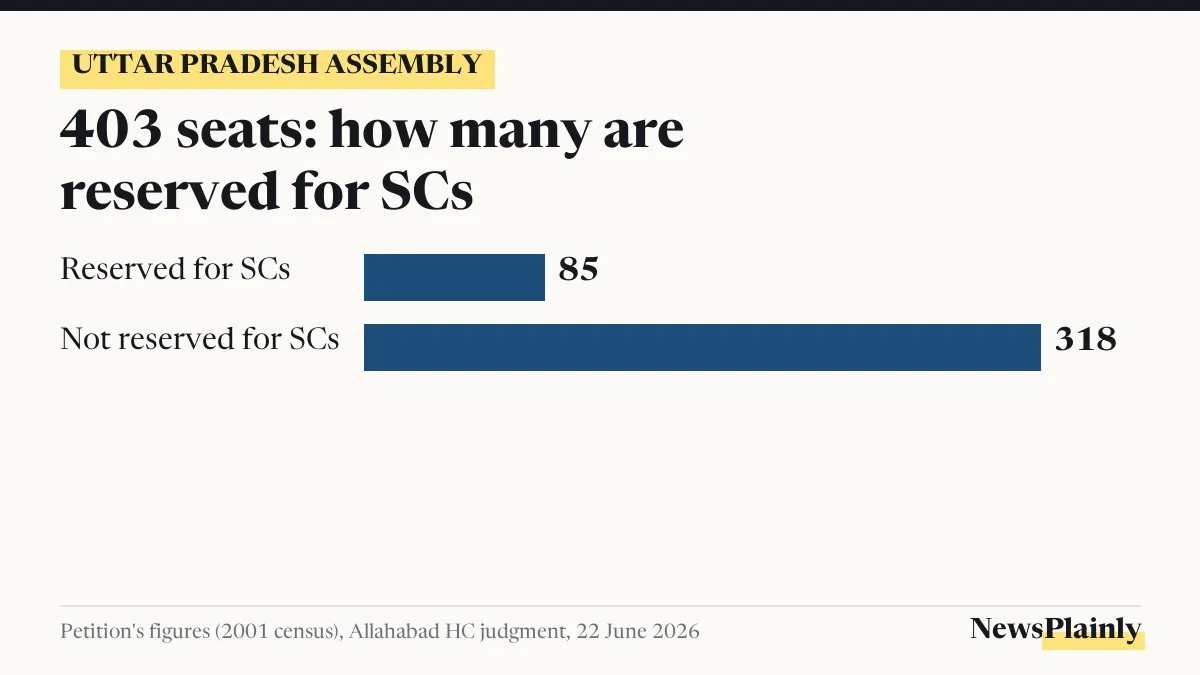
The petition’s own figures show the scale in Uttar Pradesh: according to the judgment’s record of his case, the state’s Assembly has 403 seats, of which 85 are reserved for SCs on the basis of the 2001 census.
Any change to how reserved seats are chosen would now need Parliament to amend the Delimitation Act. The order leaves Singh free to make that case to lawmakers. For more on national stories like this, see NewsPlainly’s India section.
Frequently asked questions
What does Section 9(1)(c) of the Delimitation Act say?
It says seats reserved for Scheduled Castes must be spread across different parts of a state and placed, as far as practicable, where the SC share of the population is comparatively large. Section 9(1)(d) places ST seats where the ST share is the largest.
Why did the Supreme Court reject rotation of reserved seats?
It agreed with the Allahabad High Court that rotation is not in Articles 330 and 332 or the Delimitation Act, and that only Parliament can add it. Courts cannot direct Parliament to make a law, the High Court said.
Do panchayat and municipal reserved seats rotate?
Yes. Articles 243D and 243T of the Constitution provide for rotation of reserved seats in panchayats and municipalities. The petitioner wanted the same system for Assembly and Lok Sabha seats.
Who filed the plea on reserved seats rotation?
Jagdish Singh, a voter in the 191-Kadipur Assembly constituency of Sultanpur district, Uttar Pradesh. He first filed it in the Allahabad High Court in 2011.