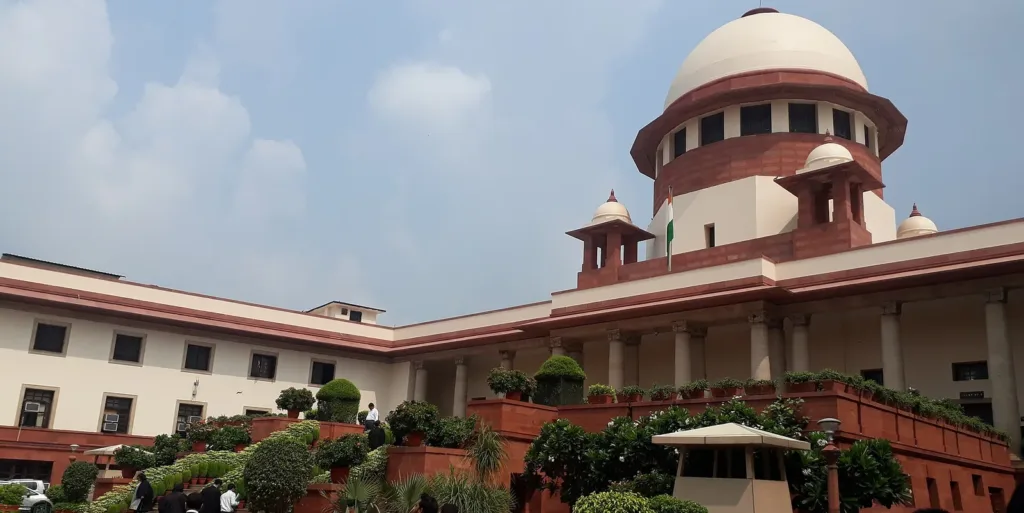
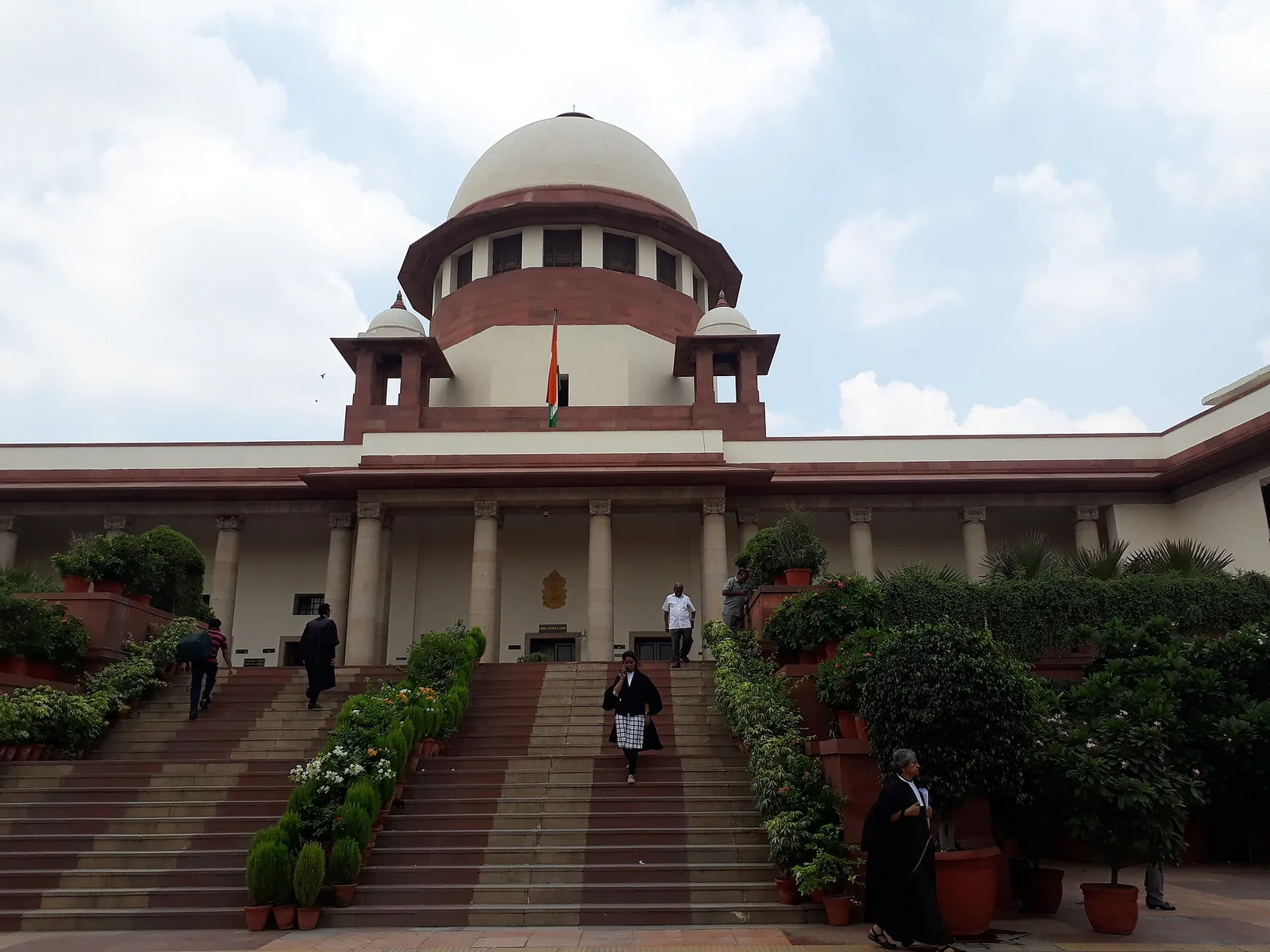
Representative image. Pinakpani, CC BY-SA 4.0, Wikimedia Commons

Why it matters
The court made Uttar Pradesh pay for a police case that kept a man in jail for six years before he was acquitted, and set out in detail what the investigation failed to prove. It sent the judgment to the state's police chief and Home Secretary and said officers should be trained in investigation.
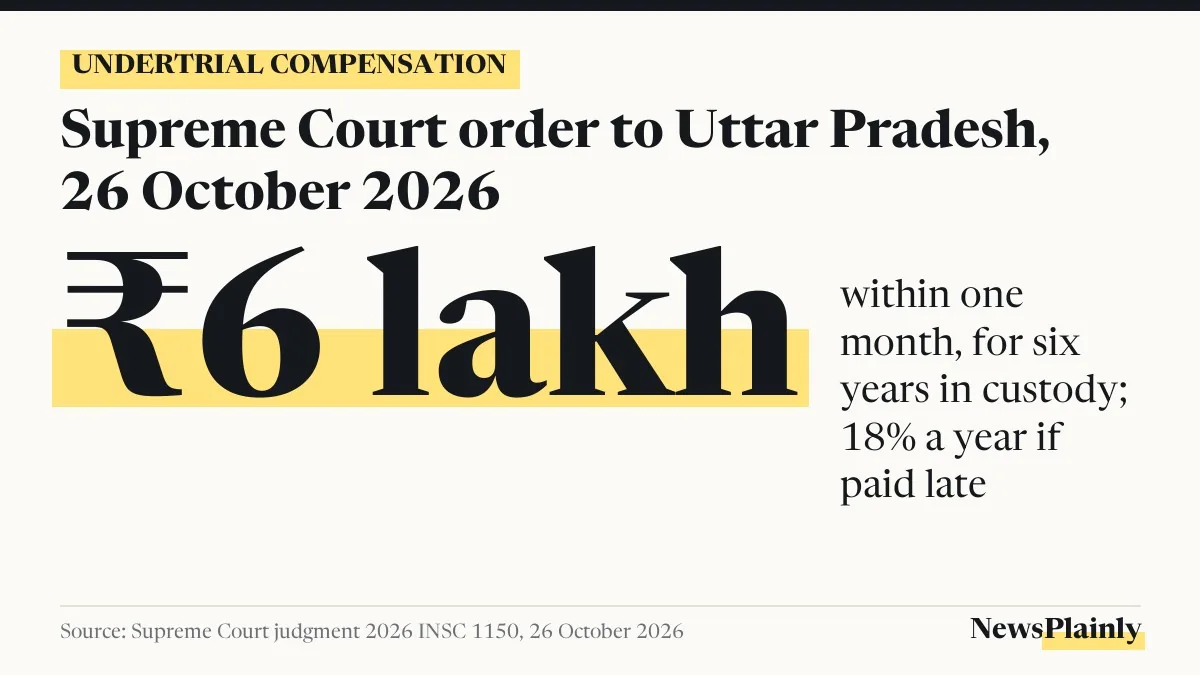
The Supreme Court has ordered the Uttar Pradesh government to pay ₹6 lakh in undertrial compensation to a man who spent six years in jail as an undertrial in an Agra kidnapping and murder case, and was then acquitted. In its judgment of 26 October 2026, a bench of Justices J.B. Pardiwala and K. Vinod Chandran called the case “a classic case of how an investigation should not be proceeded with”.
The state has one month to pay. If it does not, the amount will carry interest at 18% a year. The court itself described the sum as “paltry” compared with the years the man spent in custody.
Why the Supreme Court ordered ₹6 lakh undertrial compensation
The man had come to the Supreme Court for bail, not compensation. He had been in custody since 14 November 2019 in a case registered at the Achhnera police station in Agra district under Indian Penal Code sections for kidnapping to murder, murder and destroying evidence. On 23 March 2026 the court, noting that the case rested entirely on circumstantial evidence, told the trial court to finish the trial within three months.
The trial ended in his acquittal. The bench then asked for the trial court’s judgment, which ran to more than 100 pages in Hindi and had to be translated, and said it was “appalled” by what it read. According to the Supreme Court judgment, the man was not named in the first information report (FIR) or in the complainant’s first statement to police. He was made an accused on the basis of CCTV (closed-circuit camera) footage and a co-accused’s confession.
“Six years have been erased from the life of a man on the strength of a concocted story built on mere surmises and conjectures,” the court wrote. It sent a copy of the judgment to Uttar Pradesh’s Director General of Police and Home Secretary, and said the state police “would do well to educate their officers in the process of investigation”.
What the court found missing from the Agra investigation
The judgment lists the gaps one by one. NewsPlainly has set them out against what the prosecution claimed:
| Prosecution claim | What the Supreme Court found |
|---|---|
| Bones recovered were the missing man’s | Eight bones found; no DNA (genetic) identification produced; forensic lab result not disclosed at trial; no sample taken from his father to match |
| He was killed with sleeping pills and his mouth taped | No medical evidence; the doctor could not fix the time or cause of death |
| 55 litres of petrol bought on 20 October 2019 to burn the body | Petrol pump never identified; cans not chemically tested; burning site not identified |
| CCTV showed the accused with the missing man | Footage unclear and not backed by the certificate the law needs for electronic records |
| Call records linked the accused | No certificate; owners of the SIM (mobile phone) cards never identified |
| A ₹50 lakh ransom was demanded on 13 November 2019 | Never reported to police; first mentioned in court |
Only six witnesses were examined. The five people present when police recorded the scene of the recovery were not among them. The missing man’s motorcycle, found near where the bones were recovered, was never produced at trial, and the police did not record any statement from the accused about where items were hidden, the court noted.
The recoveries themselves did not point to him. The missing man’s Aadhaar card, bank passbook, bag and laptop were recorded as found at or behind the co-accused’s house, not with the petitioner, and the father told the court it was the police who led him and the accused to those spots.
Of the three people accused, one died during the trial and another was absconding, so the petitioner was the only one tried. The court also faulted the investigating agency for taking no steps to speed up his trial.
Timeline: from a missing person report to the Supreme Court
- 18 October 2019: a man leaves his workplace at Kiraoli tehsil, Agra, at 3.30 pm and goes missing. His father reports it to police.
- 19 October 2019: a second report says he was abducted from the tehsil gate.
- 13 November 2019: two accused are arrested; the father later told the court of a ransom demand that day.
- 14 November 2019: the petitioner’s custody begins.
- 22 January 2020: the court takes cognisance of the charge sheet.
- 23 March 2026: the Supreme Court orders the trial finished within three months.
- 2026: the trial court acquits him (the judgment does not give the date).
- 26 October 2026: the Supreme Court orders ₹6 lakh compensation.
From 14 November 2019 to the March 2026 order alone is more than six years.
What the ₹6 lakh works out to, and what happens next
The man had asked only for bail; the court ordered the payment itself after reading the trial record. Spread over six years in custody, ₹6 lakh comes to about ₹1 lakh for each year, or roughly ₹8,300 a month. If Uttar Pradesh pays late, 18% a year on ₹6 lakh adds up to ₹1.08 lakh for every full year of delay. These are NewsPlainly’s calculations from the figures in the judgment.
The judgment disposes of the case. The state’s deadline to pay runs one month from 26 October 2026. The judgment does not direct any action against the investigating officers; it says the state police would do well to train them. The reports read did not include a response from the Uttar Pradesh government or police.
The court framed its order as a wider warning. Police and prosecutors, it said, exist not just to secure convictions “by whatever means”, but to see that justice is done to the accused as well as to victims and complainants.
Frequently asked questions
Why did the Supreme Court order ₹6 lakh compensation?
The man spent six years in custody as an undertrial before being acquitted. The court found the investigation slipshod and said six years had been erased from his life.
Who has to pay the compensation?
The Uttar Pradesh government, within one month of the 26 October 2026 judgment. If it pays late, the amount carries 18% interest a year.
What went wrong in the investigation?
The court found the bones were never identified by DNA, CCTV and call records lacked the legally required certificate, the petrol purchase was never verified and the ransom claim was never reported to police.