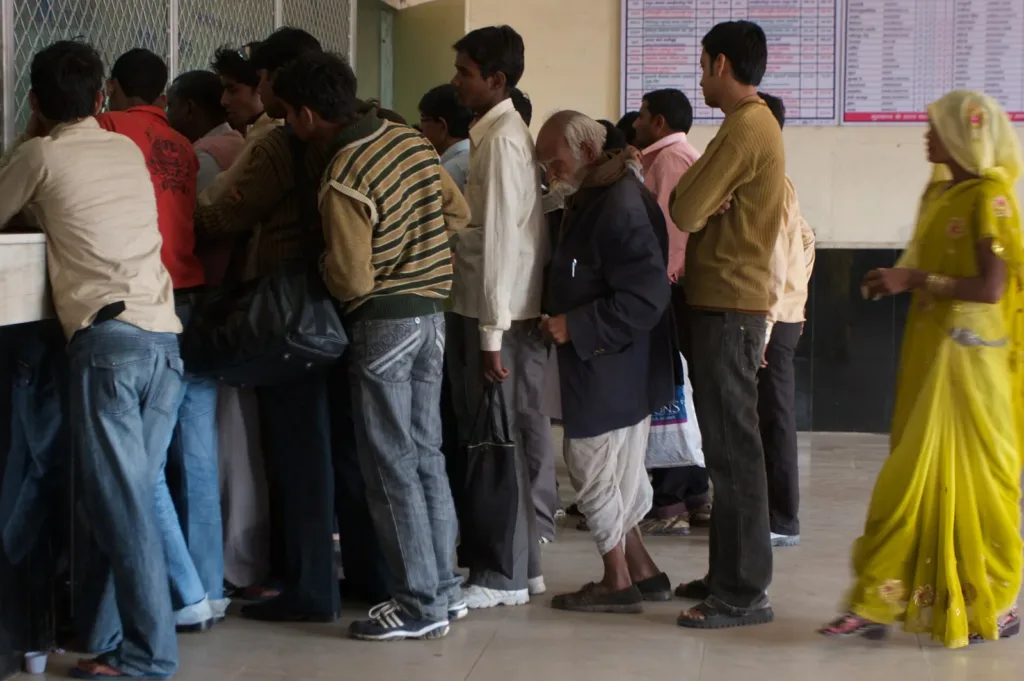
Representative image. David Brossard, CC BY-SA 2.0, Wikimedia Commons

Why it matters
Until now only people who booked online could insure their train journey, which left out many passengers who buy tickets at stations. From 27 October they can get the same cover for 45 paise, but only on reserved tickets and only if they pay the premium digitally and give a mobile number.
Train ticket insurance will no longer be an online-only option. From Tuesday, 27 October 2026, passengers who buy reserved tickets at railway station counters can choose travel insurance for 45 paise each, the same premium online buyers pay, with cover of up to ₹10 lakh if a passenger dies or is fully disabled in a train accident. The Railway Board has told all railway zones to start the facility, the Times of India reported on 25 October.
The change follows a Supreme Court order of 6 October that set 27 October as the deadline and said the Railway Board would be held directly responsible if it was not carried out.
What the counter ticket insurance covers
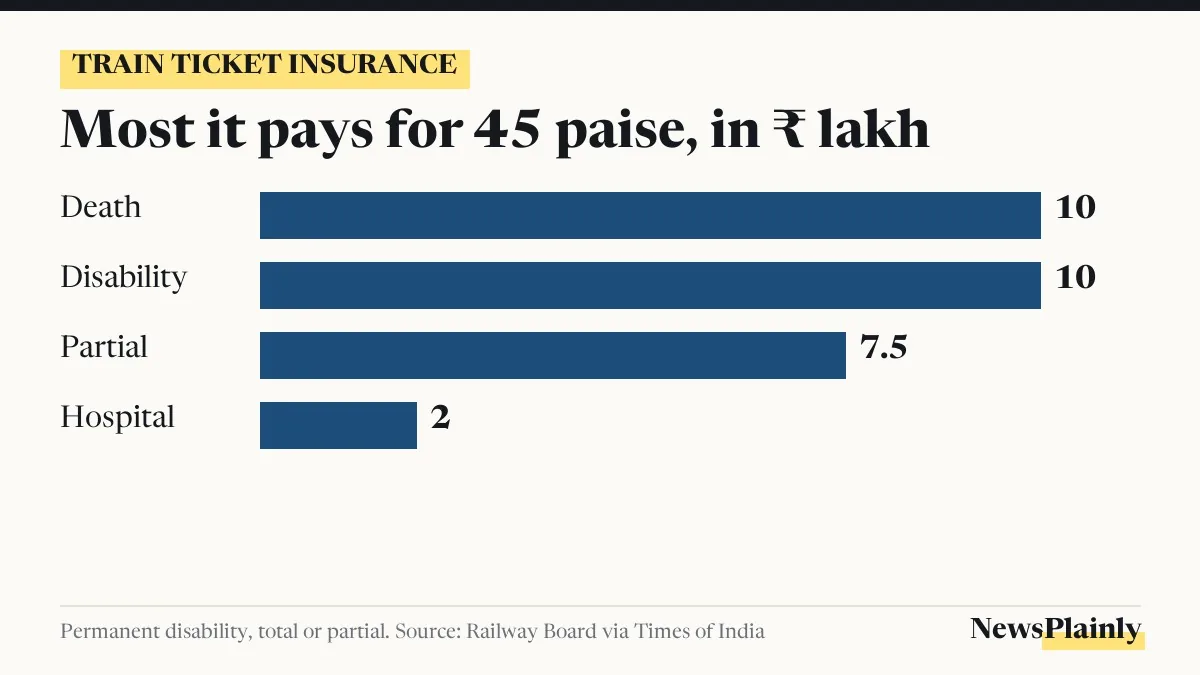
The cover mirrors the existing optional scheme for tickets booked on the IRCTC (Indian Railway Catering and Tourism Corporation) website and app. According to the Railway Board’s directions as reported by the Times of India, and the existing scheme’s terms, the policy pays:
| If a passenger suffers | Insurance pays up to |
|---|---|
| Death | ₹10 lakh |
| Permanent total disability | ₹10 lakh |
| Permanent partial disability | ₹7.5 lakh |
| Hospital costs for injuries | ₹2 lakh |
| Transport of mortal remains | ₹10,000 |
It applies to specified railway accidents and “untoward incidents”: collisions, derailments, violent attacks, robbery, arson and accidental falls from a train. Cover also extends to diverted routes and, in some cases where a train is diverted or ends its journey early, to alternative transport the railways arrange.
The ₹10 lakh figure is a maximum, not an automatic payment to everyone on a train involved in an accident. Claims depend on the insurer’s terms and exclusions.
How to buy railway travel insurance at the counter
The Railway Board’s instructions to reservation staff, as quoted by the Times of India, set out how it will work. In practice, a passenger at the counter will:
- Be told by the clerk that optional insurance is available, and say yes or no.
- Pay the 45 paise premium together with the fare, and only through a digital payment such as UPI or a card. The board said staff must make sure the payment is digital whenever a passenger opts in.
- Give a mobile number. It is mandatory, because the passenger’s details are sent to the insurance company.
- Receive the policy details by message on that mobile number.
On these rules, a passenger who opts in needs a digital way to pay the premium and a mobile number to receive the policy. The reports so far do not say whether a cash fare and a digital premium can be split in one booking; the board’s wording only says the premium is collected along with the fare through digital means.
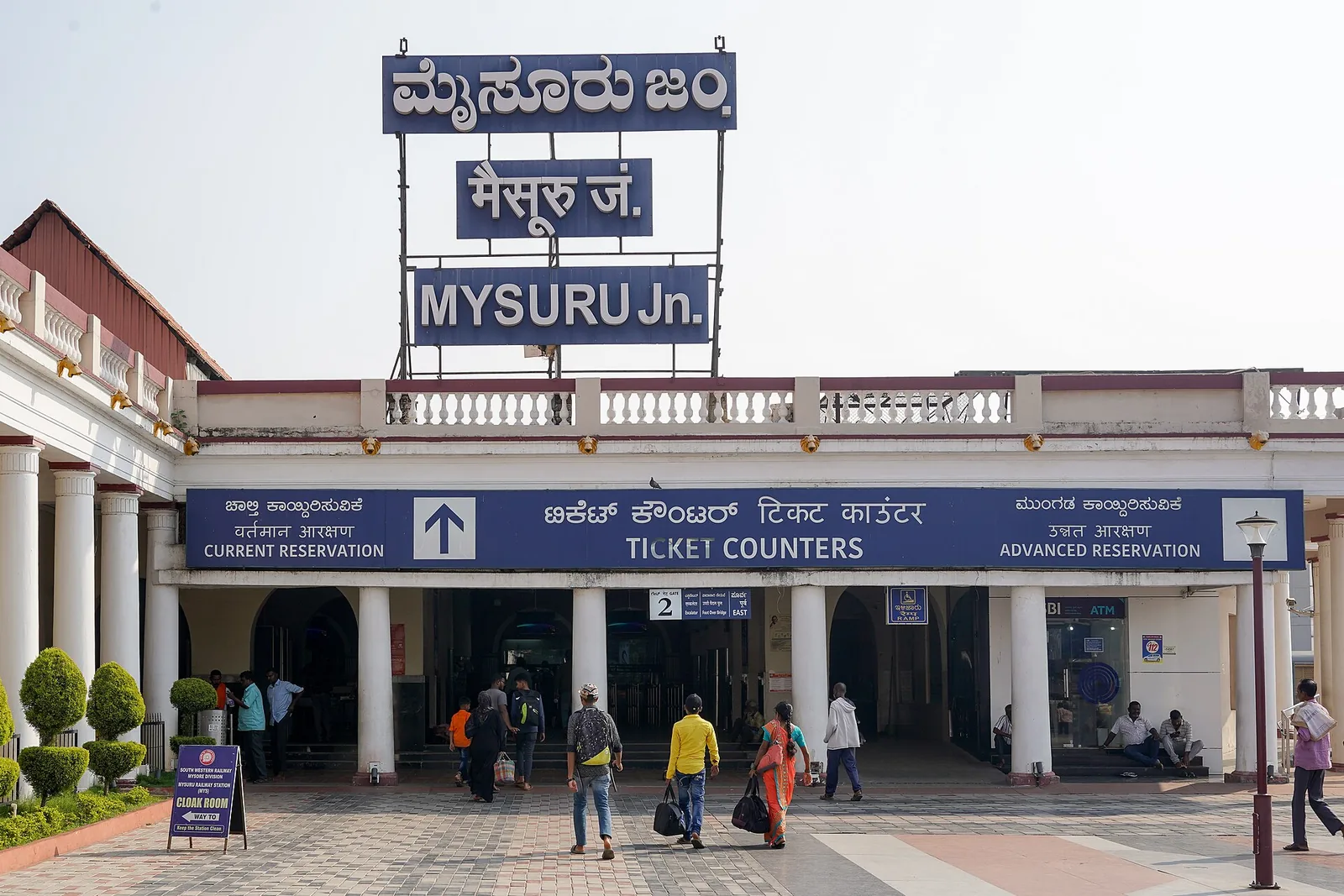
Please do not upload an edited image here without consulting me. I would like to make corrections only at my own source to ensure that the changes improve the image and are preserved.Otherwise you may upload an edited image with a new name. Please use one of the templates derivative or extract.
, CC BY-SA 4.0, Wikimedia CommonsWho is left out of train ticket insurance
Two groups are not covered, according to the Railway Board’s directions. Passengers in normal second class or general class, the unreserved coaches, cannot take the insurance. Children under 5 who travel without a berth or seat of their own are also excluded. Children aged 5 to 11 with a reservation are covered, with or without a berth.
This is the part most of the coverage has skipped. The Supreme Court’s order, as quoted by LiveLaw and the Free Press Journal, said the court had given authorities time to extend cover to people “belonging to the lowest strata of society”, who mostly buy tickets at counters, and directed that “all tickets sold over the counter at all railway stations” be insured in the same manner as online tickets. Online insurance has only ever applied to reserved e-tickets, and the board’s directions, as reported, follow that same line. Unreserved general tickets stay outside the scheme.
What 45 paise buys: NewsPlainly’s calculation
The premium is small enough to vanish inside a fare. On the reported figures, a family of four with confirmed reserved berths would pay ₹1.80 in total, which is 4 times 45 paise, for cover of up to ₹10 lakh per person. For a single passenger, ₹10 lakh of cover for 45 paise works out to more than 22 lakh rupees of maximum payout for every rupee of premium.
The calculation shows scale only. It is not a view on whether any traveller should buy the cover, which stays optional.
Why the Supreme Court stepped in
The order came from a bench of Justices Ahsanuddin Amanullah and R Mahadevan, hearing proceedings on railway safety that began after the train accident in Odisha in June 2023, Business Today and the Free Press Journal reported. The same proceedings have covered track fencing, foot overbridges and the rollout of Kavach, the automatic train protection system meant to stop trains from colliding.
At the 6 October hearing, the bench said there had been no progress on counter-ticket insurance despite earlier time given, and fixed the two-week deadline. The online scheme at 45 paise per passenger, including taxes, has been in force since 17 February 2024, the Free Press Journal reported.
Rail travellers have seen several changes this year, including the first Vande Bharat sleeper service in the south. Counter ticket insurance is the one that reaches passengers who never book online.
Frequently asked questions
When does insurance for counter train tickets start?
From Tuesday, 27 October 2026, as directed by the Supreme Court on 6 October 2026.
How much does railway travel insurance cost at the counter?
45 paise per passenger, including taxes, the same as for tickets booked on IRCTC.
Is general class covered by train ticket insurance?
No. According to the Railway Board's directions, normal second class or general class passengers are not covered, nor are children under 5 travelling without a berth or seat.
Can I pay the insurance premium in cash?
No. The Railway Board said the premium is to be collected along with the fare through digital means only.