Why it matters
Smoke from burning paddy stubble adds to the smog that settles over Delhi and north India every winter, affecting the health of millions. How fast Punjab's count rises in the next four weeks, and whether straw reaches power plants and kilns instead of fires, will shape air quality through November. For farmers, the push means more inspections and fines alongside promises of machinery.
Stubble burning in Punjab has reached 510 recorded farm fires this paddy season as of 22 October 2026, and two border districts, Tarn Taran and Amritsar, account for 383 of them. On 24 October a team from the Commission for Air Quality Management (CAQM), the central body that manages air pollution in Delhi and the surrounding region, travelled to both districts to review what officials are doing to stop the fires.
What the air quality commission told Tarn Taran and Amritsar
CAQM chairperson Rajesh Verma led the high-level team that met the deputy commissioners of the two districts, according to a release from the Environment Ministry issued through the Press Information Bureau (PIB) that evening. The team reviewed how paddy straw is being handled both in the field and away from it, and the action each district had taken as fire counts rose.
The commission expressed concern over the rise in fires and gave four sets of instructions, the release says:
- Make the most of paddy straw as fuel in thermal power plants, brick kilns and other industries that can burn it.
- Appoint nodal officers for different areas and industries, who must check that straw is actually being used and file regular compliance reports.
- Send officials to villages and farmers regularly, and make sure machines reach farmers on time through custom hiring centres (CHCs), the rental points where farmers borrow straw machinery.
- Tighten coordination between farmers, CHCs and machine suppliers so there is no delay.
Tarn Taran got a specific warning. Because the district has the most stubble fires in the state, its deputy commissioner was told to treat the issue as the top priority, and the commission said negligence or failure to act would lead to strict action and fixing of responsibility.
The team also visited an industrial unit in Amritsar where a boiler runs on pellets made from paddy straw, to see how such models could be scaled up.
How fast Punjab farm fires have grown this season
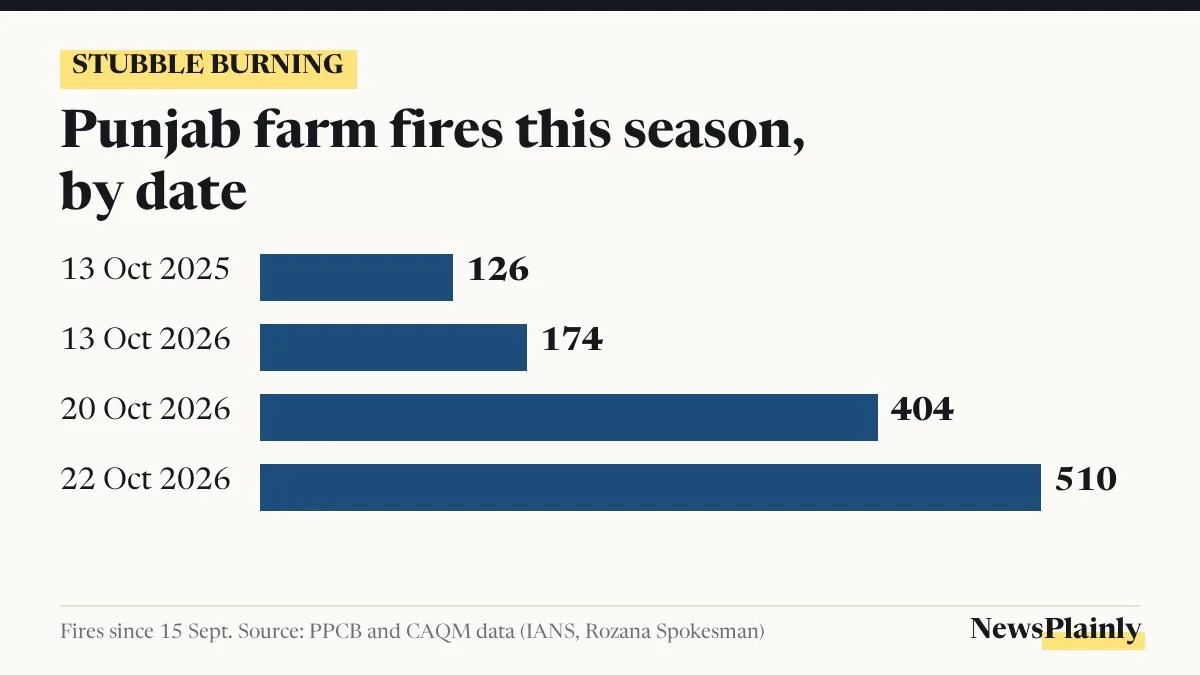
Satellite monitoring of farm fires begins on 15 September each year. Punjab crossed 100 fires on 8 October and stood at 174 by 13 October, compared with 126 on the same date in 2025, Rozana Spokesman reported, citing CAQM and Punjab Pollution Control Board (PPCB) data. A PPCB report put the count at 404 by 20 October. Two days later it was 510, the board said in a report carried by the news agency Indo-Asian News Service (IANS).
By NewsPlainly’s calculation from those figures, the state added 336 fires in the nine days from 13 to 22 October, an average of about 37 a day, against about 6 a day in the four weeks from 15 September to 13 October.
The district split is lopsided. As of 22 October, Tarn Taran had 247 fires and Amritsar 136, the PPCB data shows. Gurdaspur came next with 32, then Ferozepur with 26, Kapurthala with 18, and Fazilka and Jalandhar with nine each. IANS noted that the district figures in the report do not add up exactly to the state total, so the split should be read with that caveat.
| Date | Fires in Punjab this season | Source |
|---|---|---|
| 8 Oct 2026 | Crossed 100 | CAQM data, Rozana Spokesman |
| 13 Oct 2026 | 174 (126 a year earlier) | CAQM and PPCB data |
| 20 Oct 2026 | 404 | PPCB report |
| 22 Oct 2026 | 510 | PPCB report, via IANS |
Why paddy straw fires start in Tarn Taran and Amritsar first
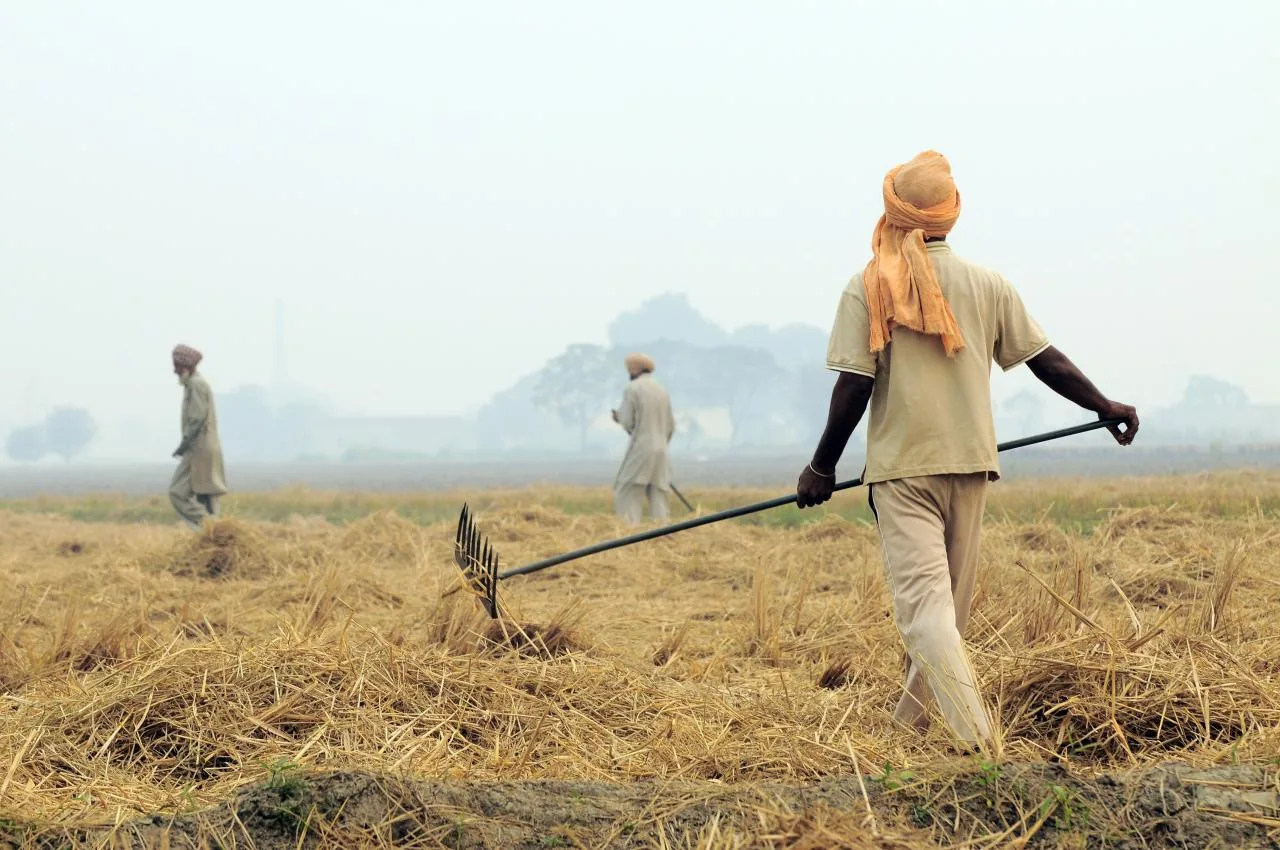
Most of the early fires came from districts where farmers sowed early-maturing paddy varieties, so harvesting, and the burning that can follow it, starts sooner, Rozana Spokesman reported. Several districts, including Ludhiana, Bathinda and Mansa, had recorded no fires at all by 13 October.
Farmers burn the leftover straw because the gap between harvesting paddy and sowing wheat is short, and clearing a field with machines costs time and money. That is why the commission keeps returning to two fixes: machines in the field that mix straw into the soil, and buyers such as power plants and kilns that take it away as fuel.
Punjab’s own season totals show how much is at stake. The state recorded 10,909 fires in 2024 and 5,114 in 2025, according to the same report. This year’s 510 by 22 October is about a tenth of last season’s full count, with the peak weeks of late October and November still ahead.
Fines so far: ₹9.30 lakh in stubble burning penalties
Enforcement figures in the PPCB report are modest compared with the number of fires. Officials physically inspected 467 sites and confirmed burning at 195 locations. Environmental compensation, the fine levied on farmers for burning crop residue, was imposed in 184 cases, totalling ₹9.30 lakh, of which ₹4.93 lakh has been recovered.
On NewsPlainly’s calculation, that works out to about ₹5,050 per penalised case, and a little over half of the money billed has been collected. In Tarn Taran, 97 of the 247 cases drew a fine; in Amritsar, 51 of 136.
The report also shows action aimed at officials rather than farmers: warning notices to 227 nodal and supervisory officers, four first information reports (FIRs) registered with police, and 166 red entries, the land record marks that flag a farm for burning. No officer has been charge-sheeted or suspended, the report says.
What the paddy straw push means for Delhi’s winter air
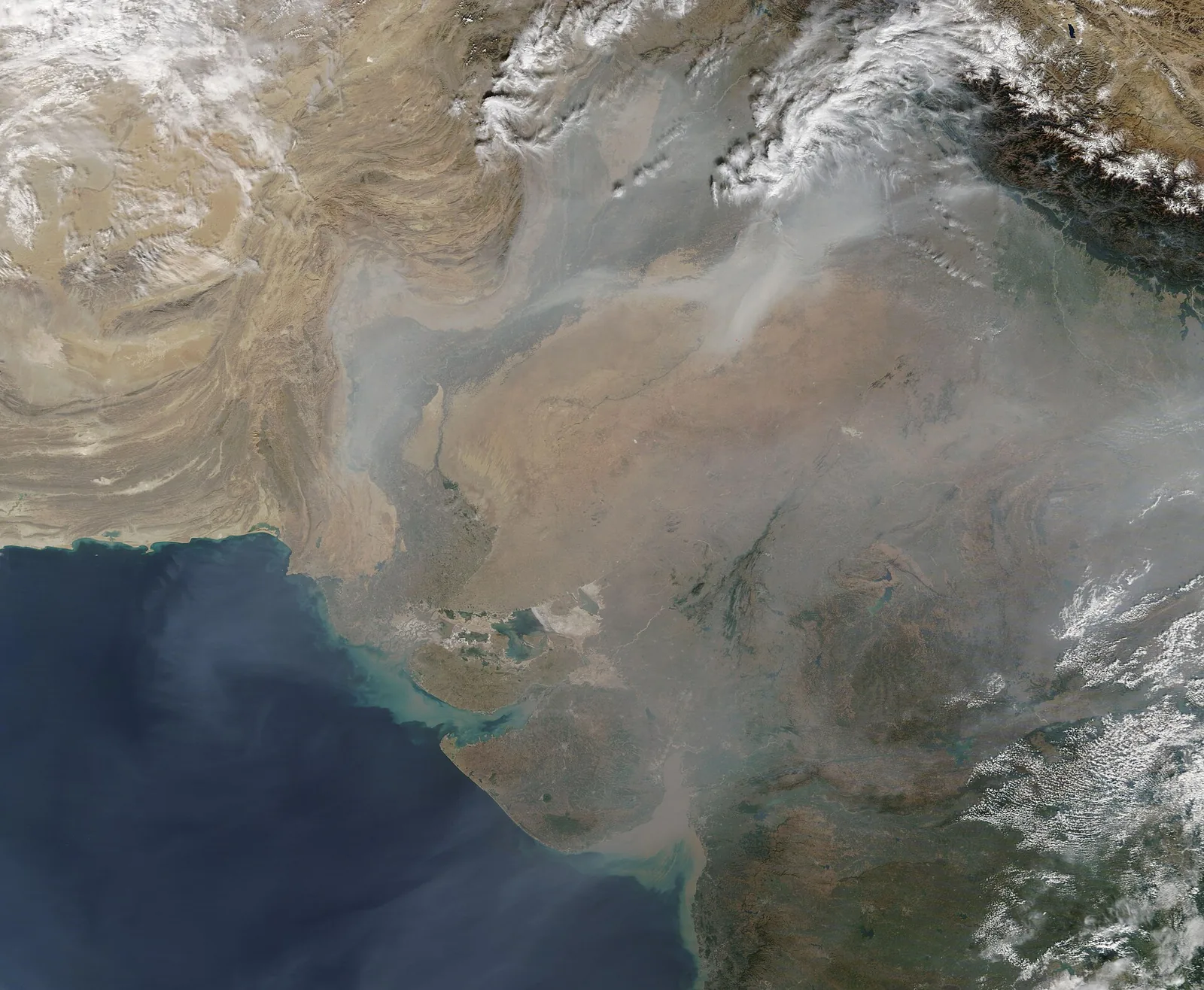
Smoke from Punjab and Haryana fields is one of several sources of Delhi’s winter smog, along with vehicles, dust and industry, and its share rises in late October and November when burning peaks. Delhi entered the first stage of its pollution action plan earlier this month, as NewsPlainly reported.
For farmers in Tarn Taran and Amritsar, the instructions mean more visits from officials and, the commission says, faster access to straw machines. For district officers, the warning is that responsibility will be fixed if the counts keep climbing.
Frequently asked questions
How many stubble burning cases has Punjab recorded in 2026?
Punjab recorded 510 stubble burning incidents this paddy season as of 22 October 2026, according to a Punjab Pollution Control Board report.
Which districts have the most farm fires?
Tarn Taran had 247 and Amritsar 136 as of 22 October, together about three in four of the state's fires.
What is the fine for stubble burning in Punjab?
Farmers are charged environmental compensation. In 184 cases so far, a total of ₹9.30 lakh has been imposed and ₹4.93 lakh recovered, the PPCB report says.
What did CAQM direct on 24 October?
It asked the districts to maximise use of paddy straw as fuel, appoint nodal officers to monitor it, visit villages, and get machinery to farmers on time, and warned of strict action for negligence.