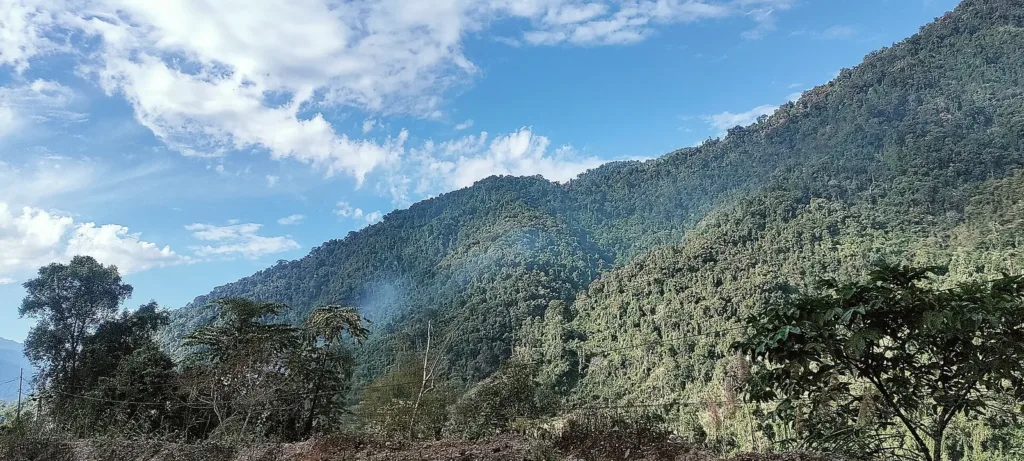
Representative image. Rashid Jorvee, CC BY-SA 4.0, Wikimedia Commons

Why it matters
The Siang project is India's planned answer to a giant Chinese dam upstream, but it would affect Adi villages along the river. The violence makes it harder to hold the surveys the government wants and the talks both sides say they are open to, and it affects daily life in three districts of Arunachal Pradesh.
The Siang dam protest in Arunachal Pradesh turned violent on the night of 23 October 2026, when a crowd in Pasighat set fire to an office of NHPC, the state-run hydropower company, and to the town’s police station, the news agency PTI reported. Seven police vehicles were burnt and the homes of two MLAs and the state BJP president were ransacked, according to the Assam Tribune. Chief Minister Pema Khandu condemned the violence on 24 October and offered talks.
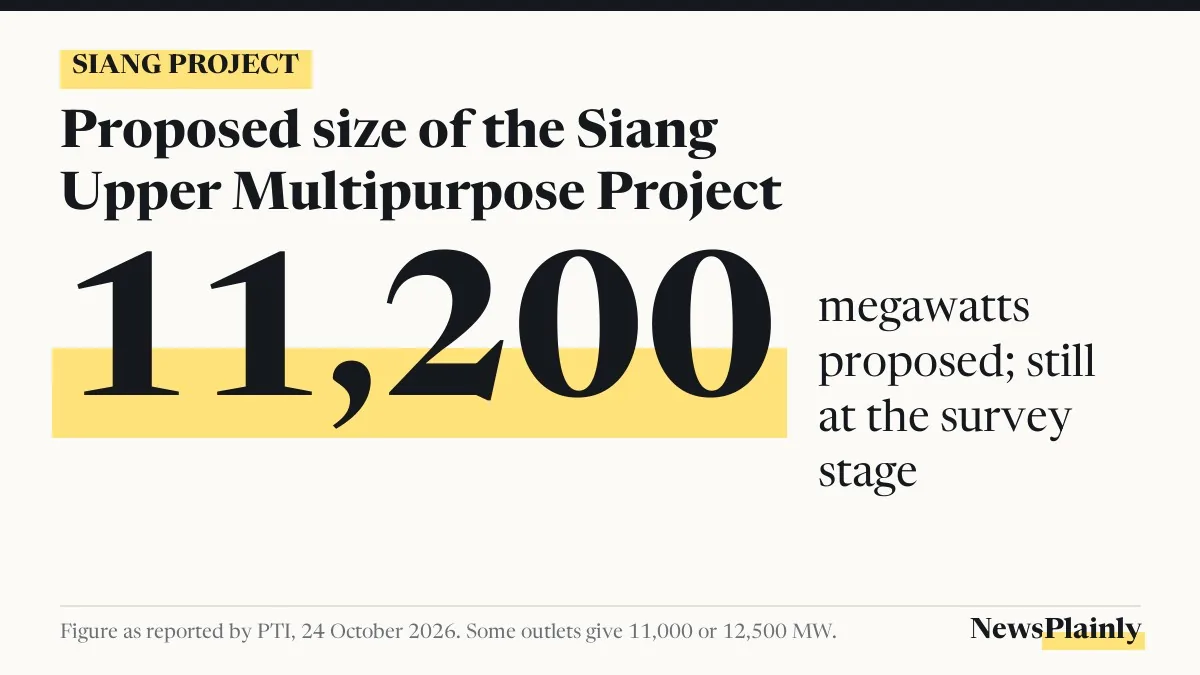
The protests are against the proposed Siang Upper Multipurpose Project (SUMP), an 11,200 MW (megawatt) dam on the Siang river, which flows into India from Tibet and becomes the Brahmaputra in Assam. The project is still at the survey stage.
How the Pasighat violence unfolded on 23 October
Four groups had called a 12-hour bandh (shutdown) from 5 am to 5 pm across Siang, Upper Siang and East Siang districts: Adi Bane Kebang United, the SUMP Affected Area Youth Association, the youth wing of the Siang Indigenous Farmers’ Forum (SIFF) and the Adi Galo Welfare Society. It stayed peaceful through the day, the Sentinel reported.
Trouble had started earlier at Dite-Dime, near Geku in Siang district. Siang Superintendent of Police Kamdam Sikhom said 150 to 200 protesters from Geku and Komkar gathered there at about 7 am carrying machetes, lathis and slingshots, tried to damage barricades and police vehicles, threw stones and broke a prohibitory order. He said police acted lawfully in the presence of an executive magistrate. Police fired tear gas; at least four women were injured and taken to hospital, the Assam Tribune reported, while Scroll put the number at five.
At about 11 pm, after the bandh hours ended, a crowd in Pasighat set fire to the NHPC office and the police station, a senior officer told PTI, as carried by ThePrint. The office of the Adi Bane Kebang, the Adi community’s main body, was ransacked. Several police personnel were hurt by stones, among them Deputy Superintendent of Police Tony Tatak. The unrest went on until about 4 am on Saturday, the Assam Tribune said.
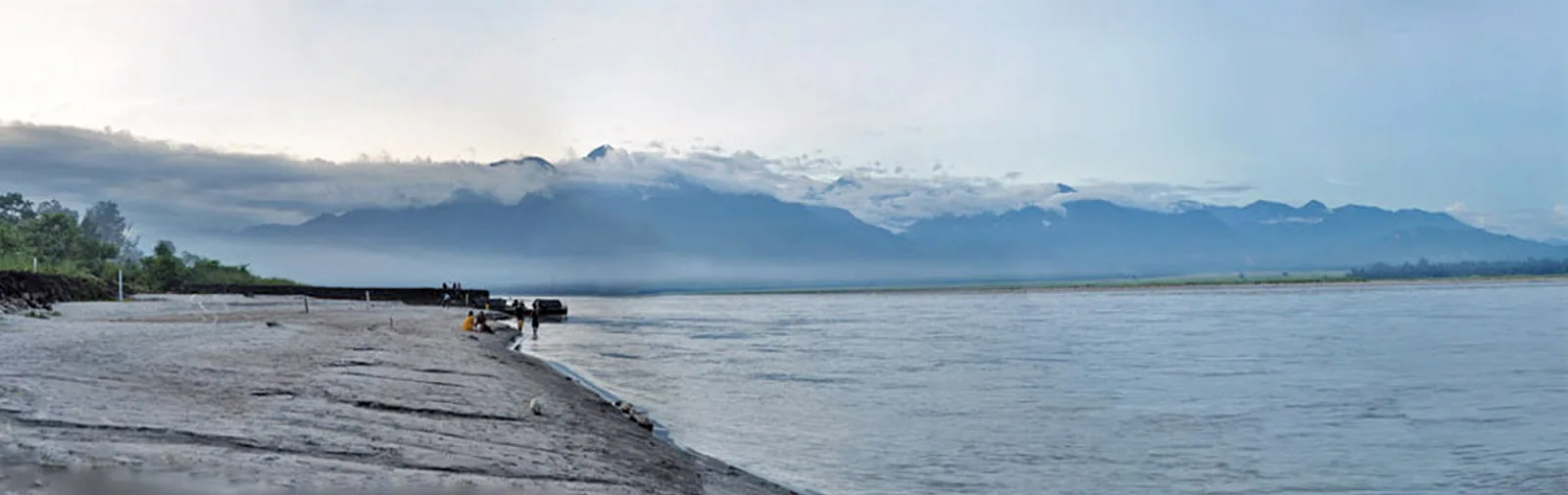
Siang dam protest: what the groups want and what the government says
The groups that called the bandh have four demands, according to PTI: release of 10 arrested activists, reinstatement of suspended gaon buras (village headmen), withdrawal of all pre-feasibility work for the project, and removal of paramilitary and central forces from the area. Local opponents say the dam threatens the Siang river basin and the indigenous Adi communities who live along it.
An unnamed official told Scroll that security forces had fired tear gas on a peaceful protest and that the crowd then got angry. Police say the protesters began the clash by throwing stones. The two accounts of how the Siang dam protest turned violent have not been reconciled. The Arunachal Pradesh Congress Committee condemned the violence and asked for an independent inquiry into the use of tear gas.
Pema Khandu said protest was a right in a democracy, “But there is a limit to exercising this right,” and that “Calling a bandh is not the solution,” the Assam Tribune reported. He invited all groups to round-table talks in Itanagar or Pasighat and repeated that the project would go ahead only with public consensus. He also said some groups were trying to keep the situation tense. The state government asked people to ignore rumours, and police called a social media claim that a young woman had died from tear gas fake news.
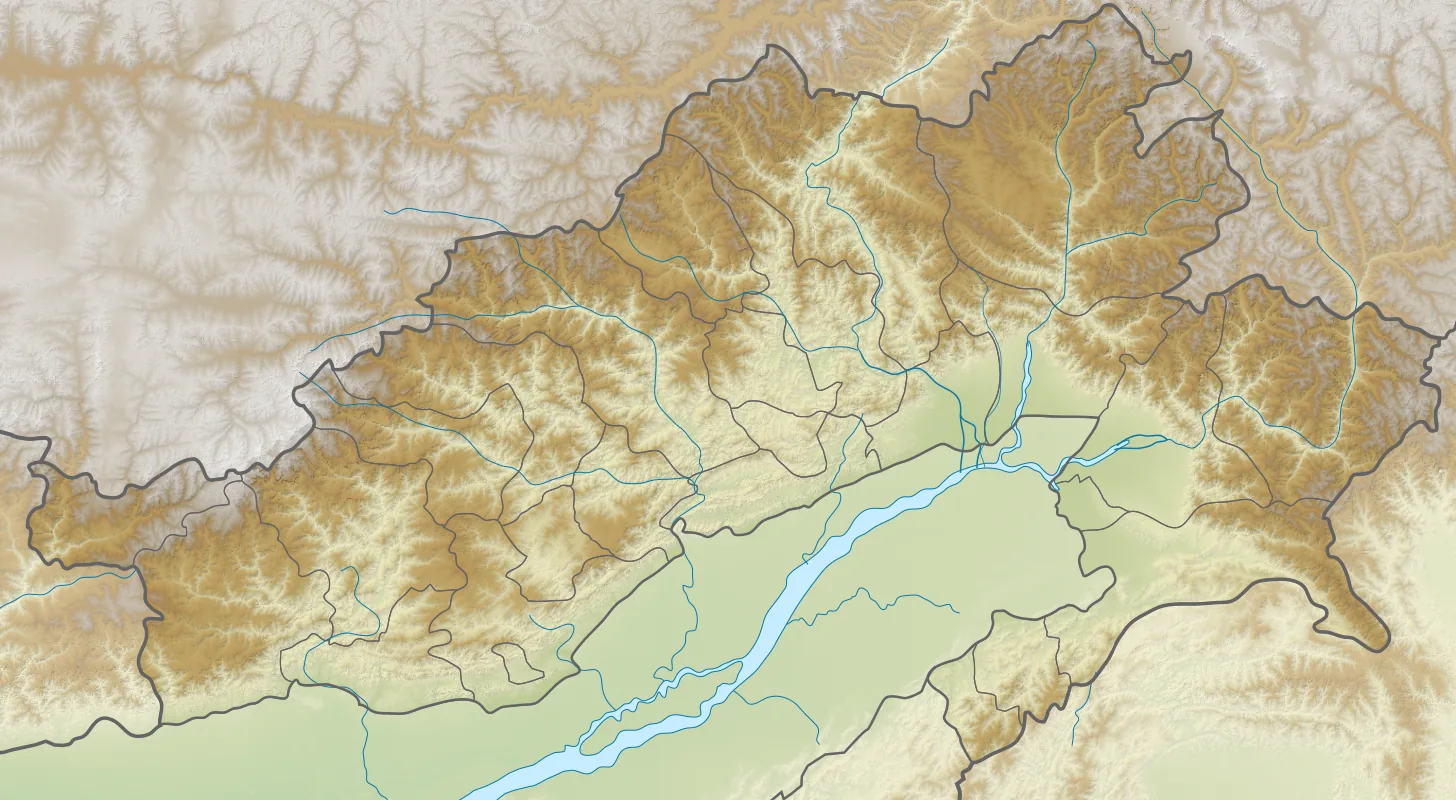
What the Siang Upper Multipurpose Project is
The state government says the Siang Upper Multipurpose Project would store and regulate the Siang’s water because China plans a very large hydropower project upstream on the same river, which it calls the Yarlung Tsangpo, at Medog in Tibet. It also cites flood control in the Siang-Brahmaputra basin and energy security. NHPC has been given the preparatory work.
Work so far is limited to technical and environmental surveys for a pre-feasibility report (PFR), the first study of whether a project can be built. Khandu has said the dam would come only after the PFR, a social impact assessment, an environmental impact assessment and a detailed project report, Mongabay reported. Uggeng and Komkar are two of the three possible dam sites.
Reports differ on the size of the Siang Upper Multipurpose Project: most give 11,200 MW, while some outlets use 11,000 MW or 12,500 MW. The dam would sit in a region where India and China already watch each other closely; NewsPlainly reported this week on the foreign ministry statement on the latest face-off along the Line of Actual Control (LAC), the de facto India-China border.
How the Siang protests built up: a timeline
The Pasighat violence follows months of rising tension in the Siang valley. NewsPlainly put the main events from the reports in one list.
| Date | Event |
|---|---|
| June 2026 | Khandu says 110 households in Geku signed a memorandum backing the survey; Adi Bane Kebang United disputes it |
| 14 Sep 2026 | Police and paramilitary personnel deployed to Uggeng and Komkar |
| 28 Sep 2026 | Clash with central forces at Geku |
| 30 Sep 2026 | During Khandu’s visit to Yingkiong, an MLA’s house is vandalised and a police vehicle burnt |
| About 9 Oct 2026 | Four people held in preventive detention in Upper Siang under a state law |
| 13 Oct 2026 | Khandu agrees in principle to reduce forces and withdraw cases, after meeting Adi youth and student bodies |
| 23 Oct 2026 | Bandh, tear gas at Dite-Dime, arson in Pasighat at night |
| 24 Oct 2026 | Khandu condemns the violence and offers round-table talks |
Northeast Now has questioned whether the promises made on 13 October were carried out. The government has not said so publicly either way.
What comes next after the Siang dam protest
Officials were still assessing the damage on 24 October, PTI reported. No arrests or police cases over the Pasighat arson had been announced by Saturday afternoon, and no curfew or internet shutdown had been reported. The groups behind the bandh had not publicly answered Pema Khandu’s offer of talks.
The survey work for the pre-feasibility report, which the protesters want stopped, has not been completed. Their other demands, on the 10 detained activists, the village headmen and the security forces, are also unresolved.
Frequently asked questions
What is the Siang Upper Multipurpose Project?
It is a proposed dam of about 11,200 MW on the Siang river in Arunachal Pradesh, meant to store water and generate power. It is at the pre-feasibility survey stage.
Why are people protesting against the Siang dam?
Local groups say it threatens the river basin and Adi communities. They want survey work withdrawn, detained activists freed and central forces removed.
Why does the government want the dam?
It says the dam would store and regulate water in view of China's planned project upstream, help control floods and add to energy security.