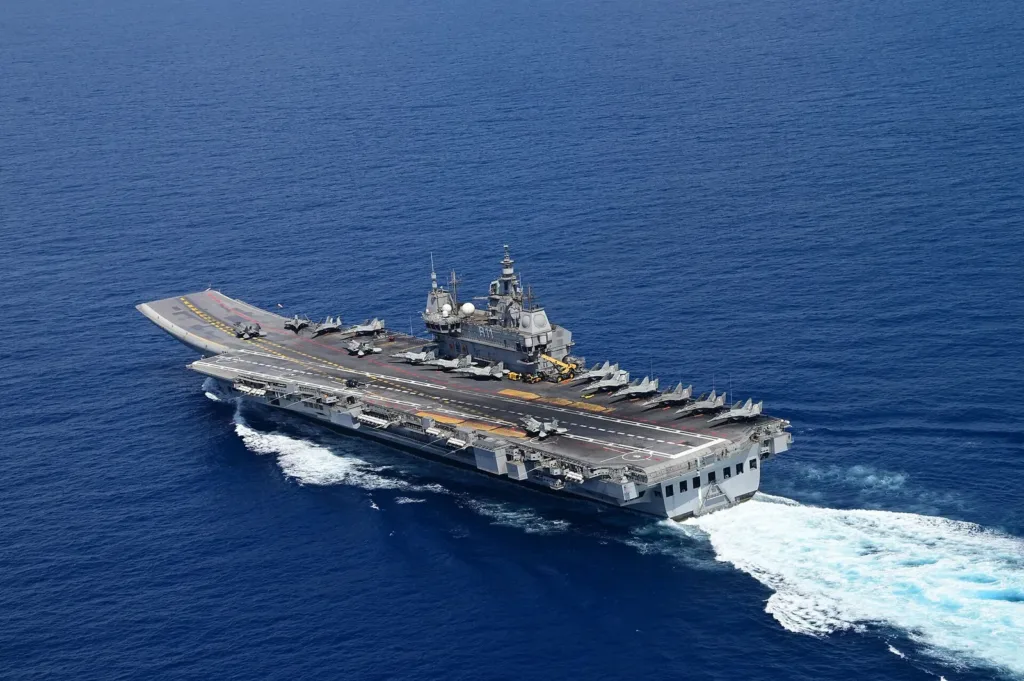
Representative image. Indian Navy Western Fleet, GODL-India, Wikimedia Commons

Why it matters
INS Vikrant was built to carry fighters, and the Rafale Marine is the jet the government chose to fly from it alongside the MiG-29K. The first landing shows the trials have moved from a test site in Goa to the ship itself. The 26 jets cost the country about ₹63,000 crore by most estimates, and the Ministry of Defence has said they will all arrive by 2030.
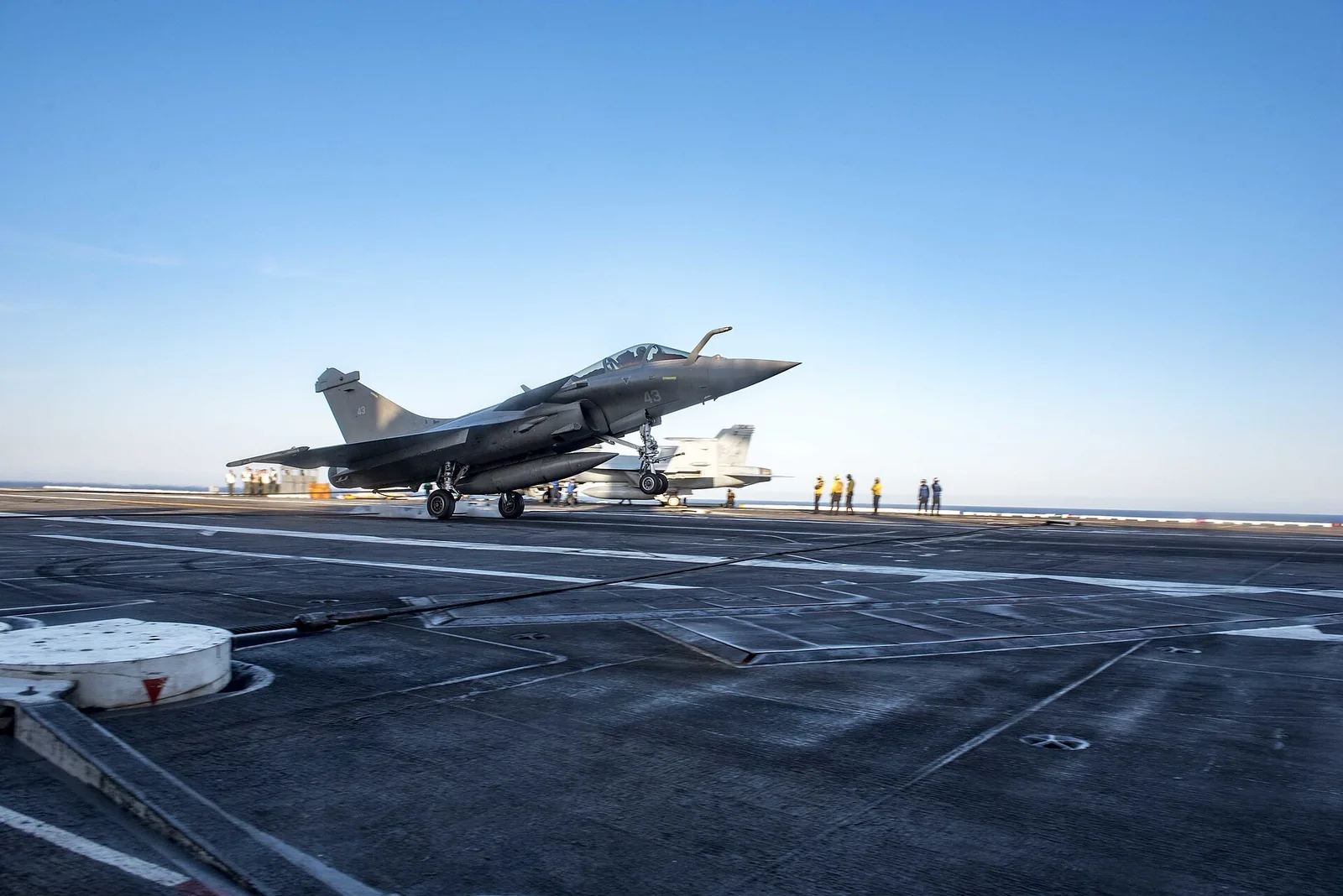
A Rafale Marine fighter landed on INS Vikrant, India’s home-built aircraft carrier, for the first time on 29 October 2026, and got it right on its first try. The Indian Navy announced the landing on X on 30 October and released a video of it, calling the ongoing trials “the first steps towards operationalisation of the aircraft in the Indian Navy”, as its post was quoted by several outlets.
The landing is the first time the French-built jet that India has ordered for its carriers has come down on Vikrant’s deck. Twenty-six of them are on order, and the Ministry of Defence has said all of them would be delivered by 2030.
What the Navy said about the Rafale Marine landing
According to the Navy’s post, as quoted by LatestLY and SSBCrack, the Rafale Marine landed on board Vikrant on its maiden attempt on 29 October. The Week, citing news agency ANI, reported that the Navy shared visuals of the landing on social media. SSBCrack and Clash Report said the landing was carried out under Captain Ashok Rao, the ship’s commanding officer.
The reports read for this article did not name the pilot, give the time of the landing or say where at sea the carrier was. The Navy’s wording is careful: these are trials and “first steps”, not the start of regular flying. The jet is not yet part of Vikrant’s air wing.
Before this, the aircraft was tested ashore. The Week, quoting ANI, reported on 22 October that the Navy had begun Rafale Marine trials in Goa to work out what changes were needed to fly the jet from Vikrant. SSBCrack and Clash Report said those trials were at the Shore-Based Test Facility at INS Hansa, the naval air station in Goa, which copies a carrier’s ski-jump ramp and arrester wires on land.
Why landing on INS Vikrant is a test of its own
INS Vikrant launches jets in a way the Rafale Marine was not first built for. Vikrant uses STOBAR (short take-off but arrested recovery): a jet takes off under its own power up a curved ski-jump at the bow, and lands by catching one of several steel arrester wires with a hook under its tail. France’s carrier, the Charles de Gaulle, uses catapults to fling jets off the deck instead. Clash Report and Daily Jagran pointed out that the Rafale Marine was designed for catapult launches, so it has to prove it can work safely from a ski-jump.
The jet already has the parts any carrier fighter needs. The Week said the Rafale Marine has strengthened landing gear and a tail hook. The open questions are about fitting it into Vikrant’s routine: how it is launched, where it parks, and how it moves between the flight deck and the hangar below.
That last point is practical. SSBCrack reported that the Rafale Marine’s wingspan, about 10.9 metres, is wider than Vikrant’s aircraft lifts, about 10 metres, so pylons at the wingtips may have to be taken off when a jet is moved down, and that work on the lifts is under way. Clash Report also listed the lifts among the checks still to be done.
Rafale M deal: a timeline of the 26 jets
The landing is one step in a longer process. This timeline puts the official dates and the reported ones side by side.
| Date | What happened |
|---|---|
| 2 September 2022 | INS Vikrant commissioned at Kochi |
| 6 February 2023 | First fighter landings on Vikrant: the naval prototype of the home-built Tejas Light Combat Aircraft (LCA Navy) and then a MiG-29K |
| 28 April 2025 | India and France sign an Inter-Governmental Agreement (IGA) for 26 Rafale Marine jets in New Delhi |
| 22 October 2026 | Rafale Marine trials in Goa reported, to assess changes needed for Vikrant |
| 29 October 2026 | First Rafale Marine landing on Vikrant, on the first attempt (announced 30 October) |
| End of 2028 or early 2029 | Deliveries expected to begin, according to The Week and LatestLY (not an official date) |
| By 2030 | All 26 aircraft to be delivered, the Ministry of Defence said in 2025 |
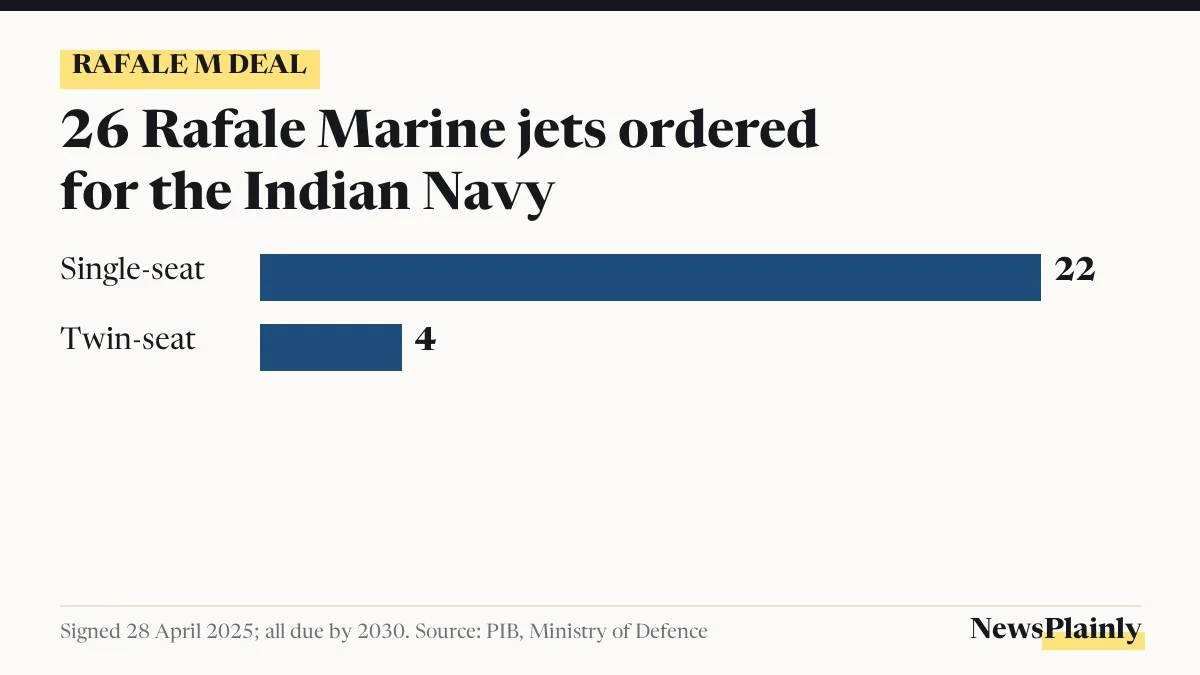
The Ministry of Defence release of 28 April 2025 set out what the IGA covers. It buys 22 single-seat and 4 twin-seat jets, the twin-seaters being used mainly for training. The package also includes training, simulators, equipment, weapons and performance-based logistics, a support contract tied to how many aircraft are kept ready to fly, plus extra equipment for the Indian Air Force’s own Rafales. Defence Minister Rajnath Singh and French Armed Forces Minister Sebastien Lecornu signed it.
The release also said the deal includes transfer of technology to fit Indian-made weapons on the jet, a factory in India for Rafale fuselages, and repair and overhaul facilities in India for the engine, sensors and weapons. Crews are being trained in France and India. The release did not give the price. News reports at the time and since have put it at about ₹63,000 crore, with some saying ₹64,000 crore.
What the Rafale Marine means for India’s carriers
Today Vikrant’s fighters are Russian-made MiG-29Ks. The Rafale Marine will join them rather than replace them straight away: Daily Jagran, citing a wire report, said the new jets will add to the MiG-29K fleet until India’s own carrier fighter, the Twin Engine Deck Based Fighter (TEDBF) now being designed, is ready. The Week and Clash Report said the Rafale Marine will be able to fly from both of India’s carriers, Vikrant and the older INS Vikramaditya.
The Ministry of Defence said in 2025 that the Rafale Marine has much in common with the Rafales the Indian Air Force already flies, which it said would help with joint operations, training and logistics. Both are made by France’s Dassault Aviation.
What tests come next for the Rafale M
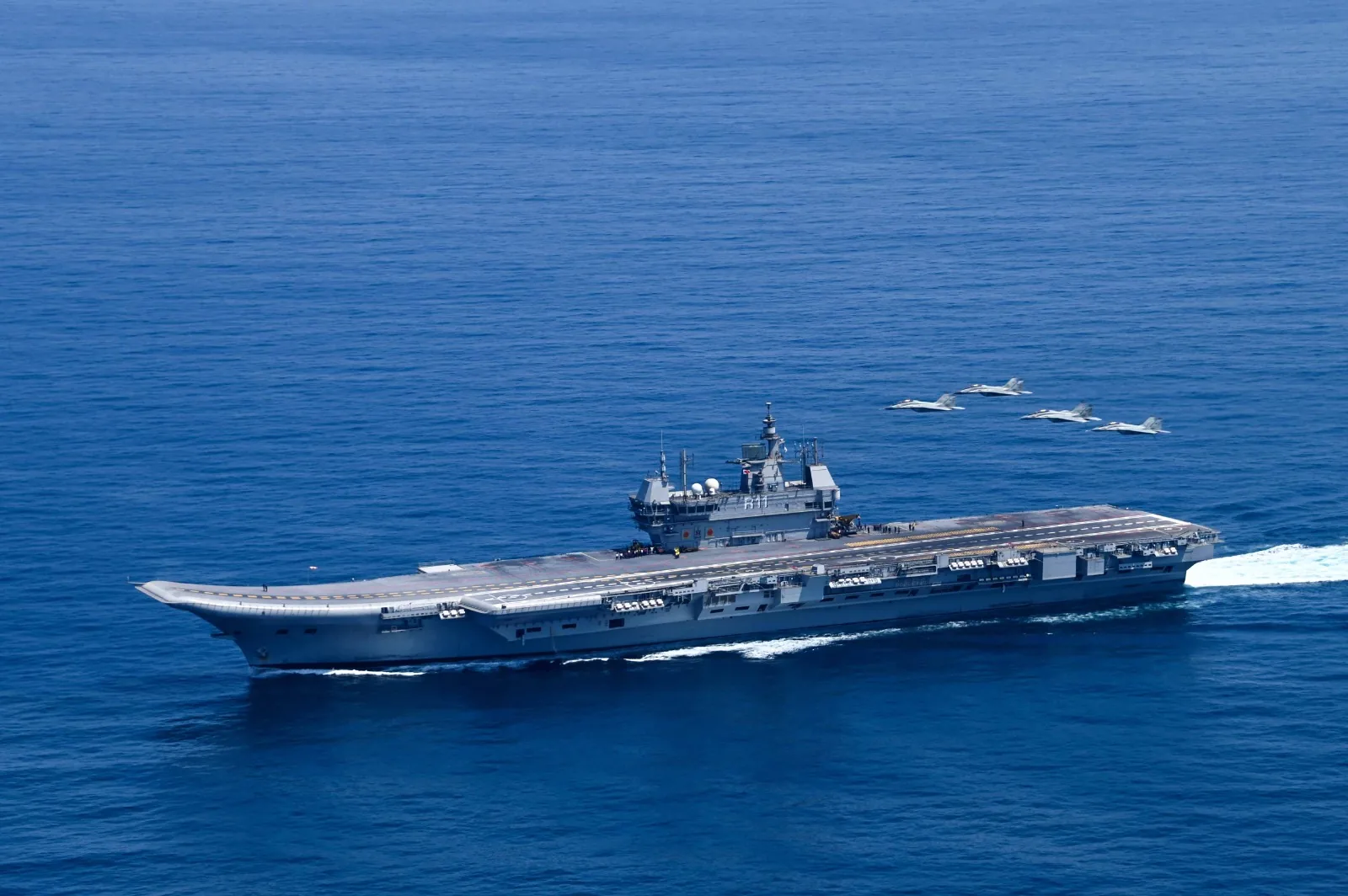
One landing does not make a jet ready for carrier service. SSBCrack reported that more trials will follow to show the aircraft is fit for sustained operations from Vikrant and Vikramaditya, and LatestLY said further technical evaluations and preparations are needed before it enters regular service. The Navy has not given a date for that in the material checked.
From here the milestones to watch are the remaining carrier trials, the work on Vikrant’s lifts, and the first deliveries of India’s own jets, which are expected from the end of 2028. The 2030 deadline for the last of the 26 aircraft is the only date the government has put on record. For the wider defence buying programme, see our report on the Defence Acquisition Council’s ₹2.12 lakh crore approvals.
Frequently asked questions
When did the Rafale Marine first land on INS Vikrant?
On 29 October 2026, on its first attempt, according to the Indian Navy's post as quoted in reports. The Navy announced it on 30 October.
How many Rafale M jets has India ordered?
26: 22 single-seat and 4 twin-seat, under an agreement signed with France on 28 April 2025, the Ministry of Defence said.
When will the Indian Navy get its Rafale Marine jets?
The Ministry of Defence said all 26 would be delivered by 2030. Reports say deliveries should begin at the end of 2028 or early 2029.
Will the Rafale Marine replace the MiG-29K?
Not straight away. Reports say it will add to the MiG-29K fleet until India's own Twin Engine Deck Based Fighter is ready.