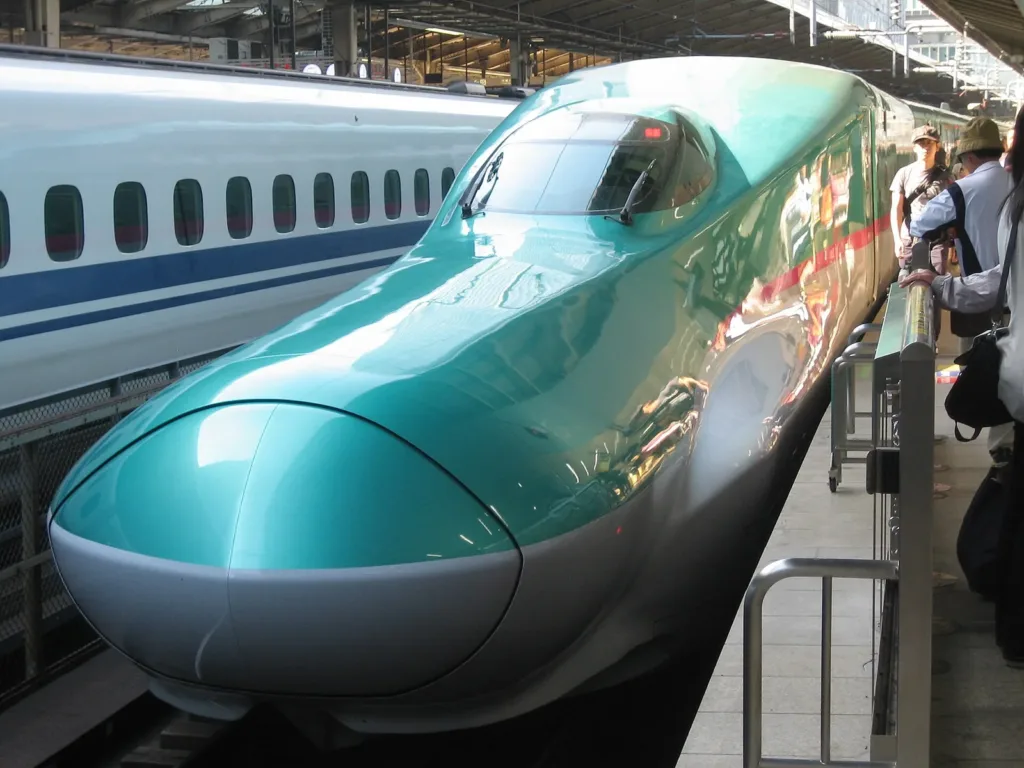
Representative image. 銚電神, CC BY-SA 3.0, Wikimedia Commons

Why it matters
The minister's figures would cut a Delhi to Varanasi trip to about three and a half hours, and he indicated fares would stay below airfares. But the approval so far rests on his statement: with no published cost, sanction or start date, travellers cannot yet tell when the line might open. PIB's estimate of ₹16 lakh crore for seven planned corridors shows the scale of public money involved.
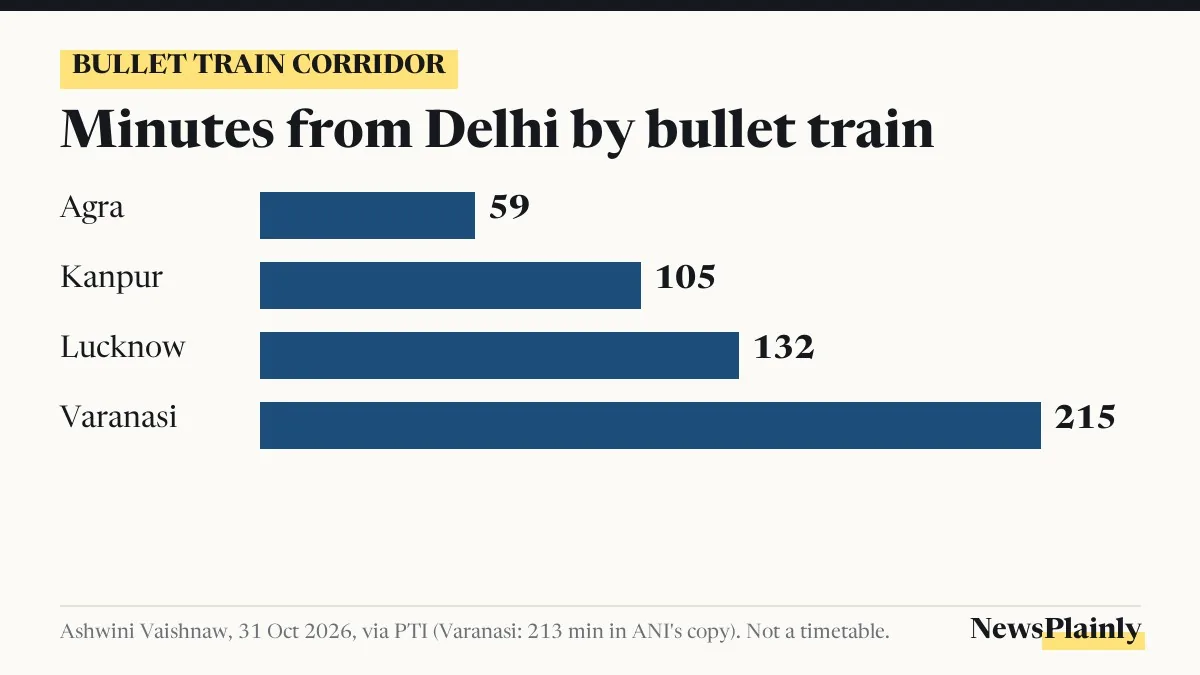
Prime Minister Narendra Modi has approved the north corridor of India’s bullet train network, Railway Minister Ashwini Vaishnaw said in Varanasi on Saturday, 31 October 2026. On the minister’s figures, the bullet train corridor would take a passenger from Delhi to Agra in 59 minutes and from Varanasi to Delhi in about three and a half hours, the news agency PTI (Press Trust of India) reported.
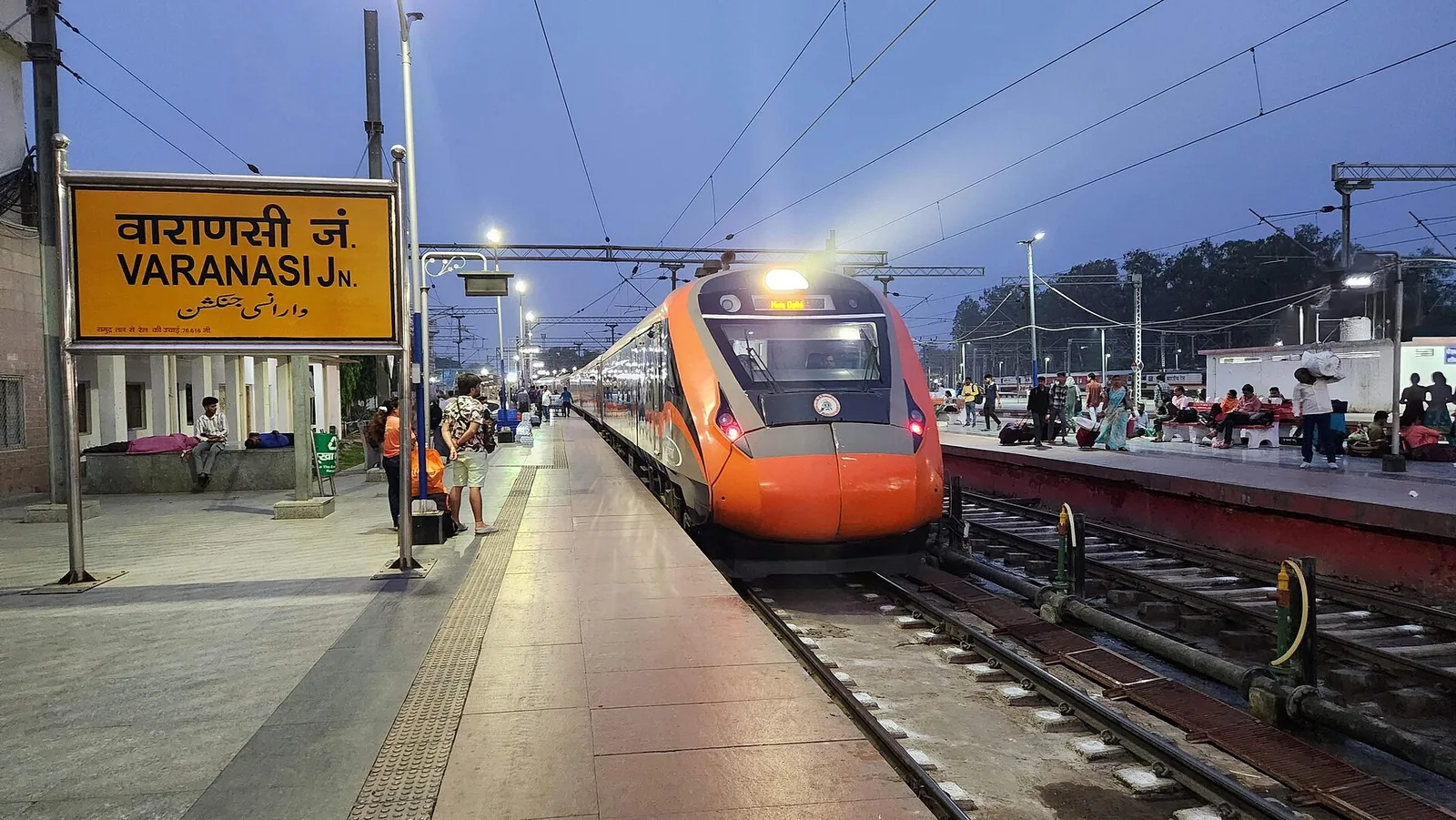
Vaishnaw spoke shortly before flagging off the new Vande Bharat Sleeper service between Varanasi and New Delhi. He named the cities on the route: Delhi, Agra, Kanpur, Lucknow, Ayodhya, Varanasi, Prayagraj, Patna and Siliguri, with the line going on to Guwahati, according to PTI.
Bullet train corridor travel times the minister gave
Two news agencies, PTI and ANI (Asian News International), carried the minister’s list of Delhi Varanasi bullet train journey times, and they differ by two minutes on the longest trip. PTI quoted 3 hours 35 minutes from Varanasi to Delhi. ANI, in a quote carried by The News Mill and India TV, had him saying 3 hours 33 minutes, and also gave times for Varanasi to Patna, Prayagraj and Agra that PTI’s copy did not include.
The table puts both versions next to the estimate in a Press Information Bureau (PIB) factsheet on high-speed rail first published on 3 July 2026.
| Journey | Vaishnaw, 31 Oct (PTI) | Vaishnaw, 31 Oct (ANI) | PIB factsheet, July |
|---|---|---|---|
| Delhi to Agra | 59 min | 59 min | not listed |
| Delhi to Kanpur | 1 hr 45 min | 1 hr 45 min | not listed |
| Delhi to Lucknow | 2 hr 12 min | 2 hr 12 min | not listed |
| Lucknow to Varanasi | 1 hr 21 min | 1 hr 21 min | not listed |
| Varanasi to Delhi | 3 hr 35 min | 3 hr 33 min | 3 hr 50 min |
| Varanasi to Agra | not in copy | 2 hr 34 min | not listed |
| Varanasi to Patna | not in copy | 1 hr | not listed |
| Varanasi to Prayagraj | not in copy | 33 min | not listed |
NewsPlainly checked the figures against each other. Adding the minister’s two legs, Delhi to Lucknow (2 hours 12 minutes) and Lucknow to Varanasi (1 hour 21 minutes), gives 3 hours 33 minutes, the same as the ANI version. That simple sum ignores any stop at Lucknow, so it is a check on the arithmetic, not a timetable. Put in minutes from Delhi, the minister’s figures are 59 to Agra, 105 to Kanpur, 132 to Lucknow and 215 (or 213 in ANI’s version) to Varanasi.
The bigger change is against July. PIB’s factsheet put the Delhi Varanasi bullet train at 3 hours 50 minutes. The minister’s figure on Saturday is 15 to 17 minutes shorter, depending on which agency’s version is used. The reports read did not explain the change, for example whether the route, the number of stops or the planned speed had been revised.
What “approved” tells us, and what it does not
The news of the bullet train corridor rests on the minister’s words. In the PTI report, Vaishnaw said the Prime Minister “has approved the north corridor of the bullet train”. The reports read did not say what form the approval took: they mention no Union Cabinet decision, no cost for this corridor, no detailed project report being cleared and no construction start date. NewsPlainly did not find a government press release on Saturday’s approval in the material it checked.
Until the government publishes what was approved, the cost of the line and the timeline for building it remain open questions.
There is also a gap between the route the minister described and the official list. PIB’s July factsheet names seven planned corridors, and its northern lines are Delhi to Varanasi and Varanasi to Siliguri through Patna. Guwahati is not in that table. Vaishnaw’s description on Saturday took the north corridor on to Guwahati, PTI reported. The Delhi Agra bullet train section, the shortest trip he named, sits at the western end of the line.
Where India’s bullet train plan stands
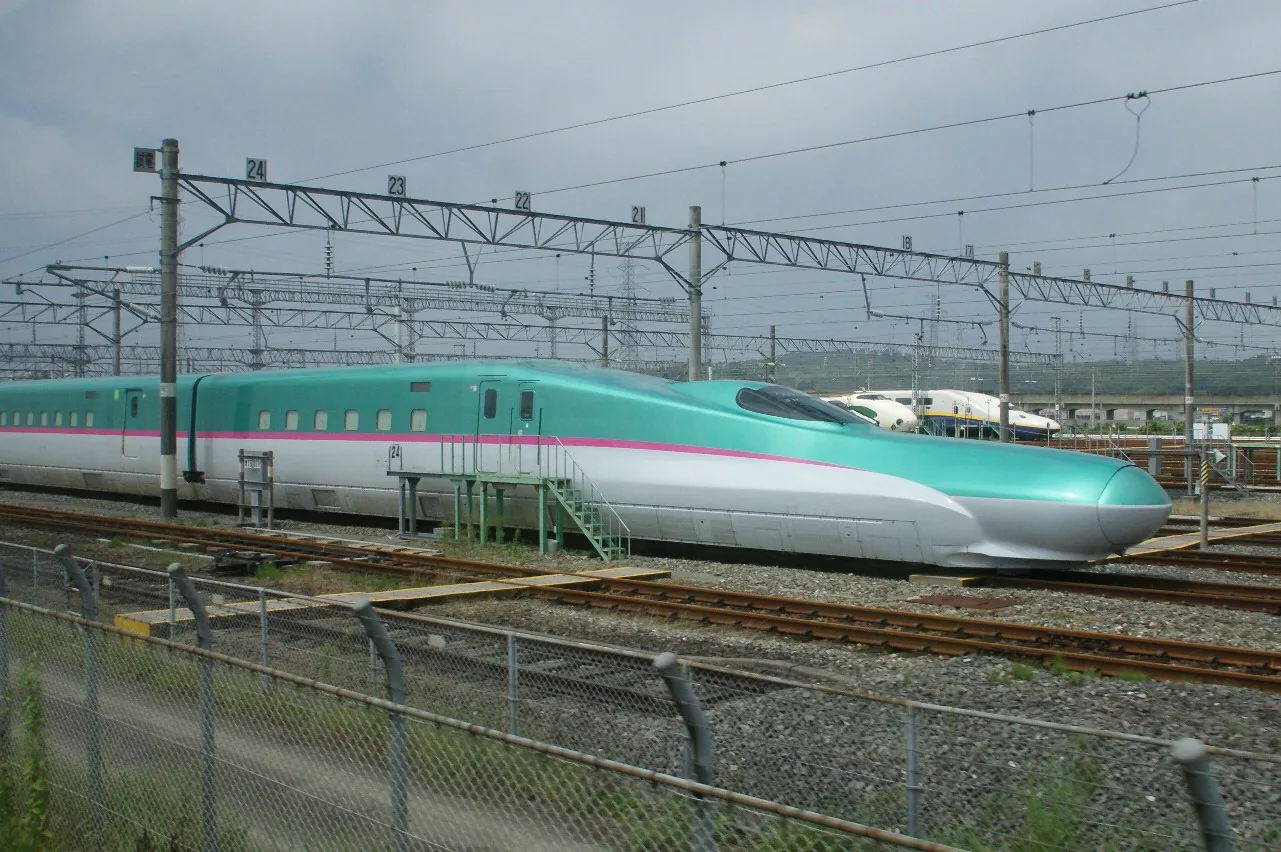
India’s first bullet train line, the Mumbai to Ahmedabad corridor, is still under construction, using Japan’s Shinkansen technology. According to the PIB factsheet, it is about 508 km long with 12 stations, and the trip will take about 1 hour 58 minutes. The first service is expected in August 2027, starting with the section between Surat and Vapi.
By NewsPlainly’s calculation, 508 km in 1 hour 58 minutes is an average of about 258 km an hour, stops included. The line’s design speed is 350 km an hour and its operating speed 320 km an hour, the factsheet says. For comparison, it gives the Vande Bharat trains a design speed of 180 km an hour.
The same factsheet says seven more corridors covering nearly 4,000 km have been identified for future development, and that this proposed network is expected to attract investment of around ₹16 lakh crore. Those are planning figures for the whole network, not a sanctioned budget for the north bullet train corridor.
The government also wants the trains themselves made in India. The factsheet says the Integral Coach Factory (ICF) in Chennai is working with Bharat Earth Movers Limited (BEML) to design and build high-speed trainsets for 280 km an hour. Vaishnaw said on Saturday that the north corridor would be built entirely under Make in India, “from pillar to girder”, PTI reported.
What the minister said about fares and who benefits
Vaishnaw said the line would help young people, middle-class families, the poor, small entrepreneurs and the MSME sector (micro, small and medium enterprises), according to ANI. He also indicated that the Delhi Varanasi bullet train fare would be kept below airfares, India TV reported, citing ANI. No fare figure was given in the reports read.
In the PTI copy, he went further: people would remember the Prime Minister “for the next 100 years” for the project, he said.
Congress leader Ajay Rai criticised the government’s approach to public infrastructure. He said the government’s mantra was to “build and sell”, referring to the Vande Bharat trains and airports, in remarks carried by ANI. His comments did not address the bullet train’s route or timings.
What to watch next for the north corridor
For travellers between Delhi and eastern Uttar Pradesh, the useful details are still missing: a cost, a construction schedule, the final list of stations and an opening year. The ones to look for are a Union Cabinet decision or a Railways Ministry statement setting out what has been approved.
The announcement came on a busy day for new trains. The Varanasi to New Delhi Vande Bharat Sleeper was flagged off the same day, and a sleeper service between Bengaluru and Mumbai starts regular runs in early November, with fares of ₹2,810 in third AC (air-conditioned three-tier). Neither is a high-speed line; the bullet train corridor would be a separate track built for far higher speeds.
Frequently asked questions
How long will the Delhi to Varanasi bullet train take?
About 3 hours 35 minutes, Ashwini Vaishnaw said on 31 October 2026, according to PTI; ANI quoted him as saying 3 hours 33 minutes. PIB's July factsheet had 3 hours 50 minutes.
How long will the Delhi to Agra bullet train take?
59 minutes, on the minister's figures given in Varanasi on 31 October 2026.
Which cities are on the north bullet train corridor?
Delhi, Agra, Kanpur, Lucknow, Ayodhya, Varanasi, Prayagraj, Patna and Siliguri, extending to Guwahati, the minister said, according to PTI.
When will the north bullet train corridor open?
No date was given in the reports read. The government has not published a cost or a construction schedule for it in the material NewsPlainly checked.