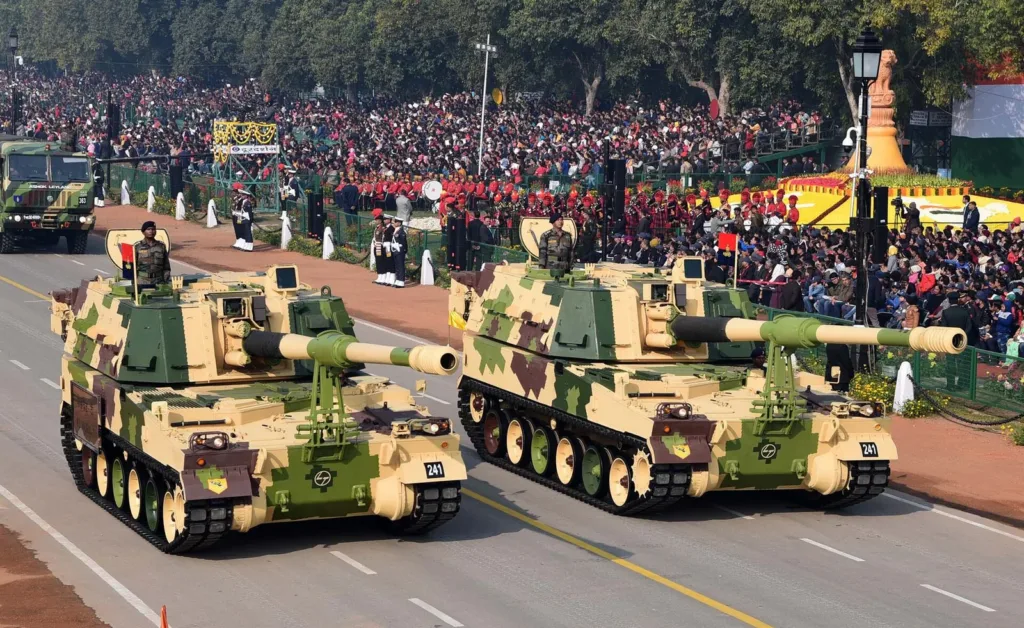
File photo: K9 Vajra-T self-propelled guns at the Republic Day parade in New Delhi, 26 January 2020. Not from the DAC meeting. Photo: Press Information Bureau, Government of India, GODL-India, Wikimedia Commons, edited by NewsPlainly.

Why it matters
These approvals decide what the armed forces can start buying, with about 82% of the value meant for Indian industry. For defence manufacturers, an AoN is the opening of a long process, not an order: in 2025-26 up to 27 March, contracts signed were worth about a third of the AoN value granted. Money is committed only when contracts are signed.
The Defence Acquisition Council (DAC) on Monday, 26 October 2026, gave its first-stage approval to arms and equipment purchases estimated at about ₹2.12 lakh crore for the Army, Navy and Air Force. The DAC approval covers artillery guns, helicopters, air defence systems, counter-drone systems and a long-range kamikaze drone system, and the Ministry of Defence says about 82% of the buying will be from Indian industry. Defence minister Rajnath Singh chaired the meeting.
This is not money spent yet. What the council granted is called Acceptance of Necessity (AoN), which the ministry describes as in-principle administrative approval. Hindustan Times noted that under India’s procurement rules, AoN is the first step towards buying military equipment. Contracts, prices and delivery dates come later.
What the DAC approval covers, service by service
The defence ministry’s release lists the items but gives no quantities, no suppliers and no split of the ₹2.12 lakh crore between the three services. The table below sorts what it does say.
| Service | Items cleared | What the ministry says they are for |
|---|---|---|
| Army | High mobility vehicles, a self-propelled tracked gun system, gunshot response system | Moving troops and supplies in hard terrain; firepower for mechanised units; real-time awareness for troops |
| Army | Very short-range air defence systems (VSHORADS), platform-based counter-drone systems | Stopping small new-generation aerial threats; helping tanks survive on the battlefield |
| Army | Surveillance drones, a long-range drone system, an integrated surveillance and strike system, a long-range kamikaze drone system | Better surveillance and targeting |
| Army and Air Force | Light multi-role helicopters | Reconnaissance, combat, search and rescue, disaster relief |
| Navy | Active offboard decoy system, other major naval platforms | Defence against modern anti-ship missiles; Indian-designed and Indian-built platforms |
| Air Force | Special utility helicopters, air defence systems, weapons, mobile X-band Doppler weather radars | Air transport; air defence; detailed local weather tracking in forward areas |
VSHORADS, short for very short-range air defence systems, are meant to take on small, new-generation aerial threats, in the ministry’s words. A kamikaze drone is one built to fly into its target and explode, rather than return. An offboard decoy works away from the ship itself; the ministry says this one will strengthen the Navy’s defence against modern anti-ship missiles. The release does not name the “major naval platforms”, beyond saying they will be designed and built in India.
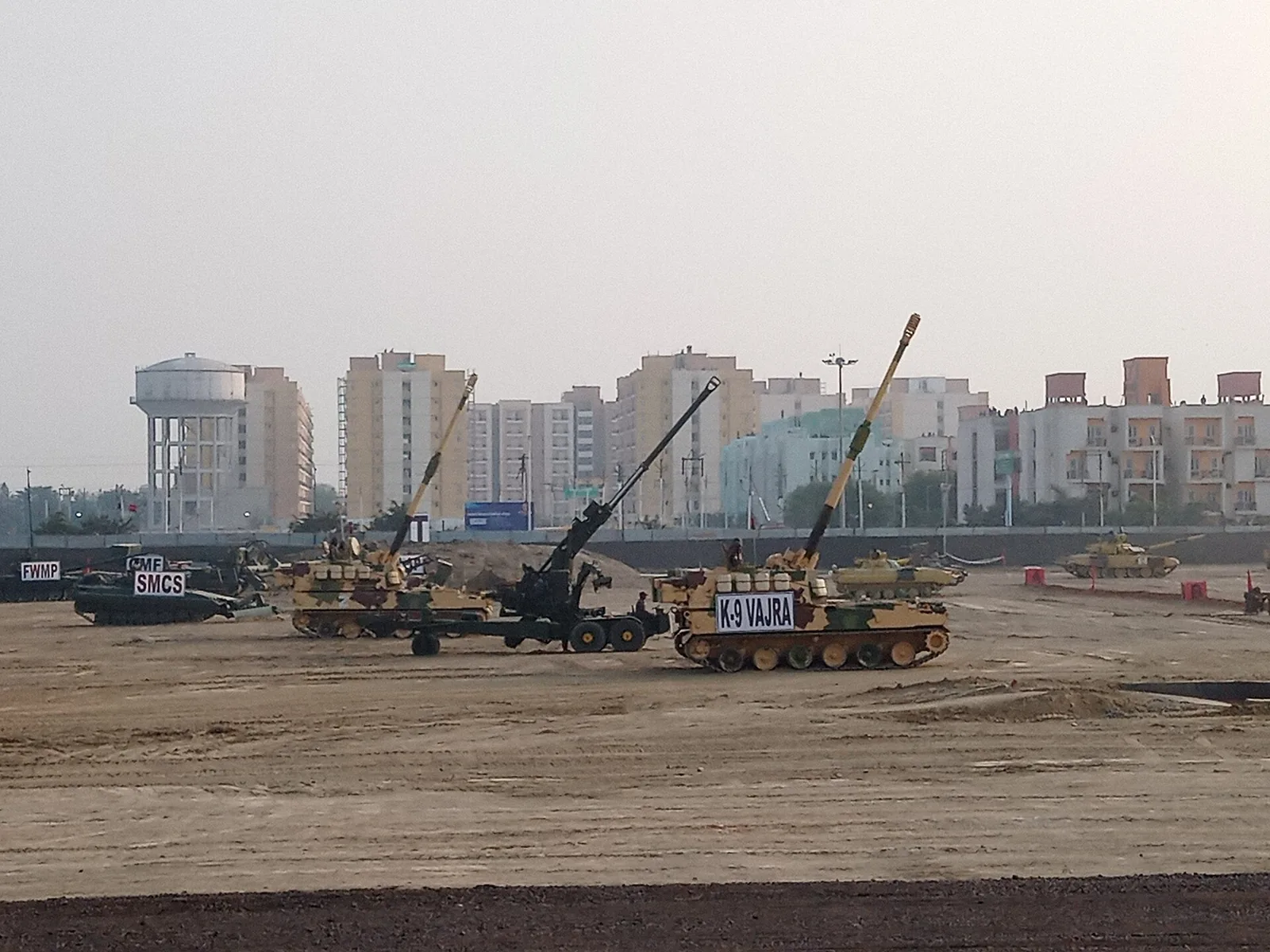
Hindustan Times reported that the gun system is a further batch of K9 Vajra-T self-propelled guns. The ministry’s release itself does not use that name.
How much goes to Indian industry
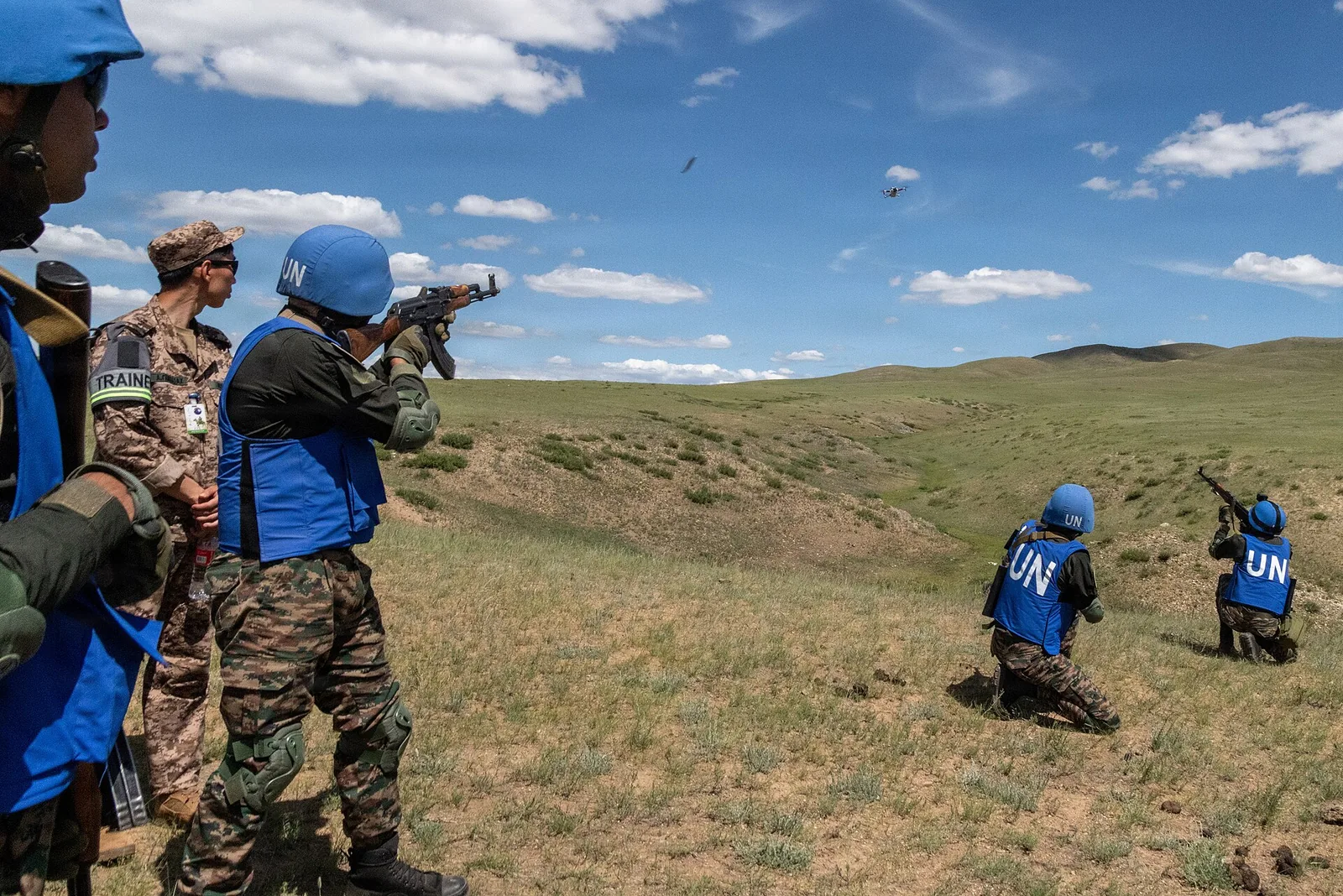
The ministry put the domestic share at “approximately 82%”. It did not give a rupee figure, so NewsPlainly worked it out from the two numbers it did give. Taking 82% of ₹2,12,000 crore gives about ₹1,73,840 crore, or roughly ₹1.74 lakh crore, for Indian companies. That leaves about ₹38,000 crore that could go to foreign suppliers. Both are rough, because the total and the share are themselves approximate.
To give a sense of scale, Hindustan Times cited defence ministry data showing India’s total defence production at a record ₹1.78 lakh crore in 2025-26, up 15.6% from ₹1.54 lakh crore a year earlier. The government’s target is ₹3 lakh crore of defence production and ₹50,000 crore of defence exports by 2029-30, the report said. On NewsPlainly’s comparison, the domestic share of Monday’s approvals is close to one year of current output, though an approval-stage estimate is not spending in any single year.
Why acceptance of necessity is not a signed contract
The gap between approval and purchase is large, and the ministry’s own figures show it. In its release after a DAC meeting on 27 March 2026, the ministry said the Defence Acquisition Council had granted acceptance of necessity for 55 proposals worth ₹6.73 lakh crore in 2025-26 up to that date. In the same period, it said, capital contracts were signed for 503 proposals worth ₹2.28 lakh crore. The year ended four days later, on 31 March.
On those figures, contracts signed in 2025-26 (to 27 March) came to about 34% of the AoN value granted in the same period (2.28 divided by 6.73, NewsPlainly’s calculation). That is a comparison of scale, not a conversion rate. The contracts signed are not necessarily for the same proposals that got AoN that year, and the two totals cover very different numbers of proposals (55 against 503).
So Monday’s DAC approval is best read as a list of what the forces have been allowed to start buying. How much of it is ordered, and when, depends on the steps that follow.
Earlier DAC approval rounds in 2026
The council has approved several large packages this year. These are the ones NewsPlainly could confirm; there may have been other meetings.
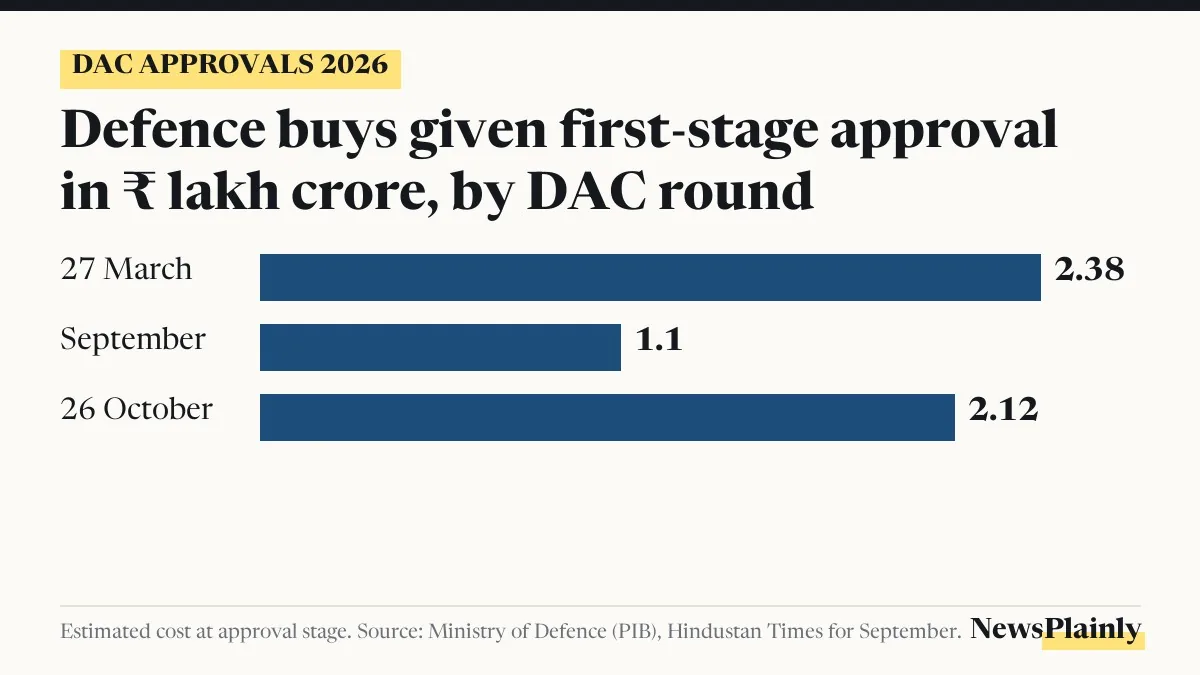
- 27 March 2026: AoN for proposals worth about ₹2.38 lakh crore, including an air defence tracked system, armour-piercing tank ammunition and the Dhanush gun system, according to the ministry’s release that day.
- September 2026: proposals worth ₹1.1 lakh crore, including systems for fighter jets, transport planes and helicopters, advanced light helicopters, CBRN (chemical, biological, radiological and nuclear) reconnaissance vehicles and Arudhra radars for the Navy, Hindustan Times reported.
- 26 October 2026: the ₹2.12 lakh crore package described above.
The September and October rounds alone add up to ₹3.22 lakh crore (NewsPlainly’s sum), more than the March round. Each figure is the estimated cost given at the approval stage, not the value of a signed contract.
What the release leaves out
Several things readers may want to know are not in the ministry’s statement on the Defence Acquisition Council meeting. It does not say how many guns, helicopters or drones will be bought, which companies are in line to build them, or how the cost splits between the Army, Navy and Air Force. It also gives no timeline for contracts or deliveries.
The approvals come amid wider security news. NewsPlainly has reported on the Chinese patrol shifts the Ministry of External Affairs cited along the Line of Actual Control. The ministry’s release, however, did not link Monday’s decisions to any particular border or threat, and spoke only of improving the forces’ capabilities.
Frequently asked questions
What did the DAC approve on 26 October 2026?
Acceptance of Necessity for capital purchases estimated at about ₹2.12 lakh crore, including guns, helicopters, air defence systems, counter-drone systems, surveillance and kamikaze drones, naval decoys and weather radars.
What is Acceptance of Necessity in defence procurement?
It is the in-principle administrative approval the Defence Acquisition Council gives to a proposal. It is the first step towards buying equipment; the contract is signed later.
How much of the ₹2.12 lakh crore will go to Indian companies?
The defence ministry said about 82% of the procurement will be from Indian industry. NewsPlainly's arithmetic puts that at roughly ₹1.74 lakh crore.
Who chairs the Defence Acquisition Council?
The defence minister. Rajnath Singh chaired the 26 October 2026 meeting.