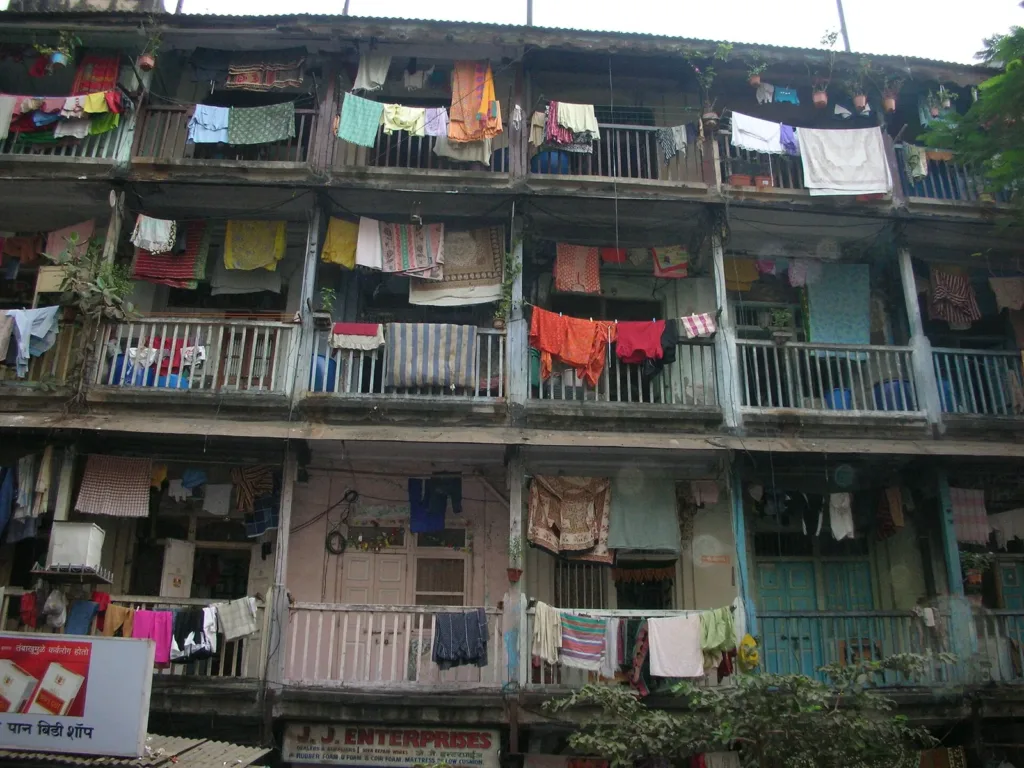
File photo: an old chawl building in Mumbai, 2006. Not a building named in the case. Photo: Abhinav Saxena, CC BY-SA 2.0, Wikimedia Commons, edited by NewsPlainly. Card licensed CC BY-SA 2.0.

Why it matters
People left out of Maharashtra's electoral roll cannot vote until their names are restored. The case asks whether residents moved out temporarily for building redevelopment were wrongly dropped, and whether returning through Form 6 exposes them to a false-declaration charge. The final roll is due on 6 November, a day after the next hearing.
The Supreme Court on Monday, 26 October 2026, issued notice on a petition challenging the Maharashtra SIR, the revision of the state’s voter list that left about 2.07 crore names out of the draft roll. When the petitioner’s lawyer said deleted voters risked prosecution for applying again on Form 6, Chief Justice of India (CJI) Surya Kant replied orally: “Nobody will be prosecuted.” The case comes back on 5 November, a day before the final roll is due.
SIR stands for Special Intensive Revision, the Election Commission of India’s (ECI) door-to-door recheck of who is on the electoral roll. The deadline for claims and objections on Maharashtra’s draft roll was the same Monday, and the court did not extend it.
What the Maharashtra SIR petition asks for
The petition was filed by Arun Anandagiri, whom Hindustan Times and the news agency Press Trust of India (PTI) describe as a chartered accountant and journalist. The case is listed as Arun Anandagiri vs Election Commission of India, writ petition (civil) 1330 of 2026. A bench of the CJI and Justices Joymalya Bagchi and V. Mohana heard it.
Senior advocate Arvind Datar, for the petitioner, asked the court to keep the revision on hold until it decides the case, and to make sure nobody who was on the pre-SIR list is dropped in the meantime, PTI reported. He also asked for more time to file claims and for the final list to be held back, arguing that Maharashtra has no election coming up immediately and that it would take time to bring the deleted voters back, LiveLaw reported.
The bench was not willing to pass those orders without hearing the poll body first, according to LiveLaw’s report of the hearing. The CJI noted that the court had extended dates in SIRs in other states. Hindustan Times reported that the bench told Datar it would consider whether any order was needed after hearing the other side.
Reports differ slightly on who must reply. LiveLaw names the ECI, PTI says notice went to the Centre, the ECI and others, and Hindustan Times names the ECI and the Maharashtra government. NewsPlainly has not seen the written order.
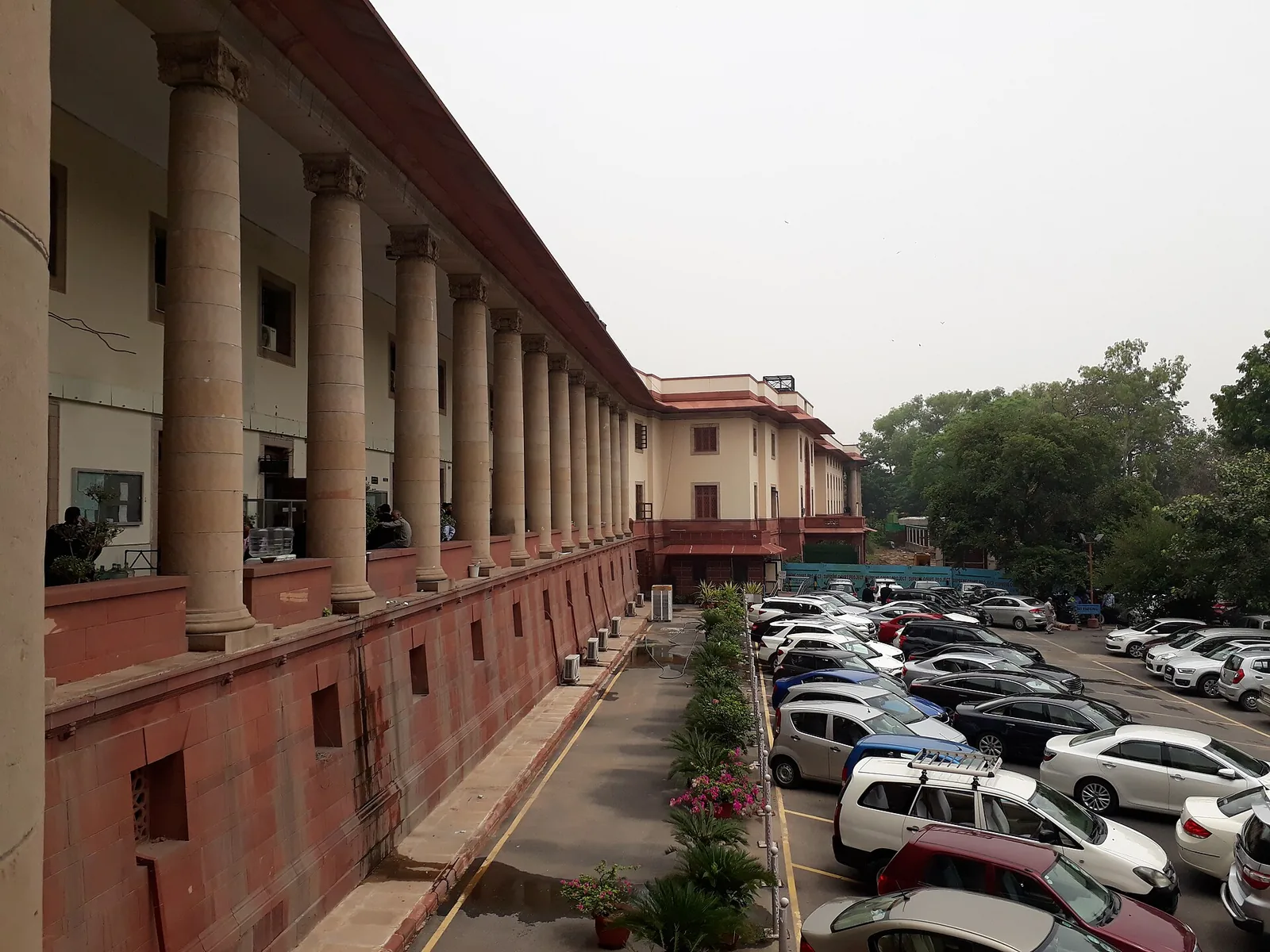
How the “3 crore deleted” claim adds up
The state’s chief electoral officer (CEO), the ECI’s top election official in Maharashtra, put the state’s electorate at 9,78,54,049, PTI reported. Of these, 2,06,88,487 people, or 21.14%, were left out of the draft roll because they could not be found at their listed addresses.
Datar told the court that a further 1.22 crore names were struck off on the ground of “logical discrepancies”, and that about 3 crore voters, roughly a third of the state, have been removed in all. Those totals are the petitioner’s claims; the court has not yet heard the ECI’s side.
The two figures fit together. Adding the CEO’s 2.07 crore to the 1.22 crore Datar cited gives about 3.29 crore, or 33.6% of the electorate. That is NewsPlainly’s arithmetic, using the CEO figure for the first part and the petitioner’s figure for the second.
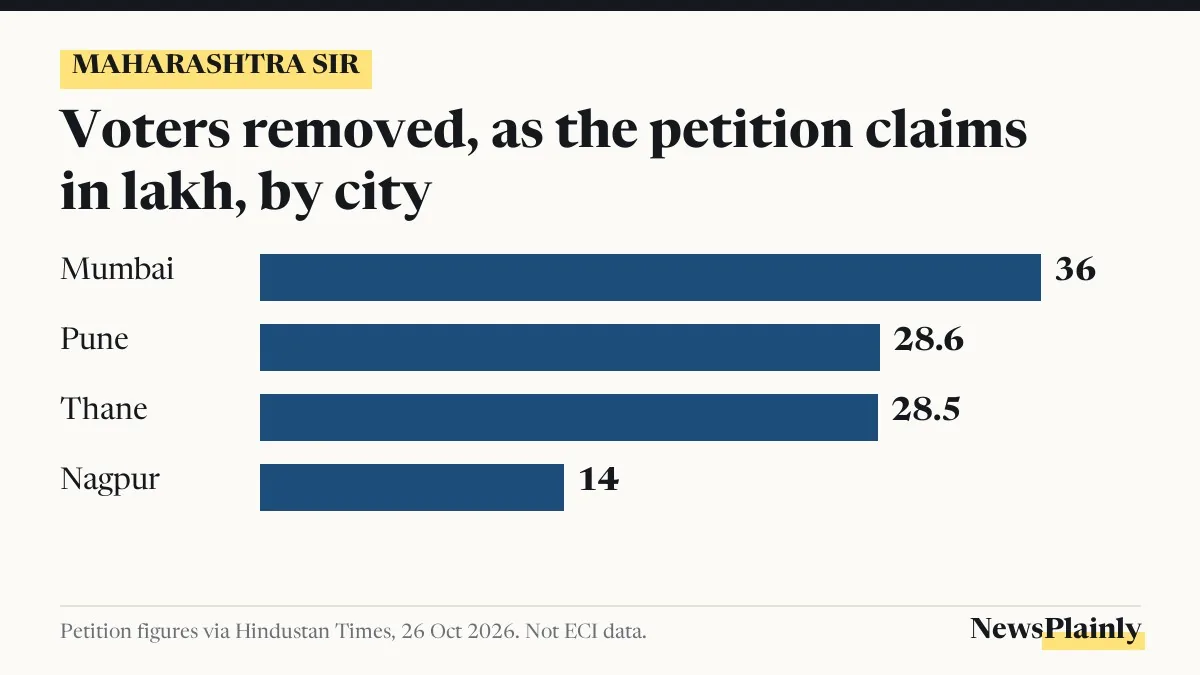
The petition says the Maharashtra SIR cuts are heaviest in the big cities. Hindustan Times reported these figures from it:
| City | Voters removed, as claimed in the petition |
|---|---|
| Mumbai | about 36 lakh (over 40% of voters) |
| Pune | 28.6 lakh |
| Thane | 28.5 lakh |
| Nagpur | 14 lakh |
| Total (NewsPlainly’s sum) | 107.1 lakh, about 1.07 crore |
If the city counts measure the same thing as the CEO’s draft-roll figure, these four cities alone would account for a little over half of the 2.07 crore names left out. The reports do not settle that point, so treat the comparison as a rough guide.
Why redevelopment flats matter in Mumbai and Pune
Datar’s main argument against the Maharashtra SIR was about housing. Old residential buildings in Mumbai and Pune are being pulled down and rebuilt, and residents are moved to temporary homes while the new flats go up. He told the court there are 3,500 such redevelopment projects in Mumbai and 1,500 in Pune, 5,000 in all, according to The Hindu and Hindustan Times.
When booth level officers (BLOs), the local officials who carry out the door-to-door check, visited the old addresses, these residents were marked “not found” and later deleted, he said. In his account, they have not moved away for good; they are waiting to move back into the rebuilt buildings.
The enumeration stage, when BLOs collected forms from households, ran from 30 June to 17 August, The Hindu reported in August. The state had 1,00,253 BLOs working across 36 districts. A CEO bulletin as of 13 August, cited by the paper, sorted the forms not collected by then into 33,94,053 dead, 63,61,113 untraceable and 71,95,388 permanently shifted voters. Those were interim counts, taken before the draft roll was published.
The Form 6 problem for deleted voters
Form 6 is the application to get a name added to the electoral roll. Form 7 is for objections to a name being included or for deletions, and Form 8 to correct an entry, Mint explained. People dropped in an SIR have been asked to use Form 6 to come back.
Datar said this creates a legal problem. Form 6 is meant for first-time voters, and the applicant has to declare, as he put it, that they have not voted before. A person who voted earlier and signs that declaration could be making a false statement, which is an offence, he argued. He said the Delhi High Court had recently said deleted voters who file Form 6 will not be prosecuted, but called that no answer, and asked for a separate form for people removed in the SIR.
That is when the CJI said nobody will be prosecuted. It was an oral remark in court. Whether it appears in the written order, and whether a new form will be ordered, is not clear from the reports.
Maharashtra and Delhi SIR side by side
The Maharashtra SIR is not the only one in court. The Delhi revision is also before the Supreme Court, and NewsPlainly reported on 24 October that few dropped Delhi voters had filed Form 6.
| Maharashtra | Delhi | |
|---|---|---|
| Left out of draft roll | 2,06,88,487 | 47,56,722 |
| Share of earlier electorate | 21.14% | 32.78% |
| Claims and objections closed | 26 October | 30 October (due) |
| Next Supreme Court date | 5 November | 28 October |
On 28 October the court takes up an application against the ECI’s decision to enrol deleted Delhi voters as new voters, Hindustan Times reported. That is close to the Form 6 issue raised in the Maharashtra case.
What happens before the final roll on 6 November
The petition was first mentioned for an urgent hearing on 15 October, with a request to tag it with the Delhi case. The CJI chose to hear it on its own on 26 October, saying the issue had to be dealt with state by state, Hindustan Times reported.
- 30 June to 17 August 2026: enumeration forms collected across Maharashtra.
- 15 October: petition first listed for urgent hearing.
- 26 October: notice issued; claims and objections window closed.
- 28 October: Supreme Court hears the Delhi application on deleted voters.
- 5 November: next hearing in the Maharashtra case.
- 6 November: final Maharashtra roll due.
The court declined to stop the final electoral roll without hearing the ECI, so the 6 November date has not changed. The ECI’s reply, and any order on a separate form for deleted voters, are the open questions for 5 November.
Frequently asked questions
What did the Supreme Court say about Form 6 in the Maharashtra SIR case?
When the petitioner's lawyer said deleted voters could be prosecuted for declaring on Form 6 that they had not voted before, CJI Surya Kant said orally in court on 26 October: "Nobody will be prosecuted."
How many voters were left out of Maharashtra's draft roll?
2,06,88,487 of 9,78,54,049 electors, or 21.14%, according to the state chief electoral officer's figures reported by PTI. The petitioner says another 1.22 crore were removed for logical discrepancies.
Was the deadline for claims and objections extended?
No. The deadline was 26 October, and the bench did not extend it without first hearing the Election Commission, LiveLaw reported.
When will the final Maharashtra voter list come out?
It is due on 6 November 2026, a day after the Supreme Court's next hearing on 5 November.