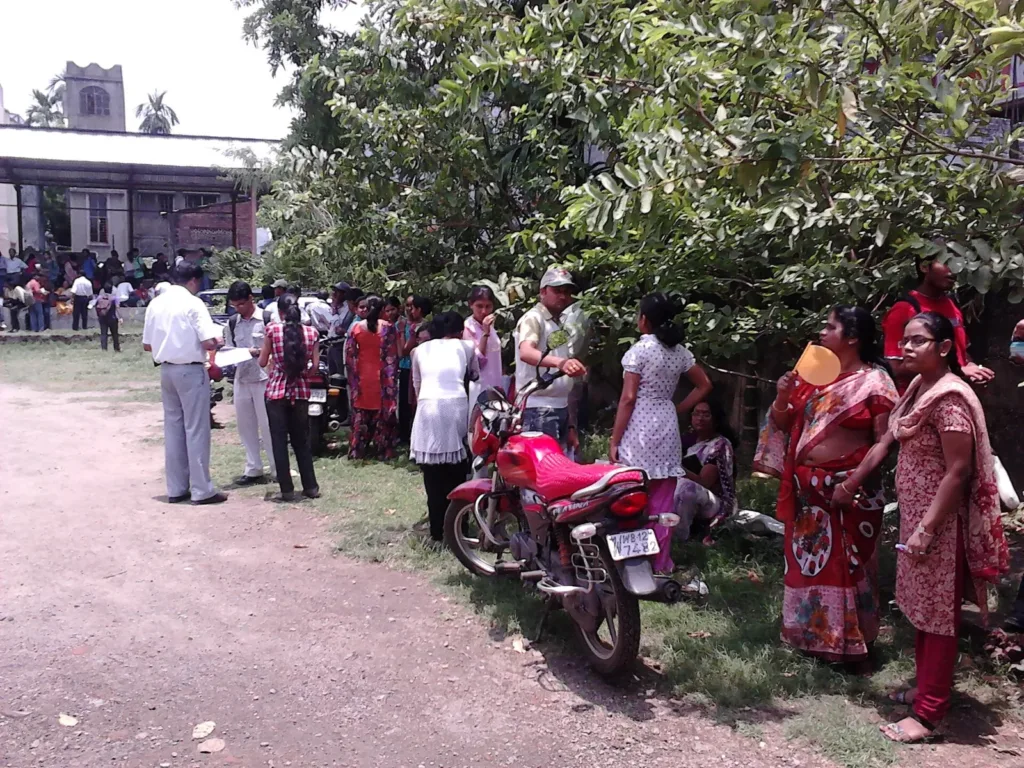
Representative image. Biswarup Ganguly, CC BY 3.0, Wikimedia Commons

Why it matters
Following widespread public concern and administrative reviews surrounding paper leak vulnerabilities, the independent observer pool establishes military-grade ground oversight at test centres without relying solely on local institutional personnel.
In an unprecedented structural reform designed to safeguard public examinations against paper leaks and institutional lapses, the National Testing Agency has set in motion an ambitious initiative to deploy military veterans and retired senior administrators inside test halls. Under the comprehensive plan, NTA exam security will be overseen by a standing national pool of independent observers deployed directly to venues hosting high-stakes assessments, including the National Eligibility cum Entrance Test (NEET), Joint Entrance Examination (JEE), Common University Entrance Test (CUET) and University Grants Commission (UGC) National Eligibility Test. The move marks a decisive break from past reliance on local ad-hoc invigilation teams.
Why NTA exam security observer overhaul was introduced
The decision to build a permanent, pre-verified observer cadre follows intense public scrutiny and administrative reviews of paper leak vulnerabilities in previous examination seasons. In earlier cycles, test logistics heavily depended on temporary local coordinators and venue superintendents appointed from participating colleges or private engineering institutes. While these officials managed local venue operations, the absence of independent central supervision created structural vulnerabilities that unscrupulous paper-leak syndicates could exploit.
According to The Hindu report on NTA exam security observers, high-level expert panels recommended placing uncompromised, externally vetted officials with demonstrated administrative discipline at every test venue. Under this revamped NTA exam security framework, each observer functions as the direct eyes and ears of the testing agency, reporting real-time observations back to central control rooms through encrypted digital reporting channels rather than operating under the command of venue administrators.
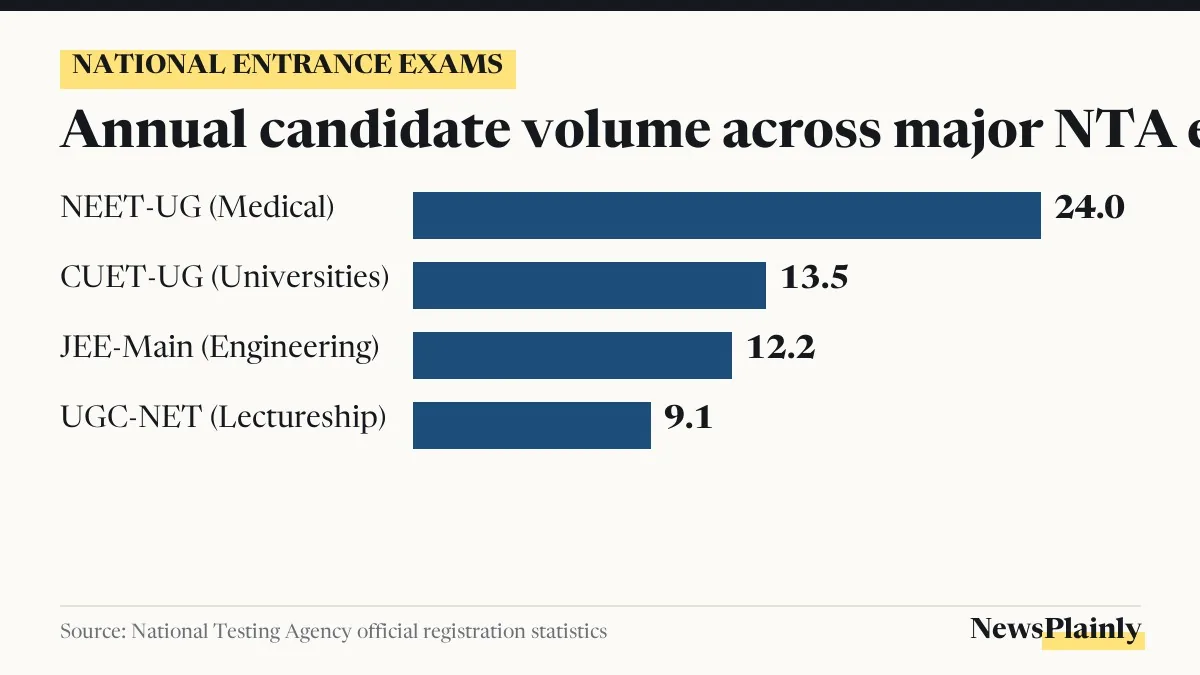
Strengthening NTA exam security has become urgent given the immense scale of modern entrance tests. With more than 24 lakh students registering annually for medical entrance examinations and millions more appearing for university admissions, administrative confidence hinges on airtight venue security. The enhanced NTA exam security protocol mandates multi-tier verification before question papers are unsealed. Readers tracking higher education reforms can review similar institutional quality initiatives in our coverage of national medical education standards.
Three observer categories and eligibility rules
To establish a resilient and geographically distributed oversight network, the agency has published an official Expression of Interest outlining three distinct applicant categories. Each category taps into established public service cadres known for administrative discipline, impartiality and adherence to strict protocols. The primary objective of NTA exam security is establishing transparent institutional custody across all testing zones.
The first group, designated Category A, comprises retired officers from central and state governments who concluded their official careers at or above Pay Level 8. Eligible administrators must fall within the 60 to 65 age bracket and hold spotless vigilance clearance. Their extensive administrative experience in government accounting and regulatory enforcement provides essential supervision over procedural compliance and NTA exam security documentation.
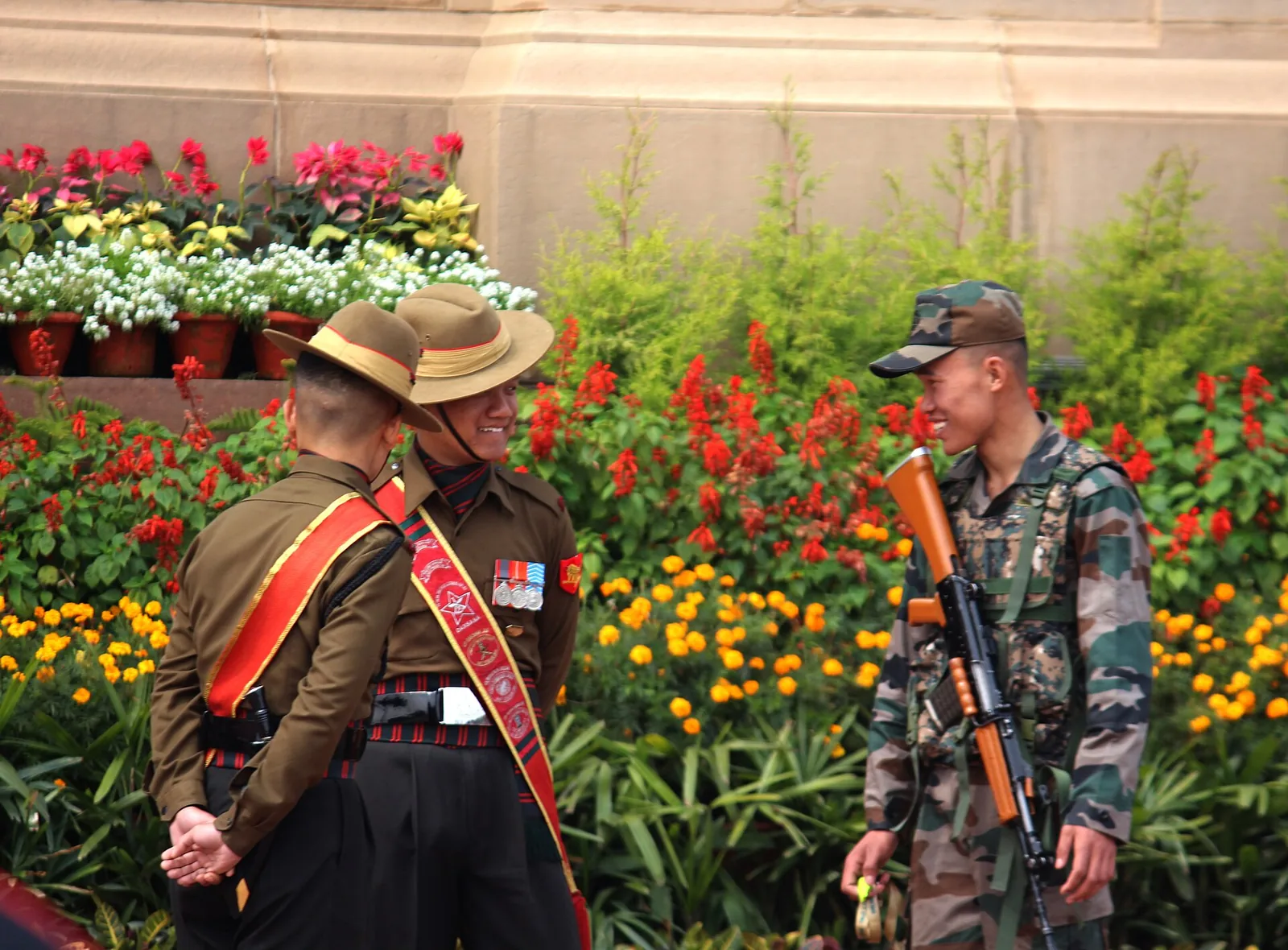
In a notable first for Indian competitive testing, Category B recruits retired personnel from the Indian Armed Forces and Central Armed Police Forces (CAPF). Eligible veterans must have held the rank of Subedar Major, Honorary Captain or equivalent commissioned ranks. Unlike civil officers, the NTA exam security guidelines specify no minimum age limit for defence applicants, accepting qualified veterans up to 65 years. Bringing armed forces personnel into test venues introduces a level of perimeter discipline, physical vigilance and logistical precision previously unavailable in civilian testing setups, substantially reinforcing NTA exam security standards.
| Observer Category | Eligible Ranks and Cadres | Age Criteria | Primary Security Role |
|---|---|---|---|
| Category A: Civil Administrators | Retired Central and State officers at Pay Level 8 and above | 60 to 65 years | Document custody and regulatory procedure auditing |
| Category B: Defence and CAPF | Retired Armed Forces and Paramilitary of Subedar Major rank and above | Up to 65 years (no lower bar) | Perimeter security, frisking oversight and biometric vigilance |
| Category C: Academic Faculty | Serving or retired professors and senior teachers from central institutions | Up to 65 years | Question booklet verification and examination room decorum |
Category C incorporates serving and retired academic professionals, including professors, associate professors and senior school educators from institutions of national importance like IITs, NITs, central universities, Kendriya Vidyalayas and Navodaya Vidyalayas. Their presence ensures that academic fairness and question paper integrity remain front and centre throughout test delivery, complementing broader NTA exam security measures.
Direct reporting powers and centre monitoring duties
Under the operational doctrine formulated by the testing agency, observers will not merely watch the examination from a distance. Instead, robust NTA exam security rules give observers independent access to every critical node of the testing process. This includes witnessing the unsealing of sensitive materials, inspecting biometric identification desks, monitoring closed-circuit television (CCTV) control terminals, and verifying that electronic signal jammers operate continuously.
An India Today report on the NTA observer pool notes that observers operate completely outside the chain of command of local test centres. They report directly to the central agency through a dedicated mobile application, submitting timestamped and geotagged photographic verification at critical milestones. Central control rooms coordinating NTA exam security will monitor biometric feeds continuously. If an observer discovers improper frisking, unauthorized electronic devices, malfunctioning surveillance cameras or compromised question trunks, they possess authority to record immediate objections and alert national monitoring squads.
Furthermore, observers will be rotated across centres and assigned to districts away from their immediate place of residence. By eliminating local institutional ties, the agency aims to prevent regional favouritism and deter organized examination syndicates from attempting corrupt overtures prior to test day. Maintaining rigorous NTA exam security requires constant coordination with district authorities, and every deployed observer will undergo specialized briefing sessions on modern surveillance countermeasures, digital tampering detection and emergency response protocols.

Empanelment process and timeline for applicants
The application portal for the new observer cadre opened on 7 November 2026 at observermanagement.nta.gov.in. Qualified individuals have until 6 December 2026 to submit digital applications alongside identity credentials, pension payment orders, service records and conduct certificates. Successful applicants will be empanelled for a two-year operational tenure, subject to annual performance reviews and satisfactory deployment feedback.
Parallel to observer empanelment, the agency has initiated a comprehensive pre-qualification drive for examination centres across India. Venues must satisfy rigorous technical and infrastructural audits, including mandatory high-definition closed-circuit television with live internet webcasting, uninterruptible power supply systems, and secure server rooms for computer-based testing. Centres failing these standards will be removed from the national test roster to preserve overall NTA exam security integrity.
By pairing physical vigilance through seasoned military and civil personnel with upgraded digital surveillance infrastructure, the testing agency seeks to restore absolute credibility to national examinations. For millions of hardworking students and parents who invest years preparing for career-defining entrance tests, strengthened NTA exam security offers vital reassurance that merit alone will decide examination outcomes.