Representative image. Bernard Gagnon, CC BY-SA 3.0, Wikimedia Commons

Why it matters
Higher retail inflation directly cuts into disposable family earnings by driving up daily expenses for cooking essentials and vegetables. For loan holders, persistent price pressures signal that the Reserve Bank of India will keep interest rates higher for longer, preventing expected cuts to monthly loan repayments.
India annual retail inflation rose to 6.09% in October 2026, crossing the upper tolerance limit set by the central bank for the first time in two years. Provisional data released on 12 November 2026 by the Ministry of Statistics and Programme Implementation (MoSPI) showed that price gains accelerated from 5.54% recorded in September. The sharp upward movement was powered by costlier kitchen staples, pushing food inflation to multi-month highs across both villages and major cities.
Why retail inflation crossed the RBI 6% ceiling
The latest print marks the first time since October 2024 that consumer price growth has broken past the 6% barrier. Under India monetary policy framework, the Reserve Bank of India (RBI) is mandated to keep inflation anchored at 4%, while operating within a legally defined tolerance corridor of 2% to 6%. When headline price gains exceed the 6% boundary, policy makers face intensified pressure to tighten credit conditions rather than ease borrowing costs for businesses and individuals.
Official records show that retail inflation has risen steadily across twelve consecutive months after hitting a low point of 0.04% in October 2025. Economists attribute the prolonged climb to a combination of persistent vegetable supply disruptions and an unfavourable statistical comparison base from the previous year. According to MoSPI provisional Consumer Price Index figures, the Consumer Price Index (CPI) climbed across every broad geographic territory, with rural consumers experiencing significantly harsher price pressures than urban residents.
In rural areas, headline price growth climbed to 6.63% during October 2026, compared to an urban inflation rate of 5.41%. Because food and beverages account for a substantially higher weight in rural consumption baskets, rural families bore the brunt of agricultural produce disruptions caused by unseasonal late-monsoon rainfall and transport delays.
Food price surges across vegetables and kitchen staples
The primary engine driving headline price pressure was the Consumer Food Price Index (CFPI), which accelerated to 8.94% in October 2026 from 7.74% in September. Food items form almost half of the overall consumer price index basket, ensuring that any sustained spike in agricultural commodities immediately spills over into overall inflation figures.
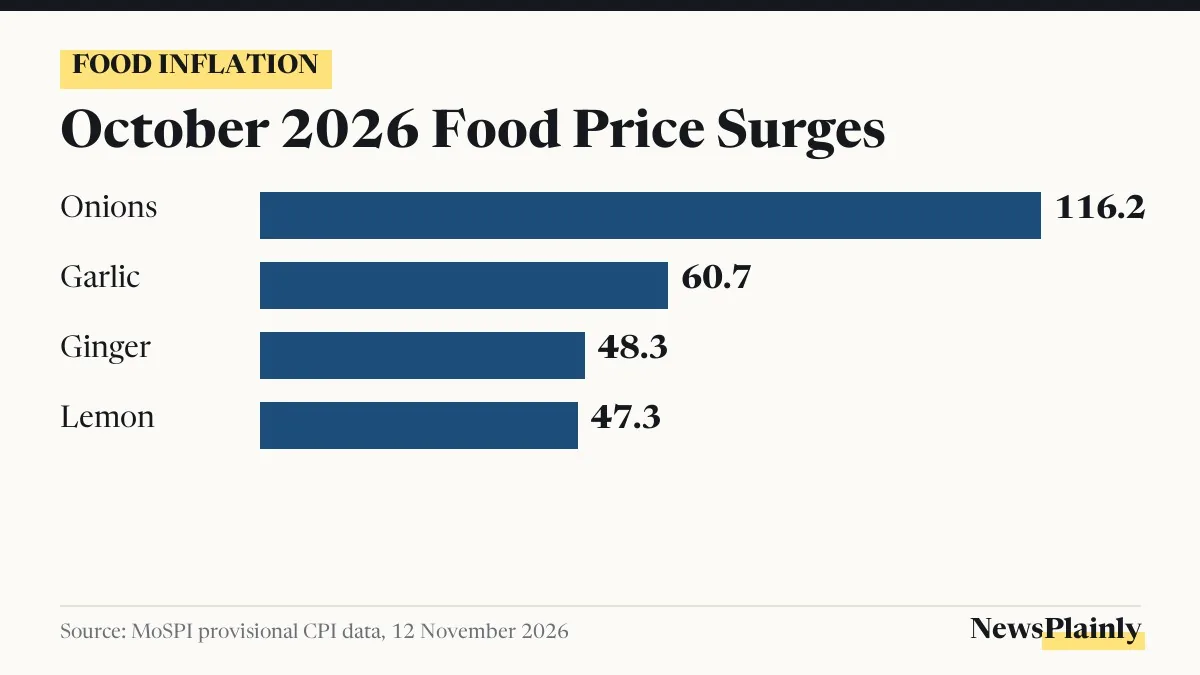
Vegetables recorded the most aggressive price increases across wholesale and retail markets. Government data indicates that onion prices surged by 116.22% on an annual basis during October, creating substantial friction in household kitchen planning. Garlic prices also recorded dramatic increases, climbing by 60.74% compared to the same month last year. Other widely consumed essentials witnessed substantial jumps, including ginger at 48.32% and fresh lemons at 47.30%. Even silver jewellery reflected broad precious metal price adjustments, advancing 52.39% year on year.
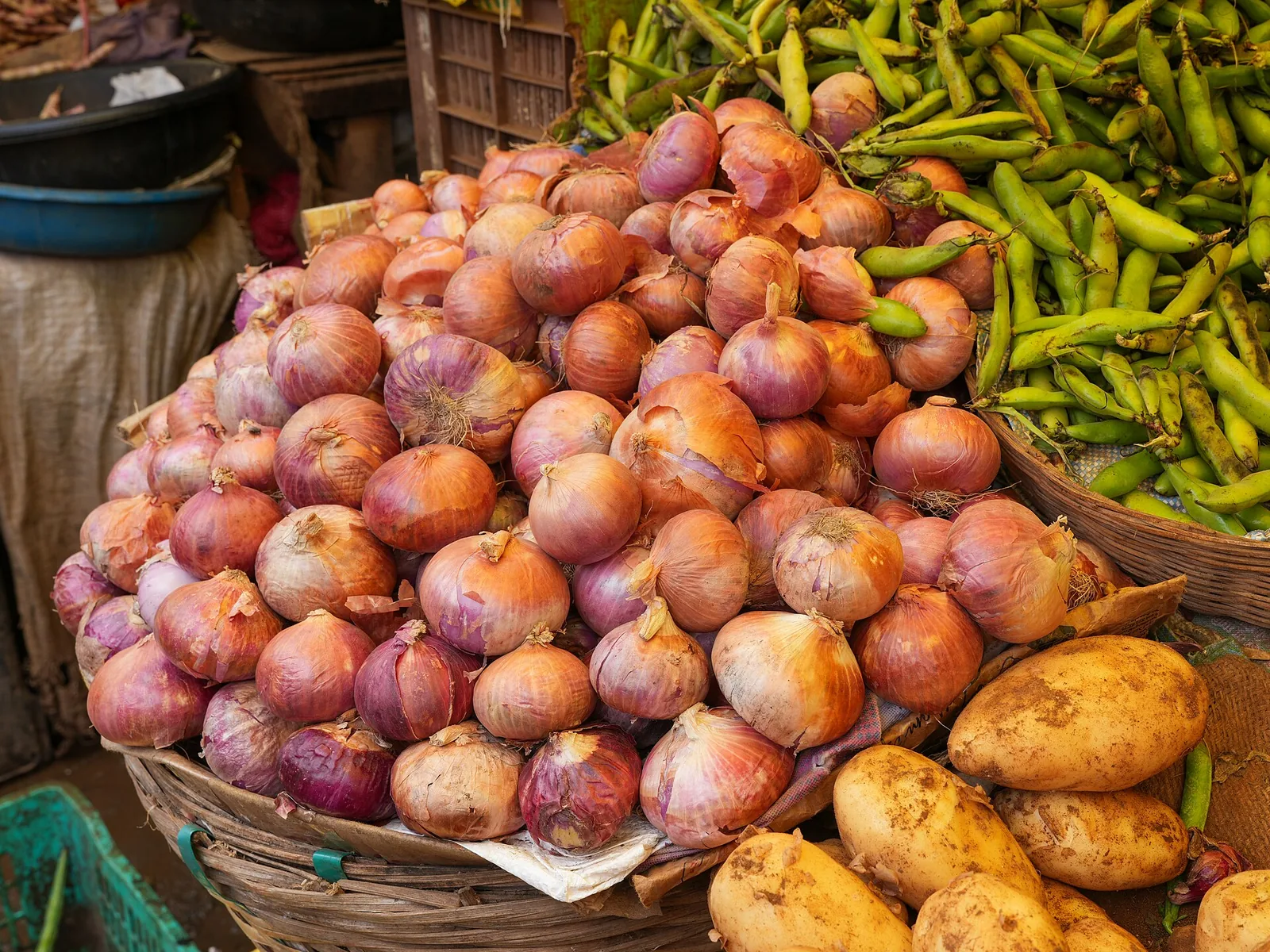
Traders in major wholesale agricultural mandis reported that excessive downpours in late September damaged standing kharif crops in key producing regions across Maharashtra, Karnataka and Madhya Pradesh. The resulting supply squeeze delayed market arrivals of fresh harvests, forcing consumers to rely on depleted buffer stocks at elevated retail markups.
State rankings and the monetary policy outlook
The geographic impact of consumer price increases varied substantially across the country. Among major states with populations of more than 50 lakh, southern and central states registered the steepest overall numbers. Tamil Nadu led the nation with a retail inflation rate of 7.29% in October, followed closely by Telangana at 7.26% and Andhra Pradesh at 7.25%. Madhya Pradesh recorded 7.19%, while Odisha posted 7.17%.
The divergence in state figures reflects differences in local food production, transportation networks and the distribution efficiency of state-level public supply systems. States that depend heavily on vegetable inflows from neighbouring regions saw rapid compounding of retail prices once regional supply chains faltered.
From a macroeconomic standpoint, the breach of the 6% ceiling alters expectations surrounding the rbi repo rate. On 7 October 2026, the central bank raised the benchmark repo rate by 25 basis points to 5.50% in an effort to contain simmering price expectations. That move was the first lending rate hike initiated by the Monetary Policy Committee (MPC) in nearly four years, following a prior increase in February 2023.
Financial analysts who had anticipated an eventual transition toward monetary easing in late 2026 now expect the MPC to maintain a prolonged pause or contemplate additional liquidity tightening measures. Readers following RBI liquidity and repo operations will note that commercial banks face restricted access to surplus funds, which keeps short-term market interest rates elevated.
What rising food costs mean for household budgets
When food inflation approaches 9%, middle-income and lower-income families must allocate a larger proportion of their monthly earnings to non-discretionary grocery purchases. To quantify the practical impact on kitchen management, consider a household with a regular monthly food and vegetable expenditure of ₹12,000.
| Index Component | September 2026 | October 2026 | Monthly Direction |
|---|---|---|---|
| Headline CPI | 5.54% | 6.09% | Up 0.55 percentage points |
| Food Index (CFPI) | 7.74% | 8.94% | Up 1.20 percentage points |
| Rural Inflation | 6.02% | 6.63% | Up 0.61 percentage points |
| Urban Inflation | 5.01% | 5.41% | Up 0.40 percentage points |
| Onion Price Index | 78.10% | 116.22% | Up 38.12 percentage points |
NewsPlainly calculation shows that with food inflation climbing by 8.94% year on year, an identical basket of groceries that cost ₹12,000 twelve months ago now requires approximately ₹13,073 per month. That represents an extra out-of-pocket outlay of ₹1,073 every month simply to purchase the same quantity of provisions. For items like onions, where prices more than doubled, households buying 10 kilograms a month at ₹35 per kilogram in 2025 now spend upwards of ₹75 to ₹80 per kilogram, adding over ₹400 in direct onion expenses alone.
Equally important is the secondary impact on personal credit. Commercial banks calculate interest rates on floating home loans and automobile advances based on external benchmarks tied directly to the central bank repo rate. Because the Monetary Policy Committee is unlikely to trim lending rates while inflation stays above 6%, borrowers cannot count on lower equated monthly instalment (EMI) payments in the coming quarters. Financial planners recommend that consumers review discretionary spending and maintain contingency savings until winter crop arrivals stabilise wholesale vegetable prices in December.