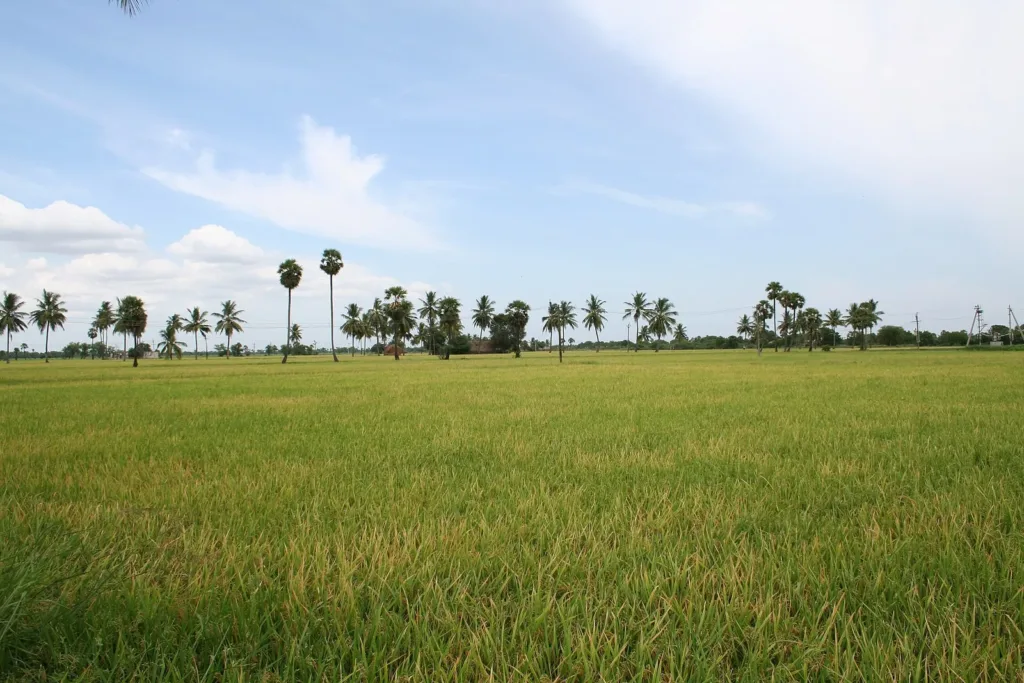
Representative image. Ramakrishna Reddy Y, CC BY-SA 2.0, Wikimedia Commons File photo of paddy fields near Nellore, Andhra Pradesh, 22 July 2007.

Why it matters
The national rate combines two geographical patterns that moved in different directions. Participation, working shares and employment status give readers a fuller account of the quarter than one headline rate.
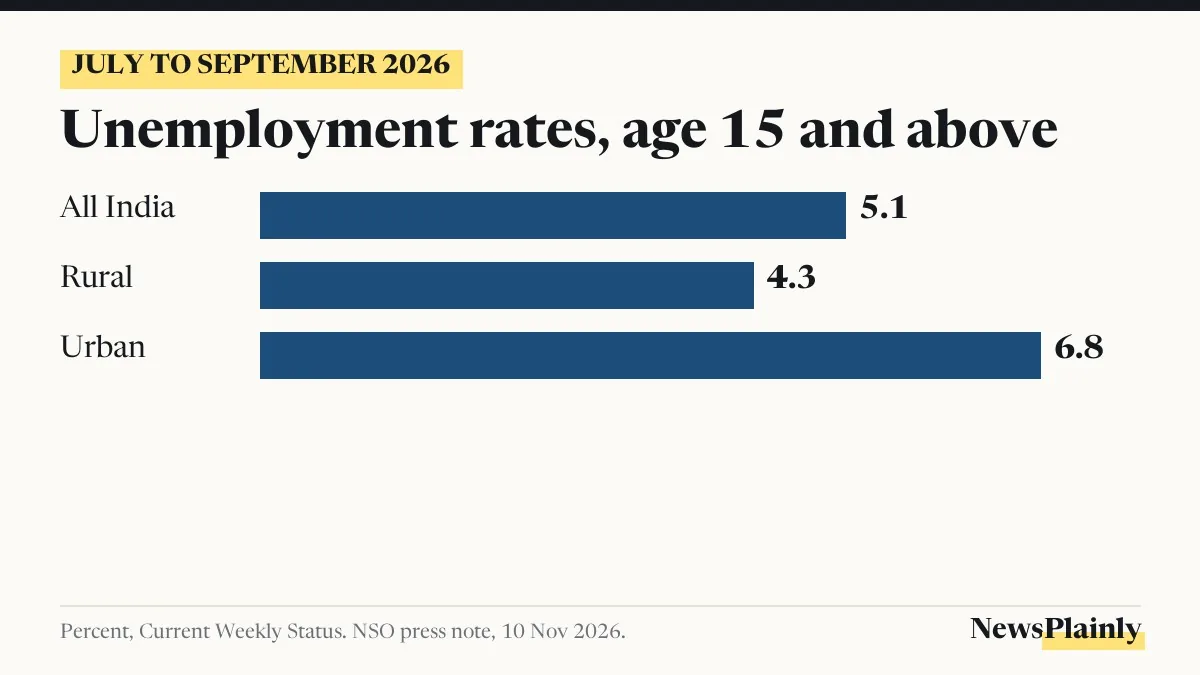
PLFS unemployment fell to 5.1% for people aged 15 and above in July to September 2026, from 5.4% in April to June, according to figures released on 10 November. The National Statistics Office’s Periodic Labour Force Survey (PLFS) recorded a larger fall in the rural rate, while the urban rate edged up.
The rural unemployment rate declined from 4.8% to 4.3%. In urban areas, it moved from 6.7% to 6.8%. The Ministry of Statistics and Programme Implementation’s quarterly press note also reported higher labour-force participation and a larger share of people in work.
PLFS unemployment moves differently in villages and cities
The official nine-page press note reports the figures under Current Weekly Status (CWS), the survey’s weekly-status framework. Its headline findings refer to people aged 15 and above. The comparison is between two quarters of 2026, with July to September following April to June.
NewsPlainly’s calculations show a decline of 0.3 percentage points in the overall unemployment rate and 0.5 points in the rural rate. The urban rate rose by 0.1 point. Each change below is the July-to-September rate minus the April-to-June rate.
| Coverage | April to June | July to September | Change, percentage points |
|---|---|---|---|
| Rural and urban combined | 5.4% | 5.1% | Down 0.3 |
| Rural | 4.8% | 4.3% | Down 0.5 |
| Urban | 6.7% | 6.8% | Up 0.1 |
The combined PLFS unemployment figure brings together the rural and urban estimates. Reading the two geographical rows separately shows where the direction differs. It also keeps the 5.1% national estimate in its proper scope when discussing jobs in cities or villages.
Participation and the working share both rise
The Labour Force Participation Rate (LFPR) measures participation in the labour force. It rose from 54.6% to 55.5% overall. Rural participation increased from 56.9% to 58.1%, while the urban figure went from 50.2% to 50.4%, according to the press note.
The Worker Population Ratio (WPR), the share of the population in work, rose from 51.7% to 52.7%. Rural WPR increased from 54.2% to 55.6%, with urban WPR moving from 46.8% to 46.9%. NewsPlainly’s subtraction gives a 1-percentage-point increase in the overall working share.
For women, LFPR increased from 33.2% to 34.7%, and WPR from 31.3% to 32.8%. Both changes amount to 1.5 percentage points. Participation, employment as a population share and the PLFS unemployment rate answer different questions, so each figure needs its own label.
Agriculture takes a larger share of rural employment
Agriculture accounted for 56.7% of rural workers during July to September, up from 52.9% in the previous quarter. The press note groups the remaining rural workers into the secondary sector, including mining and quarrying, at 21.9%, and the tertiary or services sector at 21.4%.
A separate classification records people’s employment status. In rural areas, the share of self-employed workers rose from 61.4% to 62.7%. That classification concerns how people work. The agriculture figure concerns the industry in which they work, so the two percentages describe overlapping aspects of the workforce.
Among urban workers, the share in regular wage or salaried employment rose from 49.3% to 49.6%. The casual-labour share fell from 11.1% to 10.7%. These are shares within the urban workforce, with a different base from the participation and working-population measures above.

How the survey puts the quarter in context
The National Statistics Office says the quarterly estimates use information from 5,55,593 people surveyed, including 3,16,683 in rural areas and 2,38,910 in urban areas. That sample supports the estimates, while the headline labour-market measures in this article concern the population aged 15 and above.
Using projected population figures from the health ministry, the office estimated an average of 57.9 crore employed people aged 15 and above during the quarter. This is the estimated average number in work across that period. The press note presents it alongside the rates and the distribution of employment.
The survey design was revised from January 2025. Quarterly bulletins through December 2024 covered urban areas, and the April-to-June 2025 bulletin began the series covering both rural and urban India. July to September 2026 is the sixth bulletin in that expanded series. Further economic reporting is in NewsPlainly’s Business section.
Frequently asked questions
Which period does the 5.1% unemployment rate cover?
July to September 2026, for people aged 15 and above under Current Weekly Status. The preceding quarter was April to June 2026.
Did the urban unemployment rate also fall?
The urban rate edged up from 6.7% to 6.8%. The rural rate fell from 4.8% to 4.3%.
What is the 57.9 crore figure?
It is the estimated average number of employed people aged 15 and above during the quarter, using the survey and projected population figures.