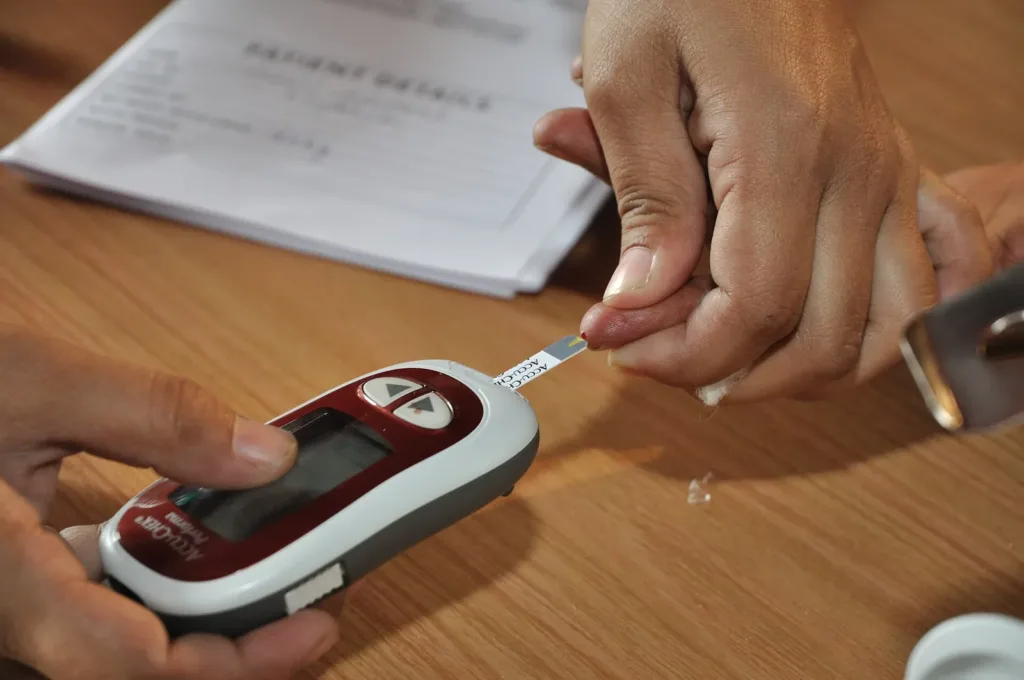
Representative image. Biswarup Ganguly, CC BY 3.0, Wikimedia Commons

Why it matters
The research records practical and emotional barriers among adults reporting type 2 diabetes risk factors. Reading its sampling limits alongside the national estimates helps keep the scale of each finding clear.
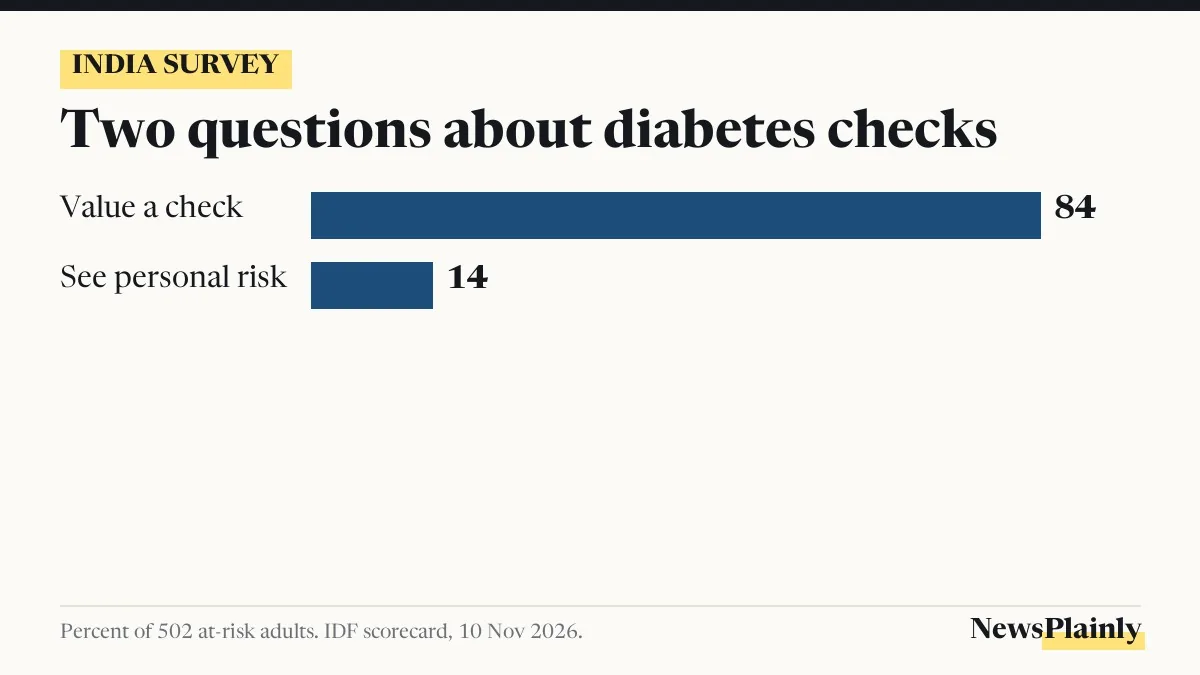
India diabetes risk research released on 10 November 2026 found that 84% of surveyed adults at increased risk thought a diabetes risk check was worthwhile, while 14% believed they were likely to develop type 2 diabetes. The International Diabetes Federation (IDF), which commissioned the research, published the findings ahead of World Diabetes Day on 14 November.
The Indian sample consisted of 502 adults aged 25 to 64 who reported risk factors and had no diabetes diagnosis. It was an online, unweighted sample. The federation describes it as not nationally representative, so the percentages describe those respondents and require that qualification when discussed as an India diabetes risk finding.
India diabetes risk survey separates awareness from personal concern
The IDF India scorecard presents two different questions. One asks whether a check is worth doing even when someone feels healthy. The other asks respondents how likely they think they are to develop type 2 diabetes. The strong support for checks sits alongside a much smaller group recognising personal likelihood.
NewsPlainly’s subtraction of the two reported percentages gives a 70-percentage-point gap, using 84 minus 14. It compares attitudes among the same surveyed group. It measures the distance between those answers, with each question retaining its own wording and purpose.
The survey was conducted by Global Health Strategies from late June to late July 2026. It covered 2,411 adults across Brazil, India, Kenya, Saudi Arabia, Spain and the United States. The federation’s release sets out those methods. The India scorecard supplies the Indian percentages used here.
Fear and appointment difficulties feature in the answers
Nearly half of the Indian respondents, 48%, said they would lack confidence arranging a diabetes risk check themselves. Asked what would make a check difficult, 35% cited worry about the result, 25% cited their belief that they were not at risk, and 22% cited difficulty getting a doctor or clinic appointment.
The scorecard specifies that the barriers question allowed multiple choices. A respondent could therefore report more than one difficulty. Adding those percentages into mutually exclusive categories would give the wrong impression of how the survey was designed.
Respondents were also asked about arrangements they would welcome. Community awareness campaigns explaining the risks drew support from 50%. Quick walk-in checks at pharmacies or supermarkets were welcomed by 48%, while 46% favoured evening or weekend appointments.
Those figures record preferences expressed in the questionnaire. The scorecard describes them as suggestions respondents would welcome and sets out their limits. The study’s evidence here concerns attitudes to access and awareness among the sampled adults.
The national diagnosis estimate comes from an older dataset
The federation places the attitudes research beside estimates from its Diabetes Atlas, 11th edition, published in 2025 using 2024 data. For India, that dataset estimates 89.8 million adults aged 20 to 79 living with diabetes of all types. Of them, 38.6 million, or 43%, are estimated to be undiagnosed.
The age range, year and disease coverage differ from the survey. The Atlas estimates concern all types of diabetes in a wider adult age group. The new questionnaire concerns reported type 2 risk and attitudes among 502 people. Keeping those bases visible helps readers understand each figure.
| Evidence | Time and people covered | What it describes |
|---|---|---|
| India survey | 2026; 502 adults aged 25 to 64 with reported type 2 risk factors | Attitudes, barriers and preferences |
| Diabetes Atlas | 2024 estimates; adults aged 20 to 79, all diabetes types | Estimated disease and diagnosis burden |
How the federation illustrates the diagnosis gap
The World Health Organization’s global goal is for 80% of people living with diabetes to be diagnosed by 2030. The scorecard places India’s estimated diagnosed share at 57%. Applying that global benchmark to the country, it illustrates a gap of around 20.7 million additional diagnoses.
The scorecard identifies the 80% threshold as a global goal and explains its country-level use as an illustration of scale. The figure is conditional on that benchmark. Readers can follow further reported research in NewsPlainly’s Health and Science section.
IDF’s response to the findings is a call for governments and health systems to make risk checks more accessible and provide practical information. Its campaign runs around World Diabetes Day on 14 November. The survey gives that call a record of respondents’ concerns, with the sampling limits set out alongside the headline findings.
Frequently asked questions
Do these percentages represent every Indian adult?
The India sample consists of 502 at-risk adults aged 25 to 64. IDF says it is unweighted and not nationally representative.
What is the source of the 38.6 million estimate?
The Diabetes Atlas 11th edition, published in 2025, uses 2024 estimates for adults aged 20 to 79 and all types of diabetes.
Were the suggested outreach measures tested?
The scorecard reports what respondents would welcome. It describes the findings as preferences from the questionnaire.