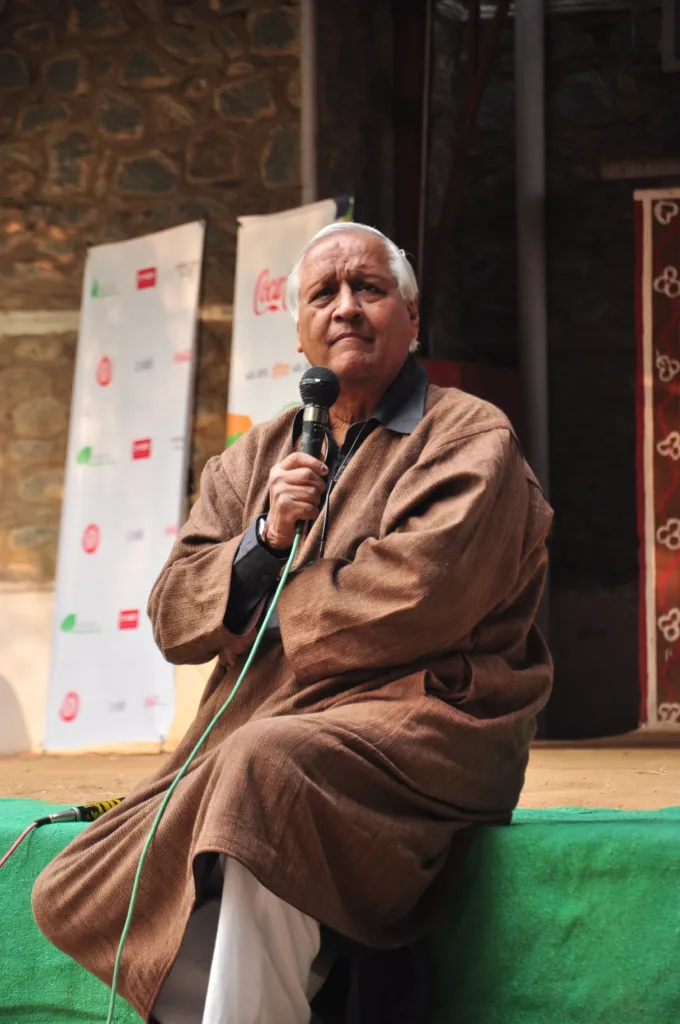
Representative image. AshishSunilSahuji, CC BY-SA 4.0, Wikimedia Commons

Why it matters
Roy helped develop a model of practical education rooted in rural communities. The solar programme put installation and repair skills in the hands of village women, rather than relying only on outside technicians.
Bunker Roy died at 81 in Tilonia, Rajasthan, on 10 November 2026, leaving the institution he founded in 1972 to train rural communities in practical skills. Barefoot College chief executive and director Sowmya Kidambi confirmed that he died at home at 6.15 am, according to a report carrying Asian News International (ANI) inputs.
Sanjit “Bunker” Roy was known for an approach that put villagers, especially women with little formal education, at the centre of development work. His best-known initiative trained women to install and maintain solar lighting systems in their own communities, Hindustan Times reported.
How Bunker Roy built the Tilonia centre
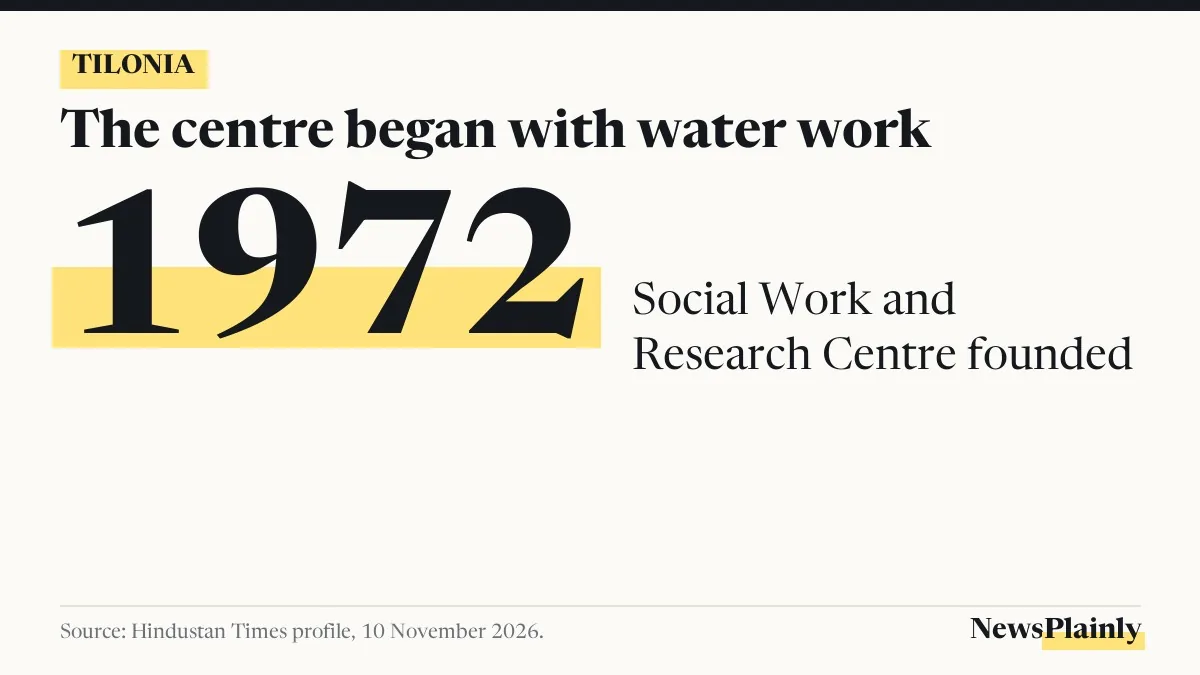
Bunker Roy established the Social Work and Research Centre in Tilonia, in Ajmer district, in 1972. Its initial focus was water and irrigation. According to the Hindustan Times account of his life, he had moved to Rajasthan and worked alongside rural communities on water problems, including digging wells in drought-prone villages.
The centre later became known as Barefoot College. Its activities widened to include education, healthcare, livelihoods, water conservation and renewable energy. That range helps explain the word “college” in its name: the institution’s work described in the reporting centred on practical community skills, rather than simply a conventional classroom education.
Bunker Bunker Roy had himself attended the Doon School in Dehradun and St Stephen’s College in Delhi. Hindustan Times reported that he was born on 30 June 1945 in Burnpur, in what is now West Bengal. His later work took him to villages in Rajasthan, where the centre remained the base for his development initiatives.
What the Solar Mamas learnt to do
The solar programme trained women from remote villages to assemble, install, repair and maintain solar lighting systems. Many trainees were illiterate or had limited formal education, according to Hindustan Times. They became widely known as Solar Mamas.
The important distinction is between supplying equipment and teaching people how to keep it working. The programme described in that report included maintenance and repairs, so the women could return to their villages with skills covering more than the initial installation. Training rural residents to perform those tasks was part of Bunker Roy’s wider community-led approach.
In his tribute, Congress MP Shashi Tharoor highlighted the training of rural grandmothers as solar engineers. ANI reported his statement that the initiative had brought light to off-grid homes in India and other developing countries. Those comments are a tribute to Bunker Roy’s work; they are not a new independent count of the programme’s reach.
A timeline of the institution and its recognition
The milestones below bring together dates in the Hindustan Times profile. They separate the founding of the centre from later awards, rather than treating recognition as evidence of a particular number of beneficiaries.
| Year | Milestone |
|---|---|
| 1972 | Social Work and Research Centre established at Tilonia. |
| 1985 | Roy received the Jamnalal Bajaj Award for applying science and technology to rural development. |
| 1986 | He received the Padma Shri. |
| 2003 | He received the St Andrews Prize for the Environment. |
| 2010 | TIME included him in its list of 100 influential people. |
| 2026 | He died at Tilonia on 10 November, aged 81. |
TIME’s recognition in 2010 focused on Roy’s work with rural communities and the idea that people without advanced formal qualifications could learn skills useful to their villages, Hindustan Times reported. The awards trace different stages of that career. They do not establish how many people are currently being trained.

Tributes focus on village skills and self-reliance
Former Rajasthan chief minister Ashok Gehlot recalled Roy’s commitment to Mahatma Gandhi’s principles and his contributions to rural education and self-reliance, according to the ANI-based report in The News Mill. He also recalled visiting Barefoot College and meeting Roy and his wife, social activist Aruna Roy.
Tharoor’s tribute emphasised practical innovation by rural communities, particularly women. Both responses placed Bunker Roy’s work in the villages where people learnt and used those skills. The accounts reviewed for this article did not give a cause of death, and none is inferred here.
For readers following India’s public and social affairs, the institution’s 1972 founding and the later solar programme provide the context for those tributes. Bunker Roy’s death closes his own role in a project built around villagers learning to solve everyday problems in their communities.
Frequently asked questions
Who was Bunker Roy?
Sanjit Bunker Roy was the social activist who established the Social Work and Research Centre at Tilonia in 1972, later known as Barefoot College.
What did the Solar Mamas programme teach?
It trained rural women to assemble, install, repair and maintain solar lighting systems.
When did Roy receive the Padma Shri?
He received it in 1986, according to the Hindustan Times profile.