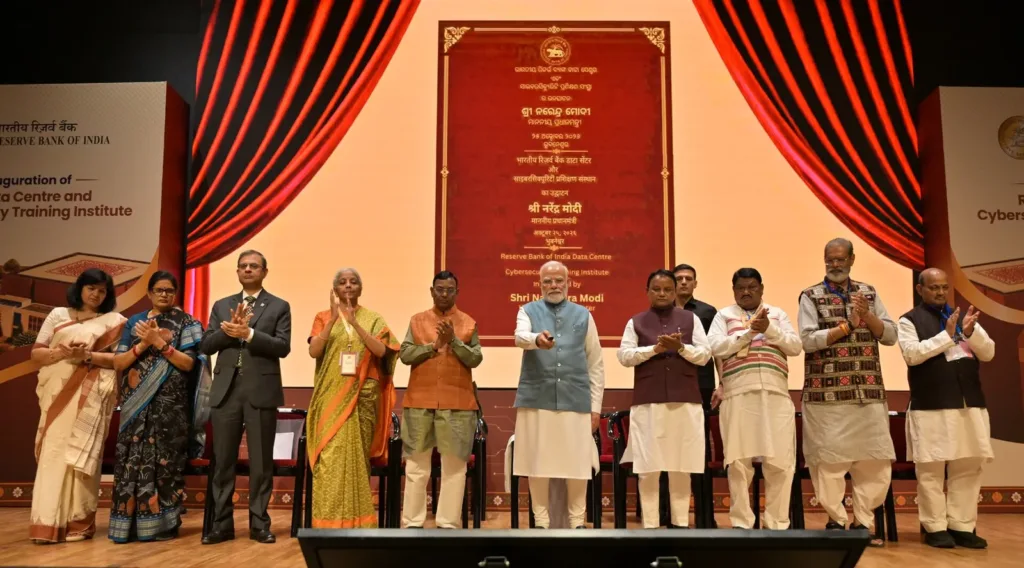
Representative image. Prime Minister's Office, GODL-India, Wikimedia Commons

Why it matters
Sustained farm sector expansion directly shapes the purchasing power of over half the Indian workforce. Record state subsidies for fertiliser and solar irrigation help keep baseline cultivation costs stable despite volatile global input markets.
India has recorded an average annual agriculture growth rate exceeding 4 percent over the past decade, marking the first time since Independence that the country maintained such consistent farm momentum, Prime Minister Narendra Modi said on Thursday, 12 November 2026. Speaking at the plenary session of the Kisan Tak Bharat Agriculture Conference held at Bharat Mandapam in New Delhi, the Prime Minister emphasised that rapid agriculture growth served as the primary engine lifting nearly 50 crore citizens out of poverty over the last 13 years, citing findings from a World Bank study.
How agriculture growth accelerated across the decade
Addressing an audience of more than 2,000 farmers, agricultural scientists, policy makers, and agribusiness leaders, PM Modi outlined the transformation of the rural economy. As India Today reported, the Prime Minister highlighted that India’s farm exports have crossed Rs 4 lakh crore annually, proving that Indian growers are increasingly competitive on the global stage. India has consolidated its rank as the world’s largest producer of milk, pulses, and millets, while securing the second position worldwide in wheat, rice, cotton, vegetables, and fish production.
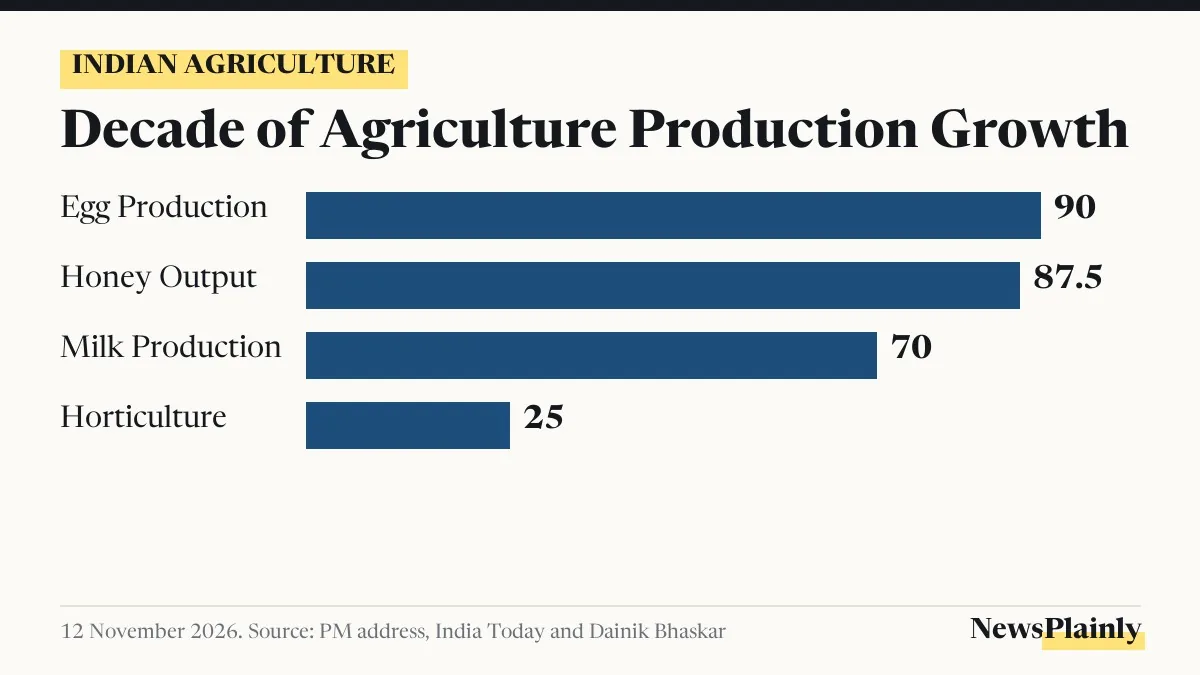
The pace of agriculture growth has been reinforced by strategic diversification into allied farm activities, rather than relying solely on cereal cultivation. Under the Sweet Revolution initiative, national honey production rose from approximately 80,000 tonnes to 1.5 lakh tonnes. Similarly, total horticulture output climbed from 280 million tonnes to more than 350 million tonnes over the past ten years. Dairy production also advanced significantly, with national milk output rising 70 percent across the decade, while commercial egg production expanded by 90 percent.
State support and fertiliser subsidies shielding farmers
According to Dainik Bhaskar’s detailed coverage of the conference address, PM Modi stressed that protecting growers from international commodity shocks has been a central pillar of federal policy. The Prime Minister stated that the central government has disbursed Rs 16 lakh crore in fertiliser subsidies over the decade. This intervention ensures that a standard bag of urea, which sells for nearly Rs 3,000 in international markets, is supplied to Indian cultivators for less than Rs 300.
The Prime Minister also pointed to fuel market interventions during periods of global geopolitical tension. When West Asian conflicts drove international crude benchmarks toward $120 per barrel, commercial realities would have mandated a diesel price increase of Rs 50 per litre. Instead, the central government absorbed Rs 43 per litre through budgetary mechanisms and limited the retail increase to Rs 7, safeguarding cultivators from severe cost spikes during critical sowing and harvesting windows.
In addition to input subsidies, institutional support networks have expanded substantially. The Prime Minister explained that the country now operates more than 725 Krishi Vigyan Kendras (KVKs, agricultural science extension centres) that connect frontline research directly with village clusters. These centres help smallholders adopt balanced soil nutrition, water-saving micro-irrigation, and integrated pest control methods, ensuring that farm sector growth reaches remote districts rather than concentrating exclusively in traditional agricultural belts.
Comparing decade farm performance across sectors
To provide a clear factual benchmark of rural sector changes discussed during the pm modi agriculture conference, NewsPlainly compiled verified figures comparing historical production baselines with current operational levels across the country:
| Sector Indicator | Historical Baseline | Current 2026 Level | Key Policy Support Driver |
|---|---|---|---|
| Decade Farm GDP Growth | Under 3.0% average | Above 4.0% average | Allied sector integration |
| Agricultural Exports | Rs 2.5 lakh crore | Rs 4.0 lakh crore | Global trade certification |
| National Milk Output | Baseline index 100 | Up 70% in decade | National Dairy Plan |
| Commercial Egg Output | Baseline index 100 | Up 90% in decade | Poultry infrastructure fund |
| Honey Production | 80,000 tonnes | 1.5 lakh tonnes | Sweet Revolution apiculture |
| Horticulture Output | 280 million tonnes | 350+ million tonnes | Micro-irrigation coverage |
| Solar Pump Deployments | Minimal presence | 12 lakh solar pumps | PM-KUSUM energy program |
| Urea Price to Farmers | Market indexed | Under Rs 300 per bag | Rs 16 lakh crore subsidy |
Solar energy and technical empowerment in villages
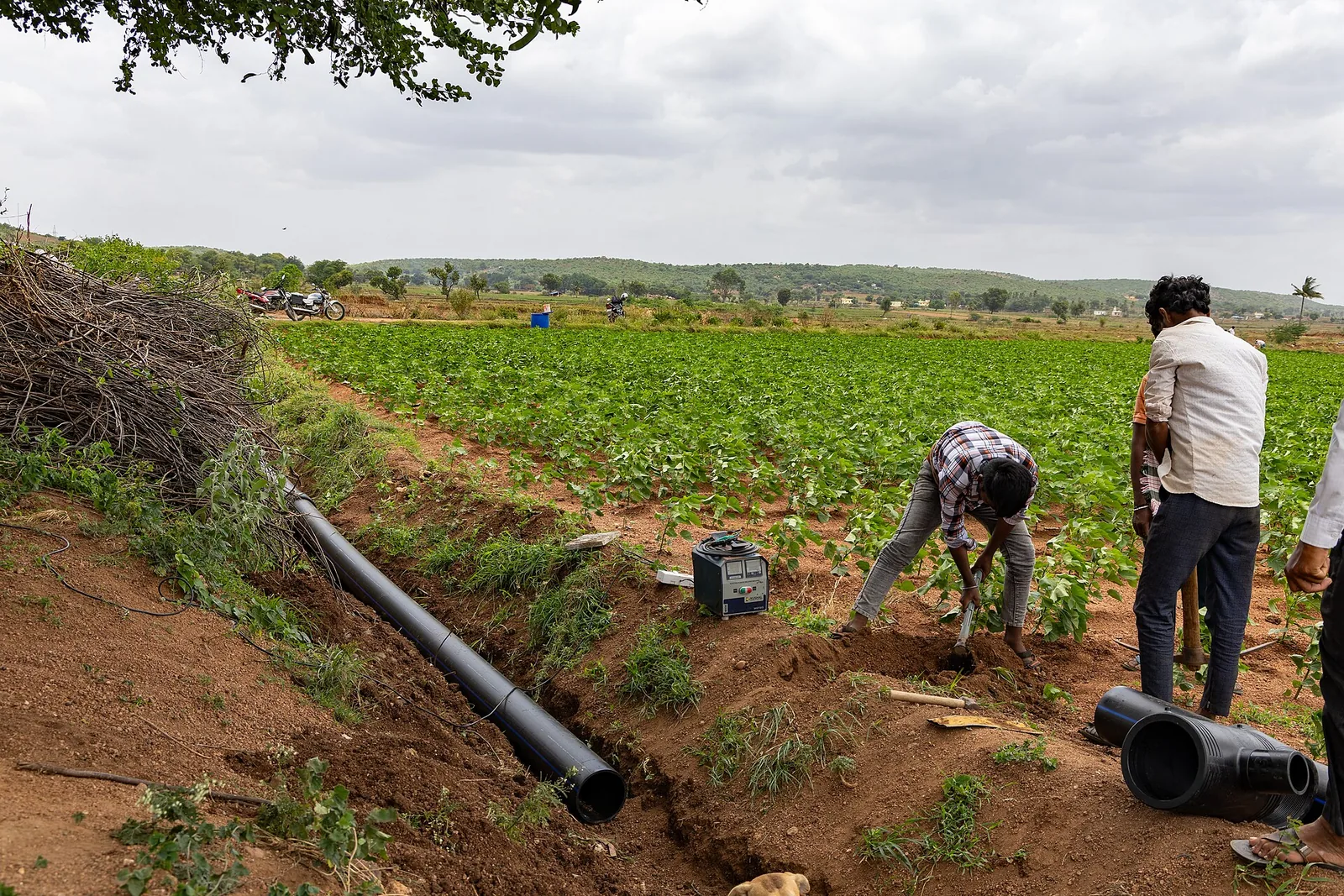
A critical shift discussed at Bharat Mandapam is the transition of rural cultivators from food producers into clean energy generators. Under the PM-KUSUM program (Pradhan Mantri Kisan Urja Suraksha evam Utthaan Mahabhiyan), approximately 12 lakh solar irrigation pumps have been installed across India. The deployment allows farmers to eliminate diesel pump fuel expenditures and generate supplementary revenue by feeding excess solar power into local distribution grids. As analyzed by the NewsPlainly agriculture desk, decentralized solar power reduces operational farm expenses while stabilizing seasonal groundwater delivery.
Modernization initiatives also encompass animal healthcare and frontline technology transfer. The Prime Minister noted that over 8 crore cattle have received free vaccinations against Foot and Mouth Disease (FMD) under nationwide eradication drives. Preventing chronic livestock epidemics preserves milk yields and protects rural households from catastrophic medical costs. Furthermore, specialized community training programs have trained thousands of rural women as Drone Didis, equipping them to operate precision agricultural drones for foliar nutrient sprays and crop surveillance.
These grassroots innovations have reduced manual labour requirements, cut pesticide wastage by up to 20 percent, and opened dignified technical employment avenues for women in agrarian belts. When combined with improved village storage facilities and direct digital benefit transfers, these interventions help sustain healthy agriculture growth even during challenging monsoon intervals.
Why robust agriculture growth anchors economic security
The Prime Minister reiterated that achieving a developed nation status is unattainable without empowering the rural workforce and sustaining robust agriculture growth. Highlighting agriculture as one of the fundamental pillars in his Red Fort national development vision, PM Modi stressed that food security and rural stability depend on increasing productivity rather than merely managing crop volumes. By pairing high-yield seeds with digital soil monitoring and expanded solar irrigation, the government aims to ensure that farm sector growth continues to outpace population expansion while insulating rural communities against extreme climate swings.
Looking ahead, agricultural researchers and tech entrepreneurs at the conference agreed that maintaining long-term agriculture growth requires deepening cold-chain storage and accelerating food-processing ventures closer to farm gates. By shifting surplus crops into processed foods, perishability losses can be minimised while creating durable employment in small towns across the country.