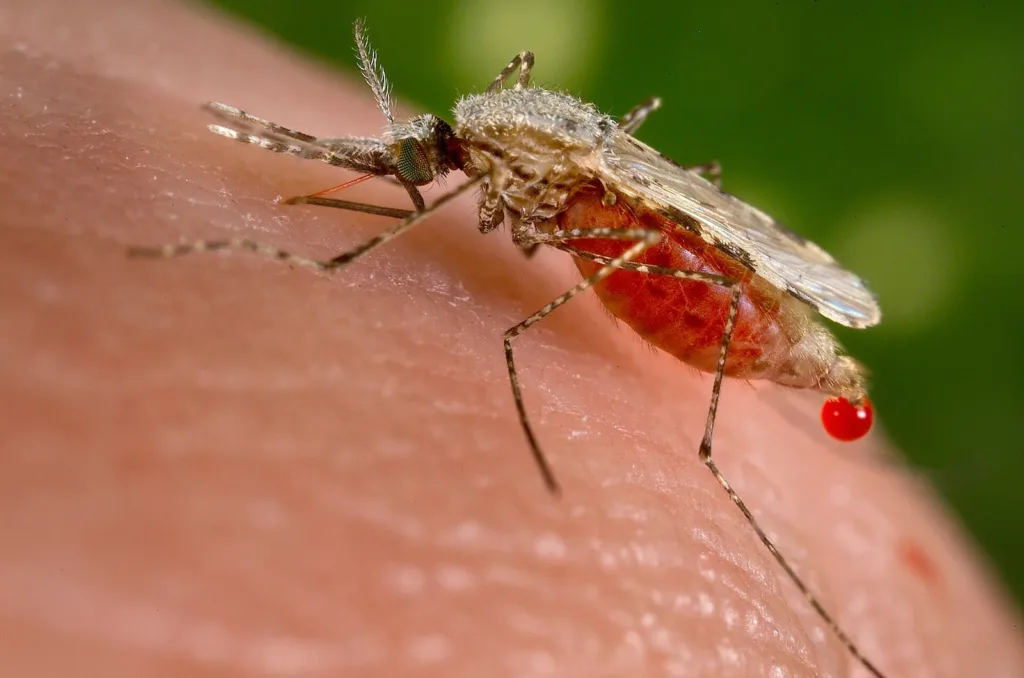
Representative image. Jim Gathany, Public domain, Wikimedia Commons

Why it matters
Malaria killed about 610,000 people in 2024, most of them young African children, and money is the main limit on how many get vaccinated. A cheaper dose stretches the same budget further. The deal also puts an Indian company at the centre of global malaria vaccine supply.
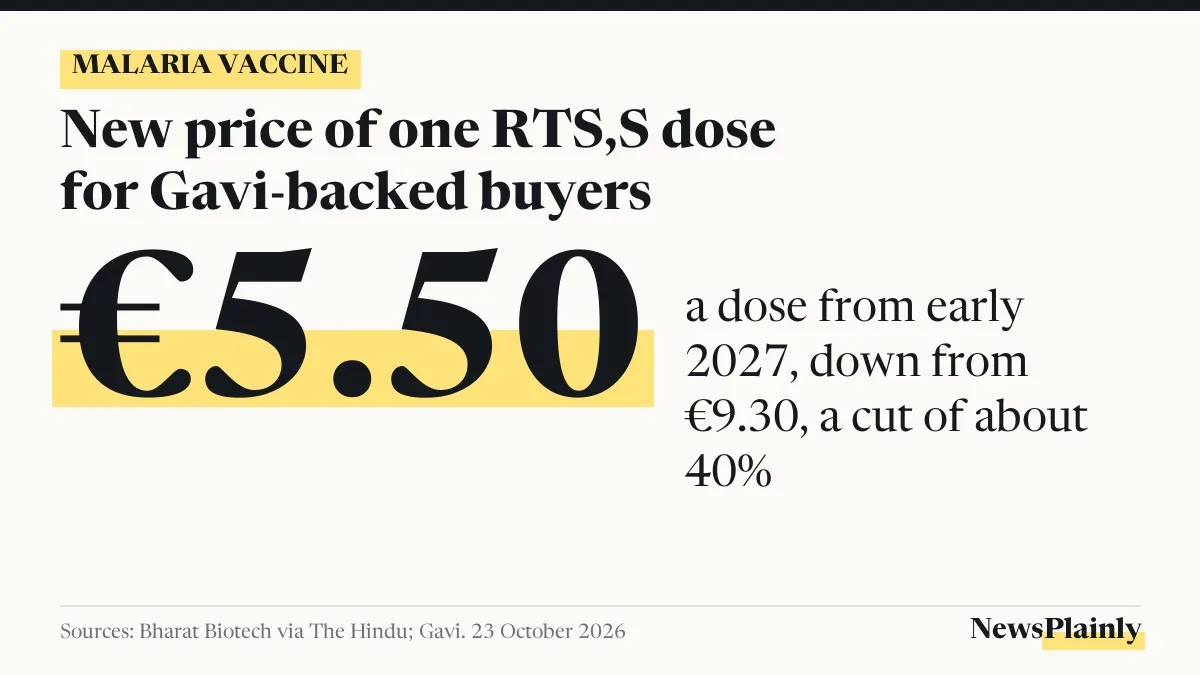
The malaria vaccine price for the world’s poorest countries will fall by about 40% under a deal announced this week, and the shots will come from a factory in India. Hyderabad-based Bharat Biotech said on Friday, 23 October 2026, that it will sell its malaria vaccine, branded Mosqivac, at €5.50 a dose, down from €9.30, after an agreement signed by UNICEF (the United Nations children’s agency) and backed by Gavi, the Vaccine Alliance.
The cheaper price is expected to apply from early 2027. Gavi and UNICEF said the savings could pay for the full four-dose course for up to one million more children.
What the Gavi UNICEF deal changes for the malaria vaccine price
The vaccine is RTS,S/AS01, the first malaria vaccine recommended by the World Health Organization (WHO), in 2021. It was developed by British drugmaker GSK with the non-profit PATH and other partners, and its production is being moved from GSK to Bharat Biotech, which sells it as Mosqivac.
UNICEF buys vaccines for poorer countries, and Gavi pays for much of that buying. In a joint statement dated 22 October, they said the Gavi UNICEF deal was made possible by an advance payment from the International Finance Facility for Immunisation (IFFIm), a fund that raises money on bond markets against future donor pledges so vaccines can be bought sooner.
Gavi and UNICEF expect the lower price to save about $50 million between 2027 and 2029. Countries can use that money to vaccinate more children against malaria or to reach more children with other vaccines, the statement said.
A simple sum shows what the lower malaria vaccine price means per child. At €9.30 a dose, the four-dose course costs €37.20. At €5.50, it costs €22, a saving of €15.20 for every child who completes the schedule.
Why Bharat Biotech can cut the Mosqivac price
Bharat Biotech said the lower Mosqivac price follows years of investment in bigger factories. GSK and Bharat Biotech have together spent $200 million on new, higher-output manufacturing lines, product development and the transfer of technology, the company said in its release, according to The Hindu.
Krishna Ella, the company’s executive chairman, called the agreement “a far-reaching commitment to expand malaria vaccination” and said the partners had invested heavily to expand supply. GSK had earlier said the price of RTS,S would be brought below $5 a dose by 2028 through process improvements, higher capacity and lower margins.
There is a condition. Gavi said the new price depends on regulatory and manufacturing milestones, including WHO prequalification of a new manufacturing facility. Prequalification is the WHO’s check that a vaccine plant meets its quality standards, and UN agencies can only buy doses from approved sites. UNICEF cannot start buying at the new price until those steps are complete.
How many children the malaria vaccine reaches now
Demand has run ahead of forecasts since routine use began in 2024. UNICEF has bought and delivered more than 74 million doses so far, and the Gavi-funded malaria programme is now part of routine childhood immunisation in 25 African countries, which together carry more than 70% of the world’s malaria burden.
The disease is still a major killer. Gavi’s figures put malaria at about 282 million cases and 610,000 deaths worldwide in 2024. Up to 95% of both were in Africa, and about 74% of the deaths were children under five. Gavi aims to vaccinate 50 million more children against malaria by 2030.
On protection, Gavi said a full four-dose course of RTS,S cuts malaria cases by about 75% when the shots are given seasonally in areas where malaria spreads mainly during one part of the year.
“This agreement is an important step towards protecting more children from malaria,” said Leila Pakkala, director of UNICEF’s Supply Division, in the joint statement.
India’s role in both approved malaria vaccines
The WHO has approved two malaria vaccines for use: RTS,S and R21/Matrix-M. The second was co-developed by the University of Oxford and the Pune-based Serum Institute of India and uses an adjuvant, an ingredient that strengthens the immune response, made by Novavax. This week’s price deal covers only RTS,S.
That means both vaccines now being given to African children have Indian companies at their centre: the Bharat Biotech malaria vaccine and the Serum Institute’s R21. NewsPlainly has also covered Indian work on another mosquito-borne disease, including Tamil Nadu’s two-dose dengue vaccine pilot.
For now, the new malaria vaccine price applies to doses meant for Gavi-supported countries buying through UNICEF under the Gavi UNICEF deal. The companies and agencies have not said anything about a price for other buyers. Readers can find the full terms in Gavi’s statement on the deal.
Frequently asked questions
What is the new malaria vaccine price?
€5.50 a dose for RTS,S (Mosqivac), down from €9.30, for doses bought by UNICEF with Gavi support.
When will the cheaper malaria vaccine be available?
From early 2027, once WHO prequalifies a new manufacturing facility and other milestones are met.
Is the malaria vaccine used in India?
The deal covers doses bought for Gavi-supported countries, mainly in Africa. The companies have not announced a price for other buyers.