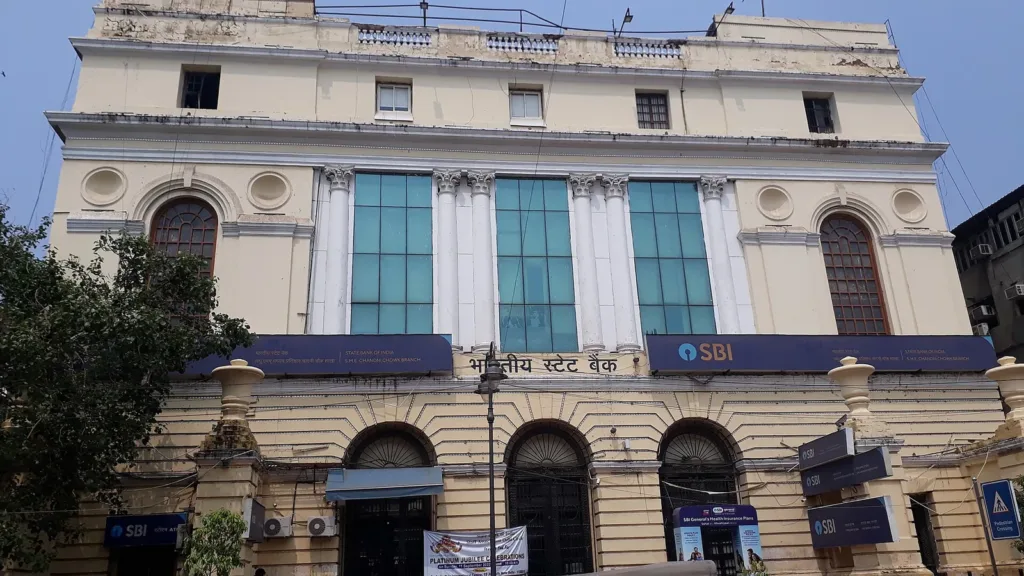
Representative image. Pinakpani, CC BY-SA 4.0, Wikimedia Commons

Why it matters
Small business owners, women founders, and marginalized entrepreneurs gain guaranteed access to formal banking credit without pledged assets through 2031. Lower guarantee fees reduce total borrowing expenses across public and commercial lenders, expanding micro enterprise working capital across India.
The Union Cabinet has approved a comprehensive five-year extension for the Stand-Up India scheme alongside the Credit Guarantee Fund for Micro Units, continuing both flagship credit programs through 31 March 2031. Chaired by Prime Minister Narendra Modi, the Cabinet sanctioned a combined financial allocation of Rs 9,111 crore to back state-guaranteed loans for small businesses, self-employed workers, women founders, and marginalized communities. According to the official Union Cabinet press release, the decision aligns national financial inclusion frameworks directly with the sixteenth Finance Commission cycle running from fiscal year 2026-27 to 2030-31.
How the five-year extension secures Rs 9,111 crore
The continuation provides sovereign credit support to financial institutions across two separate windows. Under the Stand-Up India scheme, the central government allocated a dedicated credit guarantee corpus of Rs 4,111 crore. This capital pool is managed through the National Credit Guarantee Trustee Company Limited (NCGTC), a state-owned trustee agency set up by the Department of Financial Services. NCGTC provides default risk cover to commercial banks that lend to greenfield ventures, ensuring that lenders do not bear the full brunt of enterprise risk when financing first-time business owners.
The operational mandate of Stand-Up India specifically requires every scheduled commercial bank branch across India to extend credit between Rs 10 lakh and Rs 1 crore to at least one woman borrower and at least one Scheduled Caste or Scheduled Tribe entrepreneur. By continuing this statutory obligation through 2031, the policy maintains an institutional pipeline of formal debt for under-represented business founders in rural, semi-urban, and metropolitan banking districts.
Alongside enterprise lending, the Cabinet committed Rs 5,000 crore to replenish the Credit Guarantee Fund for Micro Units, commonly known as CGFMU. This facility provides institutional risk coverage for micro loans disbursed under the Pradhan Mantri Mudra Yojana. Over the upcoming five-year period running from fiscal year 2026-27 through 2030-31, the fund is projected to enable collateral-free lending amounting to Rs 12.6 lakh crore. Detailed coverage in NewsPlainly Business news highlights how regional rural banks and microfinance institutions depend on these guarantee backstops to issue unsecured micro credit to shopkeepers, repair centers, and cottage producers.
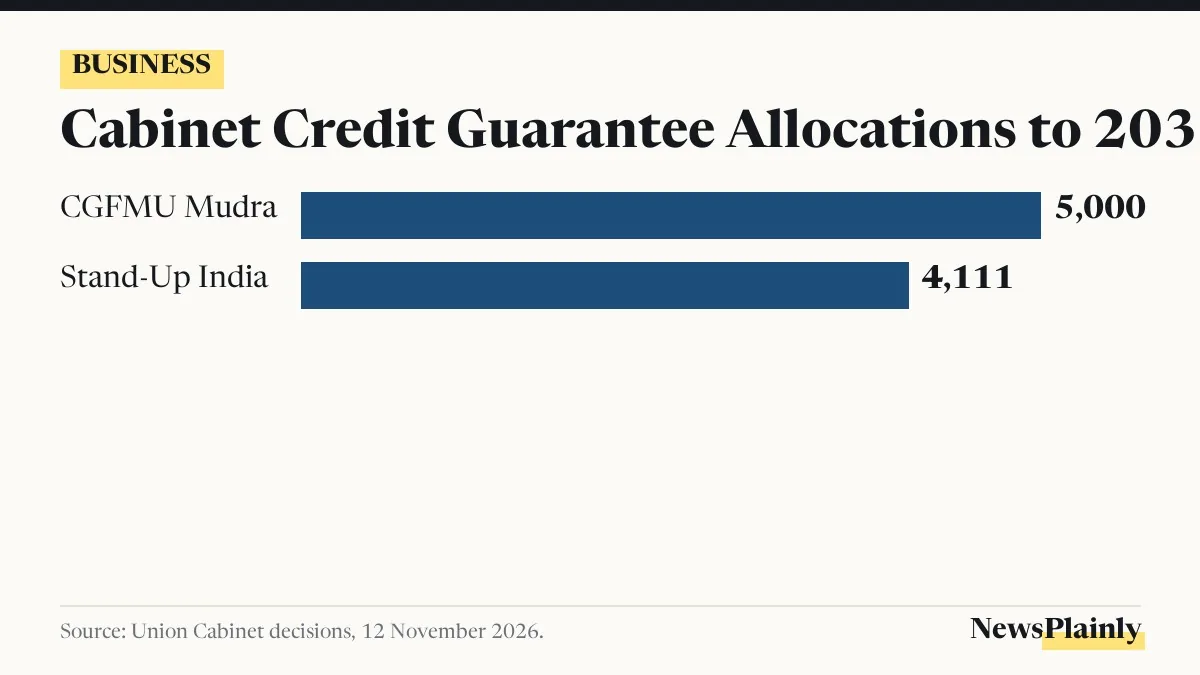
Stand-Up India vs CGFMU Mudra: Key differences explained
While both initiatives operate under the Department of Financial Services to expand credit delivery, they serve distinct borrower tiers and financing thresholds. Stand-Up India focuses strictly on greenfield projects, legally defined as the first commercial venture of an enterprise across manufacturing, services, trading, or agri-allied sectors. Loans range from above Rs 10 lakh up to Rs 1 crore, covering up to 85 percent of total project costs, with the borrower providing the balance 15 percent as margin money. The central guarantee absorbs up to 85 percent of default losses, charging a standardized annual fee of 0.50 percent from lending banks with no added risk premium.
Loan repayment under Stand-Up India is structured over a maximum tenure of seven years, incorporating a moratorium period of up to 18 months to allow new industrial and trading units to achieve operational break-even before amortisation starts.
In contrast, the CGFMU framework guarantees smaller micro loans extended across four distinct Mudra categories: Shishu loans up to Rs 50,000 for roadside vendors and entry-level micro enterprises; Kishore loans from above Rs 50,000 up to Rs 5 lakh for machinery purchase and retail inventory; Tarun loans between Rs 5 lakh and Rs 10 lakh for established enterprise expansion; and the newly introduced Tarun Plus tier covering amounts up to Rs 20 lakh for past borrowers who maintained clean repayment records. The fund also covers overdraft facilities of up to Rs 10,000 on basic Pradhan Mantri Jan Dhan Yojana savings accounts and facilities between Rs 10 lakh and Rs 20 lakh extended to Self-Help Groups (SHGs).
| Feature | Stand-Up India Scheme | CGFMU Mudra Yojana |
|---|---|---|
| Approved Corpus | Rs 4,111 crore | Rs 5,000 crore |
| Extension Window | Up to 31 March 2031 | Up to 31 March 2031 |
| Loan Ticket Size | Above Rs 10 lakh up to Rs 1 crore | Up to Rs 20 lakh (Tarun Plus) |
| Target Borrowers | Women, SC, and ST founders | Micro units, artisans, SHGs |
| Guarantee Fee | 0.50 percent annually | 0.75 percent (reduced from 1%) |
| Projected Outreach | 2.5 lakh new entrepreneurs | Rs 12.6 lakh crore credit volume |

Why credit guarantee fee cuts matter for borrowers
A crucial modification introduced in the Cabinet decision is the reduction of the annual guarantee fee for Mudra loans from 1.00 percent to 0.75 percent per year. When commercial banks, regional rural lenders, and microfinance institutions disburse collateral-free loans, they pay guarantee fees to NCGTC to insure against non-performing assets. These administrative expenses are routinely factored into borrower interest margins. Lowering the fee by 25 basis points directly eases operating overheads for financial institutions, supporting more competitive lending terms for small enterprises.
Guarantee fees for Self-Help Group facilities remain structured at 0.25 percent for the initial year and 0.50 percent for subsequent periods. By maintaining steady guarantee terms through 2031, the policy removes regulatory uncertainty for public sector lenders. Since Stand-Up India began operations in April 2016, public records confirm it has assisted over 2.75 lakh women and marginalized entrepreneurs. The fresh five-year authorization sets a minimum benchmark to finance at least 2.5 lakh additional business creators across urban and rural centers.
The reduction in guarantee charges also encourages private non-banking financial companies (NBFCs) and small finance banks to expand lending in tier-two and tier-three commercial centers. Because micro enterprises frequently lack registered commercial real estate to offer as collateral, the sovereign guarantee acts as a substitute for fixed assets, enabling banks to maintain lower capital provision buffers while satisfying statutory priority sector lending obligations.

What happens next for loan sanctions across banks
Following Cabinet authorization, the Department of Financial Services will communicate the revised guarantee guidelines to all scheduled commercial banks, small finance banks, and non-banking financial companies. The National Credit Guarantee Trustee Company will operationalize the lowered 0.75 percent fee structure across active Mudra loan tranches. Branch managers will continue adhering to statutory annual quotas mandating greenfield loan sanctions under the Stand-Up India portal.
Prospective borrowers planning new production units or commercial enterprises can apply through the dedicated Stand-Up Mitra digital portal or directly through local bank branches. Applicants must submit a formal project report covering business viability, location permits, and proof of non-defaulter banking history. With institutional backing secured through 2031, financial institutions possess guaranteed sovereign risk coverage to expand formal banking services to aspiring entrepreneurs nationwide.