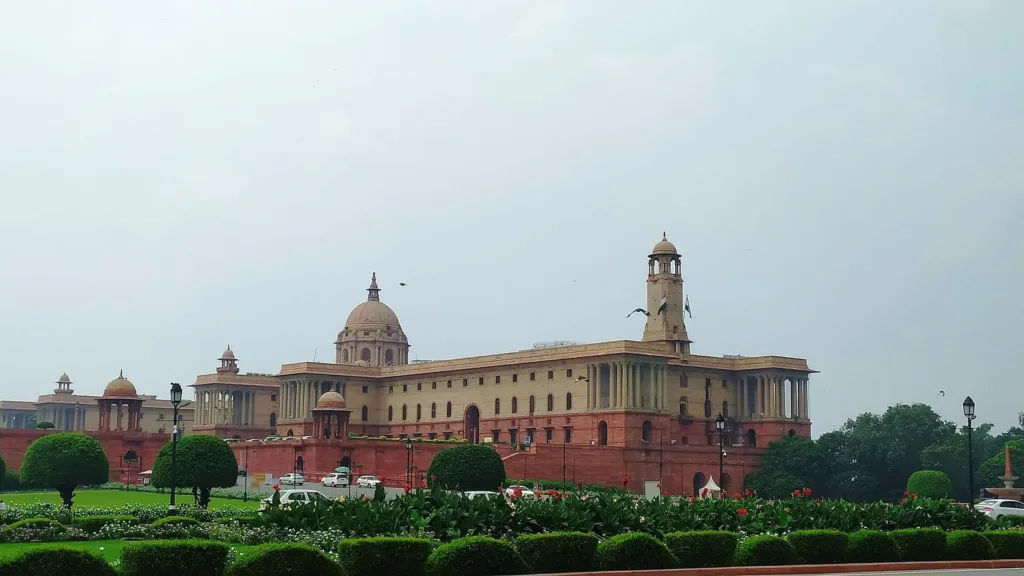
Representative image. BhuyanBhaskar, CC BY-SA 4.0, Wikimedia Commons

हिन्दी में सारांश Summary in Hindi
- केंद्रीय मंत्रिमंडल ने 11 नवंबर 2026 को नई दिल्ली में रायसीना हिल्स स्थित नॉर्थ और साउथ ब्लॉक में युगे युगीन भारत राष्ट्रीय संग्रहालय के निर्माण के लिए 3,230 करोड़ रुपये की मंजूरी दी। 1.78 लाख वर्ग मीटर में फैला यह संग्रहालय दुनिया का सबसे बड़ा संग्रहालय होगा।
বাংলায় সারাংশ Summary in Bangla
- নুমোদন করেছে। ১.৭৮ লাখ বর্গমিটার জুড়ে বিস্তৃত এই সংগ্রহশালাটি বিশ্বের বৃহত্তম প্রদর্শনী স্থান হবে।
Why it matters
The project transforms colonial era secretariats into the world's largest public museum by display area, preserving 5,000 years of civilisational heritage while establishing a premier global cultural destination in the capital.
The Cabinet Committee on Economic Affairs, chaired by Prime Minister Narendra Modi, on Wednesday, 11 November 2026, approved the development of the Yuge Yugeen Bharat museum at the historic North and South Block complex in New Delhi at an estimated cost of Rs 3,230 crore. The landmark decision clears the path for transforming the colonial era executive offices into the world’s largest museum by display area, creating an unparalleled cultural institution dedicated to India’s civilisational journey.
According to an official notification from the Ministry of Culture released on the Ministry of Culture portal, the Yuge Yugeen Bharat museum will encompass approximately 1,78,509 square metres of built-up space across the twin heritage structures on Raisina Hill. The project will be executed in phases between the 2026-27 and 2030-31 financial years, with the initial public gallery scheduled to welcome visitors in the latter part of 2027.
How Yuge Yugeen Bharat museum creates the world’s largest display space
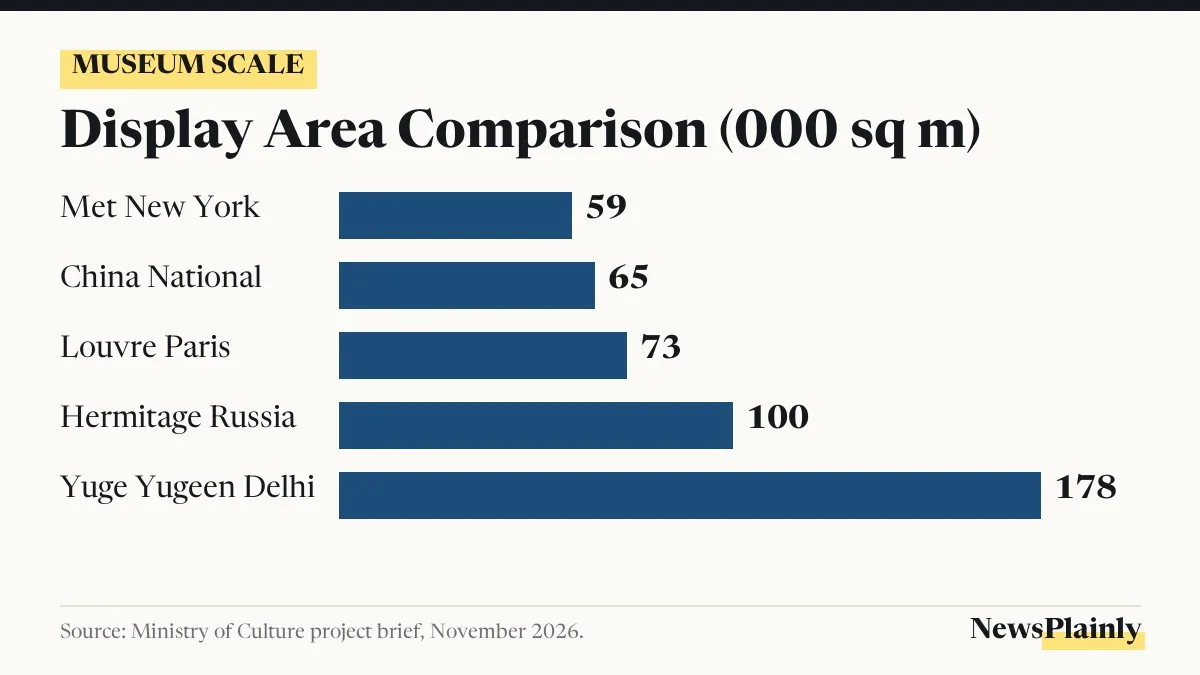
The scale of the Yuge Yugeen Bharat museum surpasses existing international benchmarks for public exhibition facilities. At over 1.78 lakh square metres, its planned display expanse exceeds that of the State Hermitage Museum in St. Petersburg (around 100,000 square metres), the Louvre in Paris (approximately 73,000 square metres), and the National Museum of China in Beijing (about 65,000 square metres).
Government planners have designed the complex to accommodate up to one crore (10 million) visitors each year, translating to an average footfall of nearly 30,000 guests daily. By converting the North and South Blocks into an open cultural sanctuary, the central administration intends to make the core architectural axis of the capital accessible to citizens and international travellers alike.
The cultural infrastructure initiative complements other major public works approved during Wednesday’s Cabinet session, including the Noida Metro Aqua Line extension designed to improve regional commuter transit across the capital territory and western Uttar Pradesh, as well as educational health measures like the Noida schools hybrid mode enacted to safeguard children during winter smog.
| Project Metric | Official Specifications | Strategic Objective |
|---|---|---|
| Approved Financial Outlay | Rs 3,230 crore | Fund structural retrofitting, climate curation, and global galleries |
| Total Built-up Display Area | 1,78,509 square metres | Surpasses major global museums as the world’s largest facility |
| Heritage Campus Location | North and South Blocks, Raisina Hill | Adaptive reuse of historic central secretariat government buildings |
| Exhibition Collection Size | Around 1.8 million historical objects | Integrates collections from National Museum, ASI, and state holdings |
| Annual Visitor Capacity | Up to 1 crore (10 million) visitors | Supports 30,000 daily cultural tourists, scholars, and school groups |
| Implementation Schedule | Financial year 2026-27 to 2030-31 | Five-year phased delivery with first gallery opening in late 2027 |
Eight civilisational galleries and 1.8 million historical artifacts
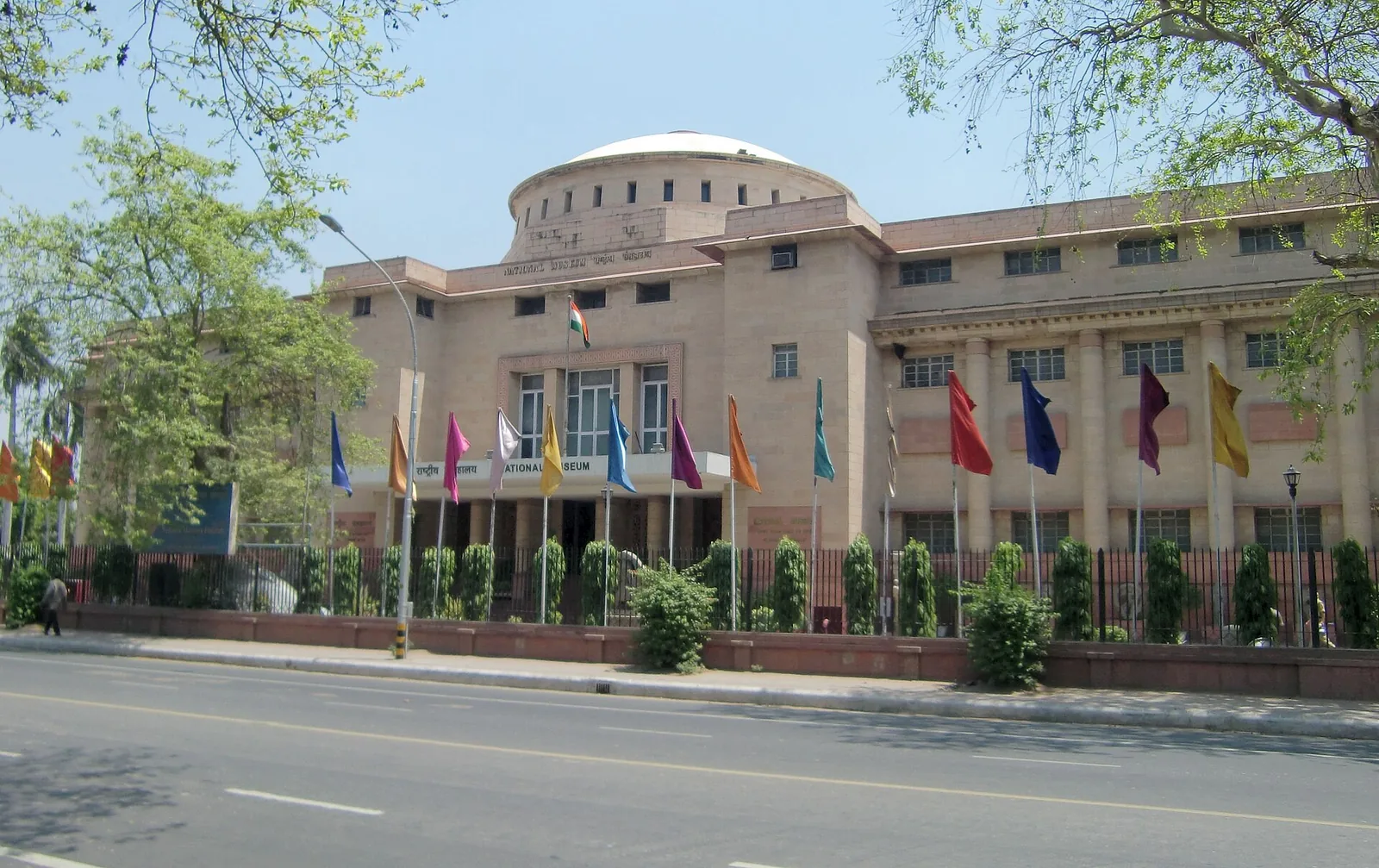
The institutional core of the Yuge Yugeen Bharat museum will feature eight thematic segments detailing 5,000 years of recorded civilisational accomplishments. The Ministry of Culture has identified approximately 1.8 million antiquities, manuscripts, numismatic treasures, and artistic masterworks from the National Museum in New Delhi, Archaeological Survey of India (ASI) site reserves, state institutions, and private collections for curated presentation.
The first public exhibition space, based on the theme of ‘Adornment’, will debut in North Block in late 2027. This introductory wing will present ancient Indian jewellery, textiles, ceremonial armaments, and decorative arts spanning the Indus Valley civilisation, the Mauryan empire, the Gupta classical era, and regional medieval kingdoms.
Subsequent galleries will illuminate diverse fields of Indian knowledge traditions, including architecture and historic city planning, Vedic mathematics, observational astronomy, languages and ancient epigraphy, philosophical thought, and spiritual traditions. Dedicated wings will explore India’s historical maritime trade networks along the Indian Ocean rim and the trans-continental Silk Routes that spread Buddhist thought, metallurgical expertise, and spice commerce across Asia and Europe.
Phased timeline from 2027 opening to 2031 completion
The execution of the Yuge Yugeen Bharat museum follows a strict five-year milestone roadmap. Under the approved project timeline, civil engineering and internal environmental conditioning will proceed progressively as government ministries complete their transfer into newly built Common Central Secretariat buildings along Kartavya Path.
By spreading the capital allocation of Rs 3,230 crore across five financial years from 2026-27 through 2030-31, the central government ensures sustainable fiscal execution while allowing conservation specialists sufficient time to execute delicate heritage restoration tasks. France Museums, an international consortium that provided technical counsel on the Louvre Abu Dhabi, has shared advisory expertise on gallery circulation, object security, and micro-climate management for rare organic antiquities.
The phased rollout allows educational tours and visitor operations to begin without waiting for the final delivery of all galleries. While the North Block showcases initial galleries from late 2027, retrofitting within the South Block will continue through 2029 and 2030, culminating in the integrated opening of all 950 rooms across the two blocks by March 2031.
Adaptive heritage reuse of North and South Block architecture
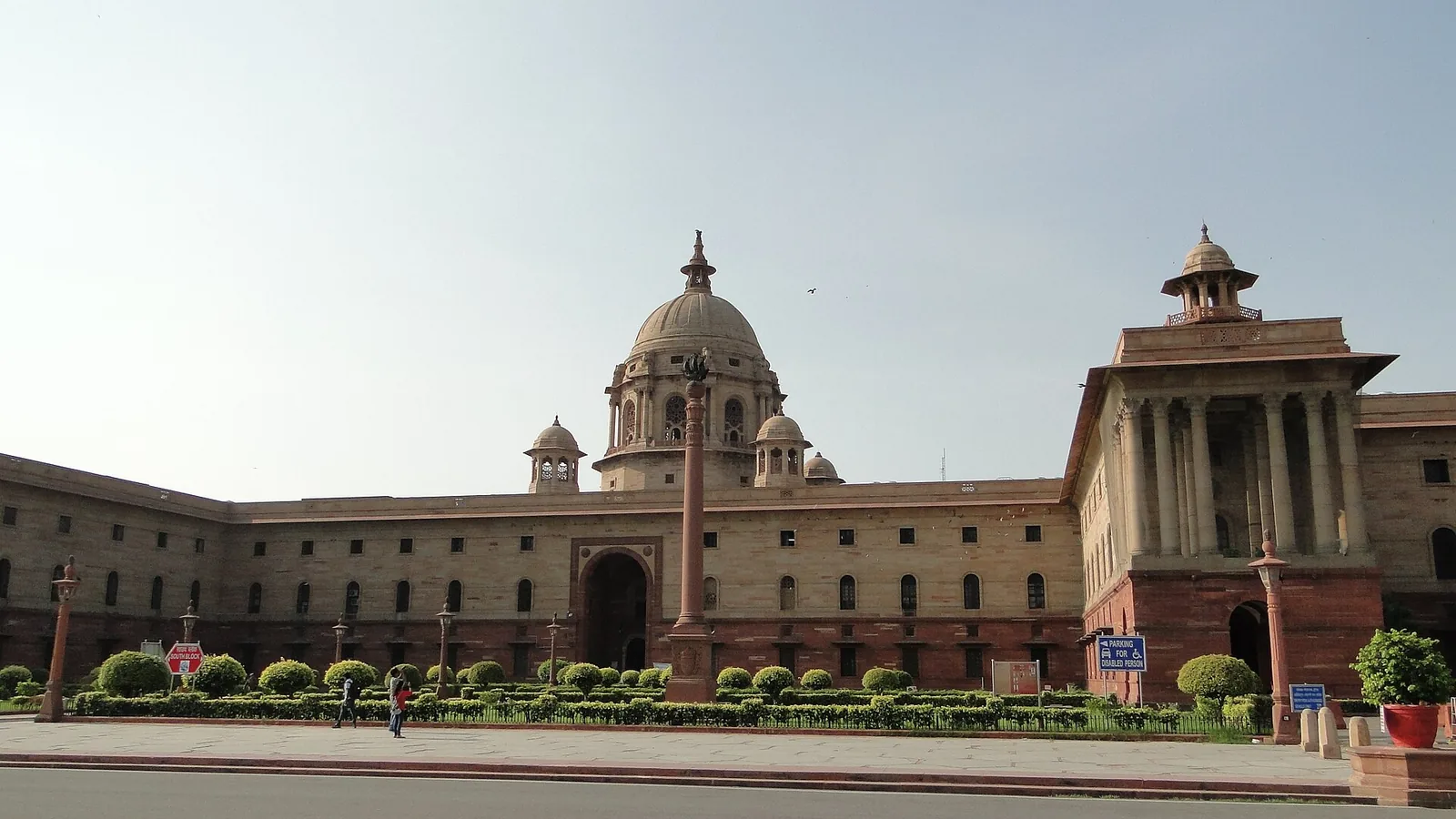
A central pillar of the Yuge Yugeen Bharat museum project is the meticulous adaptive reuse of the Edwardian Baroque buildings designed by architect Herbert Baker in the early twentieth century. Built primarily from red and cream sandstone quarried from Dholpur, the North and South Blocks represent significant architectural heritage of modern New Delhi.
The Ministry of Culture emphasised that all retrofitting will strictly respect the heritage character of the original facades, domed colonnades, ornamental fountains, and vaulted corridors. Rather than demolishing or altering internal load-bearing structures, engineers will install non-invasive display partitions, energy-efficient light emitting diode (LED) illumination, automated air filtration to counter ambient Delhi dust, and seismic stabilisation systems.
The project represents a dramatic functional evolution for Raisina Hill. For nearly a century, the twin blocks served as the secluded command centre for the Ministries of Home Affairs, Finance, Defence, and External Affairs, along with the Prime Minister’s Office. Converting these secure ministerial enclaves into an open civic space symbolises the democratization of national heritage in contemporary India.
Urban economists project that the completed Yuge Yugeen Bharat museum will act as a major economic multiplier for the hospitality, handicraft, and transport industries in the National Capital Region. Through its combination of massive display scale, immersive digital technologies, and unprecedented artifact collections, the new museum promises to establish New Delhi as one of the world’s foremost cultural epicentres for generations to come.
Frequently asked questions
What is the approved budget for the Yuge Yugeen Bharat museum?
The Cabinet Committee on Economic Affairs sanctioned an estimated capital expenditure of Rs 3,230 crore across five financial years.
Where will the new national museum be located?
It will occupy the historic North Block and South Block buildings on Raisina Hill in Central Delhi.
When will the Yuge Yugeen Bharat museum open to the public?
The first public gallery opens in late 2027, with the entire complex reaching full operational status by 2031.