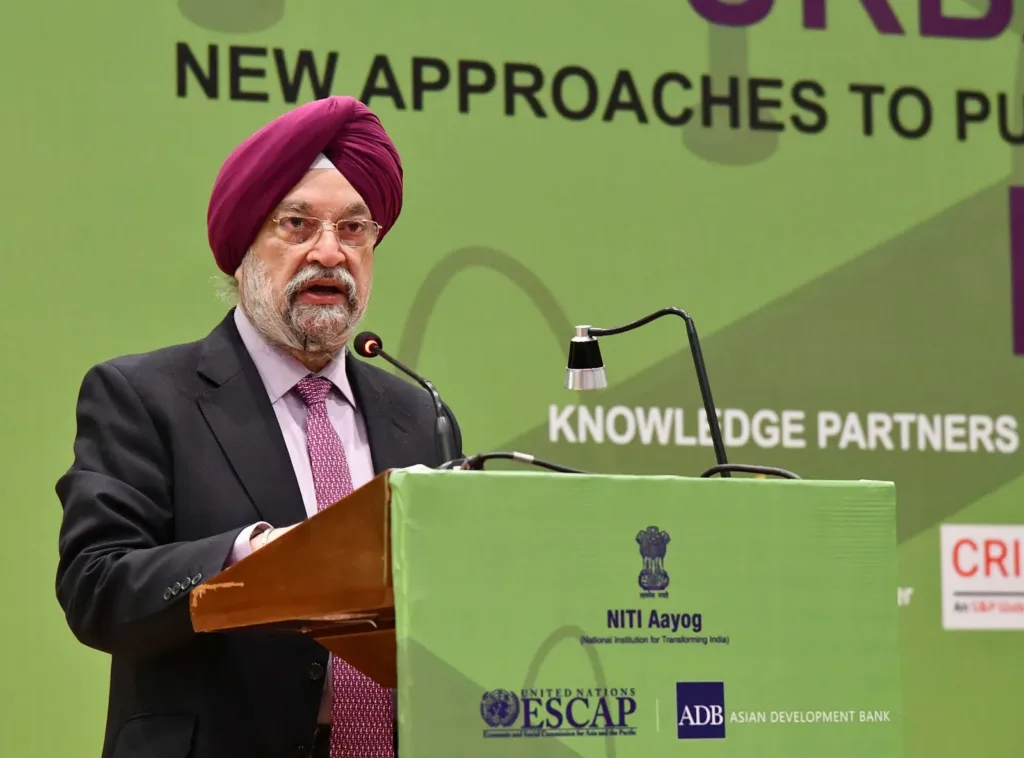
Representative image. Ministry of Housing and Urban Poverty Alleviation, GODL-India, Wikimedia Commons

Why it matters
India is one of the largest buyers of Russian crude, and that has been tied to the threat of US tariffs on Indian goods. The minister's account is that purchases follow price, and the September data shows refiners shifting towards Gulf oil as supplies recovered and discounts narrowed. Where India's oil comes from affects what refiners pay for crude and, through them, fuel costs.
Petroleum Minister Hardeep Singh Puri said on 27 October 2026 that India has faced no pressure from the United States to cut its Russian oil imports, and that refiners buy whichever crude is cheapest for the grade they need. He was speaking at the 29th Energy Technology and Innovation Meet in Panaji, Goa, the news agency Press Trust of India (PTI) reported. “I have never felt any pressure,” the minister said.
The remark comes eleven days after US President Donald Trump waived tariffs of up to 100% that a new US law had allowed on the biggest buyers of Russian energy, and about a month after ship-tracking data showed India’s Russian intake falling to its lowest level since April.
What Puri said in Goa about Russian oil imports
The minister’s argument was about price, not politics. “At the point of negotiation, whoever is supplying a particular grade, we will buy from them. Prices come down sometimes,” he said, according to PTI. He added that India was not particularly buying Russian oil at present, and that the decision rested on commercial terms rather than on any country’s demands.
Asked about the restrictions on the Russian oil companies Rosneft and Lukoil, Puri said buyers could get oil from other suppliers, including in the United Arab Emirates (UAE), PTI reported. He also pointed to Indian investments in Saudi Arabia and elsewhere as part of a wider spread of sources, and said a country that uses as much energy as India cannot compromise on supply security.
The news agency Indo-Asian News Service (IANS) carried a similar account. It reported the minister as saying that Russian crude made up only 0.2% of India’s oil imports before the war in Ukraine began in February 2022, and that purchases jumped afterwards because Russian barrels came at a discount. Now, he said, refiners are buying more Gulf oil that is also being sold at a discount, so Russian volumes have come down. In the end, he said, each decision comes down to self-interest, according to IANS.
How much Russian crude India is buying now
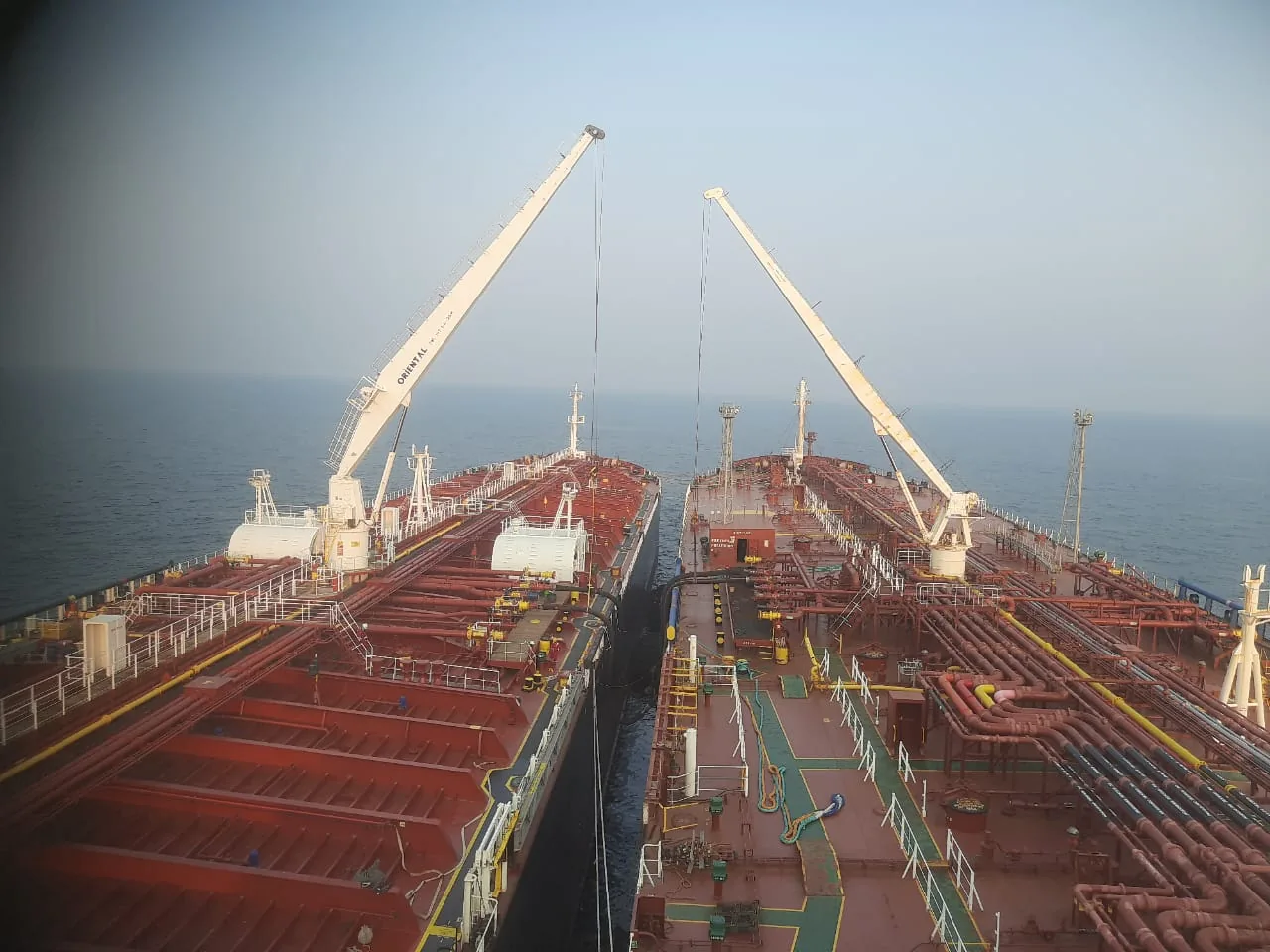
The figures behind the minister’s comments come from ship-tracking firms, not the government. According to Kpler data reported by ThePrint on 29 September, India took in about 1.74 million barrels of Russian crude a day in September (data up to 28 September), down from about 2.02 million in August and about 2.66 million in July. Kpler said that was the lowest since April.
Over the same period, oil from the Gulf came back. Total Indian crude imports were about 5.3 million barrels a day in September, roughly 600,000 more than in August, and Gulf supplies were back to about 2.7 to 3 million barrels a day, close to where they were before the conflict involving the US, Israel and Iran disrupted shipments through the Strait of Hormuz, Kpler’s data showed.
| Supplier | September 2026 (barrels a day) | Change noted by Kpler |
|---|---|---|
| Russia | about 1.74 million | down from about 2.02 million in August and 2.66 million in July |
| Iraq | about 575,000 | up more than 250% from August |
| Saudi Arabia | about 566,000 | up about 63% from August |
| UAE | about 480,000 | the only Gulf supplier that did not rise |
| Kuwait | about 331,000 | |
| United States | about 141,000 |
On those numbers Russian crude still made up about a third of everything India imported. NewsPlainly’s calculation: 1.74 million divided by 5.3 million barrels a day is about 33%. PTI’s report on Puri’s speech gave a slightly different set of figures, with Russian imports down about 14% to about 1.8 million barrels a day, a 33.5% share, and West Asian crude rising to about 54% of imports in September from 32% in August. PTI did not name the tracker, and different firms count cargoes over different date windows, which can produce small gaps between such estimates.
Kpler’s Sumit Ritolia told ThePrint that Russia remained a central part of India’s crude basket, so the September dip is a shift in mix rather than an exit.
Why US pressure was a question at all
The question put to Puri has a recent history. Washington has been pressing India to buy less Russian crude, and in September a new US law threatened steep tariffs on the biggest buyers.
- 16 September 2026: the US Congress passed the Sanctioning Russia and Iran Act, also called the Graham Act, Onmanorama reported. Trump signed it two days later.
- Section 113 of the Act: allowed tariffs of up to 100% on all goods from the five largest importers of Russian crude oil or gas, to be imposed within 30 days. India and China were among the buyers it targeted.
- 16 October 2026: Trump issued an executive order waiving those sanctions and duties under Section 115, which lets the President do so if it serves US national interest. IANS described the waiver as relief for India from possible tariffs of up to 100%.
- 20 and 21 October 2026: US Secretary of State Marco Rubio held talks in Mumbai and visited Reliance’s Jamnagar refinery. He said India had made real progress in depending less on any one supplier, as NewsPlainly reported in its story on Rubio’s visit.
- 27 October 2026: Puri told the Goa meet he had never felt pressure to stop buying Russian oil.
What decides where India’s crude comes from
On the minister’s own account, the answer is the price gap between grades. Russian crude became attractive after 2022 because it was sold at a discount to other oils, IANS reported him as saying. PTI’s report said the landed cost of Russian crude had more recently become comparable to some West Asian grades, particularly Iraqi oil, while Chinese buyers were also competing for Russian cargoes.
That is the shift the September data shows: as Gulf supply recovered after the Hormuz disruption and the discount on Russian oil narrowed, Indian refiners bought more from Iraq and Saudi Arabia. PTI also cited a Reuters report, quoting an Indian refining source, that Russian purchases could stay subdued in the coming months. That is one industry source’s view, not a government decision.
For readers, the link to daily life runs through fuel costs. Puri said India aims to keep supplies reliable while managing costs for consumers and the wider economy, PTI reported. The accounts of his speech by PTI and IANS did not include any announcement on petrol or diesel prices.
Frequently asked questions
What did Hardeep Singh Puri say about Russian oil?
On 27 October 2026 in Panaji, Goa, he said he had never felt any pressure to stop buying Russian oil and that India buys from whoever supplies a grade at the best price, PTI reported.
How much Russian oil does India import now?
About 1.74 million barrels a day in September 2026, according to Kpler ship-tracking estimates, down from about 2.66 million in July. That is roughly a third of India's crude imports.
What is the Graham Act?
The Sanctioning Russia and Iran Act, passed by the US Congress on 16 September 2026, allowed tariffs of up to 100% on goods from the five biggest importers of Russian oil or gas. Trump waived those duties on 16 October.
Why are Indian refiners buying less Russian crude?
Puri said refiners are buying more Gulf oil that is also offered at a discount. Kpler data shows Gulf supplies back near pre-conflict levels in September, and PTI reported that Russian oil's landed cost had become comparable to some Iraqi grades.