Representative image. Vinayaraj, CC BY-SA 4.0, Wikimedia Commons

Why it matters
Aavin is the state-run dairy brand sold across Tamil Nadu, and the higher prices take effect on 28 October, just before Diwali. On NewsPlainly's calculation, the rises range from 9.6% on a 500 ml ghee jar to 25% on a buttermilk sachet. Aavin says most of the extra money will go to the farmers who supply its milk.
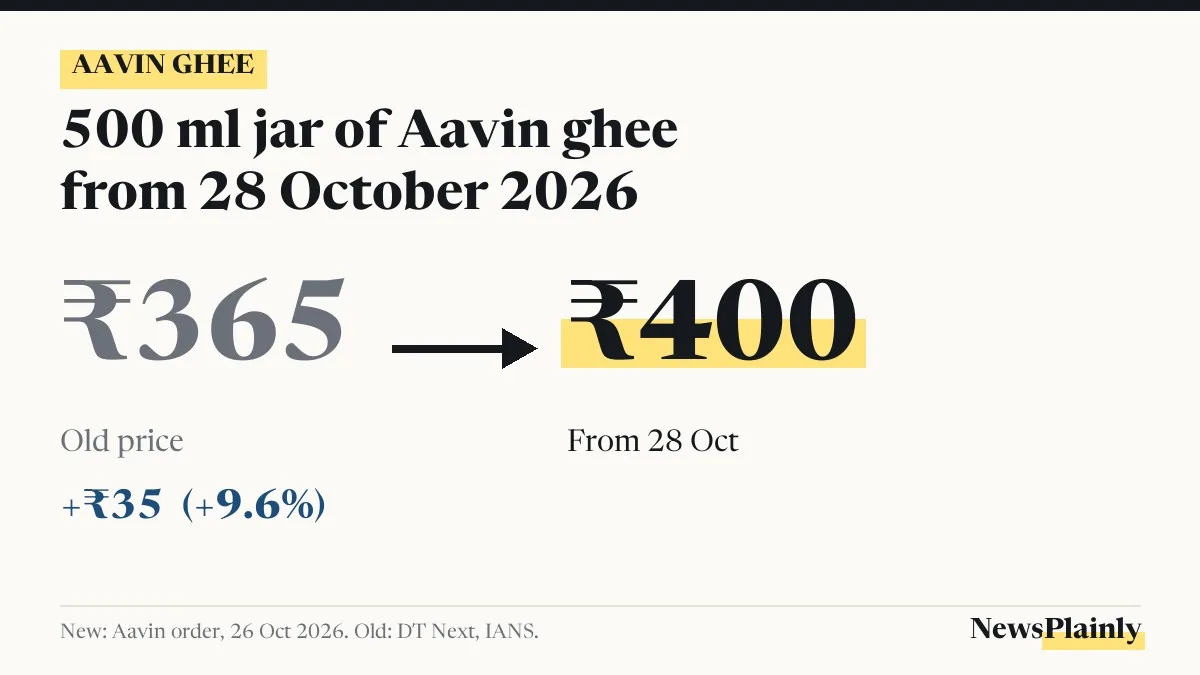
The Aavin price hike takes effect on 28 October 2026: Tamil Nadu’s state-run dairy cooperative will charge more for ghee, butter, curd, milkshakes, buttermilk and festival sweets from Wednesday, days before Diwali. A 500 ml jar of Aavin ghee goes from ₹365 to ₹400, and a 100 g pack of Aavin butter from ₹60 to ₹70. Regular packet milk is not part of the revision, DT Next and NewsBricks reported.
The Tamil Nadu Co-operative Milk Producers’ Federation (TCMPF), which sells under the Aavin brand, set out the new rates in an order from its marketing unit in Chennai dated 26 October. The order says selling prices of milk by-products were revised because raw material costs, procurement costs and other expenses have gone up. Aavin defended the change in a statement on 27 October, while opposition leaders criticised it and the AIADMK asked for a rollback.
Aavin ghee price and butter price: old and new rates
Aavin’s order lists only the new maximum retail prices (MRP) for Aavin ghee, butter and other items. The earlier prices below are as reported by India Today, Livemint, Moneycontrol, DT Next and IANS, which carried the old rates alongside the new ones. In the order’s pages published by India Today, the 50 ml ghee jar is priced at ₹55, the 100 ml jar at ₹95, the 200 ml jar at ₹180 and the 500 ml jar at ₹400.
Reports differ on the old ghee price for the 100 ml jar. India Today, Livemint, Moneycontrol and NewsBricks put the old price at ₹80, while DT Next and the news agency IANS gave ₹85. The 1 litre jar is not on the pages of the order that were published; DT Next and NewsBricks reported it rising from ₹700 to ₹780, while another Chennai outlet, News Today, gave the new price as ₹770.
Aavin butter goes up too. The 100 g pack of table and cooking butter now costs ₹70, and the 500 g cooking butter pack ₹320, up from ₹275 according to DT Next. The 500 g table butter pack is listed at ₹325.
What else costs more: curd, milkshakes and Diwali sweets
DT Next and IANS reported that 63 Aavin items are covered. The published pages of the order run to 43 rows, so not every item could be checked against it. Among the rows that could be read:
- Milkshakes in every flavour, 200 ml: ₹35 (₹30 before, according to DT Next and IANS)
- Buttermilk, 200 ml sachet: ₹10 (₹8 before); buttermilk in a 200 ml plastic (PET) bottle: ₹14 (₹12 before, according to IANS)
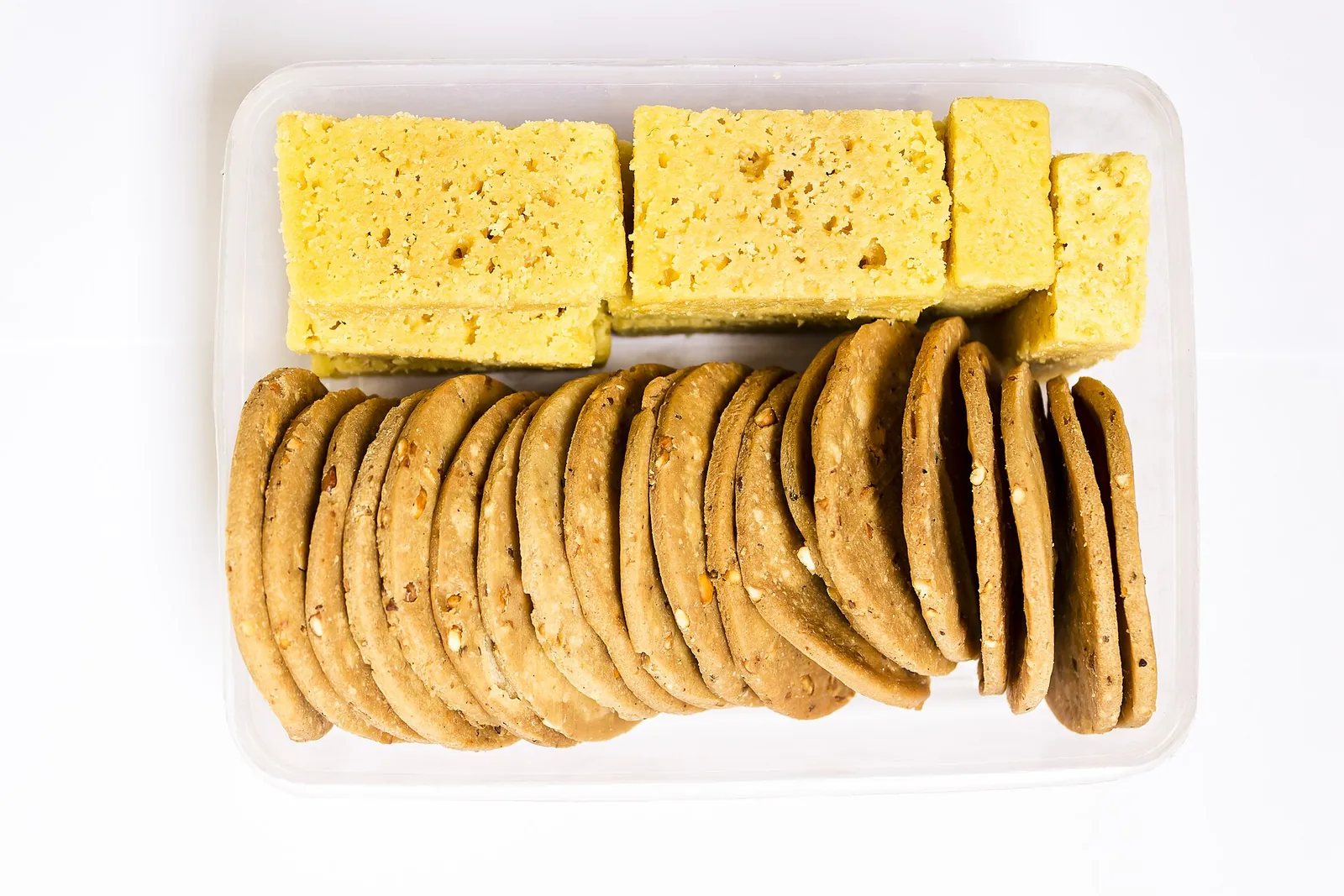
- Mysore pak, 250 g: ₹160 (₹140 before); 500 g: ₹310 (₹270 before, according to DT Next)
- Kaju katli, 250 g: ₹280; ghee halwa, 250 g: ₹125; milk peda, 250 g: ₹140
- Ultra-high temperature (UHT) treated toned milk, a long-life 150 ml pack: ₹12
Curd is not on the published pages of the order. DT Next and IANS reported the 500 ml pack of curd rising from ₹35 to ₹40 and the 1 kg pack from ₹120 to ₹130. The two reports also listed lassi at ₹23 for 200 ml, up from ₹20.
Apart from the Aavin price hike on ghee and butter, the order’s price list includes only one milk item, the small UHT pack, and no old price for it was given in the reports read. India Today, Livemint and Moneycontrol described this as the first time Aavin has raised product prices since Chief Minister C. Joseph Vijay’s Tamilaga Vettri Kazhagam (TVK) government took office.
How much more you pay: NewsPlainly’s per-litre calculation
The percentage rise from the Aavin price hike is not the same across the range. The table below works out each change, from Aavin ghee to buttermilk, and the new price per litre or kilogram from the pack price. These are NewsPlainly’s calculations, using the new prices in Aavin’s order and the old prices reported by the outlets named above.
| Item | Old price | New price | Rise | New price per litre or kg |
|---|---|---|---|---|
| Ghee, 500 ml | ₹365 | ₹400 | 9.6% | ₹800 a litre (was ₹730) |
| Ghee, 200 ml | ₹160 | ₹180 | 12.5% | ₹900 a litre (was ₹800) |
| Ghee, 100 ml | ₹80 or ₹85 | ₹95 | 18.8% or 11.8% | ₹950 a litre |
| Butter, 100 g | ₹60 | ₹70 | 16.7% | ₹700 a kg (was ₹600) |
| Mysore pak, 250 g | ₹140 | ₹160 | 14.3% | ₹640 a kg (was ₹560) |
| Milkshake, 200 ml | ₹30 | ₹35 | 16.7% | ₹175 a litre |
| Buttermilk, 200 ml | ₹8 | ₹10 | 25% | ₹50 a litre (was ₹40) |
Two things stand out. Buttermilk has the steepest rise in percentage terms, at a quarter more per sachet. And small jars carry a higher ghee price per litre than big ones: after the revision, Aavin ghee bought in 100 ml jars works out to ₹950 a litre, against ₹800 a litre in the 500 ml jar.
For an illustration only, take a hypothetical household that buys two 500 ml jars of Aavin ghee and four 100 g packs of Aavin butter every month. At the old prices that basket cost ₹970 (₹730 for ghee and ₹240 for butter). At the new prices it costs ₹1,080 (₹800 and ₹280), or ₹110 more a month, a rise of about 11.3%. Over 12 months at these prices the extra spend would be ₹1,320. Real spending will depend on what each family buys.
Why Aavin says the ghee price and other rates had to rise
Aavin said in its statement that it set the new rates after comparing production costs and the prices charged by private dairies and by cooperative milk federations in other states, according to India Today and DT Next. It said the revision was not meant to make a profit, that its products would still be cheaper than comparable private and cooperative brands, and that more than 90% of the extra revenue would go towards the welfare of milk producers.
The cost pressure has been building since August. Chief Minister Vijay raised the price Aavin pays farmers for milk from ₹38 to ₹41 a litre in the Assembly on 19 August, and on 31 August announced a further rise to ₹44, Livemint reported. He said then that the second increase would cost the state about ₹60 crore a month, or ₹720 crore a year. Retail milk prices were left unchanged at that time, DT Next reported.
This is not the first attempt to change the Aavin ghee price this year. In July, Aavin withdrew a ghee pricing order within a week of issuing it, DT Next reported.
What opposition leaders said about the Aavin price hike
All India Anna Dravida Munnetra Kazhagam (AIADMK) chief and former chief minister Edappadi K. Palaniswami said the government chose a time when people buy more ghee and sweets for Diwali. He likened it to “a corporate villain in cinema”, India Today reported, and asked for the increase to be rolled back so families can celebrate without an added burden.
Pattali Makkal Katchi (PMK) president Anbumani Ramadoss criticised the rise in the Aavin ghee and butter rates and questioned the extra strain on households already facing inflation, DT Next reported. In a separate statement on 25 October, reported by Moneycontrol, he asked the state to set up an expert committee on Aavin’s finances. He said Aavin meets only 15 to 16% of Tamil Nadu’s milk demand and that its daily procurement fell from a peak of 41 lakh litres in 2021 to 28 lakh litres by August 2026, before recovering to about 32 lakh litres after the purchase price paid to farmers went up to ₹44.
The Aavin price hike applies at Aavin parlours and outlets from 28 October. The state government’s response to the rollback demand was not part of the reports read by 4.25 pm IST on 27 October.
Frequently asked questions
When does the Aavin price hike take effect?
The new prices apply from Wednesday, 28 October 2026, according to the order of the Aavin federation's marketing unit dated 26 October.
What is the new Aavin ghee price?
The 50 ml jar costs ₹55, the 100 ml jar ₹95, the 200 ml jar ₹180 and the 500 ml jar ₹400. The 500 ml jar was ₹365 before.
Has Aavin raised the price of milk?
Regular packet milk is not part of this revision, DT Next and NewsBricks reported. The order lists one milk item, a 150 ml UHT toned milk pack at ₹12.
Why did Aavin increase prices?
Its order cites higher raw material, procurement and other costs. Aavin also said more than 90% of the extra revenue would go to milk producers' welfare.