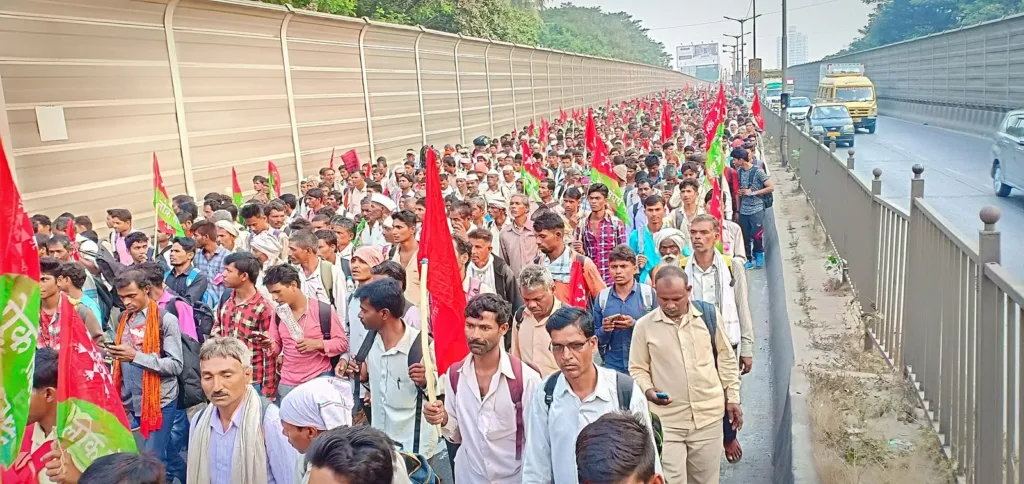
Representative image. Lok sangharsh Morcha Jalgaon Maharashtra, CC BY-SA 4.0, Wikimedia Commons

Why it matters
Drought now covers about 85% of Maharashtra's talukas, and the size of crop-loss payments is still to be fixed after field surveys. The march puts pressure on the amount and timing of that aid, on the loan waiver rules and on pending scheme payments that farm families are waiting for.
More than 12,000 farmers and rural workers are on a long march to Mumbai, asking the Maharashtra government for more drought relief, quicker crop insurance payments and a wider loan waiver. The All India Kisan Sabha (AIKS), a Left farmers’ organisation, set off from Akole on 26 October 2026 and plans to end at Varsha, the chief minister’s official home, India TV reported. The farmers long march comes after the state declared drought in 305 of its 358 talukas.
Hindustan Times reported that on 27 October the marchers, carrying red flags, moved from Igatpuri along the Nashik to Mumbai highway, and that Chief Minister Devendra Fadnavis was expected to meet a delegation of farmers that evening.
Route of the farmers long march to Mumbai
According to India TV, the march is vehicle-led and draws people from more than 20 districts. It followed a six-day sit-in at Akole, called a Maha-Mukkam Satyagraha by the organisers, from 21 to 26 October. AIKS national president Ashok Dhawale, general secretary Vijoo Krishnan, joint secretary Ajit Nawale and CPI(M) MLA Vinod Nikole were at the start in Akole, the channel reported.
The organisers planned a night halt at Ghatan Devi near Igatpuri on 26 October and a climb through Kasara Ghat on 27 October. Farmers are not the only ones on the road. India TV listed workers under PESA (the law on panchayats in Scheduled Areas), construction workers, nutrition programme workers, ASHA (Accredited Social Health Activist) workers and anganwadi staff among the marchers.
The Kisan Sabha alleged that the government sent notices through the police to stop the march from reaching Varsha, instead of holding talks. It said it wants a written commitment from the chief minister on every demand and will keep protesting until it gets one. The reports read for this article did not carry a reply from the government or the police on the notices.
What the Kisan Sabha wants, and what the state has announced
The central complaint is money. The Kisan Sabha called the ₹5,000 the state announced for each farming household too little, India TV reported. Hindustan Times described the same payment as a ₹5,000 advance to each farmer before Diwali. AIKS leader Ajit Nawale argued that farmers who repay their loans on time should also benefit from the loan waiver, HT reported.
| Issue | Kisan Sabha’s demand | What the state has announced |
|---|---|---|
| Drought aid | Enough compensation for crop losses; ₹5,000 called inadequate | ₹5,000 advance before Diwali; crop-loss aid to follow surveys |
| Loans | ₹2 lakh waiver extended to farmers who repay regularly | A loan waiver scheme is running; banks told not to recover dues |
| Crop insurance | Clear obstacles holding up claims | No specific step in the reports read |
| Namo Shetkari scheme | Release 2 pending instalments | Scheme pays ₹6,000 a year in 3 instalments |
| Land | Ownership rights for forest, temple trust, inam and grazing land farmed | No step in the reports read |
The marchers also want fair wages and social security for rural and scheme workers. The Kisan Sabha claims that 81 lakh women were dropped from the Ladki Bahin scheme for women because of e-KYC (online identity check) problems, and wants the process reopened and their pending money paid, India TV reported. That figure is the organisation’s claim; the reports did not carry a government figure.
How bad is the Maharashtra drought?
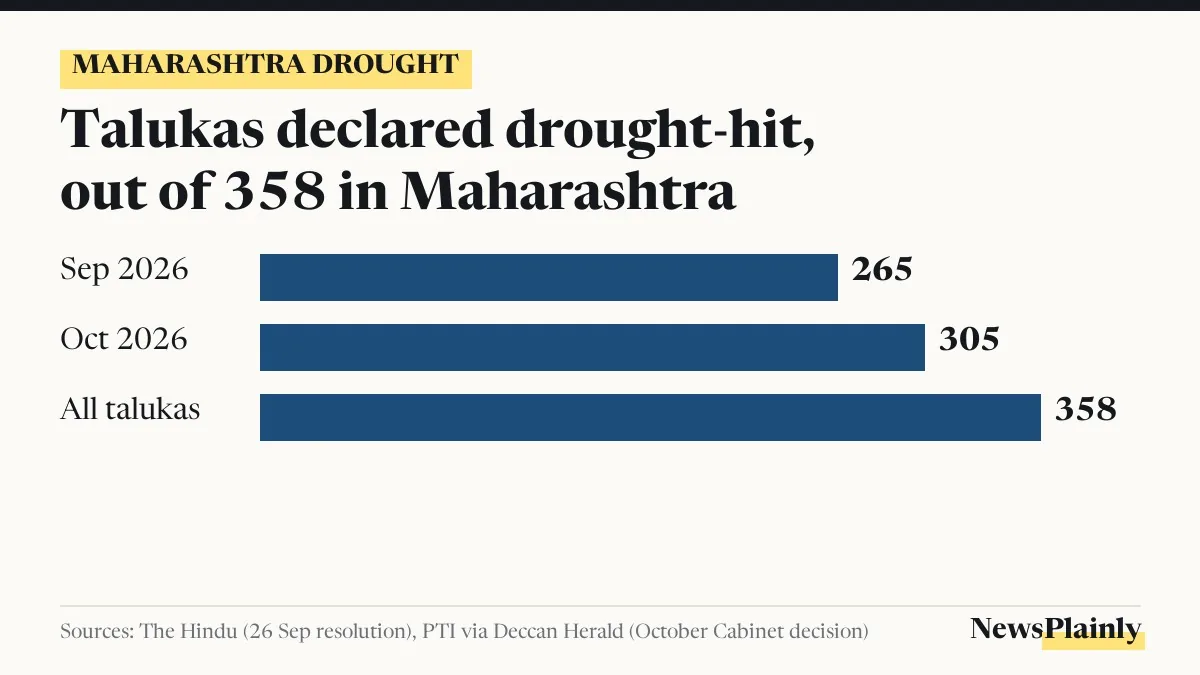
On 26 September 2026 the government declared drought in 265 talukas across 32 districts under the Drought Management Code, 2016, The Hindu reported. Between 1 June and 26 September the state got 798.2 mm of rain against an average of 970.9 mm, a shortfall of 18%. Marathwada was worst hit, with a deficit of 38% across its eight districts, and Vidarbha’s 11 districts averaged 27%.
In October the state Cabinet added 40 more talukas, taking the list to 305, Fadnavis told reporters, according to a Press Trust of India (PTI) report carried by Deccan Herald. By NewsPlainly’s count, that is about 85% of the state’s talukas (305 of 358), leaving 53 outside the list.
The declaration triggers a set of automatic measures. The Hindu listed them: land revenue waived, crop loans restructured, loan recovery deferred, power bill concessions for farm pumps, exam fees waived for students, relaxed rules for employment guarantee work, and water tankers where needed. Payment for crop losses comes through a separate order after panchnamas, the field surveys that record crop damage, are finished.
Why ₹5,000 is the sticking point
The state has asked the Centre for help. On 7 October Fadnavis met Union Home Minister Amit Shah and handed over an interim proposal for a ₹17,500 crore relief package, HT reported: ₹13,000 crore for crop losses and ₹4,500 crore for fodder. The two parts add up to the total.
Under norms brought in in 2023, compensation for crop loss ranges from ₹7,500 to ₹22,000 per hectare, depending on the crop and the rules that apply, according to HT. As a simple illustration by NewsPlainly: a farmer with two hectares of crops paid at the lowest rate would be due ₹15,000, three times the ₹5,000 advance. The final amount depends on the surveys, so this is not a forecast of what any farmer will get.
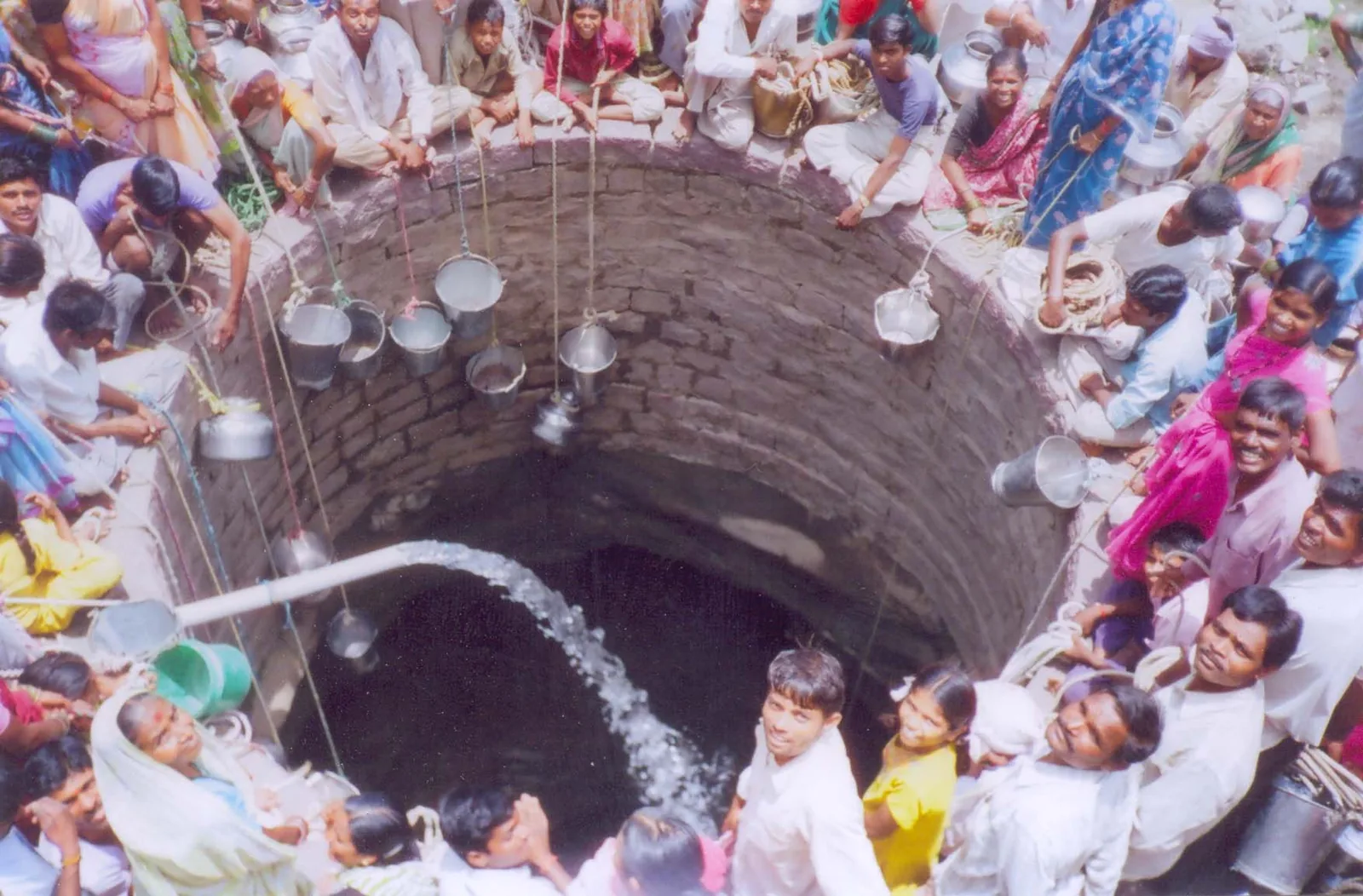
Water and fodder are the other pressures. HT reported that the number of tankers has gone up as water levels in Marathwada fell, that tankers are being tracked by satellite location (GPS), and that water has been reserved for drinking, for people and livestock, until August 2027. The government has said it will buy fodder at an assured price. An 11-member central team toured the drought-hit areas to judge how severe the damage is.
What happens when the march reaches Mumbai
The key event is the meeting HT said was expected on the evening of 27 October between Fadnavis and a delegation of farmers. The Kisan Sabha has asked for a formal written commitment on every demand and says the protest will go on until it gets one. The state’s own crop-loss payments still depend on the panchnama surveys, and the reports read did not give a date for that order.
Maharashtra is not the only state counting dry talukas this season. NewsPlainly has also reported on drought in 80 Rajasthan tehsils and on Telangana’s drought plan.
Frequently asked questions
Who is leading the farmers long march to Mumbai?
The All India Kisan Sabha. Its president Ashok Dhawale, general secretary Vijoo Krishnan and joint secretary Ajit Nawale were at the start in Akole, India TV reported.
How many talukas in Maharashtra are drought-hit?
305 of 358. The state declared drought in 265 talukas on 26 September 2026 and added 40 more in October.
How much drought relief has Maharashtra announced?
An advance of ₹5,000 before Diwali, plus measures such as loan restructuring and land revenue waivers. Crop-loss payments come after field surveys.
Where will the farmers' march end?
The organisers plan to reach Varsha, the chief minister's official residence in Mumbai.