
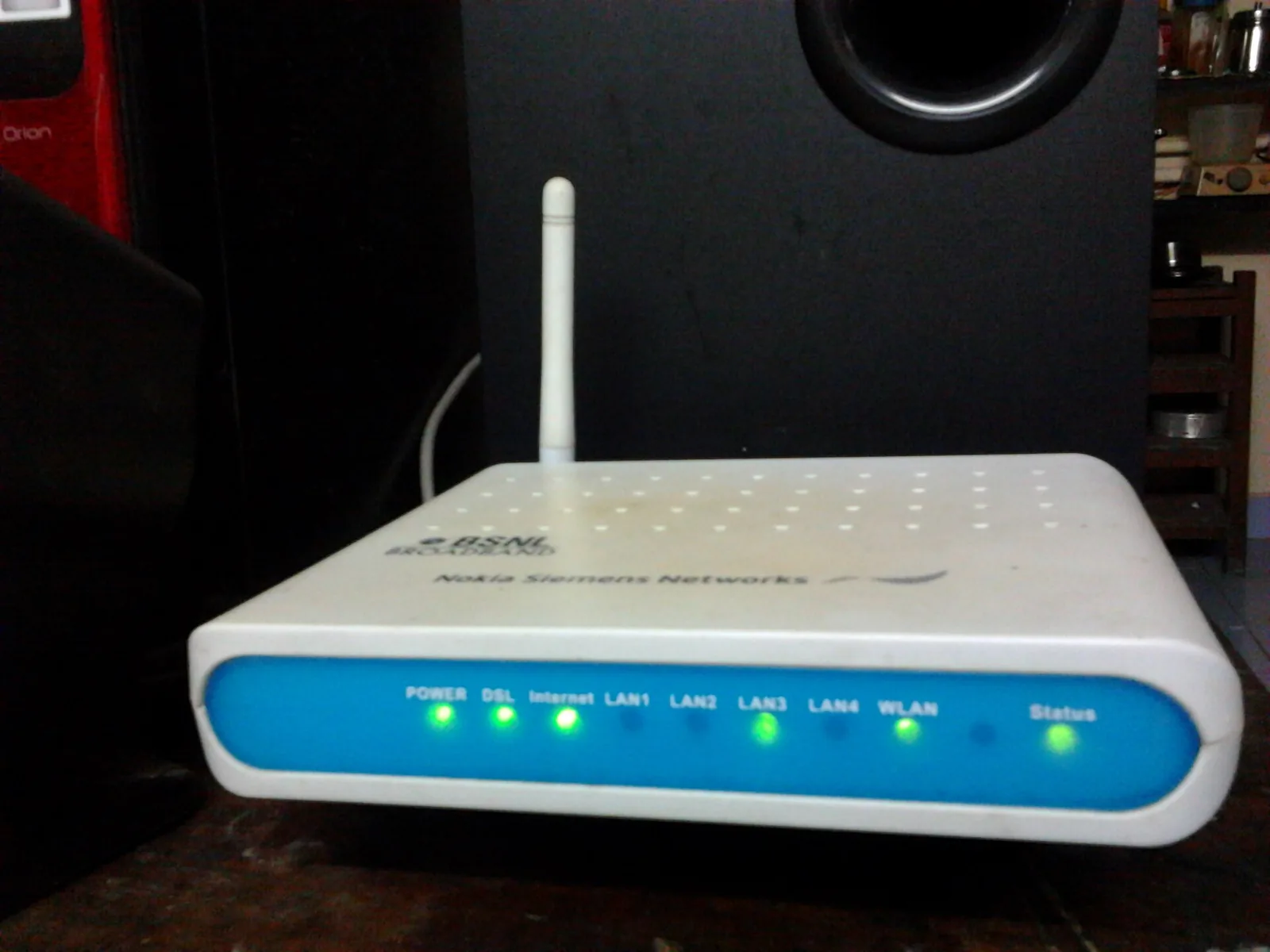
Representative image. Victorgrigas, CC BY-SA 3.0, Wikimedia Commons

Why it matters
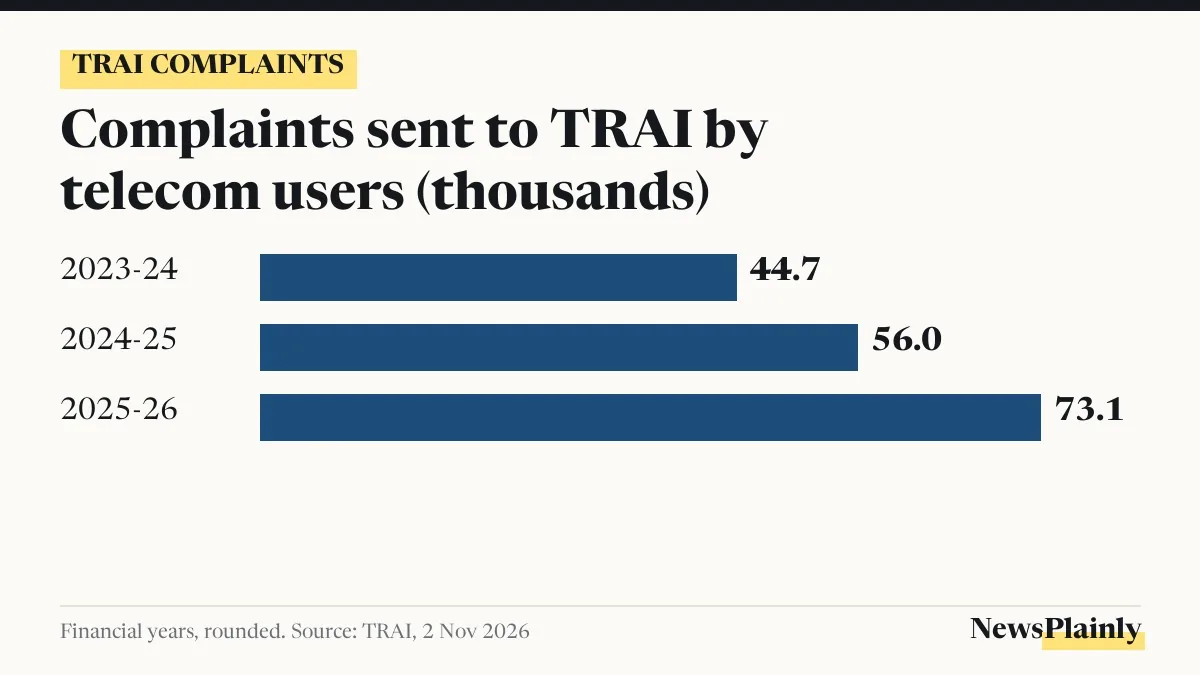
Almost every household deals with a mobile or broadband company, and complaints sent to TRAI rose to 73,081 in 2025-26. The rules give customers fixed deadlines, a free number, help at any hour and a written trail they can hold a company to. They also shorten the time to appeal, so a customer who waits a month after an unhelpful reply could lose that route.
The TRAI complaint rules for mobile, landline and internet companies have been rewritten, and they add money penalties for handling complaints badly. The Telecom Regulatory Authority of India (TRAI) notified the Telecom Consumers Complaint Redressal (Fourth Amendment) Regulations, 2026 on 2 November 2026. A company can be charged ₹1,000 for every complaint and ₹5,000 for every appeal it closes in breach of the rules, up to ₹20 lakh a quarter in each service area.
The changes are final, not a draft: TRAI published them for comment on 7 May 2026. They also halve the time a customer has to file an appeal, from 30 days to 15, and require companies to run complaint centres round the clock.
What the new TRAI complaint rules say
The rules amend TRAI’s 2012 complaint regulations, last changed in 2014. They apply to every company that provides access services (mobile and landline) or internet services. Internet providers with 10,000 or fewer subscribers at the end of the previous financial year are left out, though they must still have their own way of settling a telecom complaint.
The main changes for customers, according to the notification published on TRAI’s website:
- Help at any hour. Complaint centres must work 24 hours a day, every day. Help from a human must be available for at least 16 hours a day, and the rest can come from automated systems or AI agents working under human oversight. TRAI said this replaces the existing 16-hour arrangement, Mint reported.
- You must be told when it is a bot. A customer has to get a notice whenever they are talking to an AI agent.
- A free number. The consumer care number must not be chargeable.
- The same menu everywhere. Phone menus (IVRS, the recorded “press 1” systems), apps and websites must offer three clear choices: Complaint, Appeal, or Service request or query. Each must let you reach a human, and the phone line must offer a call-back if you are left waiting in a queue.
- Your language. Hindi, English and at least one other official language of the states in the service area.
- Updates until it is fixed. You get a docket number, an expected resolution time, a notice with reasons if it runs late, and a closing message with a feedback link. Companies must keep docket records for at least six months, up from three.
How long telecom companies have to fix a complaint
Where a TRAI rule on service quality, spam calls or consumer protection already sets a time limit, that limit applies. Where none does, the company must address the telecom complaint or service request within three days.
If you are not satisfied, you can go to the company’s appellate authority, made up of one or more of the company’s own management staff with at least five years’ experience. The window to file is now 15 days, down from 30. TRAI’s explanatory note says customers usually appeal quickly and that a longer window adds to compliance work. An appeal can be filed by email, through the app or website, by post or courier, in person, or through the consumer care number.
The Appellate Authority must register the appeal at once and send you a unique appeal number by SMS or email. It must decide within 15 days of receiving it, and the company must act on the decision in that time. The result has to reach you by email and SMS, and be updated on the website and app, within three days of the decision.
After every closed complaint or appeal, the company must send an online feedback survey on a five-point scale. It must publish quarterly figures on complaints, appeals and survey scores, and place a quarterly report before its chief executive or board.

When each part of the TRAI complaint rules starts
The rules do not all start at once. The periods are counted from the day the notification appears in the Gazette of India, the government’s official journal; the notification is dated 2 November 2026, and the copy read did not give the Gazette date.
| Starts | What comes in | What it means for you |
|---|---|---|
| 30 days after Gazette publication | 15-day appeal window, 15-day appeal decisions, free consumer care number, language rule, penalty clauses | File any appeal within 15 days of the company’s reply |
| 60 days | Feedback survey, quarterly performance reports, oversight committee, longer record keeping | A survey link after each closed complaint |
| 90 days | 24-hour complaint centres, new phone menus, complaints and appeals in apps and websites, help desks for persons with disabilities, TRAI’s periodic reviews | Round-the-clock help, AI notice, call-back option |
Penalties under the TRAI complaint rules, worked out
The fines apply when a TRAI audit, inspection or review finds that a complaint or appeal was disposed of in breach of the rules. TRAI’s explanatory note lists examples: not giving a docket number, not sending status updates or reasons for delay, not telling the customer how to appeal, not acknowledging an appeal, not communicating the decision on time, or skipping the feedback survey.
- Complaints and appeals handled wrongly: ₹1,000 per complaint and ₹5,000 per appeal, capped at ₹20 lakh a quarter for each licensed or authorised service area (roughly a telecom circle).
- Late quarterly report: up to ₹5,000 a day per report for the first 15 days, then ₹20,000 a day, capped at ₹10 lakh per instance per service area.
- Late payment: simple interest at 2% above the State Bank of India’s one-year lending benchmark (MCLR).
NewsPlainly’s calculation puts the caps in plain numbers. The ₹20 lakh limit is reached at 2,000 wrongly closed complaints (₹20 lakh divided by ₹1,000), or 400 appeals (divided by ₹5,000), in one circle in one quarter. For a late report charged at the full daily rates, the first 15 days cost ₹75,000; after that ₹20,000 a day is added, so the ₹10 lakh cap is hit on the 62nd day.
The fines are not automatic. A company must get a fair chance to respond, and TRAI can lower a fine or drop it, recording its reasons in writing. Telecom companies, through the Cellular Operators Association of India (COAI), had asked TRAI to scrap the financial penalties and the 24-hour requirement, citing cost and technical difficulty, Mint reported.
What to do with a telecom complaint now
One point the headlines skip: the fine is paid into an account TRAI names, not to you. TRAI does not take up individual complaints, and its explanatory note says compensation for a single customer’s complaint falls outside its mandate. Your route still runs through the company itself.
- Complain to the company’s complaint centre through the consumer care number, app or website, and note the docket number.
- If the company says it will take longer, it must tell you why and give a new estimate. Keep those messages.
- If the reply does not fix the problem, appeal within 15 days once the new window applies. The Appellate Authority’s name, phone number and email must be shown on the company’s website home page and in its app.
- Fill in the feedback survey. The scores go into the quarterly reports the company must publish and send to TRAI.
Why TRAI rewrote the complaint process
Complaints sent to TRAI itself have climbed: 44,733 in 2023-24, 55,978 in 2024-25 and 73,081 in 2025-26, according to TRAI’s explanatory memorandum. That is a rise of about 63% in two years, by NewsPlainly’s calculation. TRAI says its analysis of these complaints showed “a fair amount of dissatisfaction” with the systems companies run. The rules cover a market of about 1.34 billion telecom subscribers and more than 1.09 billion internet subscribers as of June 2026, by TRAI’s count.
Some respondents to the draft asked for six to nine months to make the changes; TRAI kept 30 days for most rules and gave 60 or 90 days for the bigger system changes. More telecom and gadget news is in our Tech section.
Frequently asked questions
How many days do I have to appeal against a telecom complaint decision?
15 days, down from 30, once this part of the amended rules takes effect 30 days after Gazette publication. Appeals can be filed by email, app, website, post, in person or through the consumer care number.
How much can TRAI fine a telecom company for mishandling complaints?
₹1,000 per complaint and ₹5,000 per appeal disposed of in breach of the rules, capped at ₹20 lakh a quarter for each service area. Late quarterly reports can cost up to ₹10 lakh per instance.
Will I get the penalty money if my complaint was mishandled?
No. The money goes to an account TRAI specifies. TRAI's explanatory note says compensation for individual complaints is outside its mandate.
When do the new TRAI complaint rules start?
Most parts start 30 days after the notification appears in the Gazette of India. Feedback surveys and quarterly reports follow after 60 days, and 24-hour complaint centres and new phone menus after 90 days.