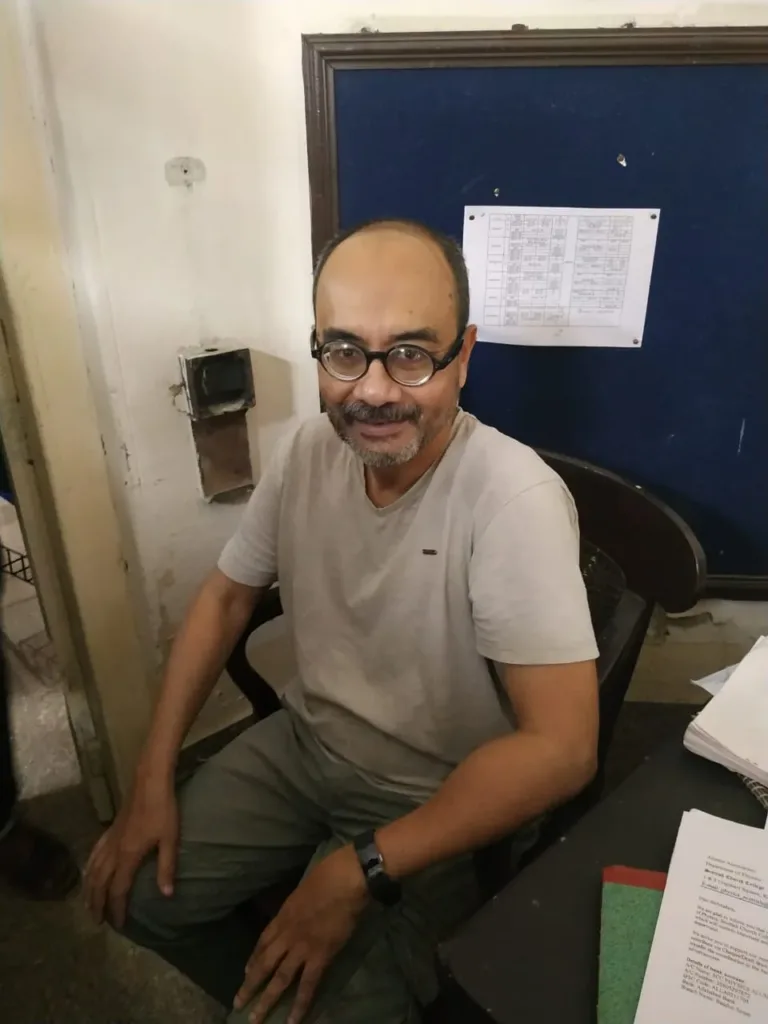
Representative image. Souravdas1998, CC BY-SA 4.0, Wikimedia Commons

Why it matters
The Oskar Klein Medal is chosen with the Nobel Committee for Physics, and an Indian scientist has never received it before. It recognises research done largely in Indian institutes, in a field where India has few top international honours.
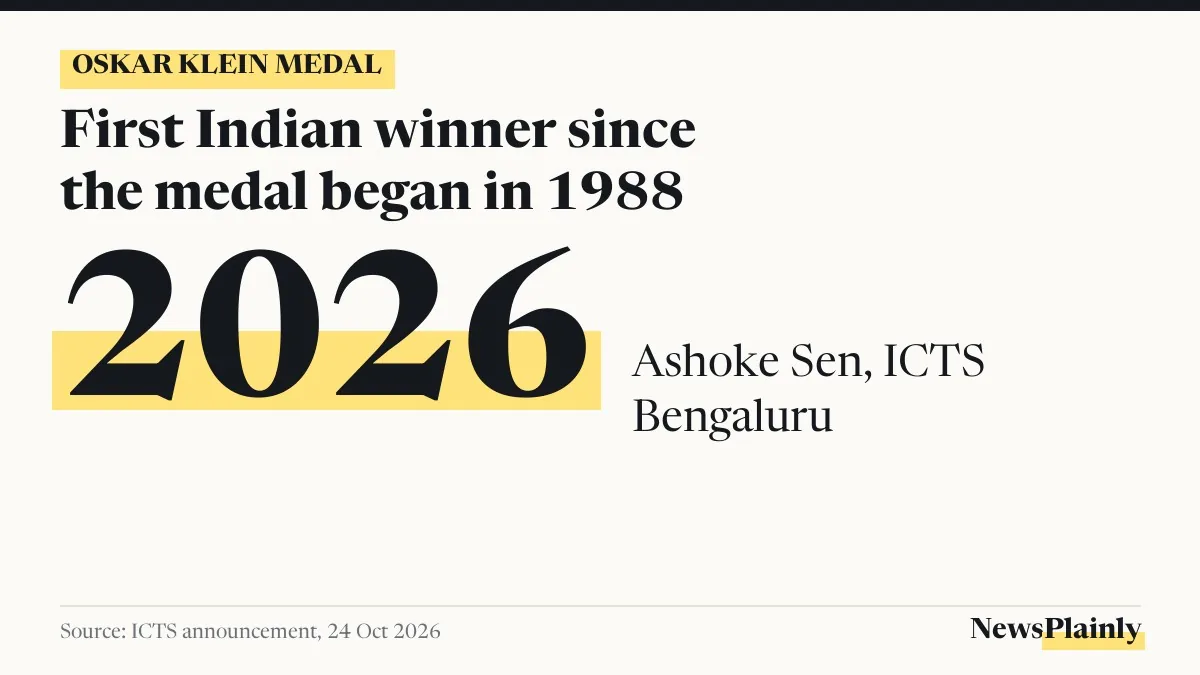
Ashoke Sen has become the first Indian physicist to receive the Oskar Klein Medal, one of the most respected honours in theoretical physics. The International Centre for Theoretical Sciences (ICTS) in Bengaluru, where he is a professor, announced the 2026 award on Saturday, 24 October 2026, two days after he gave the Oskar Klein Memorial Lecture in Stockholm.
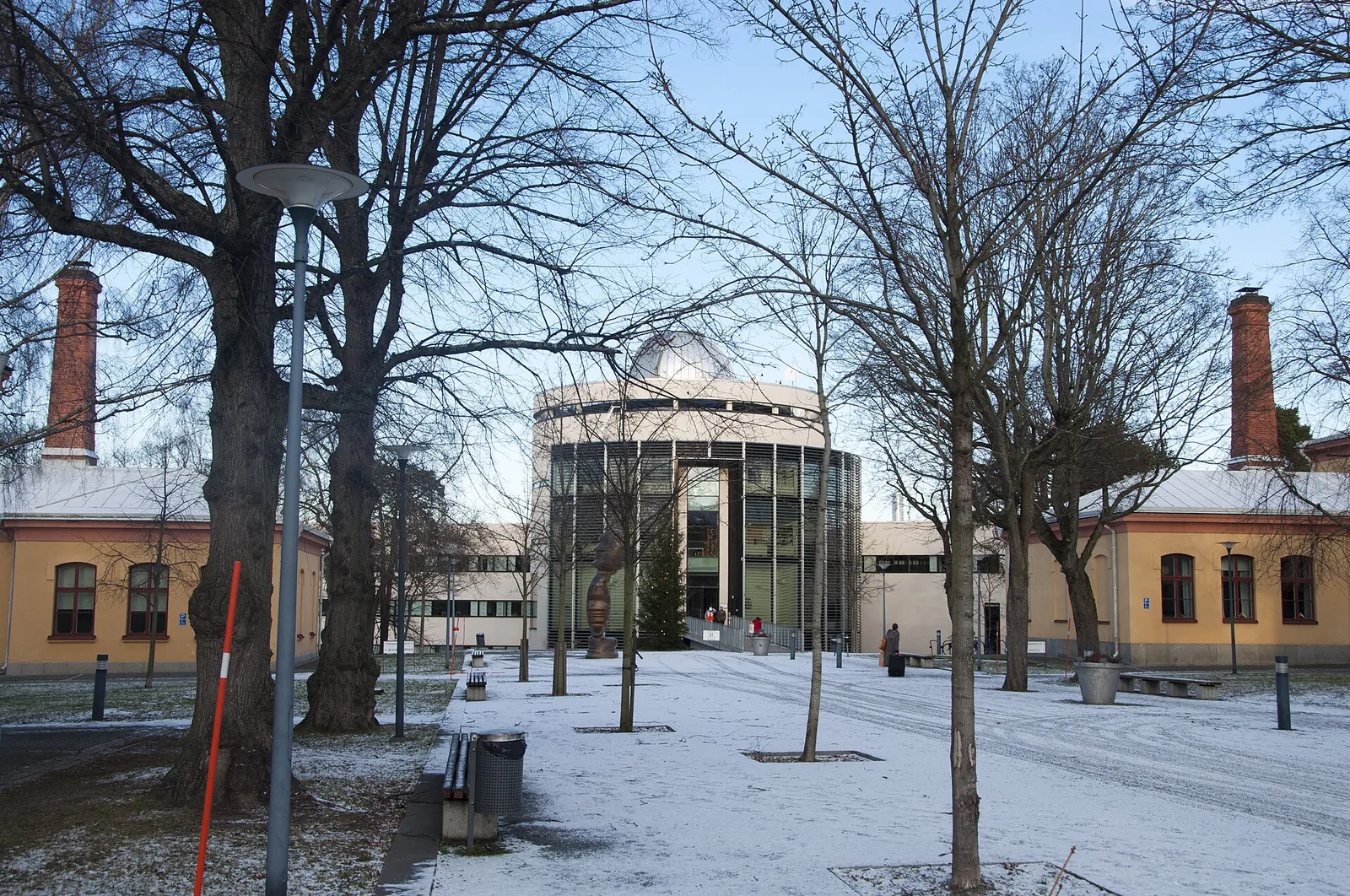
The medal is given each year by Stockholm University and the Nobel Committee for Physics of the Royal Swedish Academy of Sciences, the body that also chooses the physics Nobel. The winner gives the memorial lecture as part of the honour. Sen spoke on “Gravity from Strings and Strings from Gravity” at the university’s AlbaNova centre on 22 October, the ICTS announcement says.
What the Oskar Klein Medal is, and who has won it
The medal is named after Oskar Klein, a Swedish theoretical physicist known for early work on adding extra dimensions to physics, an idea string theory later took up. It was set up in 1988 to recognise distinguished contributions to physics.
Its first three recipients were Nobel laureates: Chen-Ning Yang in 1988, Steven Weinberg in 1989 and Hans Bethe in 1990, ICTS said. Later lecturers have included Edward Witten (1998), Stephen Hawking (2003), Peter Higgs (2009) and Kip Thorne (2016), according to the published list of past lecturers. Sen is the first physicist from India on that list.
The award is the latest of several top physics prizes for scientists in India in recent years. Earlier in 2026, theoretical physicist Deepak Dhar was named for the Dirac Medal, the second Indian after Sen to receive it, the Indian Express reported.
Ashoke Sen’s work on string theory, in plain words
String theory is an attempt to explain all particles and forces with one idea. It says the smallest building blocks of matter are not points but tiny vibrating strings, and that each way a string vibrates shows up as a different particle. One of its main goals is to fit gravity, which rules planets and galaxies, together with quantum physics, which rules atoms. The two theories clash in extreme places such as black holes.
ICTS credits Sen with three lines of work that shaped modern string theory:
- S-duality: the idea that a theory in which forces are very strong can be described exactly by another version in which forces are weak. Sen’s 1994 paper on this idea is among his best-known works. It helped show that what looked like several separate string theories could be different faces of one theory.
- Black hole entropy: entropy is a measure of how many hidden internal arrangements a system can have. Sen worked out precise counts of these arrangements for certain black holes and showed they match what gravity predicts, a test of whether string theory describes black holes correctly.
- String field theory: a framework that treats strings the way standard physics treats particles, which lets physicists calculate effects that simpler methods miss.
His Breakthrough Prize in 2012 was given for helping establish that different string theories share a unifying structure, ICTS said.
Timeline: Ashoke Sen’s major honours
| Year | Honour |
|---|---|
| 1989 | ICTP Prize |
| 1994 | Shanti Swarup Bhatnagar Prize |
| 1998 | Elected Fellow of the Royal Society |
| 2001 | Padma Shri |
| 2009 | Infosys Prize, Mathematical Sciences |
| 2012 | Breakthrough Prize in Fundamental Physics |
| 2013 | Padma Bhushan |
| 2014 | Dirac Medal |
| 2026 | Oskar Klein Medal |
The Dirac Medal, given by the Abdus Salam International Centre for Theoretical Physics (ICTP) in Italy, is among the physics honours considered just below the Nobel Prize, the Indian Express noted. The ICTP Prize, his first international award, came in 1989, 37 years before this one.
Born in Kolkata in 1956, Sen studied at Presidency College in Kolkata and IIT Kanpur before a PhD at Stony Brook University in the United States. He spent much of his career at the Harish-Chandra Research Institute in Prayagraj before moving to ICTS, which is part of the Tata Institute of Fundamental Research (TIFR). There he holds the ICTS-Infosys Madhava Chair.
What ICTS Bengaluru said about the award
ICTS director Rajesh Gopakumar congratulated Sen on behalf of the centre. “It has been no less than wonderful having Ashoke with us and setting the tone for excellence here at ICTS,” he said in the announcement.
ICTS did not say whether any event to mark the award is planned in India. For another Indian science story this month, read about the malaria vaccine price cut in the Bharat Biotech deal.
Frequently asked questions
What is the Oskar Klein Medal?
An annual physics honour given since 1988 by Stockholm University and the Nobel Committee for Physics. The winner gives the Oskar Klein Memorial Lecture.
Is Ashoke Sen the first Indian to win it?
Yes. ICTS says he is the first Indian physicist to receive the medal.
What is Ashoke Sen known for?
String theory: S-duality, precise counting of black hole entropy and string field theory.