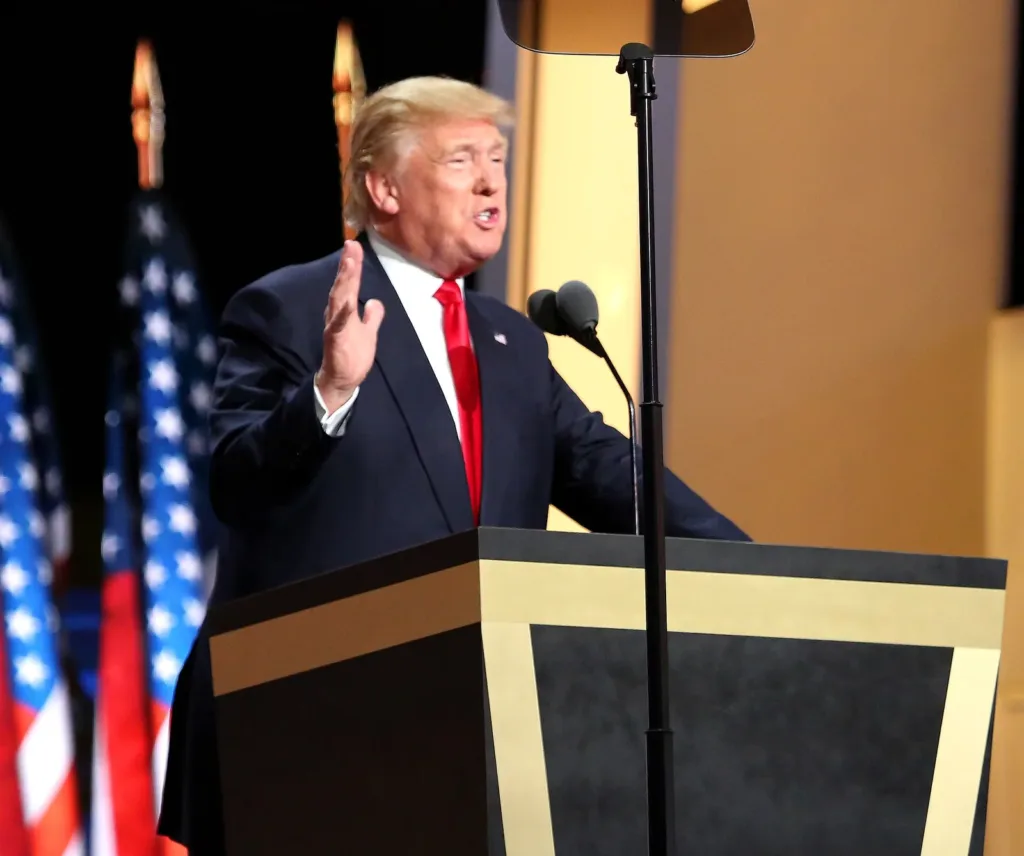
Representative image. Ali Shaker/VOA, Public domain, Wikimedia Commons

Why it matters
Negotiation signals matter to readers tracking Gulf shipping and energy. Historical refinery data show an India connection, but the remarks do not establish a price cut or normal shipping.
US President Donald Trump pointed to progress in Iran peace talks after meeting Qatar’s prime minister at the White House on 9 November 2026, while retaining the option of further military strikes. The reports describe a diplomatic opening alongside continued pressure, rather than confirming a peace agreement.
Agence France-Presse (AFP) and the Associated Press (AP) reported Trump’s positive account of the meeting. In a separate telephone interview with Reuters, he said Qatar and Saudi Arabia wanted a peaceful solution but that the United States remained prepared to strike if necessary.
Iran peace talks and the two parts of Trump’s message
At the White House, Trump characterised the war against Iran as militarily near its end and said there was progress towards a deal, according to the AFP and AP account carried by Arab News. That is the US president’s assessment of the military and diplomatic position.
The same account reports that Trump described a return to US strikes as unlikely in a Truth Social post. It also says he continued to seek a long-term solution concerning Iran’s nuclear programme. A stated expectation about future action is different from a binding agreement on what either side will do.
Reuters’ interview adds the other part of the message: Trump kept military action available and said he was content with the US naval blockade against Iran in the Strait of Hormuz. He did not describe that pressure as having ended.
What Qatar confirmed about the meeting
Qatar’s Prime Minister Sheikh Mohammed bin Abdulrahman Al Thani said he had positive discussions with Trump and US Vice President JD Vance about advancing the US-Iran talks, the AFP and AP report says.
His account confirms the diplomatic discussion and its stated aim of reaching a deal and bringing peace to the region. It does not, by itself, show that Iran accepted particular terms or that the two countries signed an agreement at the meeting.
| Question | What the reports establish |
|---|---|
| Was there a meeting? | Trump and the Qatari prime minister discussed the regional situation and talks |
| Did Trump report progress? | Yes, as his assessment of the discussions |
| Was military action ruled out? | No; he kept that option open in the Reuters interview |
| Is an agreed peace text established? | The two reports reviewed do not provide one |
The distinction matters when reading a headline about a war being over. A leader’s description of the military situation, an intermediary’s account of a productive meeting and an agreed settlement are different kinds of evidence.
Why the shipping question matters to Indian readers
The Strait of Hormuz remains relevant to energy trade beyond Iran and its neighbours. Earlier analysis by the US Energy Information Administration (EIA), drawing on Kpler data, describes how the conflict affected refinery operations, including in India.
The agency reports that crude-oil inputs in India, South Korea and Japan together fell by more than one million barrels a day in the second quarter of 2026, before recovering by 0.8 million barrels a day in the third quarter. These are combined figures for three countries, not estimates for India alone.
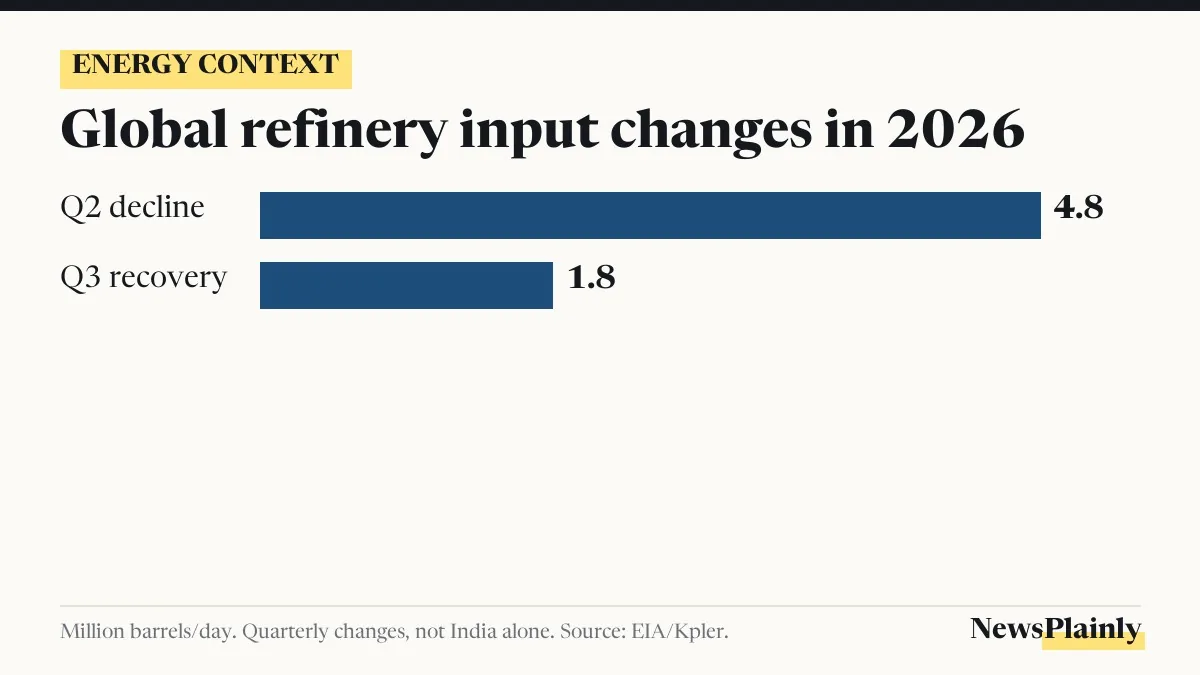
Globally, refinery inputs fell by 4.8 million barrels a day in the second quarter and recovered by 1.8 million in the third, the EIA says. Refinery inputs measure crude oil entering processing plants. They are not petrol-pump prices, and the quarterly figures are historical context rather than a reading of conditions this morning.
This gives the talks a practical India connection without assuming an immediate price effect. The remarks reviewed do not establish that the naval blockade is over or that shipping and refinery operations have returned to normal.
The points that remain open
The Reuters and AFP/AP reports reviewed carry Trump’s position and the Qatari prime minister’s account, but do not include an Iranian response to this specific meeting. The US assessment should therefore not be presented as an agreed statement by all sides.
The next substantive confirmation would be the actual terms of an agreement or a stated change in military and shipping arrangements. The reports give no fixed date for a final settlement.
NewsPlainly’s World section, which follows the distinction between negotiation proposals and confirmed agreements.
Frequently asked questions
Did Trump announce a signed peace agreement?
The reports reviewed describe his assessment of progress, not an agreed peace text.
Are the refinery figures for India alone?
No. The Asian comparison combines India, South Korea and Japan, and concerns the second and third quarters of 2026.